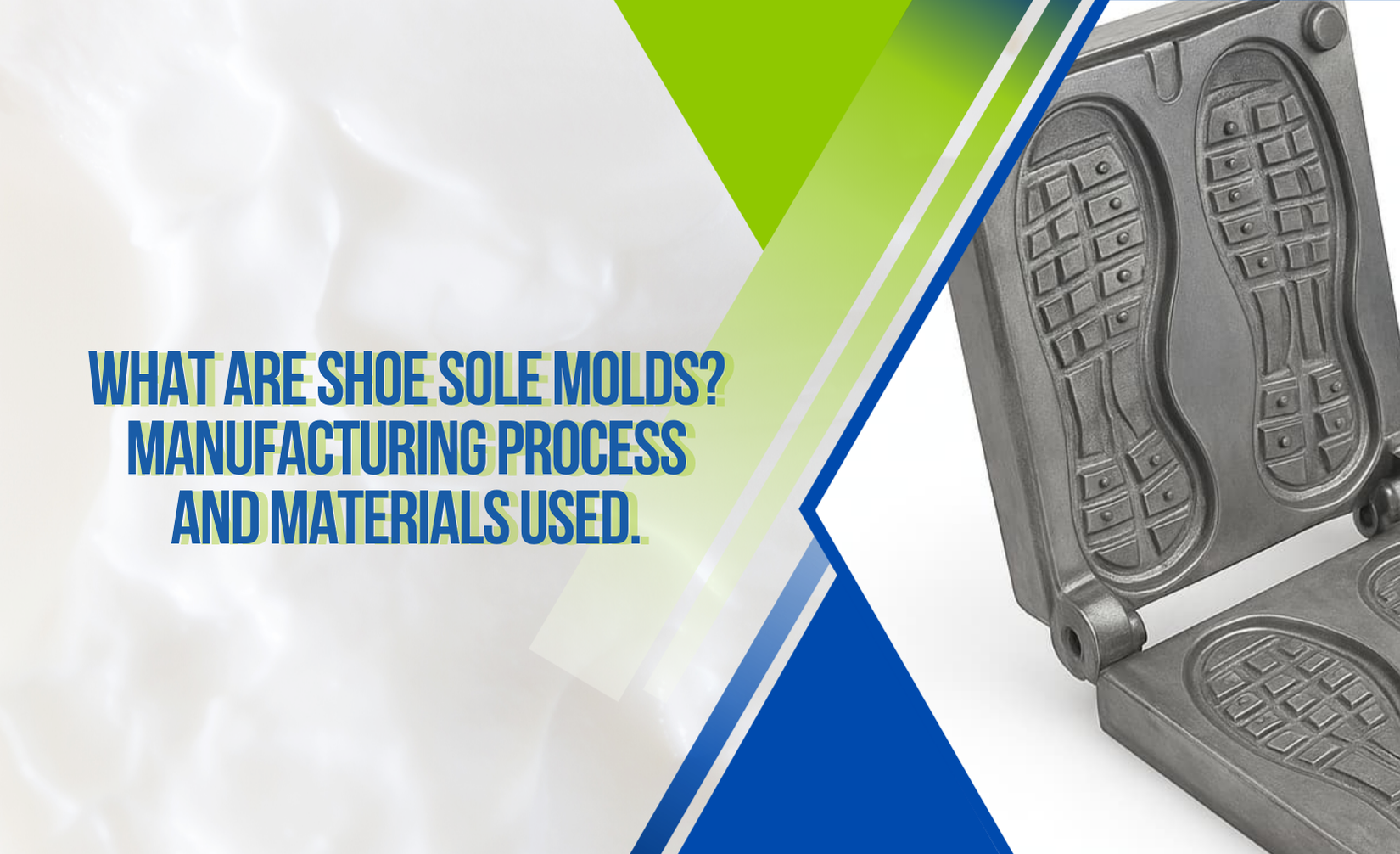
The modern footwear manufacturing industry uses various molding technologies to shape products. Among them, shoe sole mold is a common method used to produce shoe soles with high precision. This technology allows manufacturers to produce large volumes with consistent quality.
The development of polymer materials and additives has also contributed to improving the efficiency of the molding process. These materials help enhance product durability and optimize processing performance.
WHAT IS A SHOE SOLE MOLD?
A shoe sole mold is a tool used to shape shoe soles or other components of footwear. During the production process, molten polymer material is injected into the mold. The material is then cooled to form the desired shape.
The molding method helps ensure uniform dimensions and high precision. This is very important in industrial shoe manufacturing. As a result, factories can produce large quantities in a short period of time.
Many types of polymer materials are used in shoe molding. These materials need to have good elasticity and high abrasion resistance.
SHOE SOLE PRODUCTION PROCESS USING MOLDS
Mold Design and Fabrication
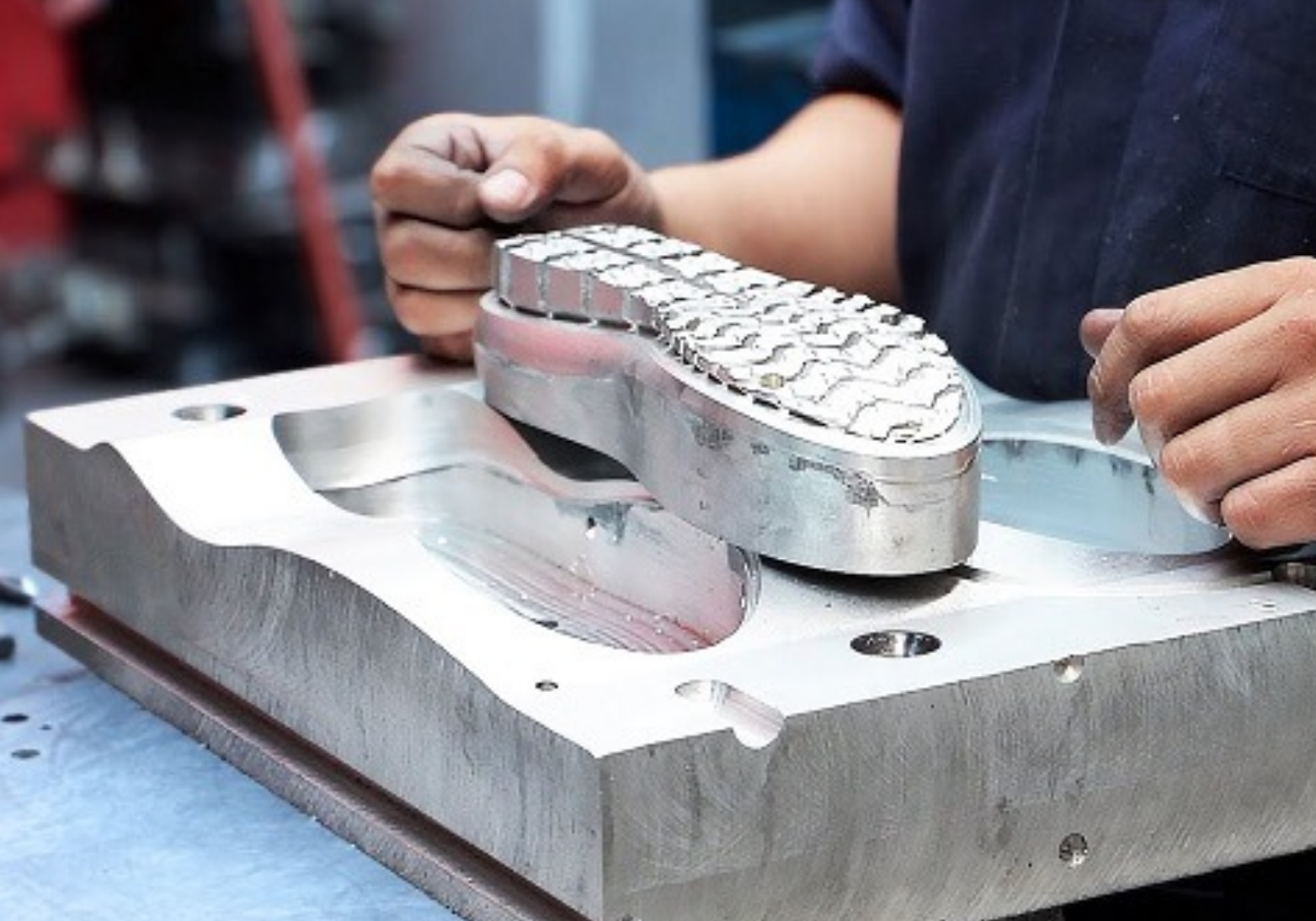
The production process begins with the mold design stage. Engineers use design software to create the shape of the shoe sole according to product requirements. The mold is then manufactured using metal to ensure high precision.
Mold design must consider many factors such as material shrinkage and air venting capability. This helps ensure that the molded product achieves good quality.
Material Injection and Molding Process
After the mold is prepared, the polymer material is heated to a molten state. The material is then injected into the mold using injection or molding machines.
Once the material fills the mold, the cooling system helps the material solidify. The product is then removed from the mold for further finishing steps.
Product Inspection and Finishing
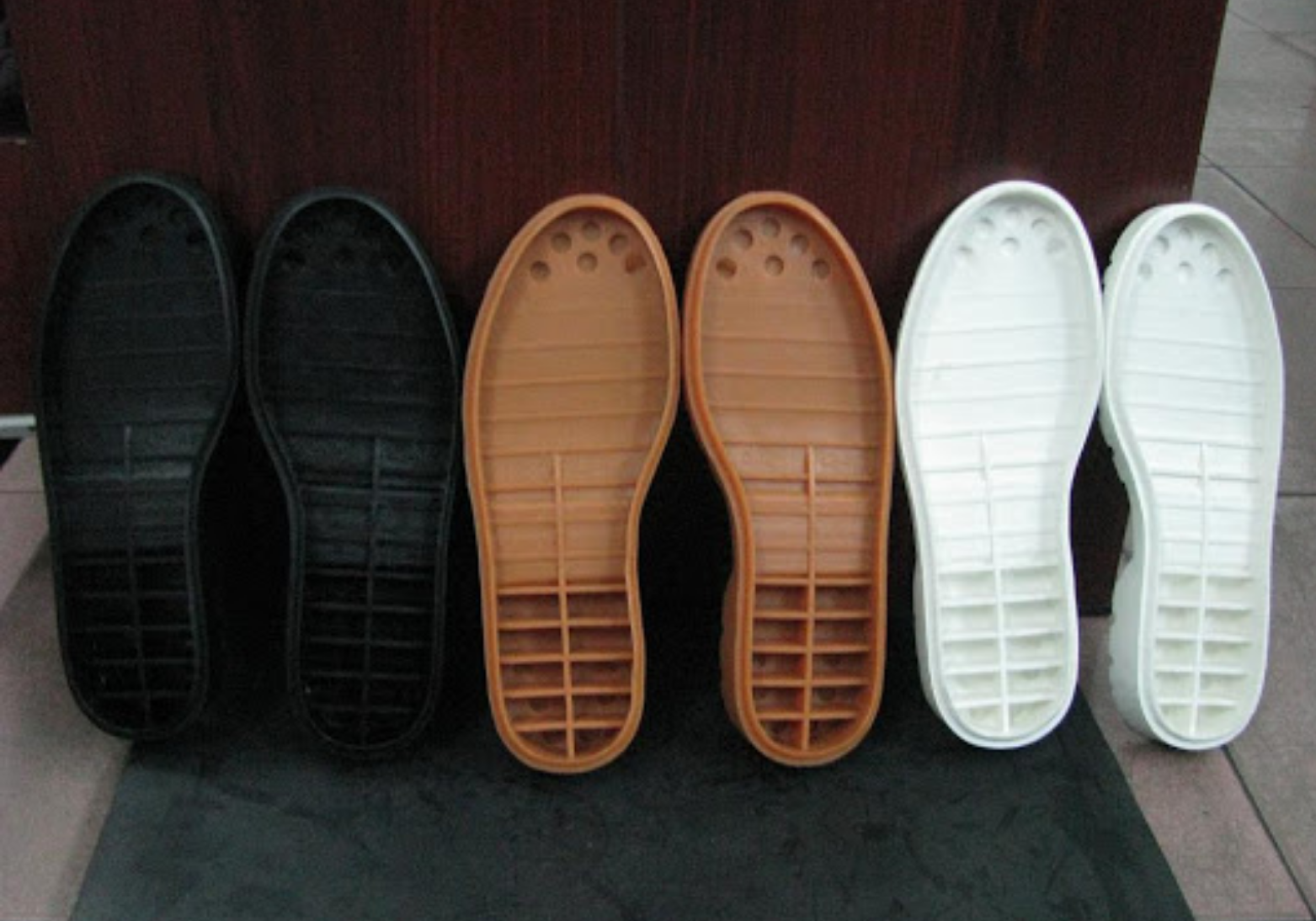
After molding, the shoe sole needs to be inspected for size and durability. Some details may undergo additional processing to meet technical requirements. This step helps ensure product quality before the shoe assembly stage.
MATERIALS USED IN SHOE MOLDING
Polymers and Elastomers
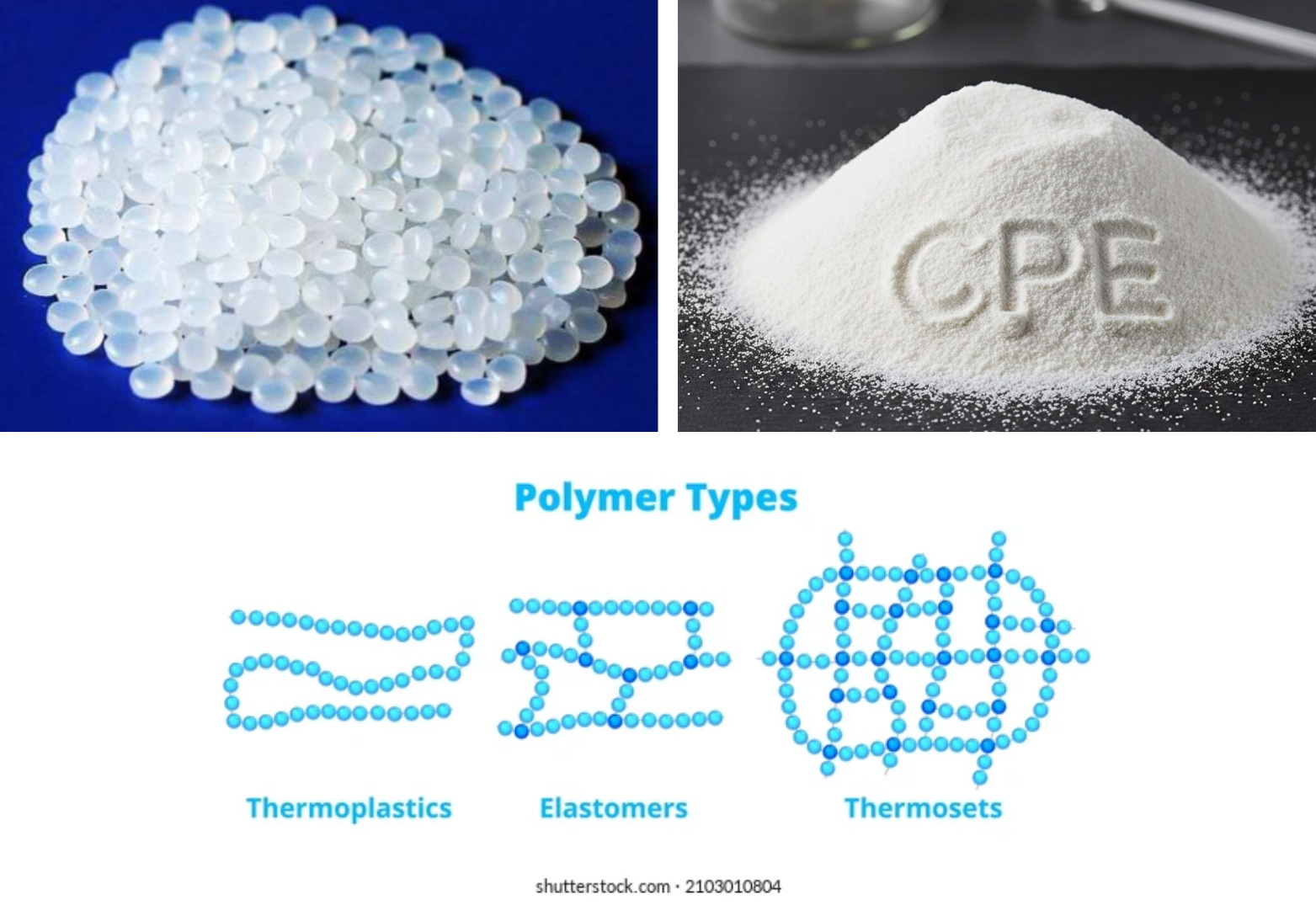
The footwear industry uses many different types of polymers. EVA and TPU are common materials because they have good elasticity. These materials help make shoe soles lightweight and flexible.
In addition, some engineering plastics are used in certain shoe components. These materials help improve durability and product lifespan.
Additives
Processing aids help materials flow more easily in the mold. This makes the production process more stable. Some additives also help increase durability and abrasion resistance. As a result, footwear products can be used for a longer period.
In the plastics industry, modifier materials are used to improve mechanical properties. CPE is a common example of this group of materials. This compound helps enhance the durability and impact resistance of polymer materials.
CONCLUSION
Shoe molding is an important technology in the modern footwear manufacturing industry. This method helps produce products with precise shapes and consistent quality.
The development of polymer materials and additives has improved the efficiency of the molding process. These materials enhance durability and processing performance of plastic products. As a result, the quality of footwear products in the market is improved.
VICHEM – OFFICIAL DISTRIBUTOR OF ENGINEERING PLASTICS, VIRGIN RESINS, AND ADDITIVES FROM POLYGRAM, TOTALENERGIES CORBION, AND TIANSHENG IN VIETNAM
Vichem is an authorized distributor of engineering plastics, virgin resins, and additives from Polygram, TotalEnergies Corbion, and Tiansheng in the Vietnamese market. We not only provide high-quality products but also deliver international-standard after-sales services.
For more information about our products, please contact us through the following channels:
📞 Hotline: 08 1790 1790
📧 Email: contact@vichem.vn
🔎 LinkedIn: Vichem JSC
🌐 Website: www.vichem.vn
📌 Facebook: Vichem JSC