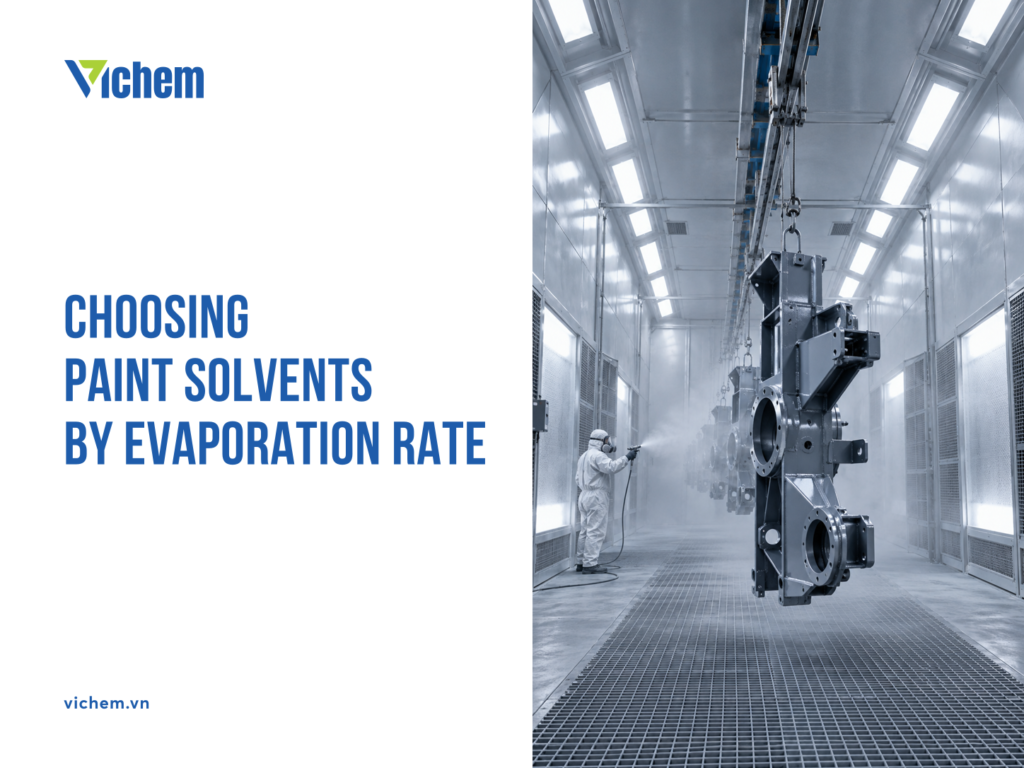
To choose a paint solvent for industrial paint, blend fast, medium and slow solvents to match the application method, the shop conditions and the solvency for the resin. Price and odor are not selection criteria. Compare the relative evaporation rate, the solvency of the slowest-evaporating fraction, and the temperature and humidity in the paint booth, then verify the blend with a spray trial on real parts.
Where the Paint Film Fails When the Paint Solvent Is Wrong
On an industrial paint line, solvent-related defects usually show up at the spray station or after the oven, when parts are already hanging on the conveyor and are hard to rework.
First, be clear on what evaporation rate means: how fast or slow a solvent leaves the paint film compared with a reference solvent. It is a relative value, so it only means something when read against the same reference solvent that the supplier states on the TDS.
When the blend evaporates too fast, the paint droplets lose solvent on the way from the gun to the part. Common signs:
- Dry spray: droplets are already tacky when they hit the surface, giving a rough layer with poor adhesion.
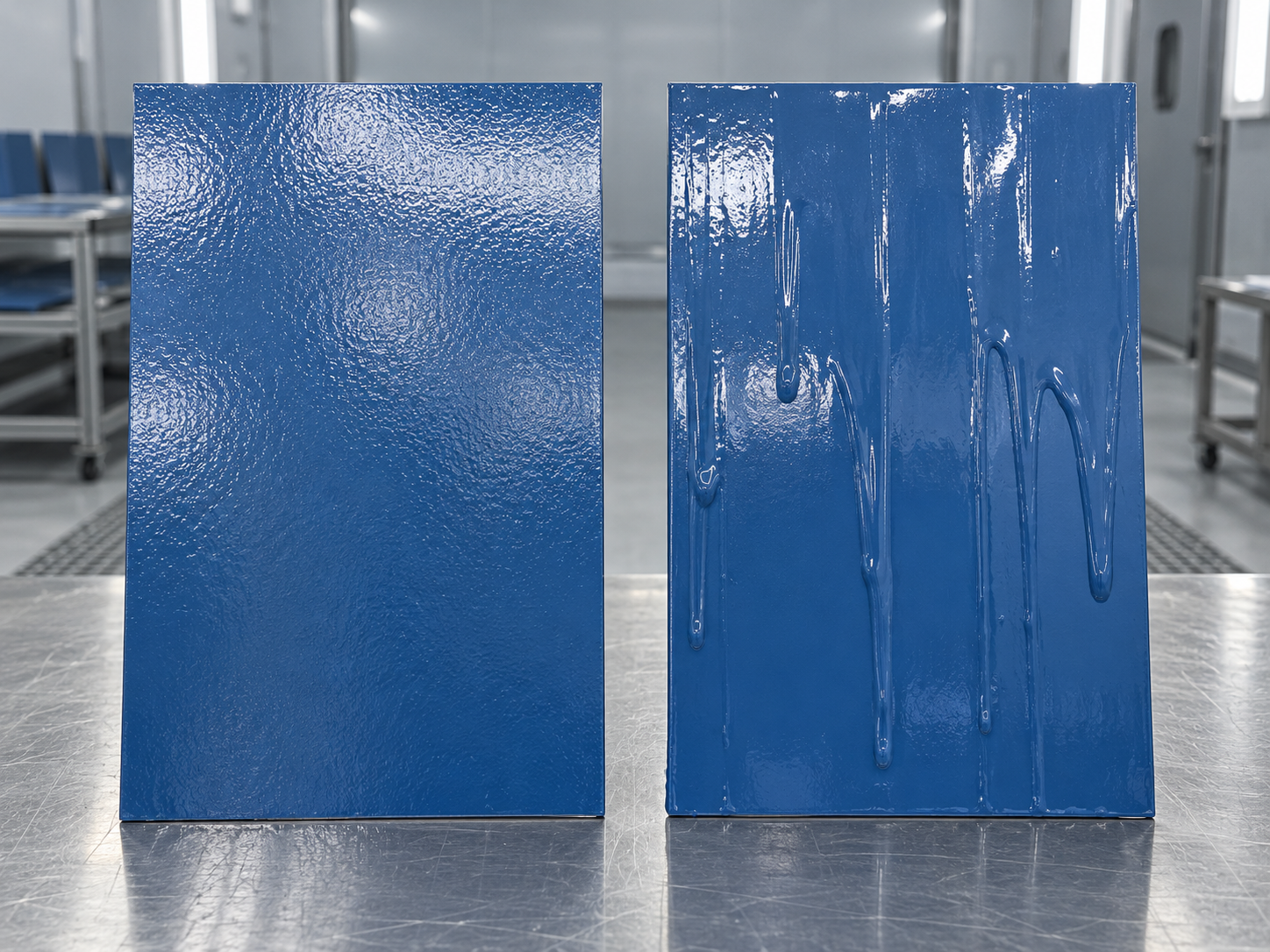
- Orange peel: the film cannot level before its viscosity rises.
- Blushing: evaporation cools the film surface, moisture in the shop condenses into the wet film, the resin precipitates and the film turns cloudy, as if covered with mist.
When the blend evaporates too slowly, the wet film stays open longer than the line can tolerate:
- Sagging on vertical surfaces, edges and corners of the part.
- Dust pickup in the booth, especially in drafty areas.
- Longer drying time, forcing a slower conveyor speed or a longer oven.
- Solvent retention in the film: the remaining solvent escapes late and causes pinholes, blisters during baking, or a film that stays soft for a long time.
Both groups of defects share one root cause: the evaporation profile of the blend does not match the pace of spraying, leveling and drying on the line.
4 Criteria for Choosing a Paint Solvent
Relative Evaporation Rate
Fast solvents leave the film while the droplets are in flight and right after they hit the part, so film viscosity builds quickly after spraying. This keeps the film from sagging on vertical surfaces. Slow solvents stay longer and keep the wet film open long enough for the resin to level and for air bubbles to escape.
The spray method determines how much of the fast solvent is lost before the paint reaches the part: the finer the droplets, the larger the surface area exposed to air, and the more solvent is lost in flight. Air spray, airless and electrostatic application therefore call for different evaporation curves. For lines with baking, also allow time for the film to level before it enters the oven. When comparing solvents, read the values only against the same reference solvent.
Solvency for the Resin
The solvent must stay compatible with the resin until the very end of drying. Once the fast fraction has evaporated, what remains in the film is mostly slow solvent. If the slowest fraction is a poor solvent for the resin, the resin can no longer stay in solution, the resin precipitates and the film turns cloudy.
Solvency must therefore be assessed at each stage of drying, not only in the original paint can. Each resin system has its own compatibility with each solvent group, and resin suppliers usually give recommendations on the TDS. For two-component systems with an isocyanate hardener, the solvent must also be free of groups that react with isocyanate and have a low water content.
Balancing Fast, Medium and Slow Solvents
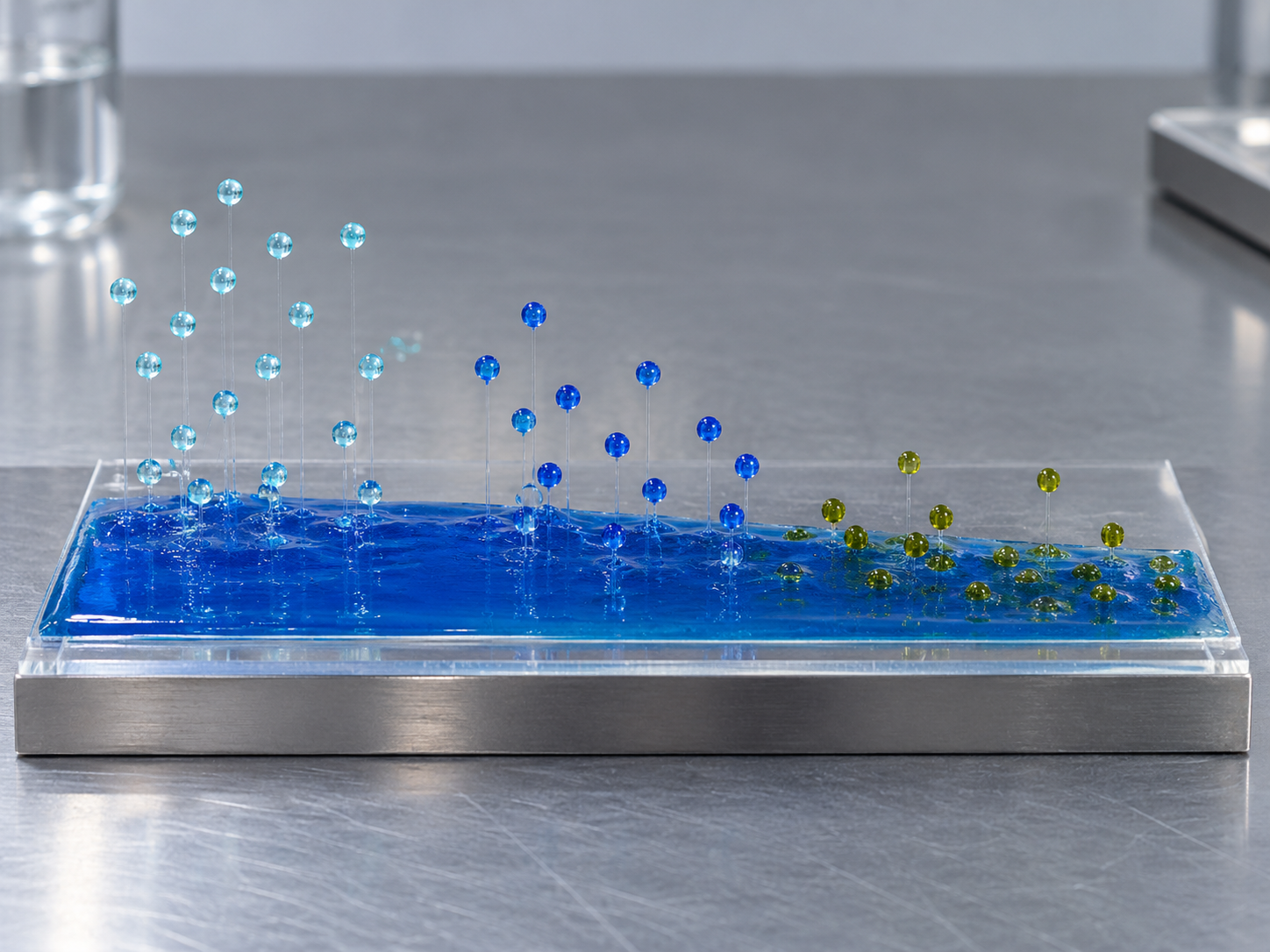
The composition of the vapor changes during drying. The fast fraction evaporates first, so the blend left in the film becomes progressively richer in slow solvent, and the viscosity and solvency of the liquid phase change over time.
A balanced blend has three roles: the fast fraction helps the film set and resists sagging, the medium fraction keeps spraying stable and bridges the two stages, and the slow fraction gives the film time to level. Without the medium fraction, viscosity tends to rise in steps instead of evenly. A single solvent can rarely cover all three roles at once.
Application Conditions and Regulations
A high shop temperature makes every solvent evaporate faster, while high humidity raises the risk of blushing, especially with blends rich in fast solvents. Air drying needs a slow fraction that does not linger too long, while baking needs time for solvent to leave the film before the surface skins over.
On the regulatory side, VOC (volatile organic compound) requirements apply to the amount of solvent in the paint, so check the market and customer requirements for each order. Flash point is a value read on the SDS to assess fire risk, booth ventilation and storage. For a blend, assess it based on the composition actually in use.
How to Match a Solvent to Your Paint Line
Step 1 — Record the Resin System, Spray Method (Air Spray, Airless, Electrostatic) and Whether the Line Bakes
Prepare a condition sheet for each paint line: resin system and hardener, spray method, gun-to-part distance, baking or air drying, and booth temperature and humidity by season. This sheet shows how much fast fraction is needed to resist sagging and how much slow fraction is needed for leveling.
Step 2 — Read the TDS and SDS
On the TDS and SDS of each solvent, read three values: relative evaporation rate (with the reference solvent used for comparison), boiling range and flash point. Do not compare figures from two documents if the reference solvent or the test method differs. Then run a spray trial under your shop's actual hot and humid conditions, because figures on paper do not reflect booth airflow, part temperature or humidity.
During the trial, record film set time, orange peel, sagging, blushing and the condition of the film after baking. Test both the hottest shift and the most humid day.
Step 3 — Build the Solvent Blend from the Groups
Choose groups by their role in the blend:
- Aromatic hydrocarbons, esters and ketones are commonly used for the fast and medium fractions; evaporation rate and solvency differ from one compound to another within each group, so choose based on the TDS.
- Glycol ethers are used for the slow fraction, keeping the wet film open longer and limiting blushing. Glycol ethers that still contain hydroxyl groups can react with isocyanate, so check this when using them in two-component systems.
- Alcohols are used with suitable resin systems; avoid them in systems with an isocyanate hardener.
Vichem distributes solvents from these groups for industrial paint, including sources from Maxone Asia, with TDS and SDS for each batch so your team can cross-check them in step 2.
Common Mistakes When Choosing a Paint Solvent
Using a single solvent. A single solvent has only one evaporation rate, so it cannot both resist sagging and give the film time to level. A multi-component blend does both.
Adding too much slow solvent to fix orange peel. A longer-lasting wet film reduces orange peel, but sagging, dust pickup and solvent retention appear. Adjust in small steps and retest after each change.
Not adjusting for hot and humid seasons. A blend that runs well in the dry season can cause blushing when humidity rises, or dry spray when the shop is hot. The solvent formula should have seasonal versions, with the conditions of use stated clearly.
Changing the solvent source without retesting. Solvents with the same name but from a different supplier or batch can still differ in impurities, water content or evaporation rate. Each time the source changes, cross-check the new TDS and SDS, then run a spray trial on real parts before going into production.
Frequently Asked Questions
What if a fast-drying paint thinner causes blushing?
Add a slow-evaporating fraction with good solvency for the resin, and reduce the fast fraction. Blushing occurs when the film surface cools sharply as solvent evaporates, causing moisture to condense into the wet film. Also check the shop humidity and any water carried in the compressed air.
Which paint solvent works for PU paint?
For two-component PU paint, choose a solvent that has no hydroxyl groups that can react with isocyanate and that has a low water content. Esters, ketones and aromatic hydrocarbons are the groups usually considered first. Avoid alcohols, and use glycol ethers only when the resin supplier confirms they are suitable. Always run a spray trial before applying.
Should you change the solvent in the rainy season?
Review the blend, and in most cases adjusting the ratio is enough instead of replacing it entirely. High humidity raises the risk of blushing, so reduce the fast fraction or increase the slow fraction that is compatible with the resin. After each adjustment, run a spray trial under actual shop conditions and record the temperature and humidity.
Conclusion
Choosing a paint solvent for industrial paint means matching the evaporation pace of the blend to the pace of the line, within the limits of resin solvency and safety regulations.
- Use a fast, medium and slow blend instead of a single solvent.
- The slowest-evaporating fraction must still dissolve the resin well until the end of drying.
- Evaporation rate can only be compared against the same reference solvent on the TDS.
- Read the flash point and VOC requirements on the SDS for the actual blend.
- Run spray trials under real hot and humid conditions, and repeat them whenever the season or the solvent source changes.
- For isocyanate systems, exclude solvents with reactive groups and control water.
Solvent groups for paint are collected on the Solvents page.
Vichem is a distributor of chemical additives from leading brands such as Covestro, Sinopec and Bühler in the Vietnamese market.
For more information about our products, please contact us through the following channels:
- Hotline: 08 1790 1790
- Zalo OA: Vichem JSC
- Email: contact@vichem.vn
- LinkedIn: Vichem JSC
- Website: www.vichem.vn
- Facebook: Vichem JSC