In the industrial adhesive sector, the stability of the bonding layer directly affects product quality and operational lifespan. When materials are exposed to high temperatures, high humidity, or continuous UV radiation, many conventional adhesives tend to lose adhesion performance over time.
This is why Acrylic PSA resin is increasingly being adopted across various industries such as electronics, automotive, technical tapes, and industrial materials. Without requiring heat or solvent activation, this adhesive can still create a durable bond with only light pressure applied to the material surface.
Thanks to its excellent aging resistance and high stability, Acrylic PSA is now considered one of the key adhesive systems in modern manufacturing lines.
WHAT IS ACRYLIC PSA RESIN?
PSA stands for Pressure Sensitive Adhesive. It is a type of adhesive capable of bonding when light pressure is applied, without requiring heat or chemical curing reactions.
Among PSA systems, Acrylic PSA is primarily composed of acrylic polymers. This material stands out due to its high environmental durability, excellent heat resistance, and long-term stability.
Unlike many traditional rubber-based adhesive systems, Acrylic PSA is less affected by UV radiation and oxidation. This allows the adhesive layer to maintain stable performance even during prolonged outdoor use.
Today, Acrylic PSA is developed in various forms to meet different technical requirements. Common types include water-based Acrylic PSA, solvent-based Acrylic PSA, and UV-curing Acrylic PSA.
ADHESION MECHANISM OF ACRYLIC PSA
Acrylic PSA operates through a surface adhesion mechanism rather than curing like conventional thermosetting adhesives. When pressure is applied, the adhesive layer spreads evenly across the material surface and forms molecular bonds at the contact interface.
This process is known as wetting. The better the wetting capability, the higher the initial adhesion strength. This is especially important for applications requiring rapid bonding or immediate stability.
Besides initial tack, the performance of Acrylic PSA also depends on tensile resistance and long-term bonding durability. In the adhesive industry, three common parameters used to evaluate PSA performance are tack, peel strength, and shear strength.
The balance among these factors determines the quality of the adhesive layer in each specific application.
WHY IS ACRYLIC PSA PREFERRED IN INDUSTRIAL ADHESIVES?
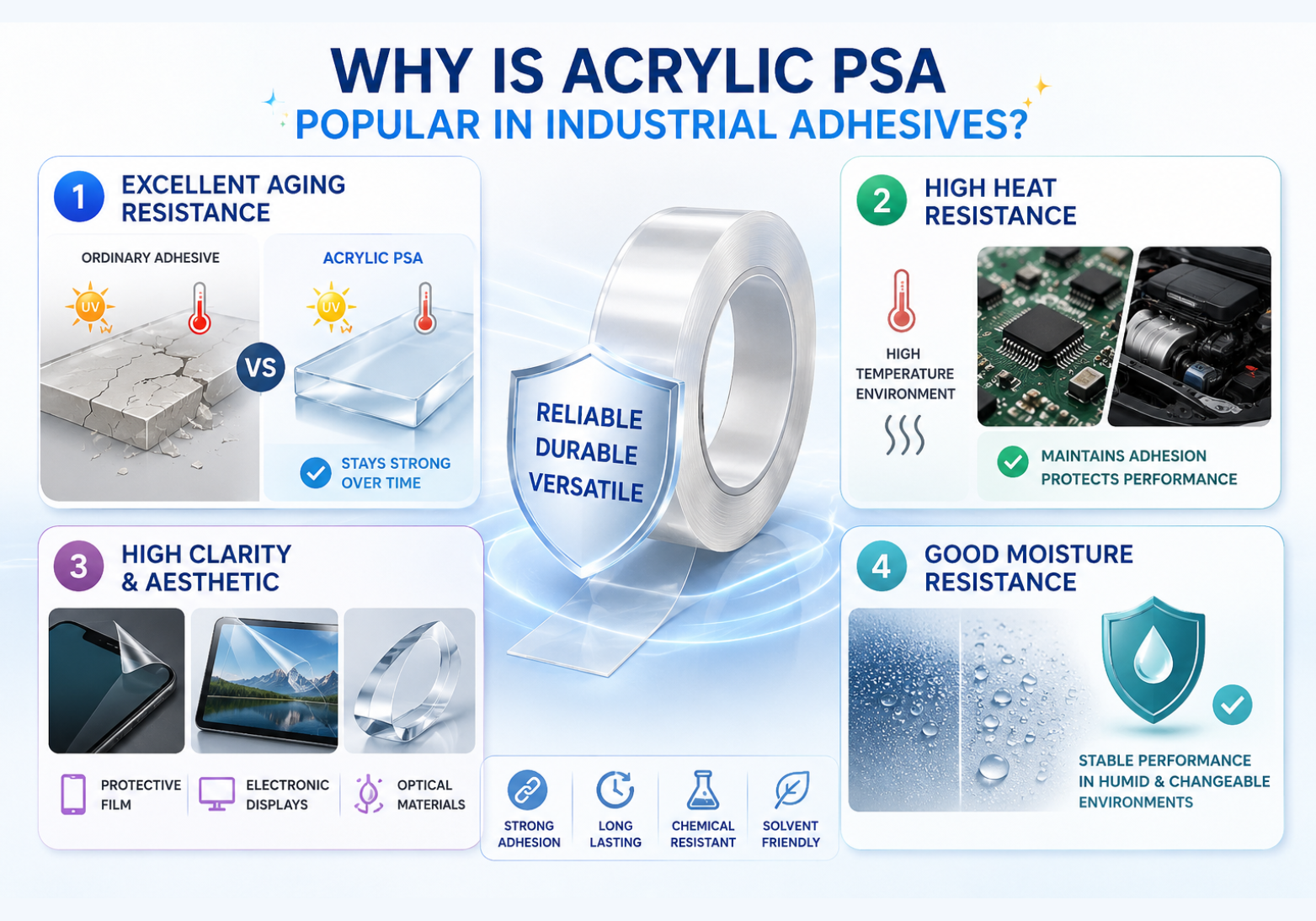
One of the greatest advantages of Acrylic PSA is its excellent aging resistance. When exposed to UV radiation or high-temperature environments over extended periods, many conventional adhesives may become brittle or lose adhesion. In contrast, Acrylic PSA maintains relatively high stability.
Its heat resistance is another factor contributing to its widespread application. In the electronics and automotive industries, many components operate continuously under relatively high temperatures. If the adhesive layer becomes unstable, the entire system may be affected.
Acrylic PSA significantly minimizes this issue thanks to its polymer structure, which provides better thermal stability than many traditional rubber-based adhesive systems.
Additionally, the transparency of Acrylic PSA is also a major advantage. Many current products offer high optical clarity, making them suitable for applications requiring aesthetics such as protective films, electronic displays, and optical materials.
The moisture resistance of Acrylic PSA is also considered highly effective. This helps the adhesive layer maintain stable performance in high-humidity environments or under continuous temperature fluctuations.
APPLICATIONS OF ACRYLIC PSA IN INDUSTRY
Technical Tape Industry
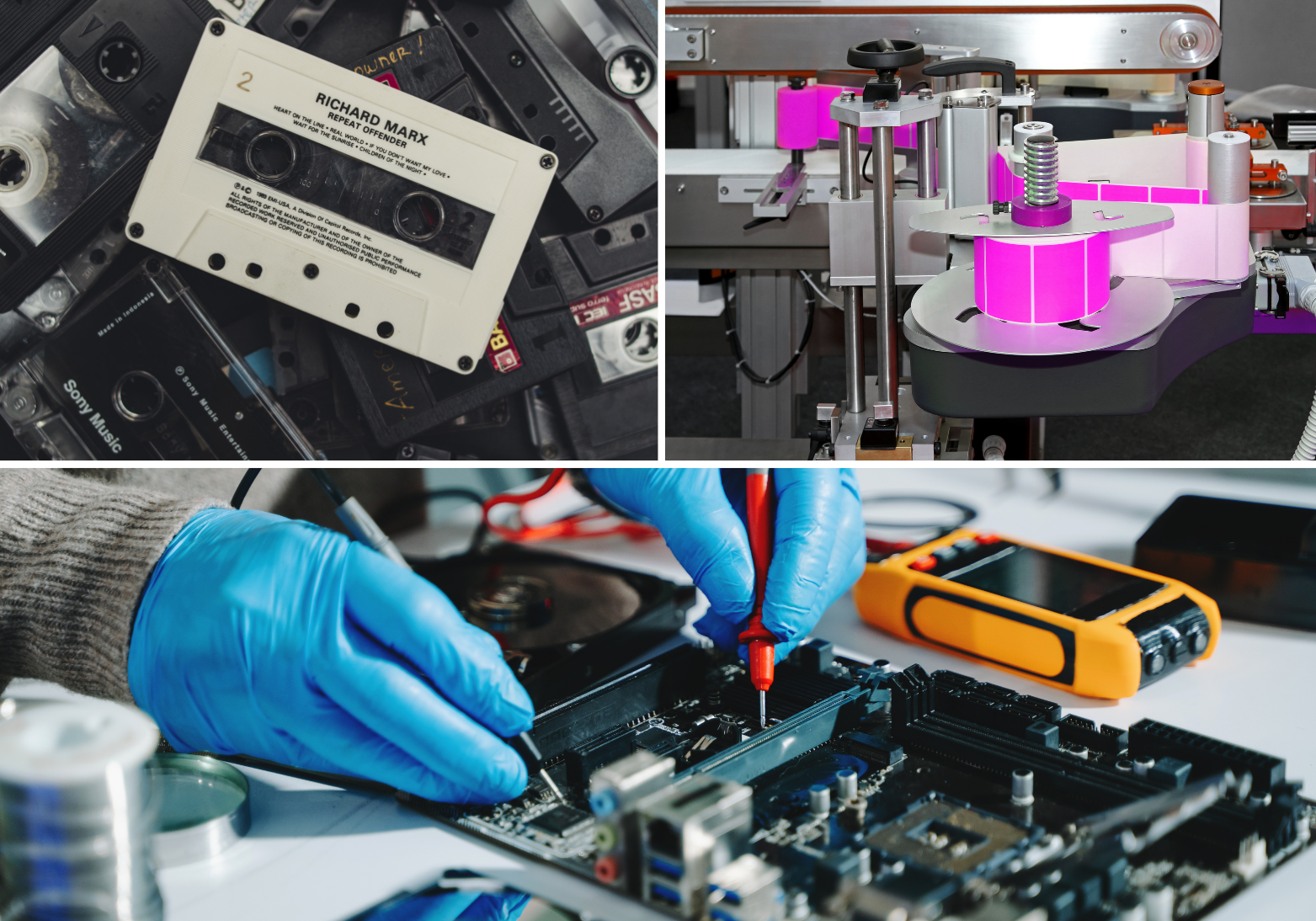
This is currently the most common application field for Acrylic PSA. Many industrial tapes require adhesive layers that provide both strong adhesion and long-term resistance to heat and humidity. Acrylic PSA helps tapes maintain stable adhesion on various materials such as metal, glass, PET, and engineering plastics.
Today, this adhesive is widely used in double-sided tapes, transfer tapes, foam tapes, and many other technical tape products.
Electronics Industry
In the electronics industry, adhesive layers not only provide bonding but also directly impact component stability. Many modern devices contain high-density components that continuously generate heat during operation. If the adhesive layer lacks stability, delamination may occur after prolonged use.
Acrylic PSA helps minimize this issue thanks to its relatively strong heat resistance and aging resistance. Today, this material is commonly found in display tapes, protective films, battery tapes, and many other electronic components.
Automotive Industry
The automotive industry currently uses many acrylic PSA systems for both interior and exterior components. Common applications include emblem mounting tapes, paint protection films, anti-vibration materials, and technical foams.
Importantly, these components are frequently exposed to high temperatures, humidity, and outdoor UV radiation. This is an environment where many conventional adhesive systems struggle to maintain long-term stability. Acrylic PSA helps extend bonding lifespan and reduce edge lifting after prolonged operation.
Industrial Label Industry
Industrial labels are often exposed to friction and environmental changes during transportation and storage. If the adhesive layer is unstable, labels may lift at the edges or lose adhesion after a short period of use.
Acrylic PSA significantly improves this stability. In addition, some PSA formulations also support clean removability without leaving adhesive residue on material surfaces.
FACTORS AFFECTING ACRYLIC PSA PERFORMANCE
The performance of Acrylic PSA depends greatly on the type of substrate surface used. Low-surface-energy materials such as PE or PP are generally more difficult to bond than metals or glass. In such cases, manufacturers often use specialized PSA systems to improve wetting capability and enhance initial adhesion.
Ambient temperature is also an important factor. When the temperature is too low, the adhesive layer may lose flexibility and become less effective in bonding. Conversely, excessively high temperatures may reduce the mechanical strength of the bond if the PSA formulation is unsuitable.
In addition, coating thickness directly affects adhesive performance. If the coating layer is too thin, the initial adhesion may not meet requirements. Conversely, an excessively thick adhesive layer may sometimes reduce the mechanical stability of the tape. Storage conditions must also be strictly controlled to maintain PSA shelf life before use.
DEVELOPMENT TRENDS
The industrial adhesive sector is rapidly shifting toward low-VOC and more environmentally friendly PSA systems. This trend is driving the demand for water-based Acrylic PSA across many modern manufacturing industries.
At the same time, high-performance PSA products are being developed to improve heat resistance, chemical resistance, and adhesion on difficult-to-bond surfaces.
In the electronics and electric vehicle sectors, material stability requirements are becoming increasingly stringent. This is considered a major driving force behind the development of next-generation Acrylic PSA systems. Many companies are also prioritizing PSA products with superior outdoor durability to extend operational lifespan and reduce product maintenance costs.
In the future, Acrylic PSA is expected to continue expanding its applications in high-tech industries and advanced engineering materials.
CONCLUSION
Acrylic PSA resin is playing an increasingly important role in the modern industrial adhesive industry. With its stable adhesion performance, excellent heat resistance, and high environmental durability, this material is now widely used in industries such as electronics, automotive, technical tapes, and industrial labeling.
In addition to improving product stability, Acrylic PSA also helps businesses enhance production efficiency and extend operational lifespan across various technical applications.
As industries continue to evolve toward automation and high-performance materials, the demand for Acrylic PSA is expected to grow significantly in the coming years.
VICHEM – AUTHORIZED DISTRIBUTOR OF CHEMICAL ADDITIVES FROM LEADING BRANDS SUCH AS COVESTRO, SINOPEC, BUHLER,… IN VIETNAM
Vichem is an authorized distributor of chemical additive products from leading brands such as Covestro, Sinopec, Buhler,… in the Vietnamese market. We not only provide high-quality products but also deliver after-sales services that meet international standards.
For more information about our products, please contact us through the following channels:
📞 Hotline: 08 1790 1790
📧 Email: contact@vichem.vn
🔎 LinkedIn: Vichem JSC
🌐 Website: www.vichem.vn
📌 Facebook: Vichem JSC