In the chemical industry, every product is accompanied by technical documentation. The two most important documents are COA and MSDS. These are not just supporting documents but essential tools for risk control.
However, many people only skim through them. They often overlook critical information such as technical limits or hazard warnings. This can lead to production errors or safety risks. Proper understanding of COA and MSDS helps you control quality, reduce errors, and protect people. So, which parts should be reviewed carefully?
OVERVIEW OF COA AND MSDS
What is COA?
COA, or Certificate of Analysis, is a document that certifies the analytical results of a specific batch of chemicals. It confirms that the product has been tested before shipment. Each COA is associated with a specific batch, providing high traceability.
In many industries such as pharmaceuticals and food, COA is a mandatory document. It ensures that raw materials meet quality standards. Without a COA, it is very difficult for companies to control production risks.
What is MSDS?
MSDS, or SDS under the updated standard, is a Safety Data Sheet. This document provides detailed information on properties, hazards, and handling procedures for chemicals.
According to international standards, SDS is structured into 16 sections. It provides information ranging from identification and hazards to emergency response. The main objective of SDS is to help workers use chemicals safely and respond effectively in case of incidents.
KEY INFORMATION TO REVIEW IN COA
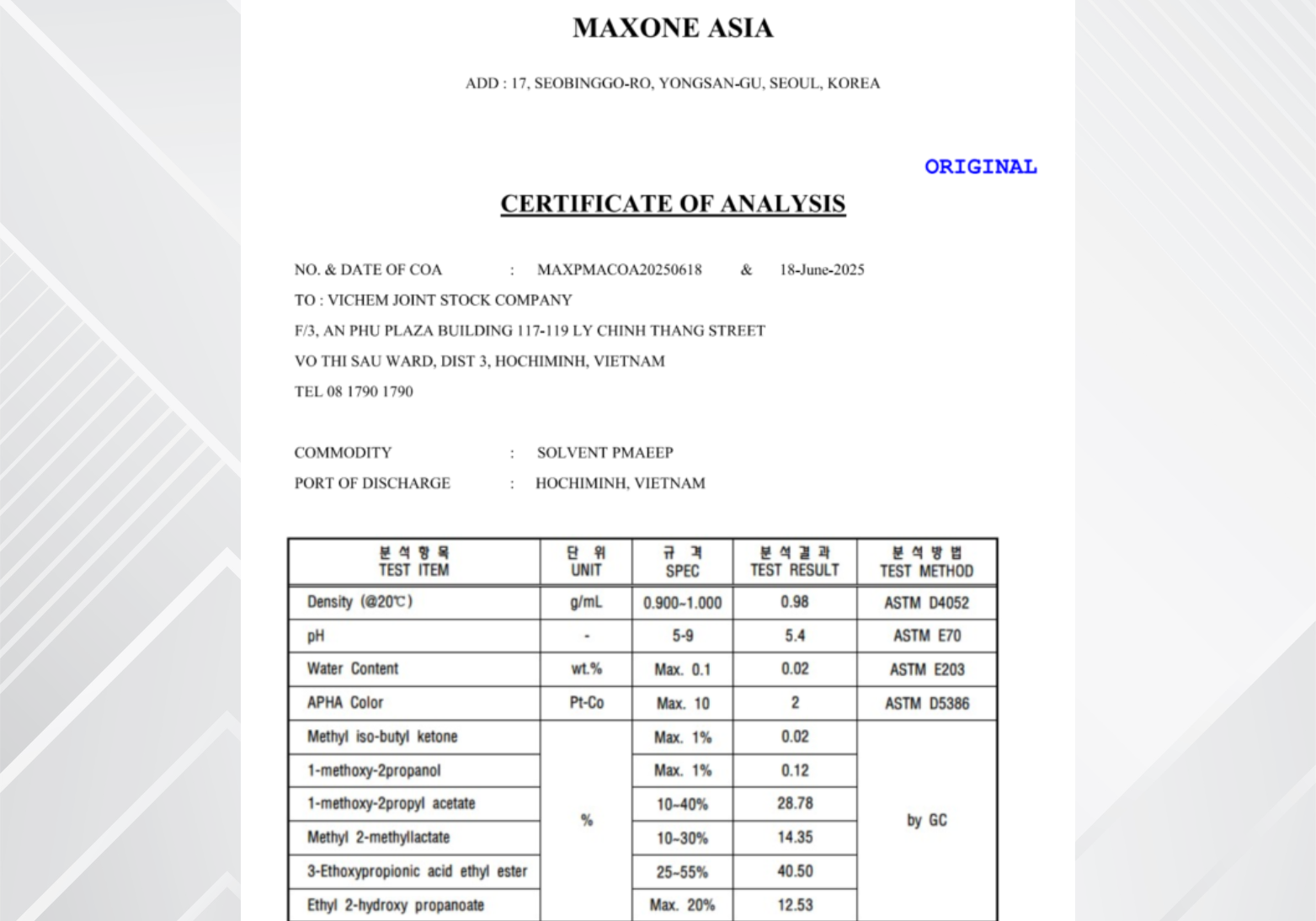
Verify product and batch information
The first section of a COA always includes product name, item code, and batch number. This is the most critical verification step. If this information does not match the actual goods, all subsequent data becomes irrelevant.
In practice, many production errors result from using the wrong batch. Therefore, this verification step should never be overlooked.
Specification limits and tolerances
COA always includes acceptable value ranges, known as specifications. If the results fall within these limits, the product is considered compliant.
However, if the values are close to the limits, careful consideration is still required. In real production, small deviations can have significant impacts.
KEY INFORMATION TO REVIEW IN MSDS (SDS)
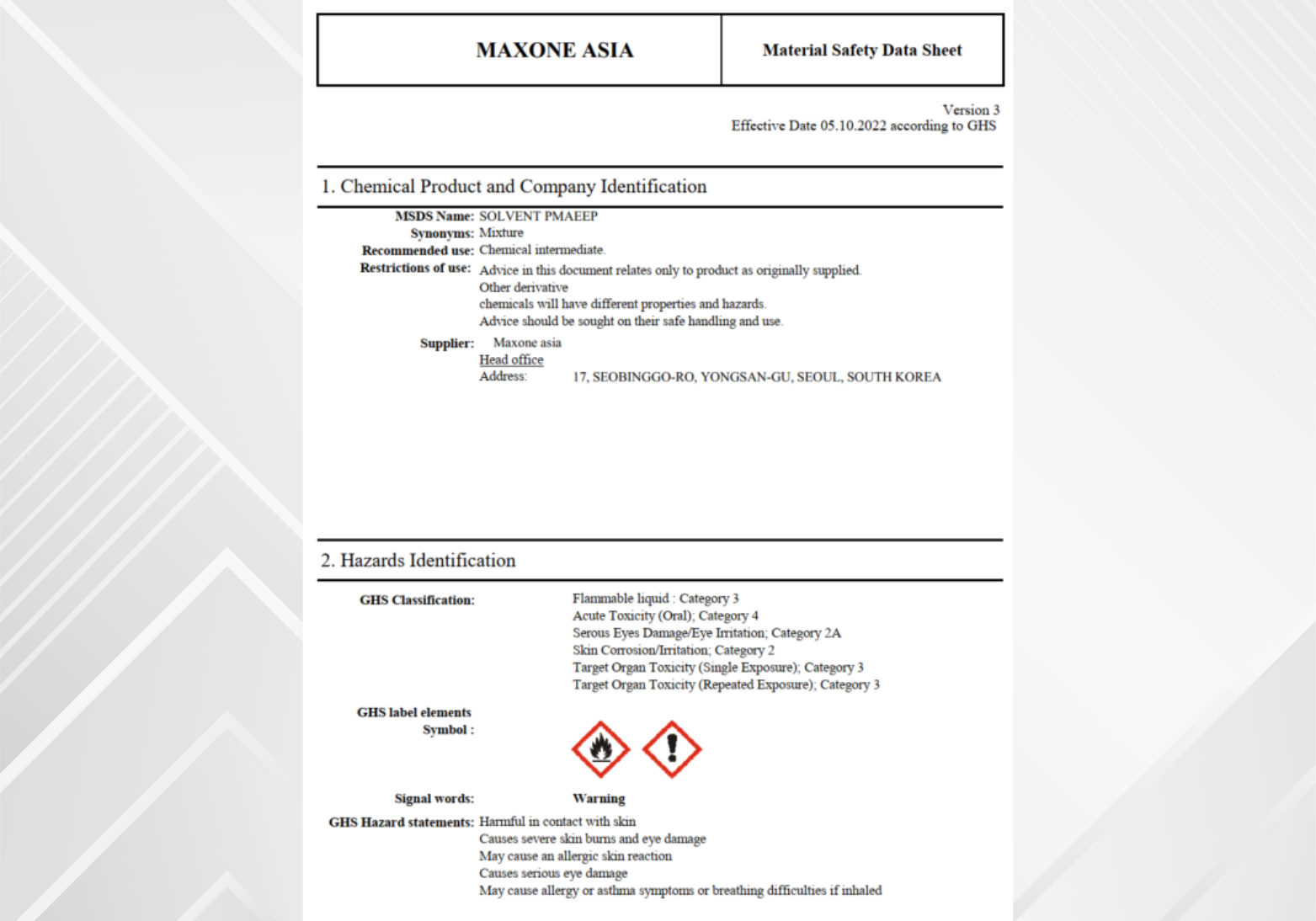
Hazard identification
This is the most important section in the entire SDS. It describes how the chemical can pose risks.
This section includes hazard symbols, hazard classification, and precautionary statements. GHS pictograms allow users to quickly recognize potential risks.
Chemical composition
This section lists the components of the product. It helps users understand the chemical nature of the material.
In some cases, composition determines compatibility with the production system. This is especially important during formulation or mixing.
Emergency response measures
These sections include first aid, firefighting, and spill response. You do not need to memorize every detail, but you should understand the key principles.
For example, how to handle skin contact or which extinguishing agent to use in case of fire. These details are critical during emergencies.
Handling and storage instructions
This section provides guidance on proper storage conditions. It includes temperature, humidity, and incompatible substances.
Improper storage may lead to quality degradation or hazardous reactions. Therefore, this section should be reviewed before storage.
COMMON MISTAKES
Many people only read the values without comparing them to specifications. This is the most common mistake when reviewing COA. In MSDS, a common mistake is ignoring hazard warnings. Some users also skip emergency handling instructions.
In addition, many companies fail to update documents. Meanwhile, SDS should be periodically updated to reflect new information.
WHY READING COA & MSDS IS IMPORTANT
COA ensures input material quality. It helps companies control products from the very beginning. MSDS ensures safety for both people and the environment. It provides clear instructions for all situations.
When both documents are used together, companies can reduce risks and improve production efficiency.
CONCLUSION
COA and MSDS are not just technical documents. They are essential tools for quality and safety management. Carefully reviewing each section helps you understand the product and control risks. This is the foundation for efficient and reliable production.
VICHEM – AUTHORIZED DISTRIBUTOR OF CHEMICAL ADDITIVES FROM LEADING BRANDS SUCH AS COVESTRO, SINOPEC, BUHLER,… IN VIETNAM
Vichem is an authorized distributor of chemical additives from leading brands such as Covestro, Sinopec, and Buhler in the Vietnamese market. We not only provide high-quality products but also deliver after-sales services that meet international standards.
For more information, please contact us via the following channels:
📞 Hotline: 08 1790 1790
📧 Email: contact@vichem.vn
🔎 LinkedIn: Vichem JSC
🌐 Website: www.vichem.vn
📌 Facebook: Vichem JSC