In the adhesive and polymer materials industry, VAE and PVA are widely used. Both are water-based emulsion systems with good bonding performance. However, each type is suitable for different application conditions.
Choosing the wrong material can affect durability, moisture resistance, and production efficiency. This is especially important in industries such as packaging, construction, and textiles. Therefore, understanding the differences between VAE and PVA is essential.
OVERVIEW OF PVA AND VAE
What is PVA?
PVA, or Polyvinyl Alcohol, is a synthetic polymer that is water-soluble. It is produced through the hydrolysis of polyvinyl acetate, resulting in the formation of multiple hydroxyl groups in its structure. This characteristic gives PVA strong adhesion and good dispersion in aqueous systems.
In practice, PVA is commonly used in applications requiring high bonding strength on porous surfaces. Typical examples include paper adhesives, wood adhesives, and certain textile applications. Due to its safety and non-toxicity, PVA is also preferred in products with indirect food contact.
What is VAE?
VAE, or Vinyl Acetate Ethylene, is a copolymer formed from vinyl acetate and ethylene. This combination creates a material with higher flexibility compared to PVA. At the same time, it significantly improves moisture resistance and durability in harsh environments.
Unlike PVA, VAE not only performs well on porous surfaces but also adheres effectively to a wide range of substrates. This makes VAE a preferred choice in industries requiring high performance.
DIFFERENCES BETWEEN VAE AND PVA
Differences in chemical structure
The first difference lies in polymer structure. PVA is a homopolymer derived from a single monomer after modification. In contrast, VAE is a copolymer, meaning it combines two different components within the same chain.
The presence of ethylene in VAE alters its properties. It increases flexibility and reduces hydrophilicity. Meanwhile, PVA contains many hydroxyl groups, making it more prone to moisture absorption.
Adhesion performance on substrates
PVA exhibits excellent adhesion on porous materials such as paper, wood, and fabric. This is due to its polar structure, which enables strong interaction with similar materials.
In contrast, VAE has a broader adhesion range. It can bond effectively to both porous and non-porous substrates such as plastics and metals. As a result, VAE is suitable for more diverse and complex applications.
Water and moisture resistance
One of the most significant differences between these polymers is their water resistance. PVA is sensitive to moisture and may lose adhesion when exposed to water over time.
On the other hand, VAE offers better moisture resistance due to the presence of ethylene. This allows it to maintain performance in high humidity or low-temperature environments. Therefore, VAE is often preferred for outdoor or cold-condition applications.
Flexibility and mechanical strength
After drying, PVA tends to form a rigid film. This can lead to cracking or brittleness under mechanical stress or temperature changes.
In contrast, VAE forms a softer and more flexible film. It can withstand deformation and is less prone to cracking. This makes it suitable for applications requiring elasticity.
Drying time and processability
PVA has a fast drying time and is easy to use in simple processes. This helps save time and is suitable for small-scale production.
Meanwhile, VAE has a longer open time. This allows users to adjust material positioning before full curing. In large-scale production lines, this feature provides a significant advantage.
Cost and economic efficiency
PVA generally has lower cost due to its simpler production process and widely available raw materials. This makes it a cost-effective choice for basic applications.
VAE has a higher price, but it offers superior performance. In many cases, using VAE can reduce maintenance costs and extend product lifespan.
PRACTICAL APPLICATIONS
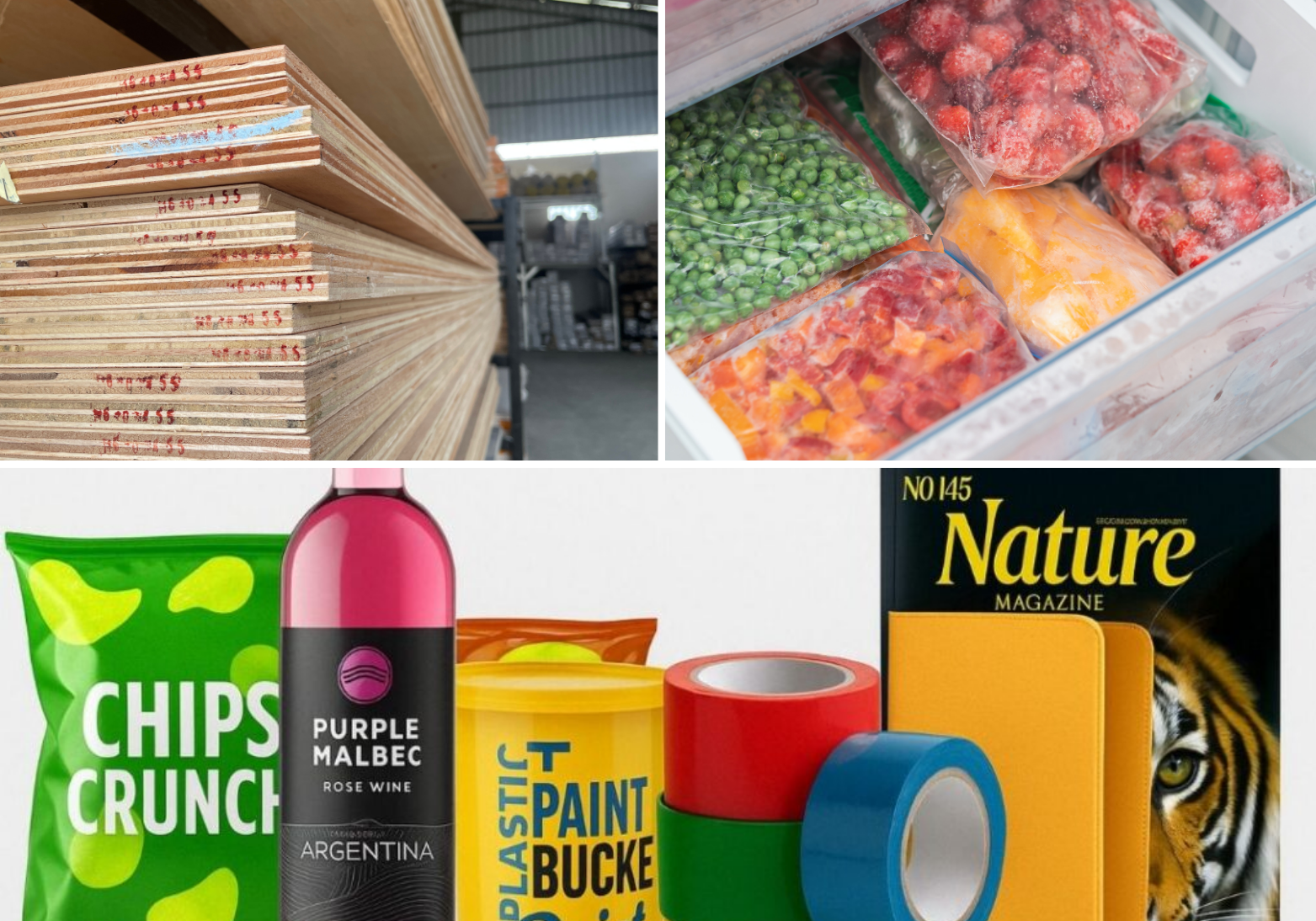
In practice, PVA is widely used in industries such as paper packaging and wood manufacturing. It is also found in handicrafts and educational applications. Thanks to its low cost and ease of use, PVA is suitable for basic needs and dry environments.
VAE is typically applied in fields requiring higher durability and environmental resistance. It is used in food packaging adhesives, bottle labeling adhesives, and construction materials. In cold-chain or frozen packaging, VAE helps maintain stable adhesion.
WHEN TO CHOOSE EACH MATERIAL
The choice between VAE and PVA depends on specific application conditions. If the application takes place in a dry environment and does not require high durability, PVA is a suitable option. It helps reduce costs and is easy to implement.
In contrast, when moisture resistance, high durability, and flexibility are required, VAE is the optimal choice. Although it has a higher cost, its long-term performance is often better.
TRENDS
The polymer industry is shifting toward sustainability and environmental friendliness. Both PVA and VAE are water-based systems, offering advantages in low emissions.
Currently, manufacturers are researching hybrid materials that combine both polymers. The goal is to leverage the advantages of each while reducing costs and improving performance.
CONCLUSION
Both VAE and PVA play important roles in the adhesive and polymer materials industries. PVA is suitable for simple applications, while VAE meets more demanding technical requirements.
Understanding the differences between these materials helps businesses select the right solution. This not only improves product quality but also optimizes long-term costs.
VICHEM – OFFICIAL DISTRIBUTOR OF CHEMICAL ADDITIVES FOR THE ADHESIVE INDUSTRY SUCH AS PVA, VAE, EVOH,… FROM SINOPEC IN VIETNAM
Vichem is an official distributor of chemical additives for the adhesive industry such as PVA, VAE, and EVOH from Sinopec in the Vietnamese market. We not only provide high-quality products but also deliver after-sales services that meet international standards.
For more information, please contact us through the following channels:
📞 Hotline: 08 1790 1790
📧 Email: contact@vichem.vn
🔎 LinkedIn: Vichem JSC
🌐 Website: www.vichem.vn
📌 Facebook: Vichem JSC