In many factories today, hydraulic oil monitoring systems have become an essential part of production lines. Sensors and controllers help businesses monitor oil conditions in real time. As a result, technicians can detect potential failures at an early stage.
However, not every system can maintain stable long-term operation. After a period of use, sensors may experience inaccurate readings, false alarms, or signal loss. These issues can easily lead businesses to misjudge equipment conditions.
If not handled promptly, oil monitoring failures may increase the risk of hydraulic pump damage, reduce machine lifespan, and cause unplanned production downtime. This is also why many businesses are now investing heavily in periodic maintenance and inspection of monitoring systems.
WHAT DOES A HYDRAULIC OIL MONITORING SYSTEM INCLUDE?
A hydraulic oil monitoring system typically consists of multiple devices working together to monitor machine operating conditions. Oil level sensors help control the amount of oil inside the reservoir. Pressure sensors support monitoring the operating pressure of the system. In addition, temperature sensors and oil cleanliness sensors help detect abnormalities early during operation.
These data are transmitted to a central controller, allowing technicians to monitor the system in real time. In many modern factories, the system is also connected to operation management software to support predictive maintenance and reduce the risk of unplanned downtime.
COMMON ERRORS
Incorrect Oil Level Sensor Readings
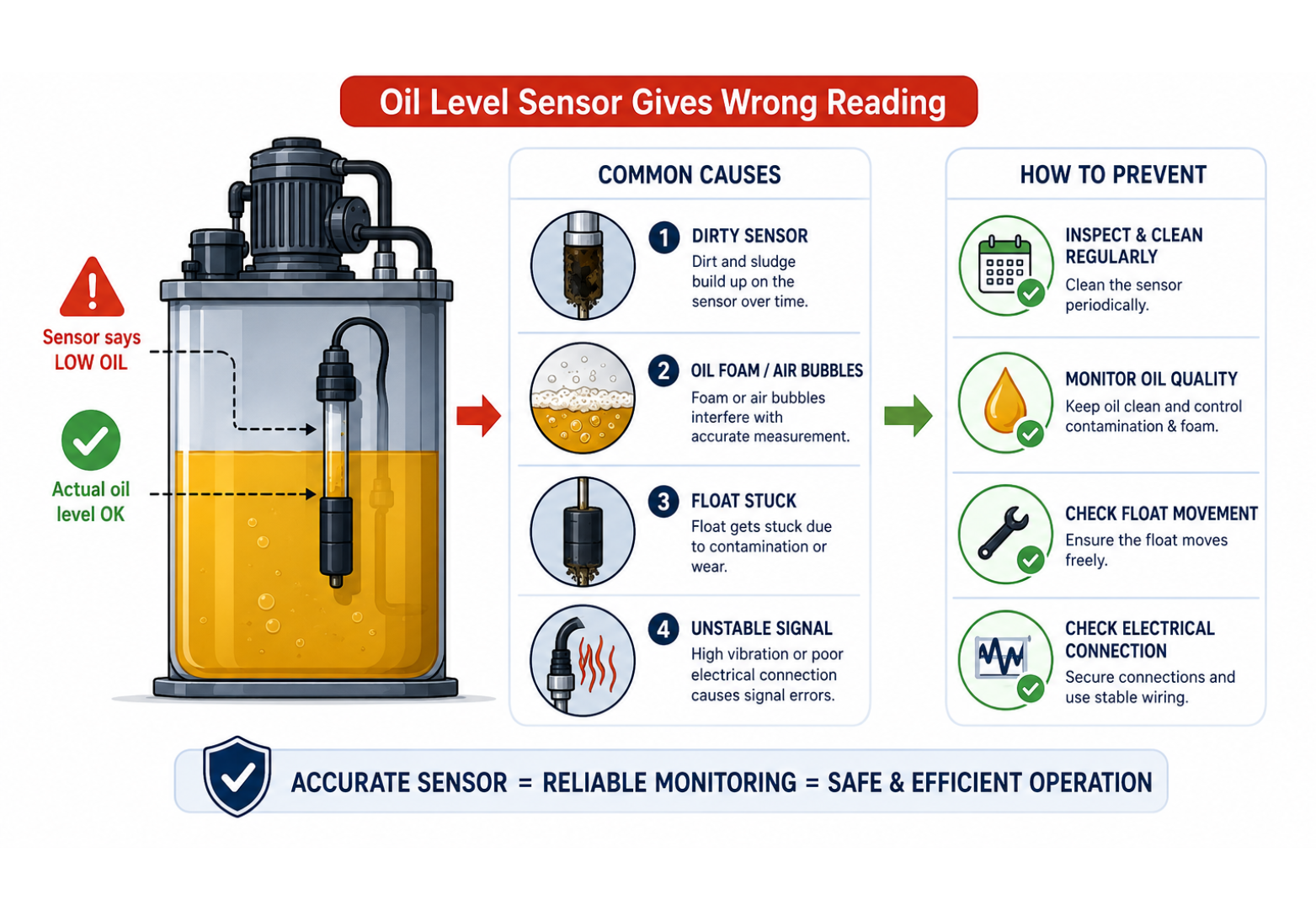
This is one of the most common issues in hydraulic oil monitoring systems. In many cases, the sensor continuously triggers low oil level warnings even though the actual oil volume remains sufficient. Conversely, some systems fail to detect oil shortages while the machine is operating.
The cause is often related to dirt or residue buildup on the sensor after prolonged use. In addition, air bubbles in the oil or a stuck sensor float can also cause inaccurate measurement signals. In industrial environments with high vibration, unstable electrical signals may also contribute to sensor inaccuracies.
To minimize this issue, businesses should periodically inspect and clean sensors. At the same time, oil quality should be monitored regularly to reduce contamination and foaming risks within the system.
Sensor Signal Loss
Some systems experience interrupted data transmission or unstable sensor signals. This prevents the controller from accurately reading hydraulic oil conditions during operation.
Signal loss is commonly associated with loose wiring, degraded connectors, or electromagnetic interference within the factory. In systems operating under high temperatures and strong vibrations, the lifespan of electrical components may also decrease faster than normal.
Businesses should periodically inspect the entire signal wiring system to ensure stable connections. In addition, using sensors with strong anti-interference capabilities can improve the reliability of the monitoring system.
Continuous False Alarms
Many businesses encounter situations where the system continuously generates alarms even though the machine is operating normally. This not only creates difficulties for technicians but also reduces confidence in the monitoring system.
The most common cause is alarm threshold settings that are not suitable for actual operating conditions. In addition, strong fluctuations in sensor signals or continuous changes in oil temperature may also cause the system to misinterpret data.
If this situation continues for a long time, operators may gradually ignore alarms. This creates a major risk because real system failures may not be addressed promptly when they occur.
Oil Contamination Not Detected by the System
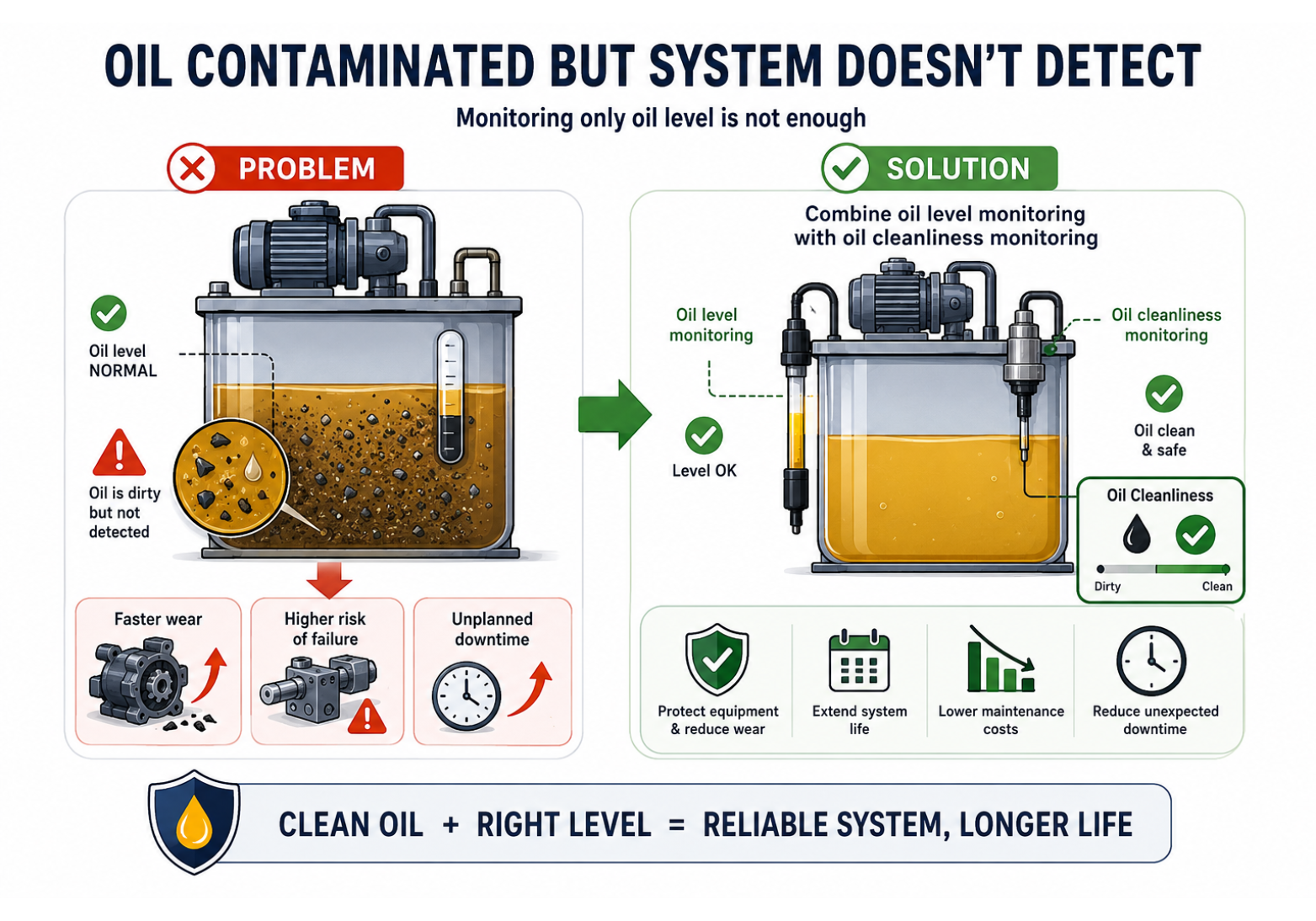
In many factories, monitoring systems focus only on oil level tracking without monitoring hydraulic oil quality. This is one of the reasons why many serious issues are not detected early.
When oil is contaminated with metal particles, water, or impurities, hydraulic pumps and valves can wear out very quickly. However, without oil cleanliness sensors, technicians often struggle to identify the issue during the early stages.
To reduce the risk of equipment damage, businesses should combine oil level monitoring with periodic oil cleanliness inspections. This is a more effective solution for extending the lifespan of hydraulic systems.
Measurement Errors Caused by Oil Temperature Changes
Continuous oil temperature fluctuations during operation may cause sensors to inaccurately measure the actual oil level. As the oil heats up, its volume expands, leading the system to record incorrect data.
This issue commonly occurs in heavy-duty systems or production lines operating continuously for long periods. If businesses fail to properly control oil temperature, monitoring data may become inaccurate and generate false alarms.
To minimize this issue, it is recommended to use sensors with temperature compensation capabilities and maintain stable oil temperatures throughout operation.
BÜHLER SOLUTIONS FOR OPTIMIZING EQUIPMENT OPERATIONS
In modern production lines, maintaining stable hydraulic oil conditions plays a crucial role in equipment performance. This is also why many businesses prioritize solutions capable of real-time operational monitoring.
Bühler is currently one of the leading brands in industrial equipment and technology. Many Bühler systems are widely applied in coating, high-tech materials, and automated manufacturing industries.
Bühler’s modern solutions emphasize the ability to monitor pressure, temperature, and oil conditions throughout the operating process. This helps businesses reduce the risk of unplanned downtime and optimize long-term maintenance costs. For continuously operating high-intensity production lines, the stable monitoring capability of the system is particularly important.
CONCLUSION
Hydraulic oil monitoring systems are becoming an essential part of modern industrial operations. Monitoring oil levels, pressure, and oil quality helps businesses detect many potential equipment failures at an early stage. However, if sensors operate unstably or monitoring data lacks accuracy, the system may still face significant operational risks.
As automation continues to advance, real-time oil monitoring capabilities will become a critical factor in helping factories reduce maintenance costs, minimize downtime, and improve the stability of the entire production line.
VICHEM – AUTHORIZED DISTRIBUTOR OF CHEMICAL ADDITIVES FROM MAJOR BRANDS SUCH AS COVESTRO, SINOPEC, BUHLER, … IN VIETNAM
Vichem is an authorized distributor of chemical additive products from major brands such as Covestro, Sinopec, Bühler, and others in the Vietnamese market. We not only provide high-quality products but also deliver after-sales services that meet international standards.
For more information about our products, please contact us through the following channels:
📞 Hotline: 08 1790 1790
📧 Email: contact@vichem.vn
🔎 LinkedIn: Vichem JSC
🌐 Website: www.vichem.vn
📌 Facebook: Vichem JSC