Hydraulic systems are widely used across many industries today. They are commonly applied in presses, lifting equipment, automated production lines, and industrial manufacturing machinery. To ensure stable operation, hydraulic oil must always be closely monitored.
Among these components, oil level sensors play a critical role. These devices monitor the oil volume inside the reservoir in real time. When the oil level drops abnormally, the system can issue early warnings to prevent serious damage.
Today, many businesses are accelerating automation and predictive maintenance initiatives. As a result, the demand for oil level sensors in hydraulic systems continues to increase. Modern factories also prioritize oil monitoring solutions to reduce downtime and optimize operating costs.
WHAT IS AN OIL LEVEL SENSOR IN A HYDRAULIC SYSTEM?
An oil level sensor is a device used to measure the amount of oil inside a hydraulic reservoir or tank. The device transmits signals to the controller, allowing operators to monitor the oil condition within the system.
In many modern systems, oil level sensors are also integrated with PLC or SCADA platforms. This enables businesses to monitor equipment conditions in real time. Some sensors are used solely for low-level warnings, while others can continuously measure and accurately display the remaining oil volume.
According to technical documentation on industrial hydraulic systems, oil monitoring helps reduce the risk of cavitation, minimize oil contamination, and limit hydraulic pump damage.
WHY DO HYDRAULIC SYSTEMS REQUIRE OIL LEVEL MONITORING?
Ensuring Stable Hydraulic Pump Operation
Hydraulic pumps require sufficient oil to maintain stable pressure and flow rates. If the oil level drops too low, the pump may draw air into the system. This phenomenon often causes the formation and collapse of air bubbles when pressure suddenly decreases. As a result, the pump may experience severe vibration, excessive noise, and reduced equipment lifespan.
Reducing the Risk of Equipment Failure
In many factories, hydraulic oil not only transmits force but also cools and lubricates components. When oil is insufficient, system temperature can rise rapidly. If the condition persists, valves and cylinders will wear out more quickly. This increases maintenance costs and machine downtime.
Supporting Predictive Maintenance
Many businesses have now shifted to proactive maintenance models. Instead of waiting for equipment failure before repairs, they use sensors to monitor operating conditions. When sensors detect abnormal oil level reductions, technicians can inspect leaks earlier. This helps minimize major production disruptions.

OPERATING PRINCIPLES OF OIL LEVEL SENSORS
Currently, there are various oil level sensing technologies available. Each type is suitable for specific operating environments:
- Float Sensors: These are the most common type. The device operates based on the movement of a floating element inside the oil tank. As the oil level rises or falls, the float changes position, and the sensor sends warning signals to the controller. The advantages of this type are low cost and easy installation.
- Capacitive Sensors: These sensors measure changes in capacitance as the oil level changes. Capacitive sensors typically offer higher accuracy than float sensors and are suitable for modern automation systems.
- Ultrasonic Sensors: These devices emit ultrasonic waves toward the oil surface and measure the response time. Since they do not come into direct contact with the oil, their service life is generally longer.
- Magnetic Sensors: Some heavy industrial systems use magnetic sensors for hydraulic oil monitoring. These sensors provide better vibration resistance and can withstand harsh operating environments.
COMMON APPLICATIONS OF OIL LEVEL SENSORS
Hydraulic Presses
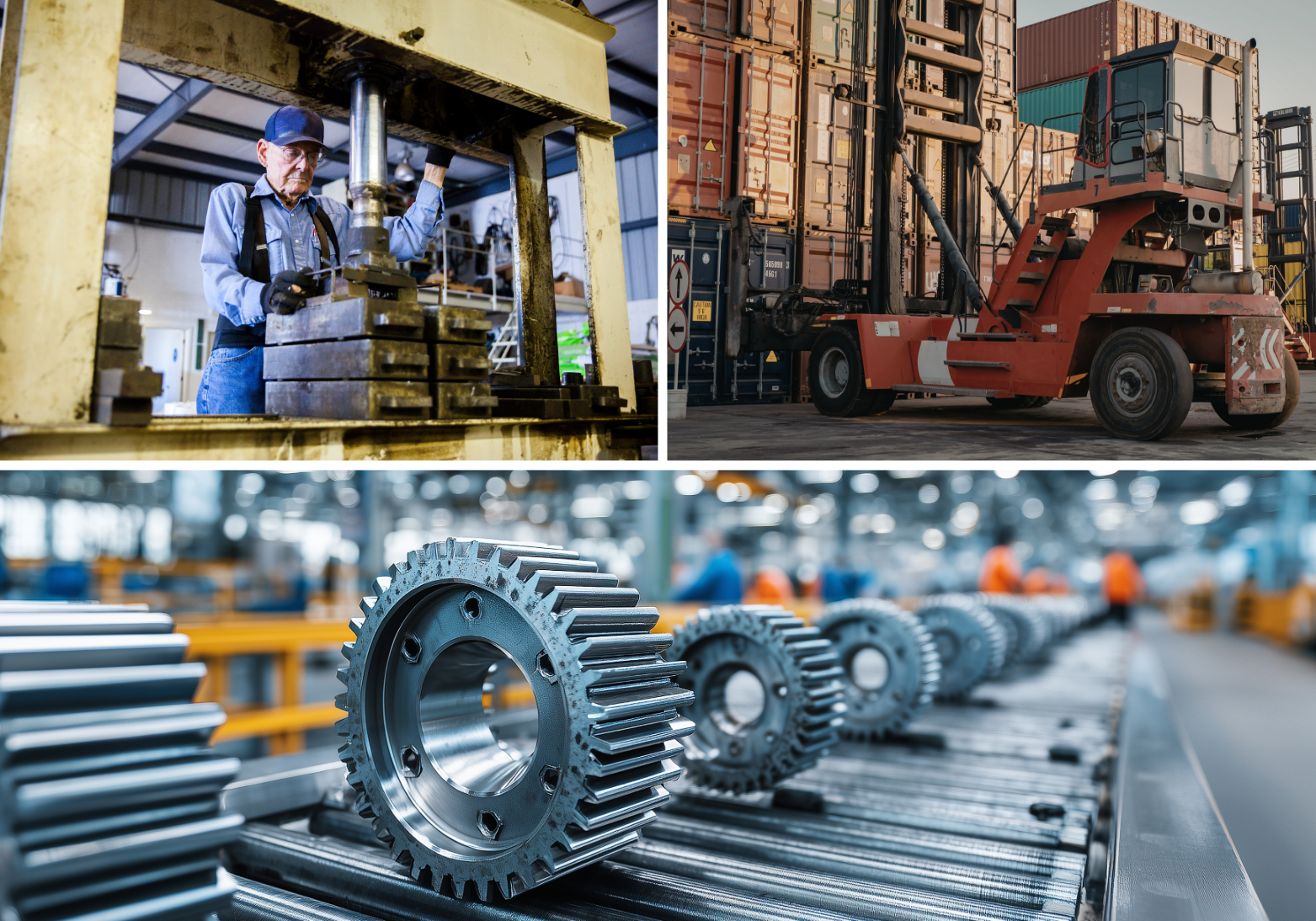
Hydraulic presses operate under extremely high pressure. If oil is insufficient, pressing force may decrease significantly and affect product quality. Oil level sensors help maintain stable oil volume throughout operation.
Forklifts and Lifting Equipment
In forklifts, hydraulic oil determines lifting capacity and system stability. When oil levels become too low, the equipment may suddenly lose pressure, increasing operational safety risks.
Automated Production Lines
Many modern production lines integrate sensors to monitor the entire hydraulic system. Sensor data is transmitted to centralized control systems for real-time equipment condition analysis.
Materials Manufacturing and Coating Industries
Grinding, dispersion, and coating systems often use multiple hydraulic units to control pressure and movement.
In modern production lines, hydraulic oil monitoring helps improve equipment stability and reduce maintenance time. Bühler currently provides various solutions for high-tech materials, coating, and industrial manufacturing industries.
For continuously operating systems, oil level sensors help technicians detect leaks earlier. This is particularly important for production lines requiring high operational stability.
BÜHLER SOLUTIONS FOR STABLE SYSTEM OPERATIONS
In many modern production lines, the stability of hydraulic systems directly impacts product quality and operational efficiency. This is also why many businesses prioritize industrial equipment capable of automation and precise operational control.
Bühler is currently one of the leading international brands in industrial equipment and solutions. Many Bühler systems are applied in coating, high-tech materials, food processing, and industrial manufacturing industries.
For continuously operating production lines, Bühler places special emphasis on real-time equipment condition monitoring. Operating systems are often integrated with sensors to monitor pressure, temperature, and hydraulic oil levels. This helps businesses reduce the risk of unplanned downtime.
In addition, many Bühler devices support energy optimization and reduced maintenance costs. These factors are especially important for factories moving toward smart and sustainable manufacturing models.
In Vietnam, VICHEM is currently an authorized distributor of various Bühler solutions and equipment, supporting businesses in optimizing operational efficiency across multiple industries.
AUTOMATION TRENDS IN HYDRAULIC OIL MONITORING
The industrial sector is rapidly transitioning toward smart factory models. As a result, sensors are playing an increasingly important role. Many systems are now integrated with IoT technology for remote oil monitoring. Data is continuously transmitted to centralized management platforms.
Some businesses also apply AI to analyze oil consumption trends. This enables them to predict leaks or pump failure risks earlier. The trend of condition monitoring is also developing rapidly in the industrial hydraulics sector.
In the future, oil level sensors will not only serve low-level warning functions. They will also become an essential part of intelligent maintenance management systems.
WHAT SHOULD BUSINESSES PREPARE?
Businesses should reassess their entire operating hydraulic systems. This helps identify positions requiring continuous oil monitoring. In addition, sensor selection should match actual production environments. Heavy-duty systems often require equipment with higher durability and vibration resistance.
Businesses should also integrate sensors into periodic maintenance plans. This is an effective way to optimize performance and reduce long-term operating costs.
CONCLUSION
Oil level sensors are becoming essential devices in modern hydraulic systems. These devices help businesses monitor oil volume in real time and minimize many serious operational failures.
As automation continues to develop rapidly, the demand for hydraulic oil management is increasing. Modern factories not only focus on performance but also prioritize operational stability and safety.
In the long term, combining intelligent sensors with predictive maintenance systems will become a major trend in the industrial automation sector.
VICHEM – AUTHORIZED DISTRIBUTOR OF CHEMICAL ADDITIVES FROM MAJOR BRANDS SUCH AS COVESTRO, SINOPEC, BUHLER, … IN VIETNAM
Vichem is an authorized distributor of chemical additive products from major brands such as Covestro, Sinopec, Bühler, and others in the Vietnamese market. We not only provide high-quality products but also deliver after-sales services that meet international standards.
For more information about our products, please contact us through the following channels:
📞 Hotline: 08 1790 1790
📧 Email: contact@vichem.vn
🔎 LinkedIn: Vichem JSC
🌐 Website: www.vichem.vn
📌 Facebook: Vichem JSC