PVC is one of the most widely used plastics in industry. In its original state, PVC is typically rigid and unsuitable for applications requiring flexibility. Therefore, plasticizers are added to the formulation to modify material properties.
If the previous article discussed oil exudation in PVC, this article will delve deeper into the foundation of that issue: the nature of PVC plasticization, its role in manufacturing, and how to make appropriate selections. By understanding the plasticization mechanism correctly, businesses can better control quality and reduce risks during use.
WHAT IS PVC PLASTICIZATION?
PVC plasticization is the process of adding plasticizers to PVC resin to make the material softer, more flexible, and easier to process. Without plasticizers, PVC is typically rigid at room temperature.
In manufacturing, plasticization is not merely the addition of additives. It is a process of modifying the material structure. Plasticizer molecules insert themselves between polymer chains, reducing intermolecular forces. As a result, the material can deform more easily without breaking.
An important point is that plasticizers generally do not form strong chemical bonds with PVC. They exist mainly through physical interactions. This makes PVC softer, but also requires proper formulation design. If the wrong type or dosage is used, the material may lose durability over time.

WHY DOES PVC NEED TO BE PLASTICIZED?
PVC has major advantages in durability, inherent flame resistance, and cost efficiency. However, virgin PVC is highly rigid. This is suitable for pipes, profiles, or rigid construction materials, but not for flexible films, cables, artificial leather, or flexible tubing.
Plasticizers significantly expand PVC applications. According to ECVM, plasticizers provide long-term softness and elasticity to flexible PVC. As a result, the material can be used in flooring, roofing membranes, coated fabrics, and many other technical products.
In other words, plasticization transforms PVC from a rigid material into a flexible one. This is why PVC appears in many industries—from construction, electrical, automotive to medical and consumer goods.
HOW DOES THE PLASTICIZATION MECHANISM WORK?
Reducing intermolecular forces between PVC chains
In PVC, polymer chains tend to pack closely together. The attractive forces between them make the material rigid and less mobile. When plasticizers are added, their molecules penetrate between polymer chains, increasing the spacing.
As a result, PVC chains can move more easily. The material becomes softer and less brittle. This is the fundamental mechanism of plasticization.
Lowering the glass transition temperature (Tg)
Another important role is reducing the glass transition temperature (Tg). When Tg decreases, PVC can remain soft under normal use conditions. Scientific literature indicates that plasticizers soften polymers by dissolving into them and lowering Tg.
This is critical for flexible PVC. If Tg is too high, the material becomes rigid and prone to cracking at low temperatures. When Tg is properly adjusted, the product maintains better flexibility and elasticity.
Improving processability
Plasticization also enhances PVC processing. When the material becomes softer, mixing, calendering, extrusion, or injection molding processes become more stable. Processing temperatures can be optimized, and machine pressure can be reduced.
This brings clear benefits to manufacturers: more stable production, better surface quality, and reduced defect rates when formulations are well controlled.
THE ROLE OF PLASTICIZERS IN PLASTICS MANUFACTURING
Determining product softness
The most visible role of plasticizers is adjusting softness. Increasing plasticizer content generally makes PVC softer, while reducing it makes the material more rigid. Therefore, manufacturers can design multiple product grades from the same PVC base.
For example, electrical cables require moderate flexibility. PVC films require high flexibility. Artificial leather requires specific surface feel and elasticity. Each product requires a different level of plasticization.
Impact on durability and lifespan
Plasticizers not only provide softness but also affect tensile strength, elongation, low-temperature resistance, and aging resistance. If properly selected, products can maintain performance over time.
Conversely, poorly compatible plasticizers may lead to faster degradation. The material may harden, crack, or change surface properties. This relates directly to the previous discussion on oil exudation in PVC, which is a manifestation of plasticizer migration. However, this article focuses on proper selection and formulation design from the beginning.
Influence on thermal stability
PVC is sensitive to heat during processing. Therefore, PVC formulations typically require multiple additive groups. Plasticizers can influence heat transfer, melt viscosity, and processing stability.
A suitable plasticizer system improves processing smoothness and reduces the risk of burning, discoloration, or localized degradation. However, plasticizers cannot fully replace heat stabilizers. These additive groups must be properly coordinated.
COMMON TYPES OF PVC PLASTICIZERS
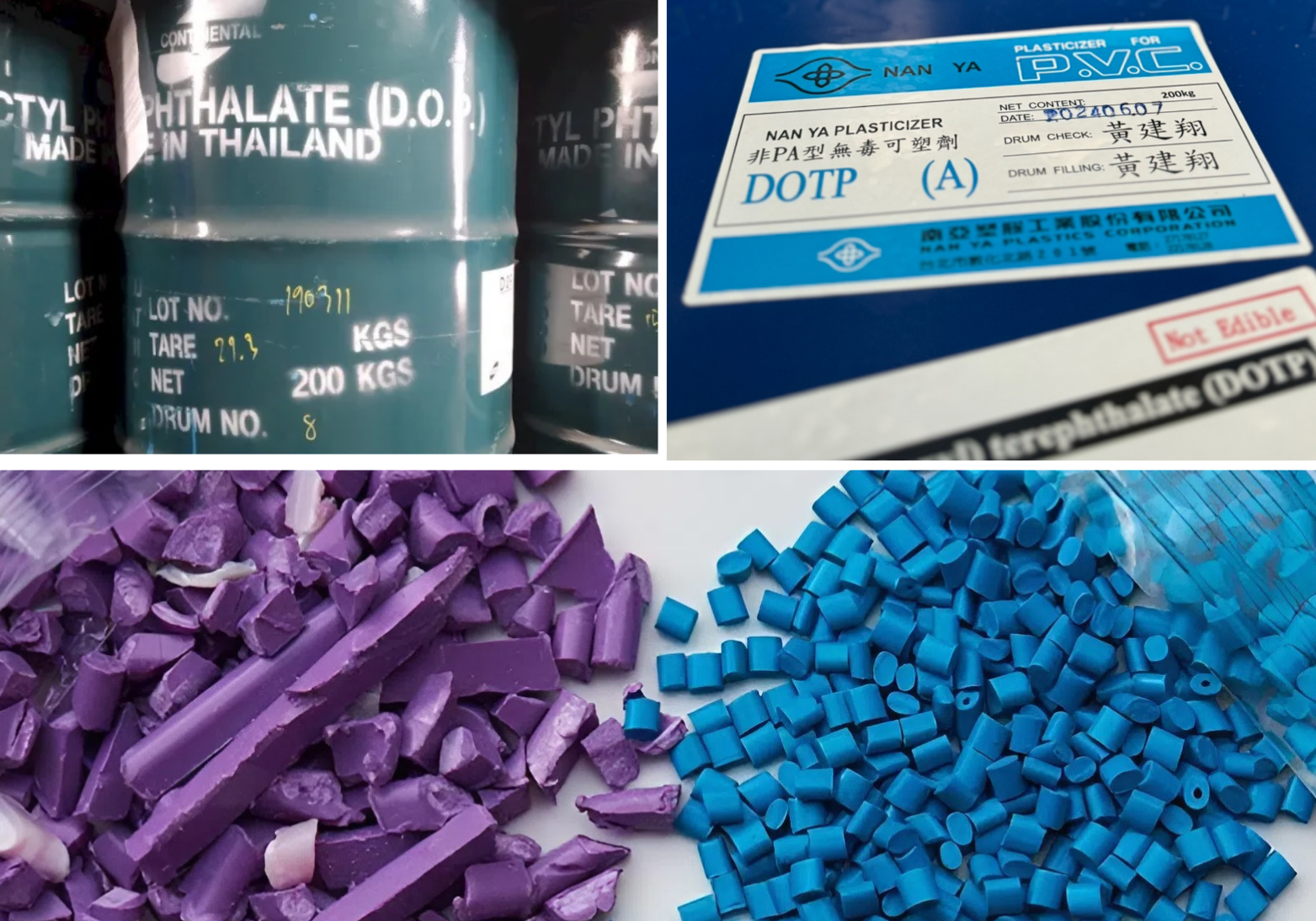
Phthalate plasticizers
Phthalates are widely used in flexible PVC. They offer advantages in plasticizing efficiency, cost, and compatibility. Some types are commonly used in durable industrial products.
However, not all phthalates are the same. Certain low-molecular-weight phthalates are strictly regulated in sensitive applications. Therefore, businesses must clearly distinguish between types and base selection on regulatory requirements and intended use.
Non-phthalate plasticizers
Non-phthalate plasticizers have gained increasing attention in recent years. They are often used when products require higher safety, environmental compliance, or export standards.
The shift away from some ortho-phthalates stems from concerns about toxicity to humans and organisms, as noted in market studies and regulatory requirements.
Non-phthalates include various chemical groups, each with specific advantages—such as better thermal stability, lower odor, or suitability for low-migration applications.
Polymeric plasticizers
Polymeric plasticizers typically have higher molecular weight, resulting in lower volatility and reduced migration under many conditions. They are suitable for products requiring long-term durability or low migration.
The downside is higher cost, and plasticizing efficiency may differ from low-molecular-weight plasticizers. Therefore, formulation testing is necessary before substitution.
HOW TO SELECT A SUITABLE PLASTICIZER
Based on compatibility with PVC
Compatibility is a critical factor. Well-compatible plasticizers disperse uniformly within the PVC matrix, ensuring stable softness and reducing phase separation risks. Poor compatibility may lead to defects such as tacky surfaces, glossiness, or oil exudation, along with reduced durability over time.
Based on application conditions
Indoor and outdoor products have different requirements. Products used at low temperatures differ from those exposed to heat. Therefore, usage conditions must be defined from the beginning.
Outdoor products require resistance to heat, UV, and moisture. Cables require insulation, flame resistance, and thermal stability. Skin-contact materials require low odor, safety, and low migration.
Based on processing requirements
Plasticizers must also be compatible with equipment and processes. If viscosity is unsuitable, mixing may be uneven. Poor absorption rates may prolong production time.
In extrusion, calendering, or coating processes, processing performance is crucial. A theoretically good formulation may still cause defects if it does not match the actual production line.
APPLICATIONS
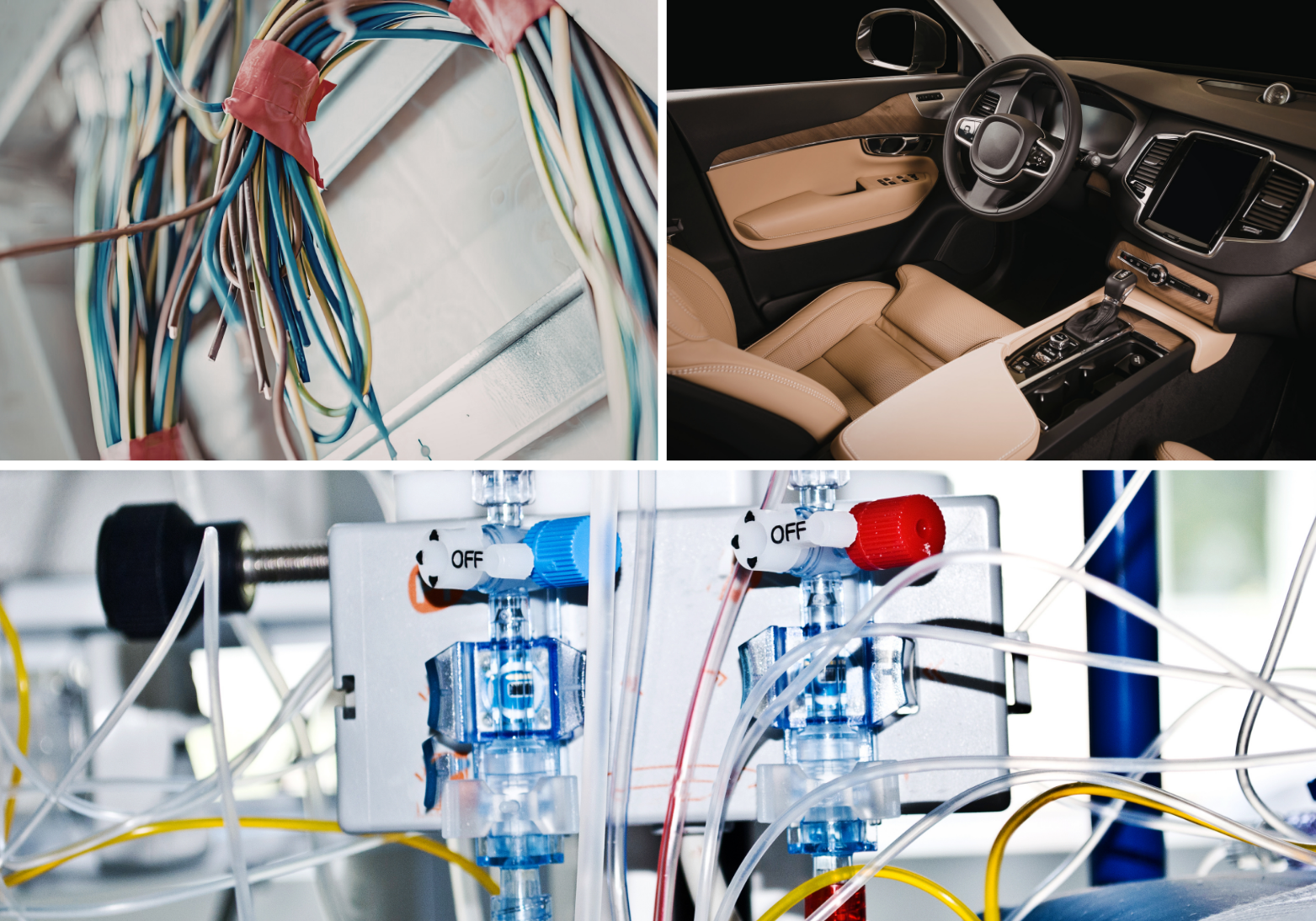
Plasticized PVC is used in a wide range of products. In the electrical industry, it is used in wire and cable insulation. In construction, it is used for vinyl flooring, waterproof membranes, and coatings. In automotive applications, it appears in interior components and synthetic leather materials.
In the medical field, flexible PVC also plays an important role. According to ECVM, plasticizers are added to PVC compounds to provide softness and flexibility for medical devices. Flexibility is critical for tubing used in patient care.
However, each industry has specific requirements. Therefore, manufacturers should not select plasticizers based solely on cost, but must balance performance, safety, durability, and regulatory compliance.
DEVELOPMENT TRENDS
The PVC industry is shifting toward safer and more sustainable plasticization solutions. Non-phthalate, bio-based, and polymeric plasticizers are gaining more attention. The goal is to reduce migration risks, minimize odor, and improve environmental profiles.
Research on effective PVC plasticizers also focuses on lowering Tg, increasing flexibility, and limiting migration. A 2021 review highlights that the primary function of plasticizers is to enhance polymer flexibility and processability by reducing the glass transition temperature.
In the future, businesses will need to focus more on technical data. Certificates of Analysis (CoA), Safety Data Sheets (SDS), migration testing, and aging tests will become essential. This ensures better compliance with B2B requirements and export standards.
CONCLUSION
PVC plasticization is a crucial process in flexible plastics manufacturing. It transforms PVC from a rigid material into a flexible, processable material with broader applications. Plasticizers directly influence softness, durability, processability, and product lifespan.
However, plasticization effectiveness largely depends on material selection and formulation design. Incorrect choices can lead to product defects during use. Therefore, businesses must evaluate plasticizers based on compatibility, application conditions, processing requirements, and safety standards.
VICHEM – AUTHORIZED DISTRIBUTOR OF CHEMICAL ADDITIVES FROM LEADING BRANDS SUCH AS COVESTRO, SINOPEC, BUHLER,… IN VIETNAM
Vichem is an authorized distributor of chemical additives from major brands such as Covestro, Sinopec, Buhler,… in the Vietnamese market. We not only provide high-quality products but also deliver international-standard after-sales services.
For more information, please contact us via:
📞 Hotline: 08 1790 1790
📧 Email: contact@vichem.vn
🔎 LinkedIn: Vichem JSC
🌐 Website: www.vichem.vn
📌 Facebook: Vichem JSC