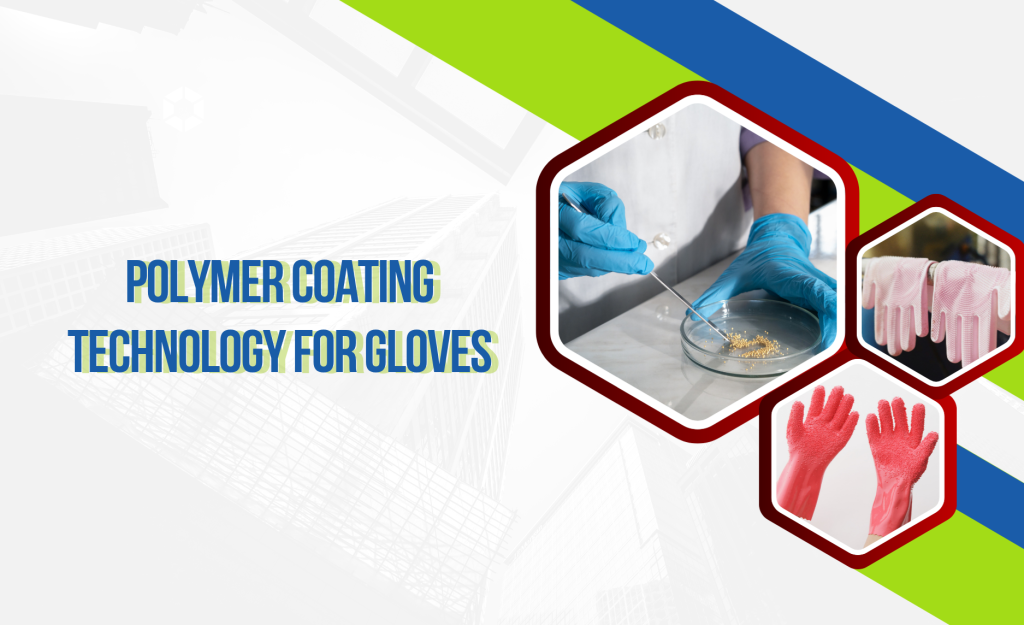
Protective gloves are no longer simple products. Behind the coating lies an entire material technology system. Over the years, the industry has shifted from natural latex to modern polymer coatings. This transition has significantly improved performance.
Today, coating technology does more than provide grip. It determines durability, comfort, and protective capability. This article helps clarify polymer coating technologies and analyzes how to select the right option for each application.
OVERVIEW
Polymer coating technology is the process of forming a thin film on the surface of gloves. This layer is typically created from synthetic materials with high stability.
In manufacturing practice, polymers are used to replace traditional methods such as powder coating. This helps reduce friction when wearing gloves and minimizes skin irritation. At the same time, the coating makes the glove surface smoother and more uniform.
An important point is that the polymer layer does not alter the core structure of the glove. It functions as a protective and performance-enhancing layer. As a result, the product retains the flexibility required during use.

ROLE OF POLYMERS IN GLOVE STRUCTURE
Polymer coatings provide multiple practical benefits during use. First, they improve mechanical durability. Gloves can withstand tensile forces better and are less prone to tearing in harsh working conditions.
In addition, polymers enhance grip. When the surface is properly treated, users can hold objects more securely without applying excessive force. This is especially important in tasks requiring high precision.
Another benefit is anti-stick properties. Gloves do not require powder, thereby reducing the risk of contamination. This is critical in medical and food industries.
Moreover, the coating helps reduce the risk of allergies. This is commonly seen in latex gloves coated with polymer to limit direct contact with natural proteins.
COMMON POLYMERS USED IN GLOVES
Polyurethane (PU)
In glove manufacturing, various polymers are used depending on the application. One of the most common is polyurethane. It offers a thin structure and excellent tactile sensitivity, making it suitable for environments requiring cleanliness and high precision.
PVC
PVC is also widely used in industry. This material provides good water resistance and abrasion resistance. Its relatively low production cost makes it suitable for large-scale applications.
Nitrile
Nitrile is a synthetic polymer with high durability. It is commonly used in environments involving chemical exposure. Additionally, nitrile does not cause allergic reactions like latex, making it increasingly popular.
Latex
In some cases, latex gloves are still used but with an added polymer coating. This improves user experience while maintaining the inherent elasticity of latex.
POLYMER COATING PROCESS IN GLOVE MANUFACTURING
The polymer coating process consists of several continuous steps. First, gloves are formed from base materials such as rubber or textile fibers. This base layer determines the fundamental properties of the product.
Next, the gloves are immersed in a polymer solution. The dipping process ensures that the coating adheres evenly across the entire surface. This is a critical step as it directly affects coating quality.
The following stage is drying. Temperature is carefully controlled so that the polymer solidifies into a stable film. If the temperature is not appropriate, the coating may become defective or uneven.
Finally, the product undergoes surface treatment and quality inspection. Parameters such as thickness, adhesion, and durability must meet standards before shipment.
APPLICATIONS
Polymer-coated gloves are widely used across various industries. In the medical field, they help reduce the risk of cross-contamination while providing comfort during extended use.
In the electronics industry, polyurethane-coated gloves help minimize dust and static electricity, which is essential when handling sensitive components.
In the food industry, polymer coatings ensure hygiene. The gloves are powder-free and reduce contamination risks.
In heavy industry, PVC or nitrile-coated gloves are used for resistance against chemicals and oils, providing better protection for workers in hazardous environments.

DEVELOPMENT TRENDS
The glove industry is undergoing significant changes. One major trend is the reduction of traditional chemical usage, with companies shifting toward more environmentally friendly polymers.
At the same time, new materials are being researched and applied. Some next-generation polymers offer enhanced durability while maintaining thinness, improving performance without compromising tactile feel.
Sustainability is also becoming a key criterion. Products must meet increasingly strict environmental and safety standards, pushing companies to invest in advanced technologies and manufacturing processes.
CONCLUSION
Polymer coating technology for gloves represents an important advancement in manufacturing. It enhances performance, improves safety, and meets the growing demands of the market.
From healthcare to industry, polymer coatings have proven their value. Companies need to fully understand this technology to select appropriate solutions.
In the future, polymer technology will continue to evolve toward greater sustainability and efficiency. Strategic investment in materials and processes will help businesses build long-term competitive advantages.
VICHEM – AUTHORIZED DISTRIBUTOR OF CHEMICAL ADDITIVES FROM MAJOR BRANDS SUCH AS COVESTRO, SINOPEC, BUHLER,… IN VIETNAM
Vichem is an authorized distributor of chemical additives from leading brands such as Covestro, Sinopec, Buhler,… in the Vietnamese market. We not only provide high-quality products but also deliver after-sales services that meet international standards.
For more information about our products, please contact us via the following channels:
📞 Hotline: 08 1790 1790
📧 Email: contact@vichem.vn
🔎 LinkedIn: Vichem JSC
🌐 Website: www.vichem.vn
📌 Facebook: Vichem JSC