PFAS were once considered a major advancement in the modern chemical industry. These substances offer excellent water- and oil-resistant properties. They also provide strong heat resistance and chemical resistance. Thanks to these characteristics, PFAS are used in a wide range of industrial products. They are commonly found in coatings, textiles, semiconductors, and even food packaging.
However, recent studies have shown that PFAS can persist in the environment for a very long time. Many compounds are nearly non-degradable under natural conditions. This is why PFAS are often referred to as “forever chemicals.” Currently, the United States and Europe are tightening PFAS regulations. At the same time, many companies are beginning to seek safer alternatives.
WHAT ARE PFAS?
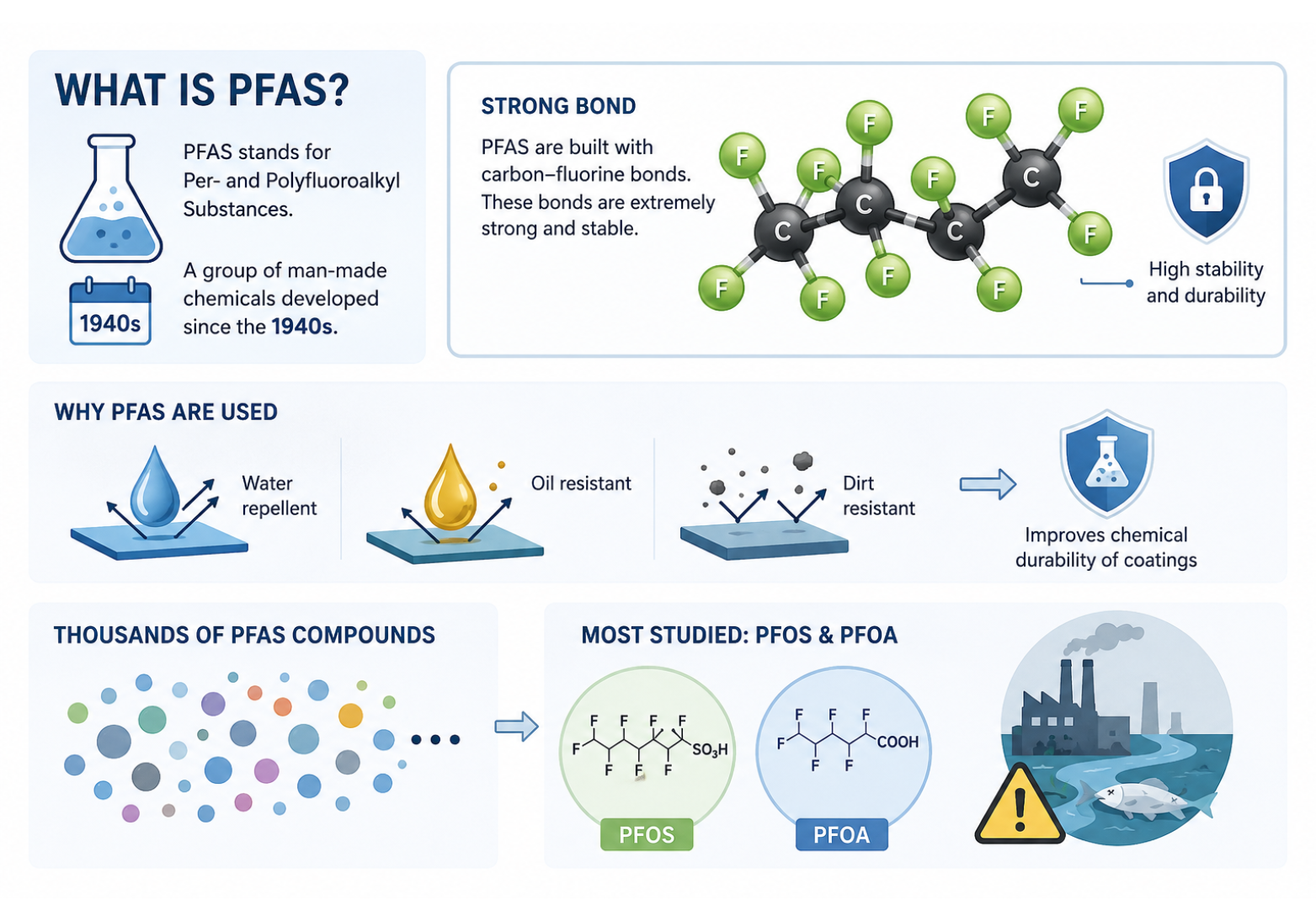
PFAS stands for Per- and Polyfluoroalkyl Substances. They are a group of organofluorine chemicals developed since the 1940s. The unique characteristic of PFAS lies in their carbon–fluorine bonds. These bonds are extremely strong and durable. As a result, PFAS possess many important technical properties.
In the chemical industry, PFAS are commonly used to enhance water resistance. They also help surfaces resist oil and reduce dirt adhesion effectively. Many modern coating systems use PFAS to improve chemical durability.
There are currently thousands of different PFAS compounds. Among them, PFOS and PFOA are the two most extensively studied groups. These compounds are also associated with many environmental controversies.
WHY ARE PFAS CALLED “FOREVER CHEMICALS”?
PFAS are well known for their extremely long persistence in the environment. Normally, many organic compounds degrade over time. They can be broken down by heat, light, or microorganisms.
However, PFAS are different. Their carbon–fluorine bonds are extremely difficult to break. This allows PFAS to remain in soil and water for very long periods. Some studies show that PFAS can travel great distances. They have been detected in groundwater, rivers, lakes, and even marine organisms.
Scientists have also detected PFAS in human blood. This indicates that these substances are already widely dispersed.
HOW DO PFAS CREATE ENVIRONMENTAL RISKS?
Water contamination
This is currently the biggest risk associated with PFAS. During manufacturing processes, PFAS can enter industrial wastewater. They may then spread into surrounding water systems.
What is particularly concerning is that PFAS are very difficult to remove using conventional treatment technologies. Many existing water treatment systems cannot completely eliminate these substances. In the United States, PFAS have already been detected in drinking water supplies in many regions. This has prompted the EPA to introduce new regulatory limits.
Accumulation in ecosystems
PFAS do not only remain in water. They also accumulate in living organisms and food chains. Some studies have detected PFAS in fish and seabirds. Many samples have been recorded far away from emission sources. This demonstrates the wide-ranging dispersal capability of PFAS.
Over long periods, PFAS accumulation may affect natural ecosystems. This is why many environmental organizations are closely monitoring these substances.
Difficult waste treatment
Many PFAS compounds cannot be destroyed using conventional treatment methods. Some current technologies require extremely high temperatures to treat PFAS. This significantly increases operational costs.
In addition, companies must invest in stricter environmental control systems. Rising cost pressures are driving many businesses to reduce PFAS usage in manufacturing.
HOW DO PFAS AFFECT HUMAN HEALTH?
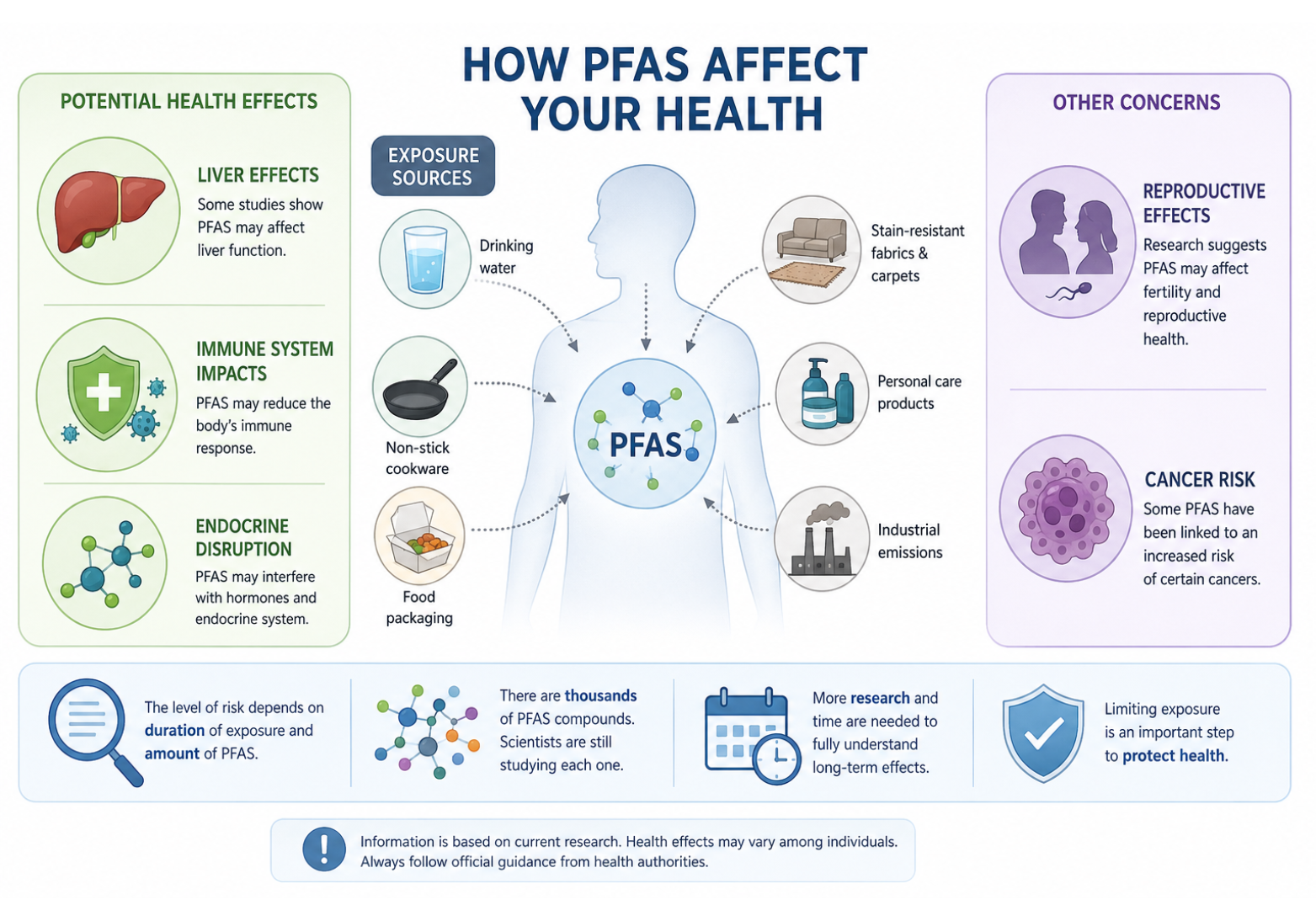
Over the years, PFAS have become a major research topic in the healthcare sector. According to the EPA, exposure to certain PFAS may be associated with various health risks. Some studies suggest that PFAS may affect the liver and immune system. Certain cases have also been linked to endocrine disruption.
In addition, scientists are studying the potential impacts of PFAS on fertility and cancer risk. However, the severity of these effects depends on exposure duration and concentration levels. Due to the large number of PFAS compounds, scientists still need more time to fully evaluate each substance.
INDUSTRIES CURRENTLY USING PFAS
Coatings and paints industry
PFAS help coatings achieve better water and oil resistance. Some coating systems also use PFAS to improve chemical durability. This is especially important in harsh industrial environments. In the paint industry, PFAS also help reduce dirt adhesion on coated surfaces.
Semiconductor industry
The semiconductor industry still uses PFAS in many highly technical processes. Certain applications require materials with extremely high thermal and chemical stability. This is why replacing PFAS in semiconductors remains challenging.
Textile and packaging industry
PFAS are used to create water-resistant properties for fabrics and packaging paper. However, this application sector is also facing the strictest regulations today. Many major brands have already started requiring PFAS-free materials.

PFAS REPLACEMENT TRENDS IN THE CHEMICAL INDUSTRY
Replacing PFAS is not simple because these chemicals offer many outstanding properties. Their heat resistance, oil resistance, water repellency, and chemical durability are difficult to replicate with alternative compounds.
Many companies are currently investing in new fluorine-free materials. These solutions aim to provide water resistance and anti-fouling performance without fluorinated compounds. In coatings, many new silicone- and polymer-based systems are being rapidly developed. Some nanotechnology solutions are also being researched to replace PFAS in surface treatment applications.
Besides changing raw materials, many companies are also improving coating designs. The goal is to enhance surface performance without relying heavily on PFAS. This trend helps businesses reduce pressure from new environmental regulations.
In addition to material replacement, many factories are investing in more advanced PFAS treatment technologies. Some systems use activated carbon or specialized filtration membranes. Certain emerging technologies even use plasma to treat PFAS. However, investment costs remain relatively high. This continues to be a major challenge for many chemical companies.
WHAT SHOULD CHEMICAL COMPANIES PREPARE FOR?
PFAS regulations are evolving rapidly under the influence of global policies. Companies need to proactively review their raw materials and supply chains. This is particularly important for the coatings and specialty chemicals industries.
In addition, businesses should closely monitor updates from the EPA and REACH regulations. The search for alternative materials should begin as early as possible. This helps reduce risks when new regulations take effect.
In the long term, environmentally friendly products will become a key competitive advantage in the chemical industry.
CONCLUSION
PFAS once played an important role in the modern chemical industry. These substances helped improve the performance of many industrial products. However, their long-term persistence is turning PFAS into a major global environmental issue.
Many countries have now tightened PFAS regulations in manufacturing and consumer products. At the same time, the chemical industry is rapidly shifting toward safer fluorine-free solutions.
In the future, balancing technical performance and sustainability will become increasingly important. This will also be a long-term development trend for the modern chemical industry.
VICHEM – AUTHORIZED DISTRIBUTOR OF CHEMICAL ADDITIVES FROM MAJOR BRANDS SUCH AS COVESTRO, SINOPEC, BUHLER, AND MORE IN VIETNAM
Vichem is an authorized distributor of chemical additive products from leading brands such as Covestro, Sinopec, Buhler, and others in the Vietnamese market. We not only provide high-quality products but also deliver after-sales services that meet international standards.
For more information about our products, please contact us through the following channels:
📞 Hotline: 08 1790 1790
📧 Email: contact@vichem.vn
🔎 LinkedIn: Vichem JSC
🌐 Website: www.vichem.vn
📌 Facebook: Vichem JSC