The beer industry is continuously evolving with increasing demands for quality and output. To meet these requirements, breweries have adopted modern production processes with a high level of automation. Each stage is strictly controlled to ensure product consistency. Understanding this process not only helps optimize operations but also improves production efficiency. The following article will help you clearly understand each step in the modern beer production process.
DEFINITION
The beer production process is a sequence of stages from raw materials to finished products. Each step has its own role and directly affects the quality of the beer.
In modern systems, this process is highly automated. Control systems help minimize errors and ensure precision. As a result, the final product remains consistent across production batches.
STAGES IN THE BEER PRODUCTION CHAIN
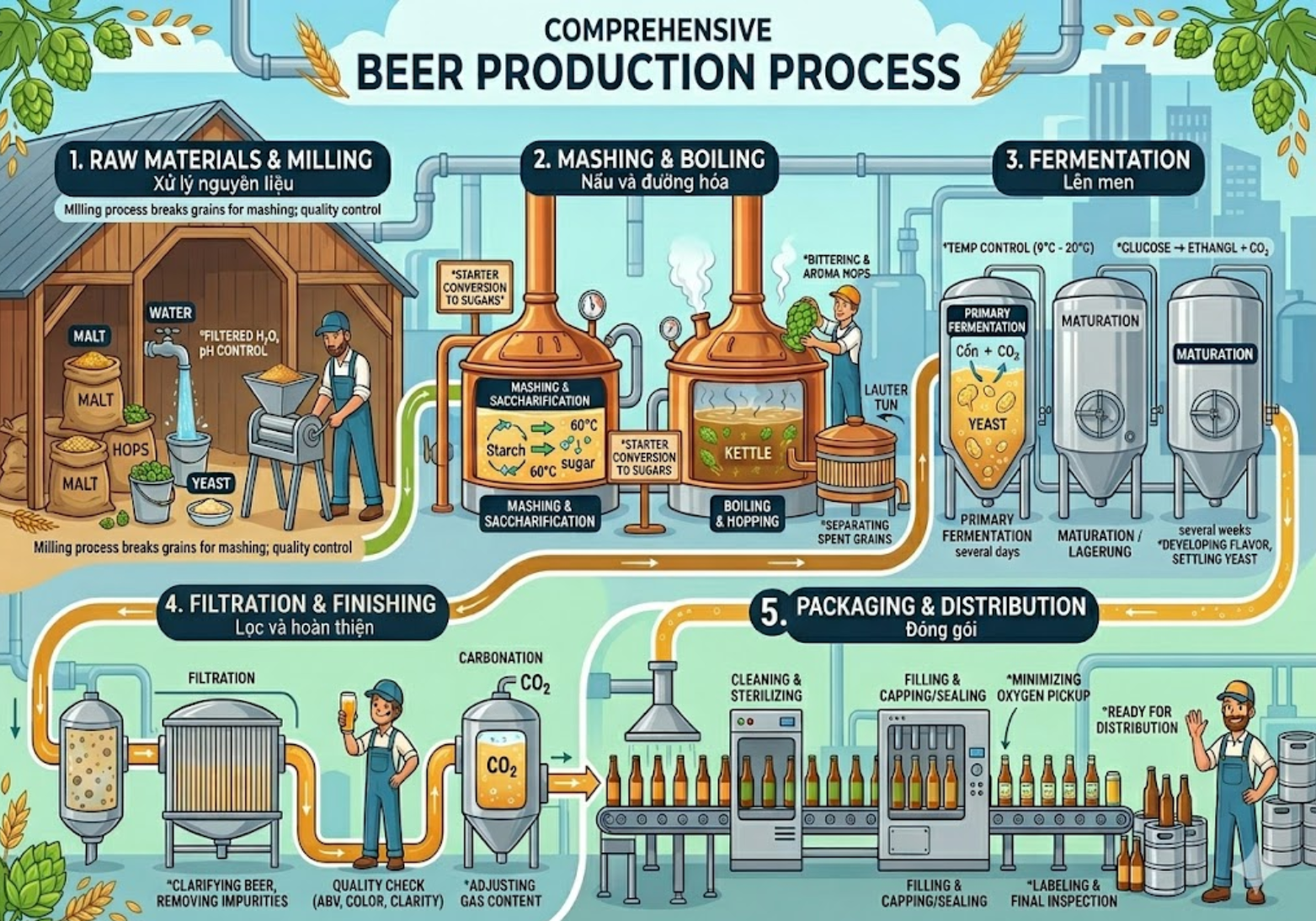
Raw Material Processing
The beer production process begins with raw material preparation. Malt is the most important ingredient. In addition, hops, water, and yeast are also essential. Each raw material must be strictly quality-controlled before entering production.
Malt is typically milled before mashing. The goal is to break the grain structure while preserving the husk layer. This facilitates the filtration process later on. If the malt is ground too finely, wort filtration becomes difficult. Conversely, if it is too coarse, extraction efficiency decreases.
In addition to milling, water must also be carefully treated. The mineral composition of water directly affects the flavor of beer. Therefore, many breweries use filtration systems and pH adjustment to achieve the desired standards.
Mashing and Saccharification
After milling, the raw materials are transferred to the mash tun for saccharification. At this stage, the starch in the malt is converted into fermentable sugars by enzymes. This step determines the amount of sugar available for fermentation.
Saccharification occurs at different temperature levels. Each temperature activates a specific enzyme. For example, amylase enzymes function optimally at moderate temperatures and help produce fermentable sugars.
Controlling temperature and time is critical. If the temperature is not appropriate, enzymes lose activity, reducing conversion efficiency.
After saccharification, the mixture is filtered to separate the spent grains. The liquid obtained is called wort. The wort is then boiled with hops. This process creates the characteristic bitterness and aroma of beer. It also sterilizes the wort before fermentation.
Fermentation
After boiling, the wort is rapidly cooled to an appropriate temperature. Yeast is then added to initiate fermentation. This is the stage where sugars are converted into alcohol and CO₂.
Fermentation typically lasts from several days to several weeks, depending on the type of beer and yeast strain used. Throughout this process, temperature must be strictly controlled. If the temperature is too high, yeast activity increases excessively and may produce undesirable flavors.
In addition to temperature, pressure and environmental conditions must also be controlled. This ensures stable yeast performance and consistent product quality.
After primary fermentation, the beer usually undergoes a maturation phase. This period allows the flavor to fully develop while undesirable compounds gradually decrease.
Filtration and Finishing
After fermentation, the beer contains residues such as yeast and proteins. Therefore, filtration is required to clarify the product.
Various filtration methods can be used. Some breweries use mechanical filters, while others use filtration media such as diatomaceous earth. The goal is to remove impurities while preserving the natural flavor.
After filtration, the beer may be further adjusted in terms of color and flavor. Some products are also carbonated with CO₂ to achieve the desired level of carbonation.
The finishing stage also includes quality control. Parameters such as alcohol content, color, and clarity must meet standards. This ensures the product is ready for the market.
Packaging
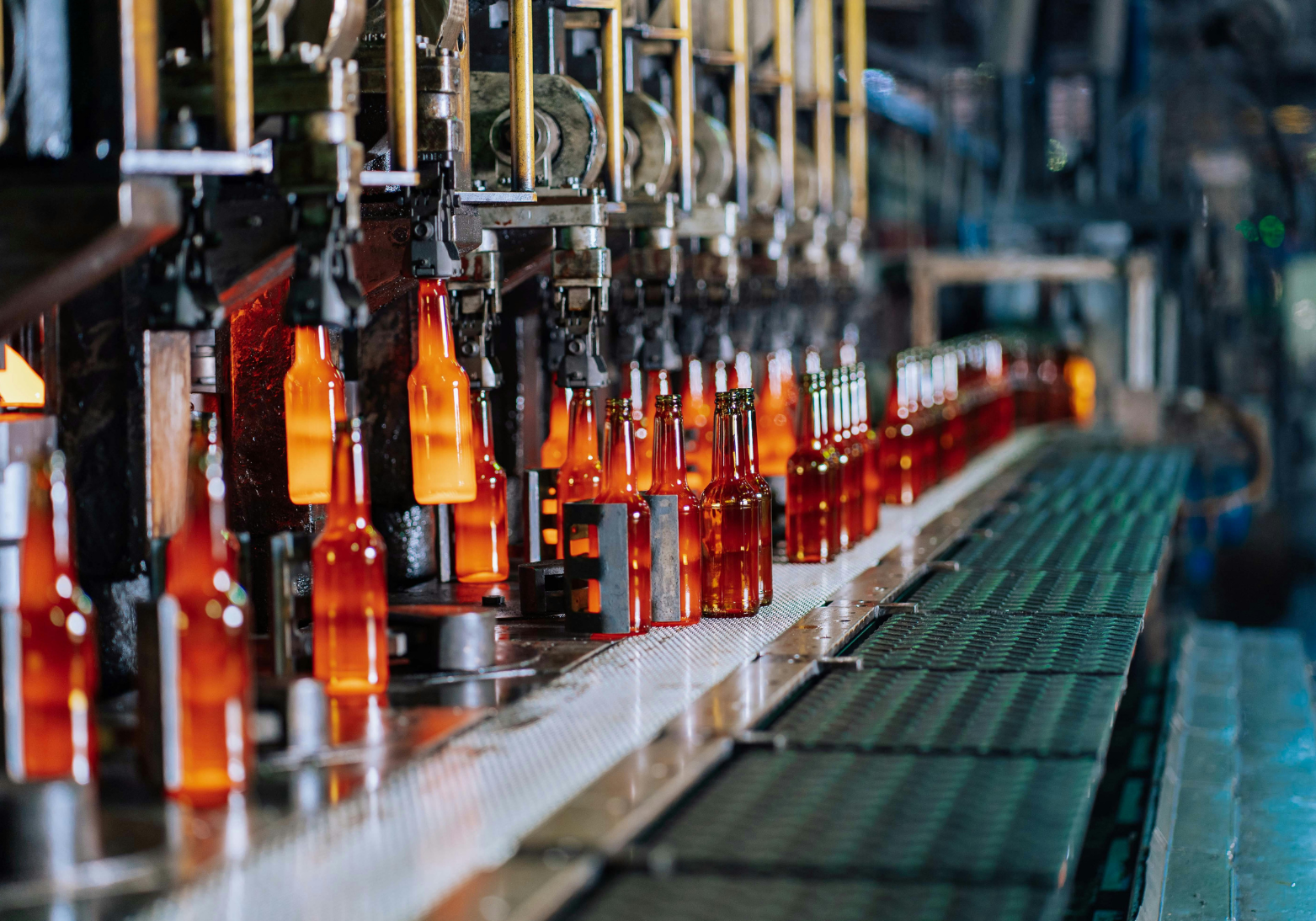
Packaging is the final stage in the beer production chain. The finished beer is filled into bottles, cans, or kegs. This process must comply with strict hygiene conditions.
Before filling, packaging materials must be cleaned and sterilized to prevent contamination and extend shelf life.
During filling, oxygen levels must be kept low. Oxygen can degrade beer quality and affect flavor. Therefore, many systems use CO₂ to push beer into the packaging.
After sealing, products are labeled and undergo final inspection. Information such as production date and expiration date must be clearly printed.
DOMESTIC AND INTERNATIONAL BEER MARKET
Vietnam’s beer market is considered one of the most dynamic in Southeast Asia. Consumption volume is large and has remained stable over many years. A high proportion of young consumers with strong purchasing behavior creates significant demand for the industry.
In addition, cultural consumption habits play an important role. Beer is commonly present at social gatherings, festivals, and networking events. This helps maintain stable long-term demand.
Globally, the beer industry is undergoing significant changes. The trend toward personalized consumption experiences is becoming more evident. Consumers are not only drinking beer but also seeking new and unique flavors. Craft beer is growing strongly in Europe and North America. Small producers are creating innovative products, increasing competition with traditional brands.
OPPORTUNITIES
The beer industry still offers many growth opportunities thanks to stable demand and increasing quality expectations. In markets such as Vietnam, a young population and rising incomes help expand consumption. In addition, the emergence of premium beer, craft beer, and low-alcohol beer creates further growth potential. The application of modern technology also enables businesses to optimize production and enhance competitiveness.
CHALLENGES
However, the beer industry also faces many challenges. Regulations on alcoholic beverages are becoming stricter, affecting consumption levels. Health-conscious trends are leading some consumers to reduce beer intake. At the same time, competition among brands is intensifying, requiring continuous innovation for survival and growth.
BUHLER BEER PRODUCTION TECHNOLOGY
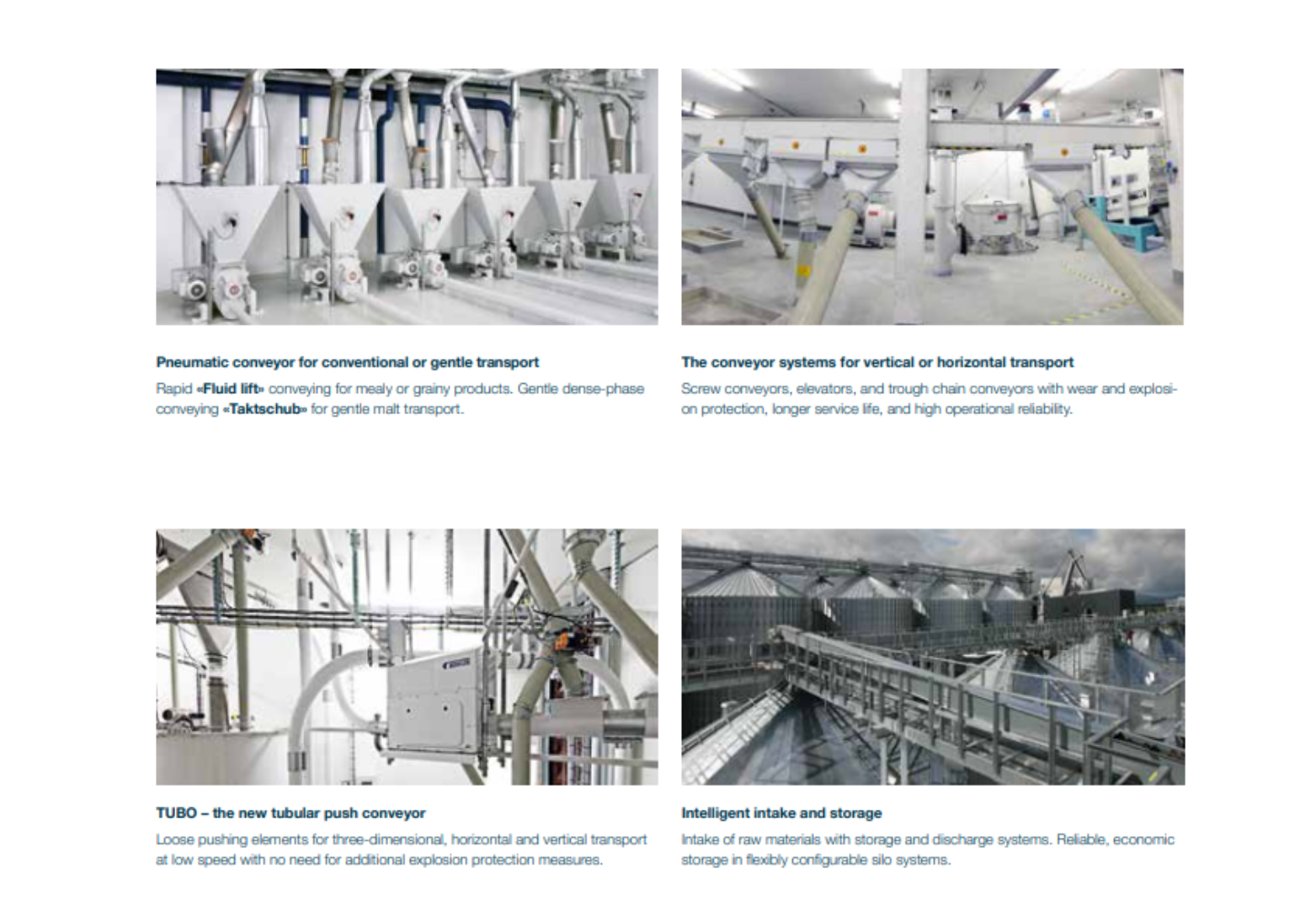
Bühler’s equipment chain primarily focuses on the raw material processing stage. The system includes equipment for conveying, storage, and cleaning of malt to remove impurities such as stones, dust, and foreign particles. This ensures that raw materials meet quality requirements before entering production.
In addition, Bühler provides advanced milling systems such as roller mills and hammer mills. These machines create an optimal grain structure, improving extraction efficiency and shortening wort filtration time.
A key highlight is the integration of weighing, dosing, and dust removal systems within a single production line. Sensors and digital solutions also enable quality monitoring and process automation. As a result, breweries can operate more stably, reduce errors, and improve overall efficiency.
Overall, this equipment chain plays a foundational role in modern beer production. It helps optimize raw material preparation and enhances final product quality.
CONCLUSION
The beer market, both domestically and internationally, still holds strong growth potential. However, opportunities always come with challenges. Businesses must quickly adapt to market changes.
Investing in technology and product innovation will be the key to success. By effectively combining strategy and technology, companies can achieve sustainable growth in the modern beer industry.
VICHEM – AUTHORIZED DISTRIBUTOR OF BUHLER INDUSTRIAL AND AGRICULTURAL MACHINERY IN VIETNAM
Vichem is an authorized distributor of Bühler industrial and agricultural machinery products in the Vietnamese market. We not only provide high-quality products but also deliver after-sales services that meet international standards.
For more information, please contact us via the following channels:
📞 Hotline: 08 1790 1790
📧 Email: contact@vichem.vn
🔎 LinkedIn: Vichem JSC
🌐 Website: www.vichem.vn
📌 Facebook: Vichem JSC