In the construction paint industry, primers play an important role in protecting surfaces and enhancing adhesion for the topcoat. However, if alkali resistance is insufficient, the coating may quickly peel, chalk, or discolor after a short period of use.
Alkalization commonly occurs on newly applied cement or concrete surfaces. This is one of the major factors affecting the durability of paint films in many residential and industrial projects.
WHAT IS ALKALI RESISTANCE IN PRIMERS?
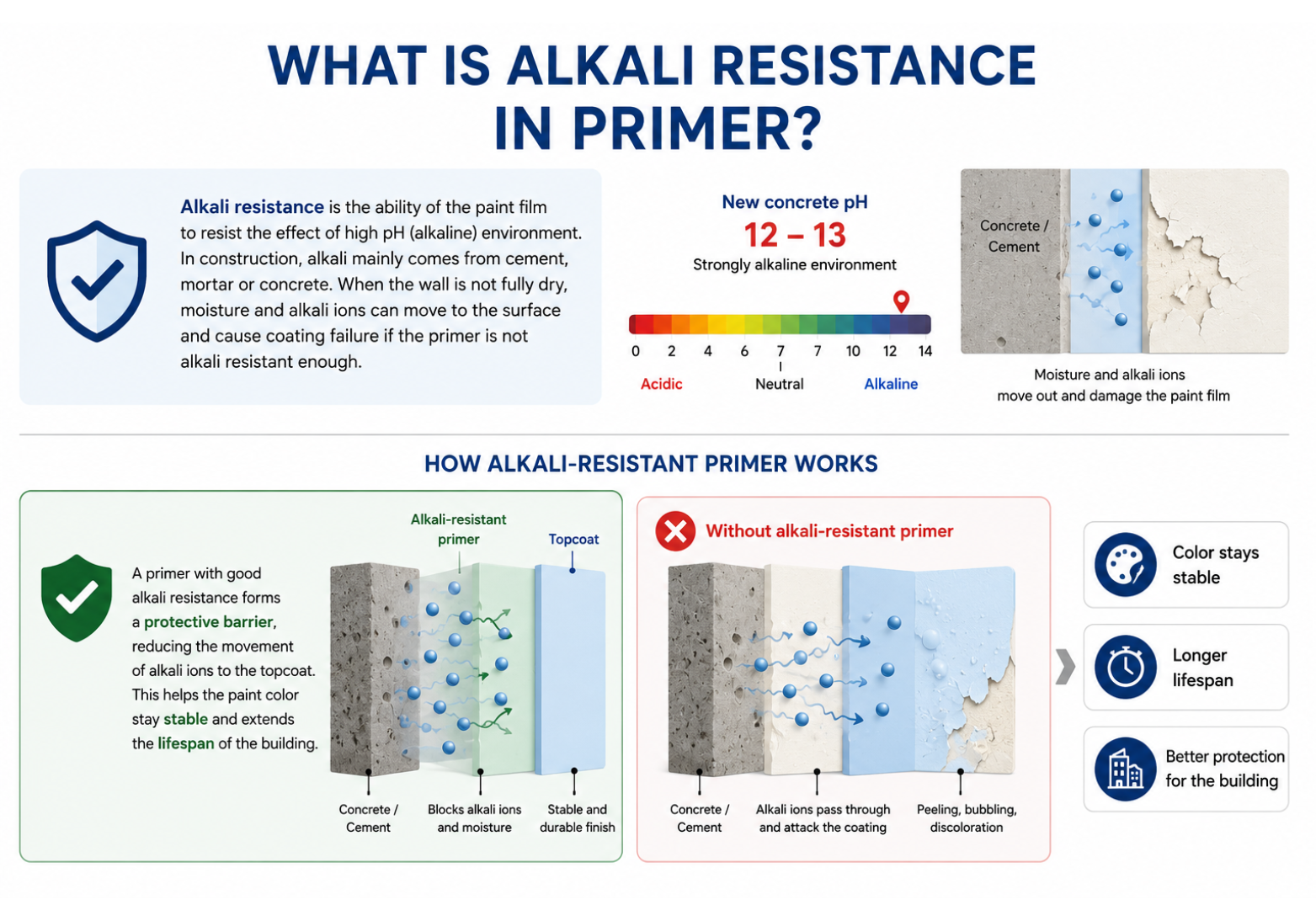
Alkali resistance refers to the ability of a paint film to withstand the effects of high-pH environments. In construction, alkali mainly originates from cement, mortar, or concrete. When newly constructed walls are not fully dry, moisture and alkaline ions can migrate from inside the substrate to the surface. If the primer does not provide sufficient protection, the coating can deteriorate easily.
According to many international coating references, the pH level of fresh concrete can range from 12 to 13. This creates a highly alkaline environment for architectural coatings.
A primer with good alkali resistance helps minimize the migration of alkaline ions into the topcoat. This helps maintain paint color stability and extends the lifespan of the structure.
WHY ARE PRIMERS EASILY AFFECTED BY ALKALI?
Moisture in Walls Accelerates the Alkalization Process
New concrete or cement substrates usually contain a significant amount of residual moisture. As water moves through the capillaries within the material, alkaline ions are carried to the wall surface. This process often occurs silently during the first several months after construction. If the primer lacks sufficient chemical durability, the paint film may lose cohesion and protective performance.
According to PPG Protective Coatings, moisture combined with alkali is one of the most common causes of blistering and coating delamination on cement surfaces.
Some Resin Types Have Poor Alkali Resistance
Not all resin systems are suitable for high-pH environments. Some low-cost resin systems may undergo hydrolysis or bond degradation after prolonged exposure to alkali.
This can cause the paint film to soften quickly or lose adhesion. This is why many paint manufacturers are shifting toward acrylic or styrene-acrylic systems with better alkali resistance.
Surface Quality Has a Major Impact
If the wall is still too damp or has not been properly cured, the level of free alkali will be significantly higher. In such cases, even high-quality coatings may fail if application procedures are not performed correctly.
SIGNS OF POOR ALKALI-RESISTANT PRIMERS
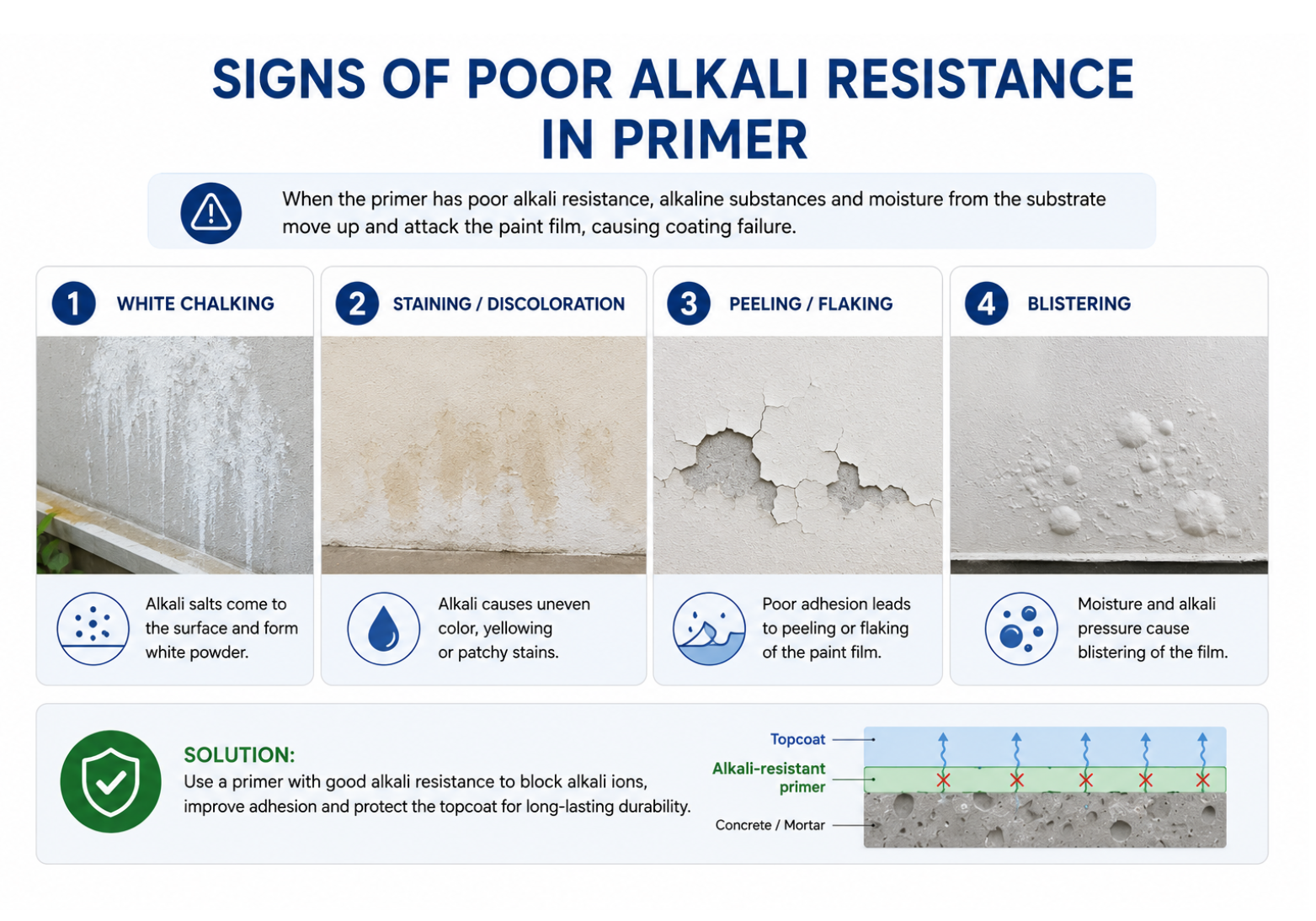
When the primer lacks sufficient alkali resistance, the coated surface often shows various signs of deterioration after a period of use. The most common issues include white powdering or discoloration on the wall surface. These are caused by alkaline salts migrating into the outer coating layer.
In addition, the paint film may peel in patches or lose adhesion. In some cases, blistering may occur when excessive moisture is trapped inside the wall. This is one of the most common issues associated with alkali and moisture in construction materials.
HOW TO IMPROVE ALKALI RESISTANCE FOR PRIMERS
Select Acrylic Resins with High Alkali Resistance
Resin is the most important factor determining the alkali resistance of primers. Currently, waterborne acrylic resins are widely used in many architectural primer products.
Acrylic resins offer excellent chemical stability in high-pH environments. In addition, these resin systems help maintain stable adhesion and elasticity of the paint film.
Use Suitable Pigments and Extenders
Certain pigments can improve the alkali resistance of primer coatings. High-quality titanium dioxide generally provides better stability in high-pH environments.
In addition, extenders such as calcium carbonate or talc must also be carefully controlled in terms of purity and chemical stability. If unsuitable fillers are selected, the coating may lose durability and become more vulnerable to moisture or alkaline ions.
Improve the Water Resistance of the Paint Film
Alkali usually migrates together with water inside construction materials. Therefore, reducing water permeability is also an important solution for improving alkali resistance. Many coating manufacturers now incorporate silicone additives or hydrophobic additives to reduce water absorption in primers.
Optimize Particle Size and Coating Density
The denser the paint film structure, the better its ability to block alkaline ions. This is why many modern primer formulations focus on improving particle packing and coating density.
If the coating film contains too many pores, moisture and alkali can easily penetrate through the film and reduce the durability of the topcoat.
Add Additives that Enhance Alkali Resistance
Some specialty additives are currently used to improve water resistance and enhance paint film stability. Suitable dispersants, defoamers, and wetting agents also help stabilize coatings during the film-forming process.
CURRENT TRENDS IN ALKALI-RESISTANT PRIMER DEVELOPMENT
The coating industry is rapidly shifting toward low-VOC, high-durability waterborne primer systems. Many chemical manufacturers are developing new acrylic binders with improved alkali resistance while still maintaining low odor and easy application properties.
Today, demand for durable and moisture-resistant architectural coatings is growing rapidly across many Asian markets. In addition, current trends also prioritize primer systems with anti-efflorescence properties and enhanced long-term durability for topcoat systems.
CONCLUSION
Alkali resistance is an extremely important factor for primers in the modern construction industry. If the coating lacks sufficient chemical durability, the paint film can quickly deteriorate due to the effects of alkali and moisture within walls.
Selecting the right acrylic resin, pigments, and additives can significantly improve the alkali resistance performance of primers. In addition, controlling substrate moisture and optimizing paint film structure also play important roles in extending coating lifespan.
As the market increasingly prioritizes low-VOC and high-durability coating systems, modern alkali-resistant primer solutions will continue to play a key role in the architectural coatings industry.
VICHEM – AUTHORIZED DISTRIBUTOR OF CHEMICAL ADDITIVES FROM LEADING BRANDS SUCH AS COVESTRO, SINOPEC, BUHLER,… IN VIETNAM
Vichem is an authorized distributor of chemical additives from leading brands such as Covestro, Sinopec, Buhler,… in the Vietnamese market. We not only provide high-quality products but also deliver after-sales services that meet international standards.
For more information about our products, please contact us through the following channels:
📞 Hotline: 08 1790 1790
📧 Email: contact@vichem.vn
🔎 LinkedIn: Vichem JSC
🌐 Website: www.vichem.vn
📌 Facebook: Vichem JSC