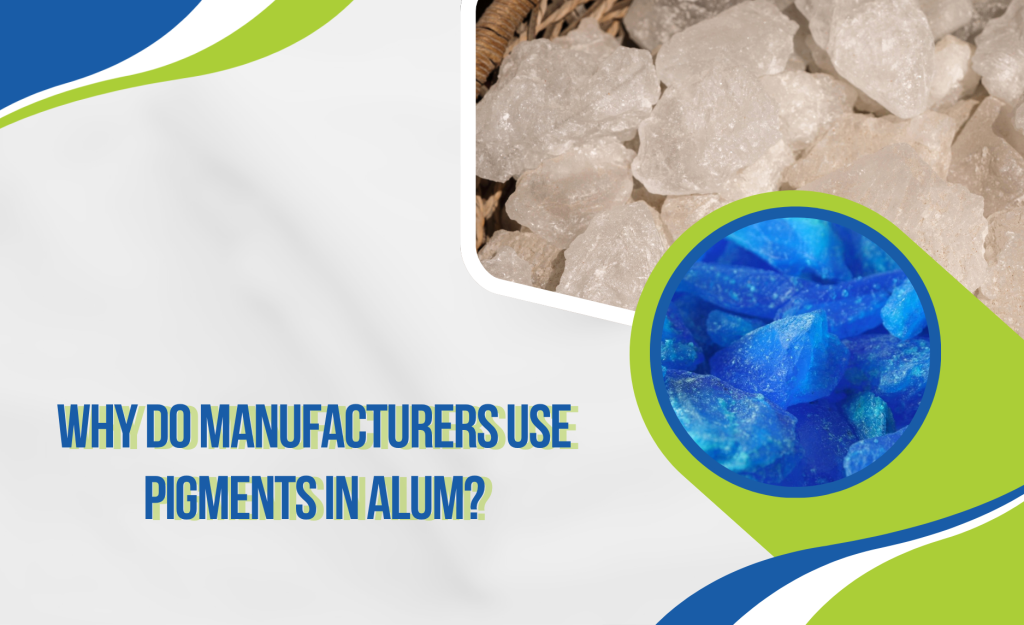
Alum is a familiar chemical used across a wide range of industries. This compound is commonly found in water treatment, textile dyeing, and paper manufacturing. In addition, alum is utilized in many other chemical processes.
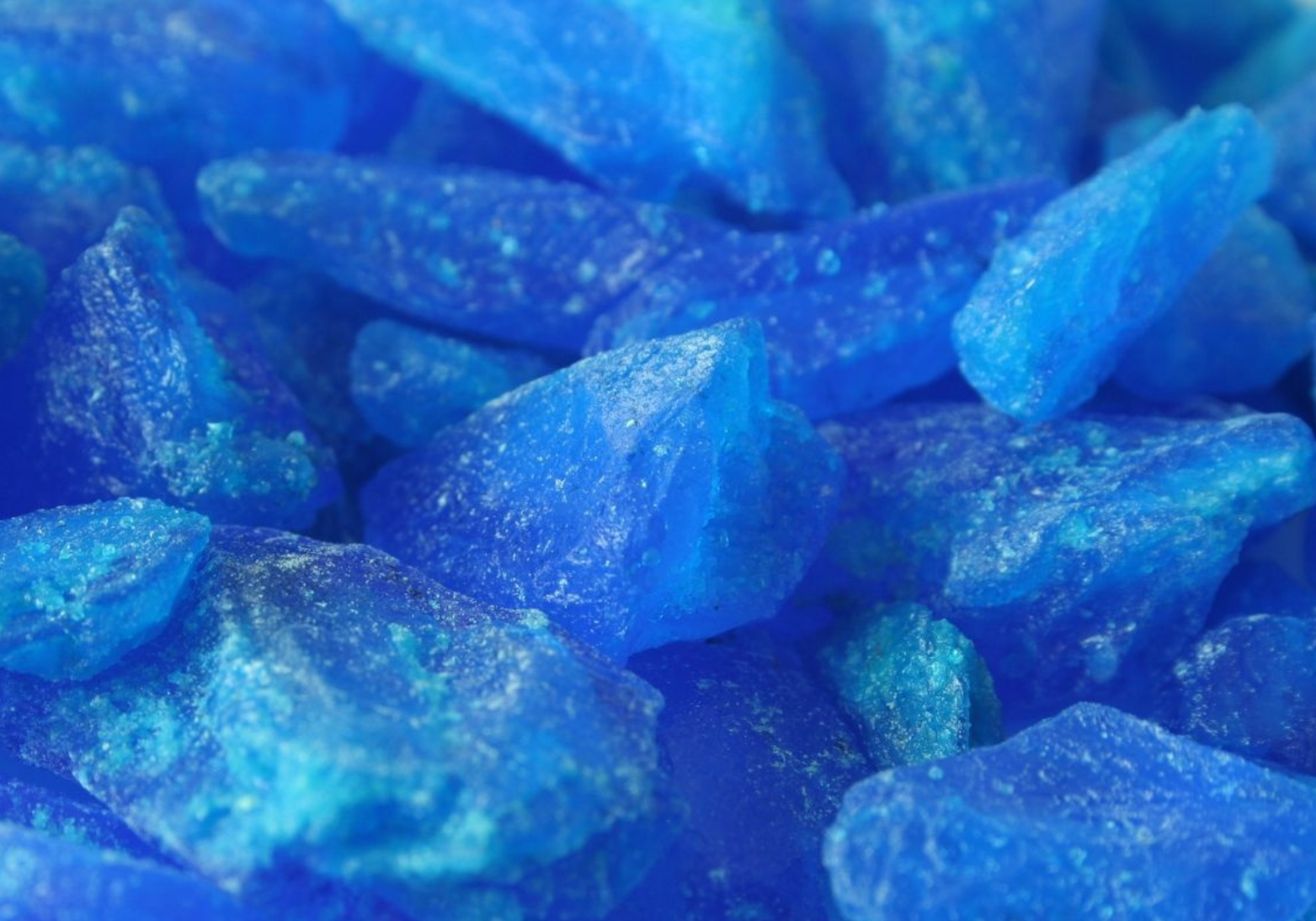
When observing the market, many people notice that some types of alum come in different colors. Some products are white, while others appear blue, yellow, or light pink.
In practice, adding color pigments offers several benefits for businesses. This solution makes product identification easier and also supports more effective management and operational control.
WHAT IS ALUM?
Alum is the common name for a group of compounds containing aluminum and sulfate. The most widely used types are aluminum sulfate and double sulfate salts. This compound has long been applied in daily life. In particular, the water treatment industry uses alum in very large quantities.
When dissolved in water, alum forms coagulating particles. These particles help aggregate small impurities into larger flocs. As a result, sedimentation and filtration processes become more efficient. Besides water treatment, this material is also used in the paper industry. Furthermore, many textile dyeing companies use alum to assist in color fixation.
WHAT ARE COLOR PIGMENTS IN ALUM?
Color pigments are coloring agents added at appropriate concentrations. They may consist of inorganic pigments or organic pigments. The primary purpose of adding color is to differentiate product lines. This allows users to identify products more quickly during use.
Typically, the amount of coloring agent is strictly controlled. Therefore, it does not significantly alter the performance of alum. In addition, manufacturers often select highly durable pigments. This helps maintain color stability throughout the storage period.
WHAT DO DIFFERENT ALUM COLORS MEAN?
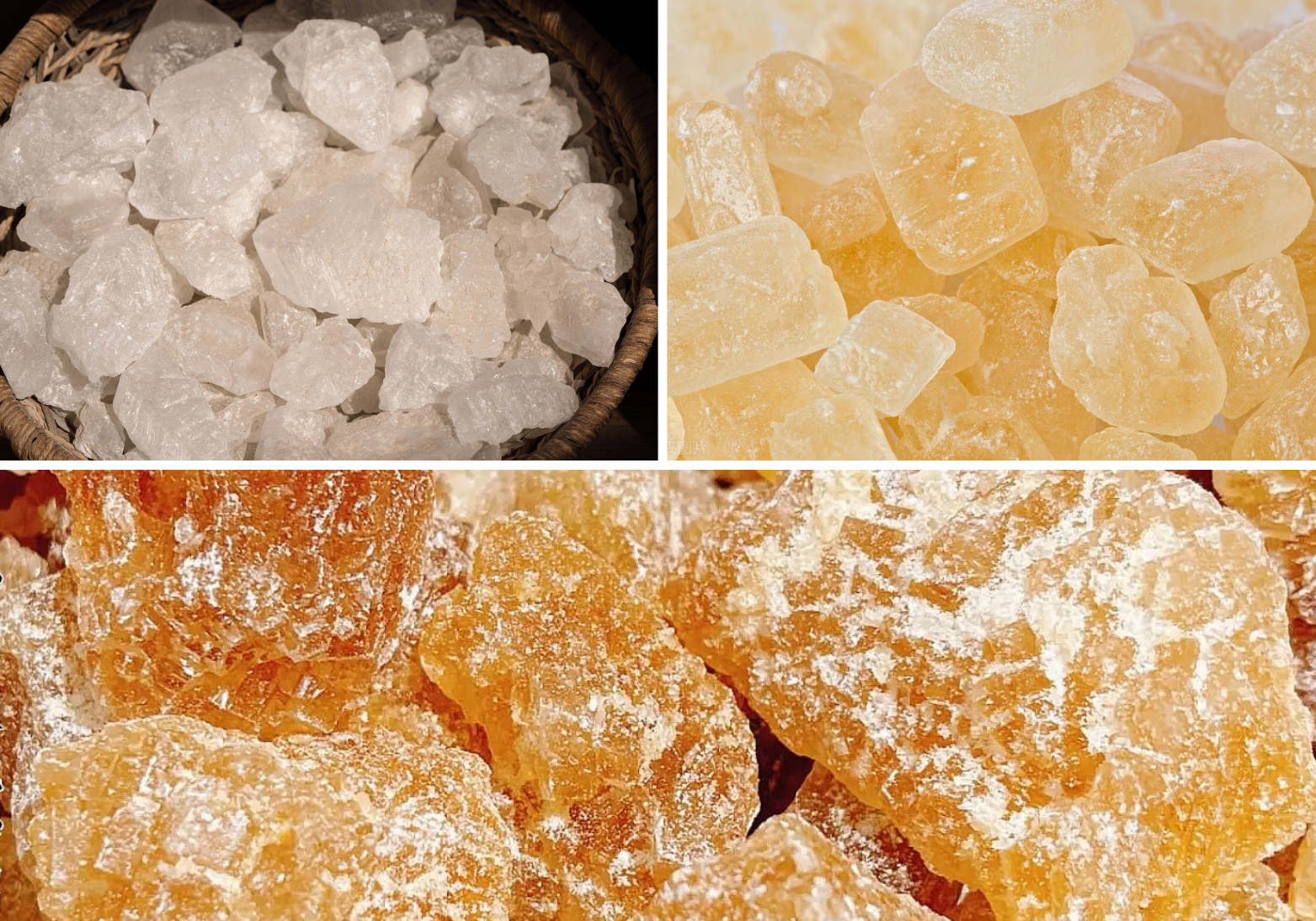
White or Colorless Alum
This is the most common form available on the market. White color is typically found in products with high purity levels. The metal impurity content is relatively low. As a result, the product is suitable for a wide range of industrial applications.
Light Yellow Alum
A light yellow color often appears when the raw material contains a small amount of iron compounds. In many cases, this is the natural color of the product. This coloration does not necessarily indicate lower quality. However, users should still review the technical specifications before use.
Brown or Reddish-Brown Alum
Brown coloration is generally associated with higher iron content in the raw material. This type of product is often used in specific industrial applications. However, its suitability depends on the technical requirements of each industry.
Alum with Added Identification Colors
Some manufacturers intentionally add pigments for product identification purposes. For example, a company may use blue for one product line, while pink or yellow is used for another. The main objective is to support warehouse management and minimize operational errors.
In addition, color coding helps customers identify products more quickly. This is also a widely used method for strengthening brand recognition.
CAN ALUM QUALITY BE EVALUATED BASED ON COLOR?
The answer is no. Color is only an external identifying characteristic. Actual quality should be assessed through technical specifications. Some important parameters include:
- Al₂O₃ content
- Iron (Fe) content
- Water solubility
- pH level
- Impurity content
- Manufacturing standards
Therefore, users should not select products based solely on color. Instead, they should refer to technical documentation and information provided by the supplier.
DO COLOR PIGMENTS AFFECT ALUM QUALITY?
The answer depends on the type of pigment used. If the manufacturer selects suitable coloring agents, the impact is almost negligible. The core performance characteristics of alum remain unchanged.
On the other hand, using low-quality pigments may introduce risks. In some cases, it can even reduce product purity. Therefore, reputable companies always maintain strict control over incoming raw materials. This helps ensure consistent finished-product quality.
In addition, the blending process plays an important role. Color uniformity reflects the manufacturer’s ability to control production quality.
NEW TRENDS IN THE ALUM AND COLORANT INDUSTRY
Prioritizing Safer Raw Materials
Environmental requirements are becoming increasingly stringent. As a result, many businesses are seeking more sustainable solutions. High-safety pigments are gaining priority, helping reduce environmental impact.
Enhancing Traceability
Traceability is becoming a major industry trend. Many customers want clear information about raw material origins. Consequently, product standardization is receiving greater attention. Identification colors also contribute to supporting this objective.
Advancing Production Automation
Many factories now implement intelligent management systems. Automation solutions are developing rapidly. In this context, identification colors continue to demonstrate their effectiveness by simplifying monitoring and supervision processes.
CONCLUSION
Color pigments in alum serve more than just identification purposes. They also support warehouse management and production process control. In addition, color coding helps reduce operational errors. This is a highly valuable benefit for industrial enterprises.
However, pigment quality must be strictly controlled. This ensures that product performance remains unaffected. In the future, the trend toward using safer raw materials will continue to grow. At the same time, the demand for traceability will increase further.
VICHEM – AUTHORIZED DISTRIBUTOR OF CHEMICAL ADDITIVES FROM LEADING BRANDS SUCH AS COVESTRO, SINOPEC, BUHLER, AND MORE IN VIETNAM
Vichem is an authorized distributor of chemical additive products from leading brands such as Covestro, Sinopec, Buhler, and others in the Vietnamese market. We not only provide high-quality products but also deliver after-sales services that meet international standards.
For more information about our products, please contact us through the following channels:
📞 Hotline: 08 1790 1790
📧 Email: contact@vichem.vn
🔎 LinkedIn: Vichem JSC
🌐 Website: www.vichem.vn
📌 Facebook: Vichem JSC