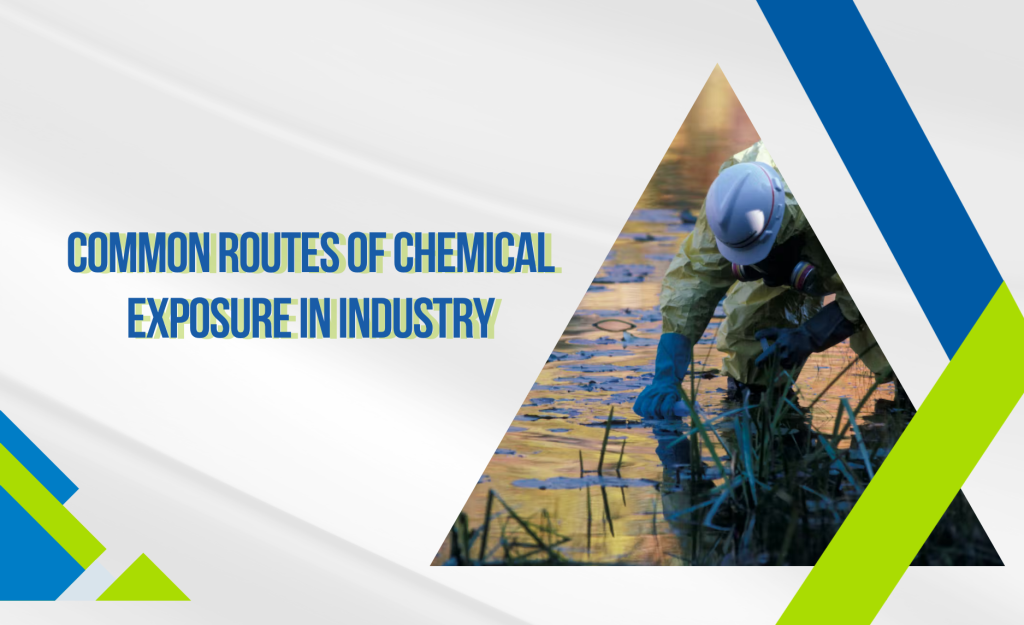
In industrial environments, chemicals are present throughout nearly every stage of production. From solvents, acids, and alkalis to toxic gases and chemical dust, all of these substances can directly affect workers’ health if not properly controlled.
What is concerning is that many exposure cases do not occur immediately. Some chemicals can silently cause harm over long periods of time. Workers may not realize that their bodies are absorbing chemicals every day through breathing, skin contact, or contaminated food.
Therefore, understanding the common routes of chemical exposure in industrial settings is essential for building an effective occupational safety system.
WHAT IS CHEMICAL EXPOSURE IN INDUSTRIAL ENVIRONMENTS?
Chemical exposure is the process by which chemicals enter the human body during work activities. According to OSHA, chemicals can enter the body through inhalation, skin contact, eye contact, or ingestion. In industrial environments, the level of exposure depends on many different factors. Chemical concentration, duration of contact, and ventilation conditions all directly affect the level of risk.
Some chemicals cause irritation immediately upon contact. However, many others cause chronic effects after accumulating in the body over time. This is one of the leading causes of occupational diseases today.
Organizations such as OSHA and NIOSH require businesses to fully assess exposure risks. This helps reduce risks to workers during production processes.
WHY IS IT IMPORTANT TO UNDERSTAND EXPOSURE ROUTES?
Many businesses focus only on the toxicity of chemicals. However, the way chemicals enter the body is equally important. Some chemicals are relatively safe upon skin contact, yet extremely dangerous when inhaled over long periods. Conversely, many low-volatility substances can penetrate the skin very effectively.
Identifying the correct exposure route helps businesses implement more effective safety controls. It also serves as the basis for selecting appropriate personal protective equipment (PPE) for each working environment.
In addition, understanding exposure mechanisms helps businesses minimize occupational diseases and reduce workplace accidents. This is an especially important factor in today’s industrial chemical sector.
INHALATION EXPOSURE
According to OSHA, inhalation is currently the most common route of chemical exposure. In manufacturing environments, chemicals often exist in the form of gases, solvent vapors, or fine airborne dust.
When inhaled, chemical particles enter the lungs directly. They can then rapidly enter the circulatory system and affect multiple organs.
Industries such as industrial coatings, petrochemicals, and plastics manufacturing are considered high-risk sectors. Workers in these industries are frequently exposed to solvent vapors and toxic gases throughout their shifts.

Common Health Effects
Depending on the type of chemical, workers may experience various health issues. Some cases involve persistent coughing, shortness of breath, or frequent headaches. Other chemicals may affect the nervous system and cause dizziness. Long-term exposure can also increase the risk of chronic respiratory diseases or occupational cancers.
In many cases, symptoms only appear after years of work. This is why experts consistently recommend that businesses monitor indoor air quality in factories.
Effective Control Measures
Today, businesses commonly combine multiple measures to reduce inhalation exposure. Ventilation systems and local exhaust extraction are considered the most important solutions.
In addition, many factories use air filtration systems and specialized respirators. These devices help reduce the amount of chemicals entering the body during work activities. International safety organizations also emphasize that engineering controls should always take priority over personal PPE. This helps minimize risks directly at the source of chemical emissions.
SKIN AND EYE EXPOSURE
Many people assume that the skin can protect the body from chemicals. However, in reality, many industrial chemicals can penetrate the skin very quickly.
This exposure route commonly occurs when chemicals splash directly onto the skin or when protective clothing becomes contaminated. In many cases, workers may not realize that their bodies are absorbing chemicals daily. In addition to the skin, the eyes are also highly sensitive to chemicals. Even a small amount of acid or strong solvent can cause serious injury.

Chemicals Easily Absorbed Through the Skin
According to NIOSH, organic solvents are among the chemicals with the highest potential for dermal absorption. Certain surface treatment chemicals and pesticides also pose similar risks.
Many chemicals do not cause immediate pain upon contact. However, they may silently enter the bloodstream and affect internal organs after long-term accumulation. This is why many businesses today strictly control direct chemical contact during production.
Ways to Reduce Exposure Risks
Businesses commonly use chemical-resistant gloves and protective clothing to protect workers. Sealed safety goggles are also widely used in many production areas.
In addition to personal PPE, emergency washing stations also play a critical role. In the event of an accident, rapid decontamination can significantly reduce the severity of injuries. Experts also recommend that businesses replace PPE periodically. Damaged equipment may reduce chemical resistance during use.
INGESTION EXPOSURE
Compared to inhalation, ingestion exposure often receives less attention. However, it remains a fairly common exposure route in many industrial facilities. Workers may unintentionally ingest chemicals by eating or drinking in production areas. Other cases occur when workers fail to wash their hands after handling chemicals.
In addition, smoking or touching the face during work also increases the risk of exposure. This remains a common issue in industrial environments today.

Common Health Effects
Depending on the chemical involved, workers may suffer from acute poisoning or internal organ damage. Some heavy metals can also accumulate in the body over long periods.
The liver, kidneys, and nervous system are among the organs most commonly affected. In severe cases, workers may experience long-term health complications lasting many years.
Necessary Preventive Measures
Businesses need to establish strict hygiene regulations within factories. Workers should not eat or drink in areas where hazardous chemicals are present. In addition, handwashing before breaks is extremely important. This is a simple measure that can significantly reduce ingestion exposure risks.
Safety awareness training should also be conducted regularly. This helps workers better understand workplace hazards during daily operations.
EXPOSURE THROUGH OPEN WOUNDS
Exposure through open wounds occurs when chemicals directly enter the body through damaged skin. Some cases are caused by sharp objects or high-pressure equipment.
Although this route is less common, the level of danger is often very high. Chemicals can enter tissues or the bloodstream extremely quickly.
In the industrial coatings industry, accidents involving high-pressure spray guns are a typical example. These incidents can cause severe injuries if not treated promptly.
CURRENT TRENDS IN CHEMICAL EXPOSURE CONTROL
Today, many businesses no longer rely solely on personal PPE as they did in the past. Environmental monitoring systems are increasingly being implemented in modern factories. Some companies use toxic gas sensors to detect leaks in real time. This helps reduce exposure risks in hazardous production areas.
In addition, automation trends also help minimize direct human contact with chemicals. This is currently a priority investment area across many industrial sectors. International standards now also require businesses to assess all exposure routes rather than focusing solely on indoor air quality monitoring.
CONCLUSION
Chemical exposure routes in industrial environments can seriously affect workers’ health. Chemicals not only enter the body through inhalation, but can also be absorbed through the skin, eyes, or digestive system.
What makes this particularly dangerous is that many exposure cases occur silently over long periods. Workers often fail to recognize the cumulative effects occurring daily in production environments. Therefore, businesses need to comprehensively assess risks in every work area. Selecting the appropriate PPE and improving safety procedures can significantly reduce the risk of occupational diseases.
VICHEM – AUTHORIZED DISTRIBUTOR OF CHEMICAL ADDITIVES FROM LEADING BRANDS SUCH AS COVESTRO, SINOPEC, BUHLER, … IN VIETNAM
Vichem is an authorized distributor of chemical additive products from leading brands such as Covestro, Sinopec, Buhler, and others in the Vietnamese market. We not only provide high-quality products but also deliver after-sales services that meet international standards.
For more information about our products, please contact us through the following channels:
📞 Hotline: 08 1790 1790
📧 Email: contact@vichem.vn
🔎 LinkedIn: Vichem JSC
🌐 Website: www.vichem.vn
📌 Facebook: Vichem JSC