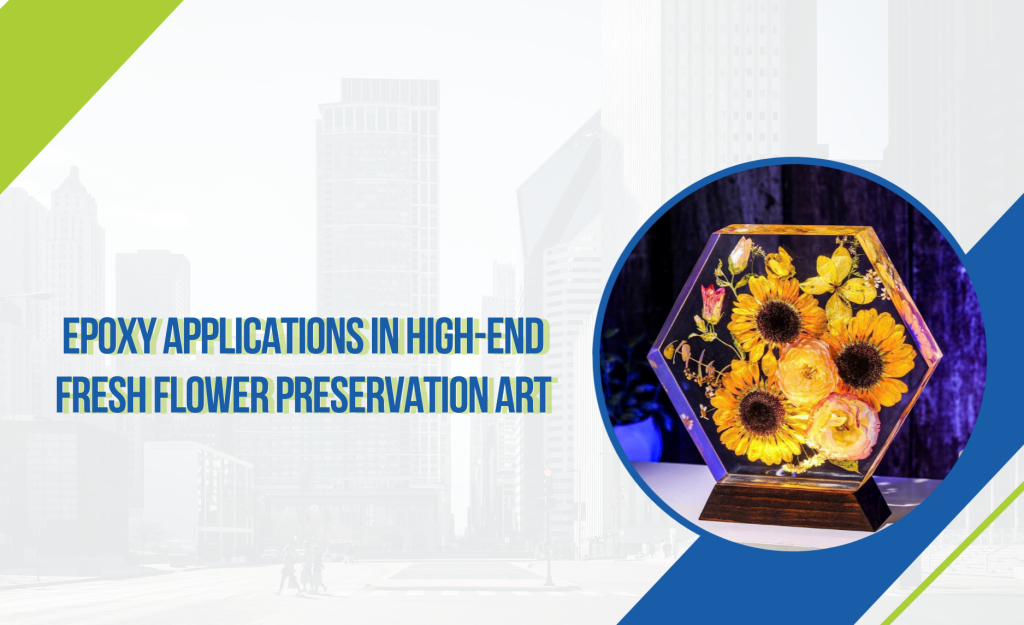
Fresh flowers have always been associated with special moments in life. They may be wedding bouquets, anniversary flowers, or gifts carrying deep sentimental value. However, the beauty of flowers typically lasts only for a short period of time.
As a result, the demand for flower preservation has been growing significantly. Instead of allowing flowers to dry naturally or using traditional flower pressing methods, many people now choose epoxy technology for flower preservation. This method helps retain the shape, color, and emotional value of each flower.
In recent years, the art of flower preservation resin has grown rapidly in many countries. Epoxy-preserved floral products are increasingly appearing in the premium gift, interior decoration, and wedding keepsake markets.
WHAT IS EPOXY IN FRESH FLOWER PRESERVATION ART?
Epoxy is a thermosetting resin composed of two main components: resin and hardener. When mixed at the correct ratio, the mixture cures and forms a transparent material with high durability.
In flower preservation art, epoxy is used to encapsulate dried and treated flowers. Once fully cured, the resin creates a crystal-clear, glass-like effect. This helps protect the flowers from moisture and environmental factors.
Unlike traditional flower pressing methods, epoxy allows the preservation of a flower’s three-dimensional form. As a result, the artwork maintains a more realistic appearance and higher aesthetic value.
Today, epoxy is also used to create a variety of artistic products, including display blocks, decorative trays, candle holders, photo frames, and personalized keepsakes.
WHY IS EPOXY FLOWER PRESERVATION ART BECOMING A TREND?
Growing Demand for Preserving Memories
People always want to preserve important milestones in their lives. Wedding bouquets are one of the most common examples.
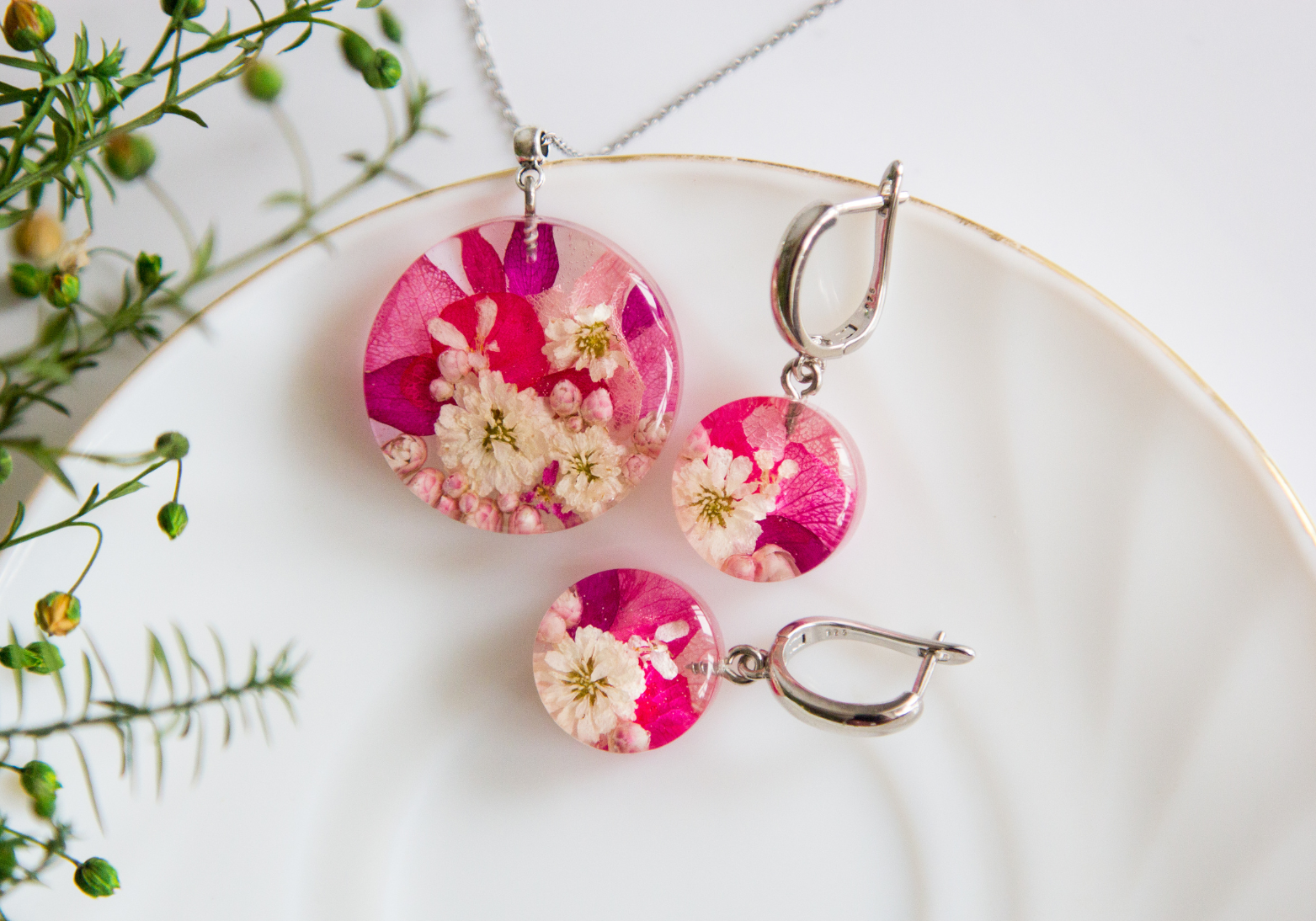
Many couples no longer want to discard their bouquets after the wedding. Instead, they choose epoxy flower preservation to transform them into long-lasting decorative keepsakes. This is also one of the key reasons why the wedding bouquet preservation market has experienced strong growth in recent years.
High Artistic Value
Each epoxy artwork is unique. No two flowers are exactly alike. Artists can arrange flowers in countless compositions, creating products with significant handcrafted value and a high degree of personalization.
Suitable for Modern Interior Design Trends
Modern interior design increasingly favors transparent materials and natural elements. Epoxy-preserved flowers align perfectly with this trend. They offer natural beauty while adding a luxurious touch to living spaces.
THE PROCESS OF PRESERVING FRESH FLOWERS WITH EPOXY
Creating a high-quality product requires multiple stages.
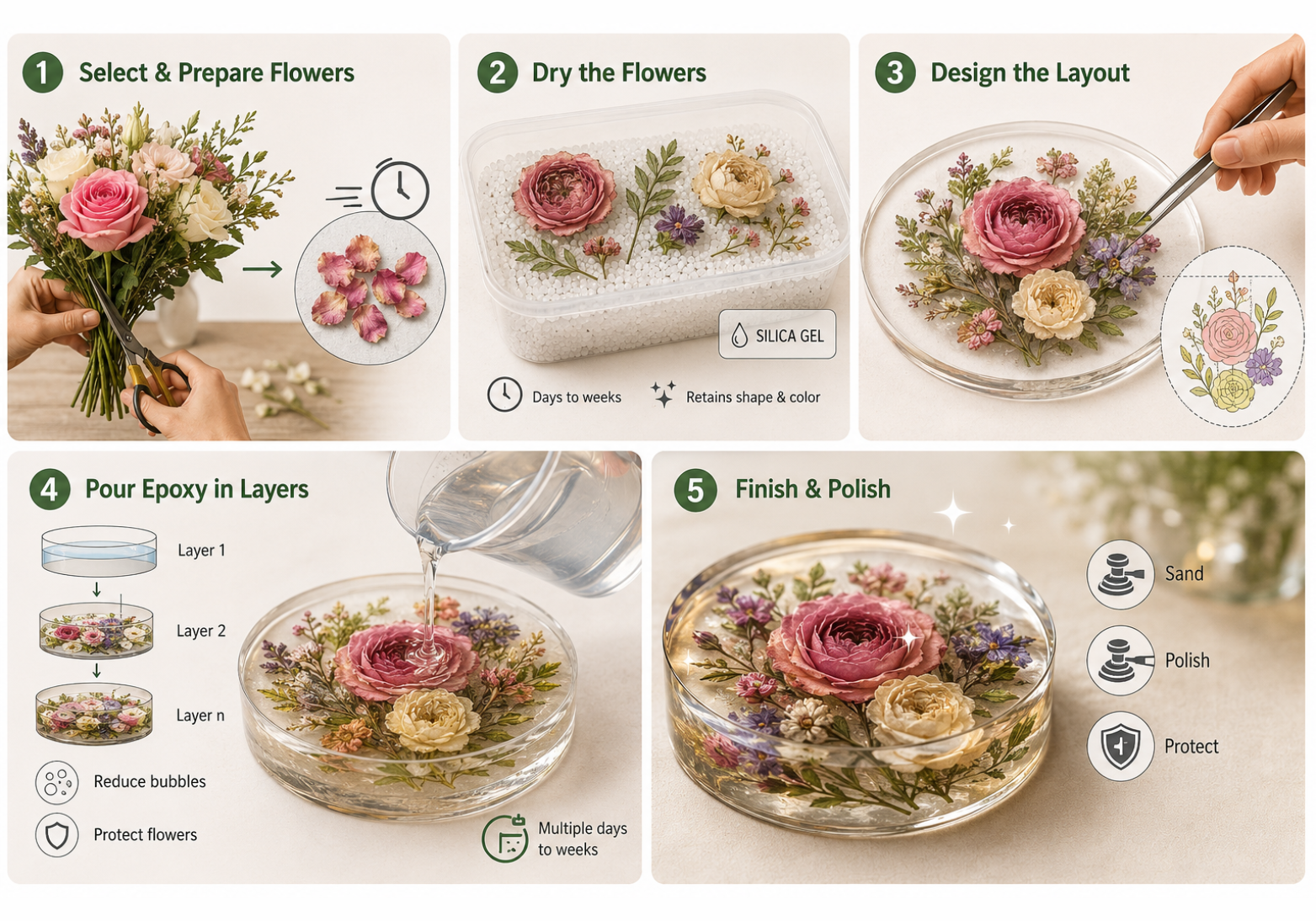
Step 1: Flower Selection and Preparation
Flowers should be processed shortly after harvesting or immediately following an event. If left for too long, the petals may lose moisture and fade in color. This directly affects the quality of the final product.
Step 2: Flower Drying
This is a critical stage in the process. Many artisans use silica gel to quickly absorb moisture and better preserve flower colors. Compared to conventional air-drying methods, this technique helps flowers retain their natural shape more effectively.
Depending on the flower species, achieving the appropriate dryness level may take anywhere from several days to several weeks.
Step 3: Composition Design
After drying, the flowers are arranged according to the desired design. The artist must carefully determine the position of each flower to create depth, balance, and visual harmony within the artwork.
Step 4: Layer-by-Layer Epoxy Pouring
Epoxy is typically not poured all at once. Instead, artisans apply it in multiple layers. This approach helps minimize air bubbles and reduces the risk of damaging the flowers. Some projects may require several days or even weeks to be completed.
Step 5: Finishing and Polishing
Once the epoxy has fully cured, the surface undergoes finishing treatments. Common processes include sanding, polishing, and applying protective coatings. These steps enhance both the clarity and gloss of the final product.
FLOWER TYPES SUITABLE FOR EPOXY PRESERVATION
Not all flowers produce the same results when encapsulated in resin. Roses are the most popular choice due to their thick petal structure and ability to maintain their shape well after drying.
Baby’s breath is commonly used to create a soft and delicate visual effect. Its small size allows it to be incorporated easily into a wide variety of designs.
Hydrangeas create striking color effects within large resin blocks. They are a preferred choice among many artisans for premium decorative artworks.
In addition to the flowers mentioned above, many other flower species can also be preserved using epoxy resin. However, each flower possesses different structural characteristics and moisture content. Therefore, selecting the appropriate drying and treatment methods is essential to ensure optimal color retention, shape preservation, and overall product quality after resin casting.
CHALLENGES IN THE EPOXY FLOWER PRESERVATION PROCESS
Yellowing: This is one of the most common concerns. According to many experts in the flower preservation industry, most epoxy systems may gradually yellow over time when continuously exposed to UV radiation. Therefore, selecting a high-quality resin system is extremely important.
Air Bubbles:Air bubbles can reduce the aesthetic quality of the final product. Proper temperature control and mixing techniques are required to minimize this issue.
Natural Color Changes in Flowers: Even when properly preserved, some flower species may still undergo color changes over time. This is a natural characteristic of organic materials. Therefore, the initial treatment process plays a crucial role in achieving long-term preservation results.
CONCLUSION
Epoxy is driving a new phase of development in premium fresh flower preservation art. Thanks to its ability to protect and recreate the natural beauty of flowers, this technology allows special memories to be preserved for much longer.
From wedding bouquets and commemorative flowers to artistic decorative pieces, epoxy offers significant aesthetic and emotional value. At the same time, this material opens up numerous creative opportunities for the modern arts and crafts industry.
As the demand for personalization continues to grow, flower preservation resin art is expected to expand further. UV-resistant, anti-yellowing, and high-clarity resin technologies are anticipated to become key industry trends in the future.
VICHEM – AUTHORIZED DISTRIBUTOR OF CHEMICAL ADDITIVES FROM LEADING BRANDS SUCH AS COVESTRO, SINOPEC, BUHLER, AND MORE IN VIETNAM
Vichem is an authorized distributor of chemical additive products from leading brands such as Covestro, Sinopec, Buhler, and others in the Vietnamese market. We not only provide high-quality products but also deliver after-sales services that meet international standards.
For more information about our products, please contact us through the following channels:
📞 Hotline: 08 1790 1790
📧 Email: contact@vichem.vn
🔎 LinkedIn: Vichem JSC
🌐 Website: www.vichem.vn
📌 Facebook: Vichem JSC