The textile industry has undergone significant changes in recent years. Businesses are required to improve product quality and optimize operating costs. In this context, PVA has become an important material. It helps improve yarn strength and stabilize the weaving process. At the same time, PVA also supports various stages in the production chain. Understanding the role of PVA will help enterprises enhance production efficiency.
DEFINITION
PVA stands for Polyvinyl Alcohol, a synthetic polymer that is water-soluble. This material has excellent film-forming properties and high adhesion. Thanks to these characteristics, PVA is widely used in the textile industry. In practice, it is commonly used as a sizing agent before weaving. This sizing layer helps protect the yarn and reduce damage during production. After completion, PVA can be easily removed with water.
ROLE OF PVA IN THE TEXTILE INDUSTRY
PVA plays an important role in increasing the mechanical strength of yarns. When applied to the surface, it forms a protective film. This film helps reduce friction as the yarn passes through weaving machine components. As a result, yarn breakage is significantly minimized. This is particularly important in high-speed production.
In addition, PVA helps improve the operational efficiency of weaving machines. When the yarn is more stable, the weaving process becomes more continuous and less interrupted. Machine downtime is reduced, thereby increasing productivity. At the same time, the yarn surface becomes smoother, enabling a more efficient weaving process.
Moreover, PVA contributes to maintaining consistent fabric quality. Yarns treated with PVA typically have higher uniformity. This results in finished fabrics with fewer defects and smoother surfaces. Consistency between production batches is also significantly improved.
APPLICATIONS
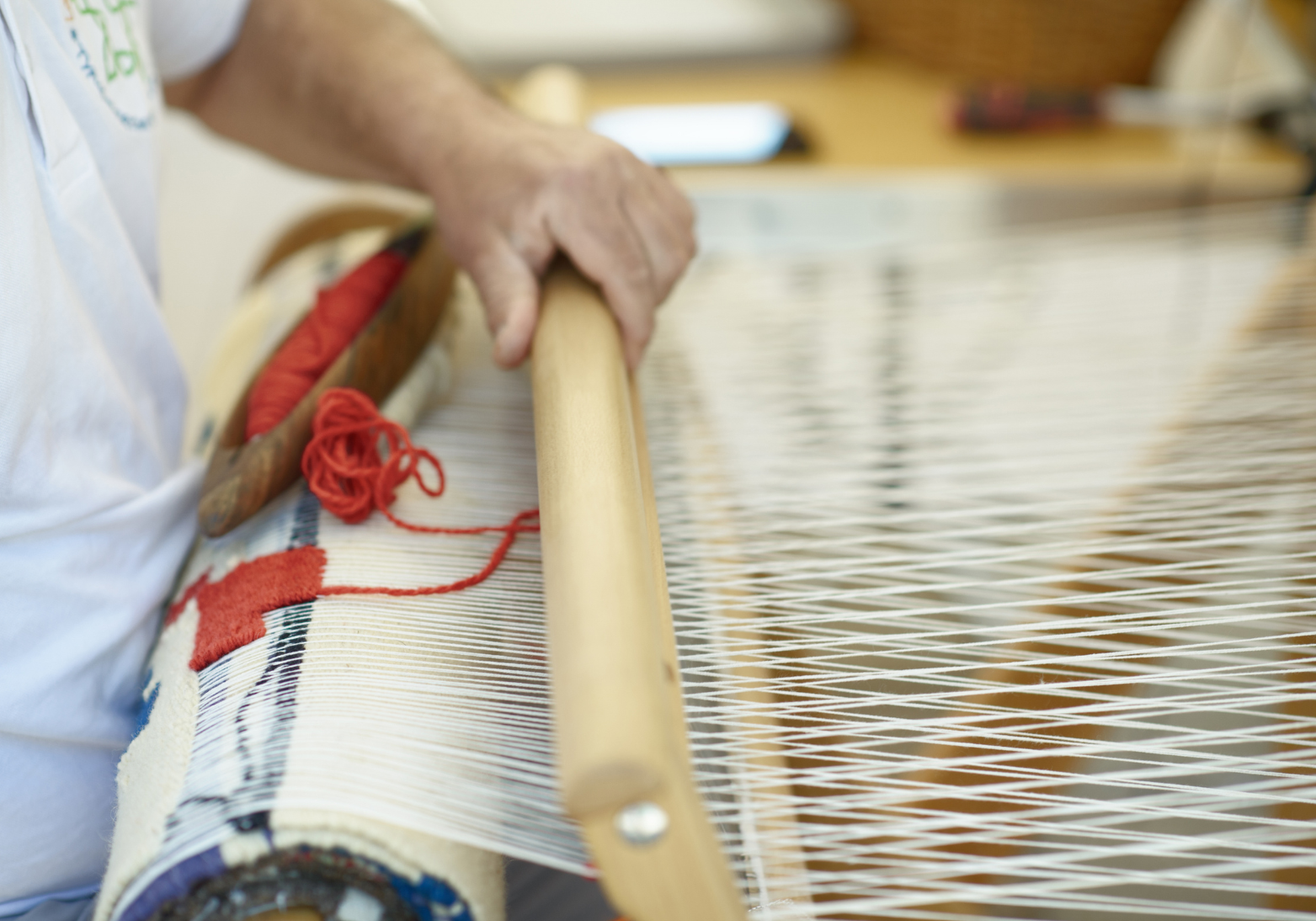
The most important application of PVA is in the sizing process. Before weaving, yarn is coated with a layer of PVA to increase strength and reduce friction. This sizing layer enables the yarn to withstand tensile forces during weaving. After completion, the PVA layer can be washed off without affecting fabric quality.
In addition, PVA is used in fabric printing and dyeing. In this stage, it acts as a binder. PVA helps the color adhere evenly to the fabric surface and improves color fastness. As a result, the product retains its color after multiple washes.
In nonwoven fabric production, PVA is used to bond fibers together. This helps create a strong and stable fabric structure. Products such as masks or filtration materials often use this type of fabric.
At the finishing stage, PVA also helps improve the aesthetic properties of fabrics. It can enhance gloss and softness. In addition, some applications help improve wrinkle resistance.
ADVANTAGES
PVA has excellent water solubility, making removal after weaving easy. This helps reduce treatment costs and save time. In addition, PVA has very stable film-forming properties. The uniform coating layer effectively protects the yarn.
Another advantage is its flexibility. PVA can be used for various types of fibers, from natural to synthetic fibers. Furthermore, PVA is considered more environmentally friendly compared to many other materials. Some types are even biodegradable under suitable conditions.
DISADVANTAGES
Despite its advantages, PVA still has some limitations. The cost of PVA is often higher than that of some traditional sizing agents. This may affect overall production costs.
In addition, due to its water solubility, PVA may put pressure on wastewater treatment systems. If not treated properly, it can impact the environment. Furthermore, the use of PVA requires appropriate temperature control during dissolution. This demands a stable technical system.
DEVELOPMENT OPPORTUNITIES
The textile industry still has significant growth potential. The increasing demand for high-quality products creates favorable conditions for PVA development. In addition, the trend toward green production is promoting the use of environmentally friendly materials.
New technologies also help optimize the use of PVA. Process improvements can reduce costs and enhance efficiency. Moreover, the demand for technical textiles and functional fabrics is opening up new opportunities for this material.
CHALLENGES
The textile industry faces increasingly strict environmental regulations. This requires businesses to invest in wastewater treatment systems. Investment costs may increase significantly.
In addition, competition from alternative materials is also a challenge. Some new polymers have lower costs and comparable performance. Furthermore, raw material prices may fluctuate according to the market, affecting profitability.
CONCLUSION
PVA plays an important role in the modern textile industry. It helps improve yarn quality and enhance production efficiency. Although there are still some limitations, the development potential of this material remains significant.
In the context of the textile industry moving toward sustainable development, PVA continues to be a suitable choice. Enterprises need to combine technology and strategy to maximize the benefits of this material.
VICHEM – AUTHORIZED DISTRIBUTOR OF CHEMICAL ADDITIVES FROM MAJOR BRANDS SUCH AS COVESTRO, SINOPEC, BUHLER,… IN VIETNAM
Vichem is an authorized distributor of chemical additive products from major brands such as Covestro, Sinopec, Buhler,… in the Vietnamese market. We not only provide high-quality products but also deliver after-sales services that meet international standards.
For more information about our products, please contact us via the following channels:
📞 Hotline: 08 1790 1790
📧 Email: contact@vichem.vn
🔎 LinkedIn: Vichem JSC
🌐 Website: www.vichem.vn
📌 Facebook: Vichem JSC