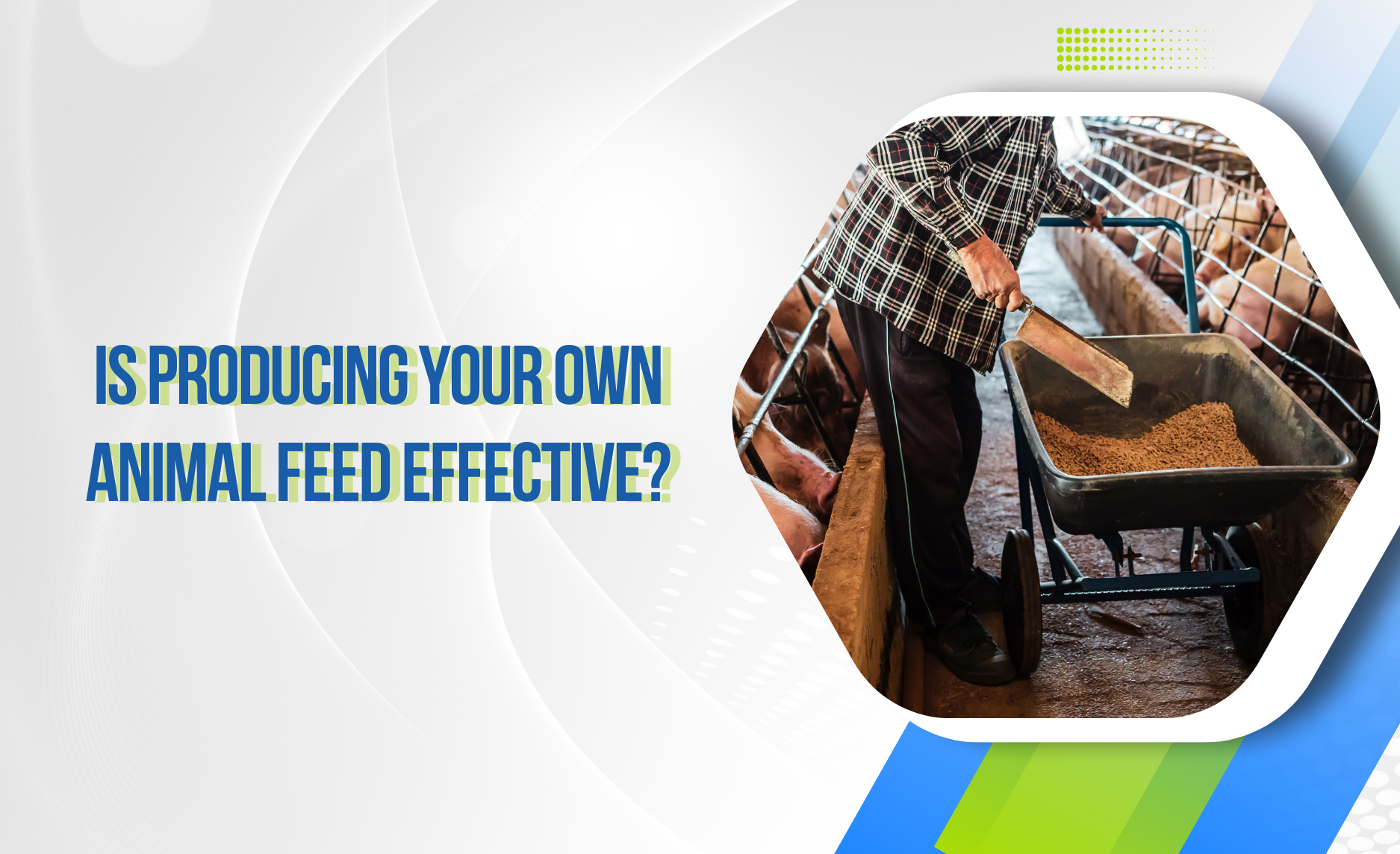
After understanding what animal feed is and its role in production, a common question arises: does self-producing feed truly help save costs and improve efficiency?
In the context of fluctuating industrial feed prices and rising livestock production costs, many households and farms have shifted to mixing their own feed ingredients. However, in many cases, the actual results do not meet expectations and may even increase costs or reduce productivity.
To answer this question accurately, it is necessary to examine the issue comprehensively—not only in terms of cost, but also nutrition, processes, and technology.
OVERVIEW
Self-production of animal feed refers to the practice where farmers proactively select, mix, and process ingredients to create feed rations for livestock. Essentially, this is not a new method. In traditional farming, farmers have long utilized available materials such as corn, bran, green vegetables, or agricultural by-products to feed livestock and poultry.
However, the key difference today lies in the context: livestock production has shifted to a larger scale with higher requirements for productivity and product quality.
Therefore, self-producing feed now requires a clear understanding of animal nutritional needs, strict control of raw material quality, and even the application of technology in processing.
PRACTICAL BENEFITS
One of the main reasons farmers choose to produce their own feed is the potential to reduce input costs. By utilizing locally available materials such as corn, rice bran, or agricultural by-products, feed costs can be significantly lower than purchasing complete industrial feed.
In addition to cost savings, self-production offers greater flexibility. Farmers can adjust feed formulations according to each stage of animal development instead of relying entirely on pre-formulated products from manufacturers. In specific farming models such as organic or indigenous livestock systems, this flexibility enables the creation of differentiated, higher-value products in the market.
Moreover, the use of agricultural by-products helps reduce resource waste. Materials that might otherwise be discarded—such as soybean residue, brewer’s grains, or coarse bran—can become valuable nutritional sources if properly processed. This approach also aligns with the circular economy trend in modern agriculture.
LIMITATIONS
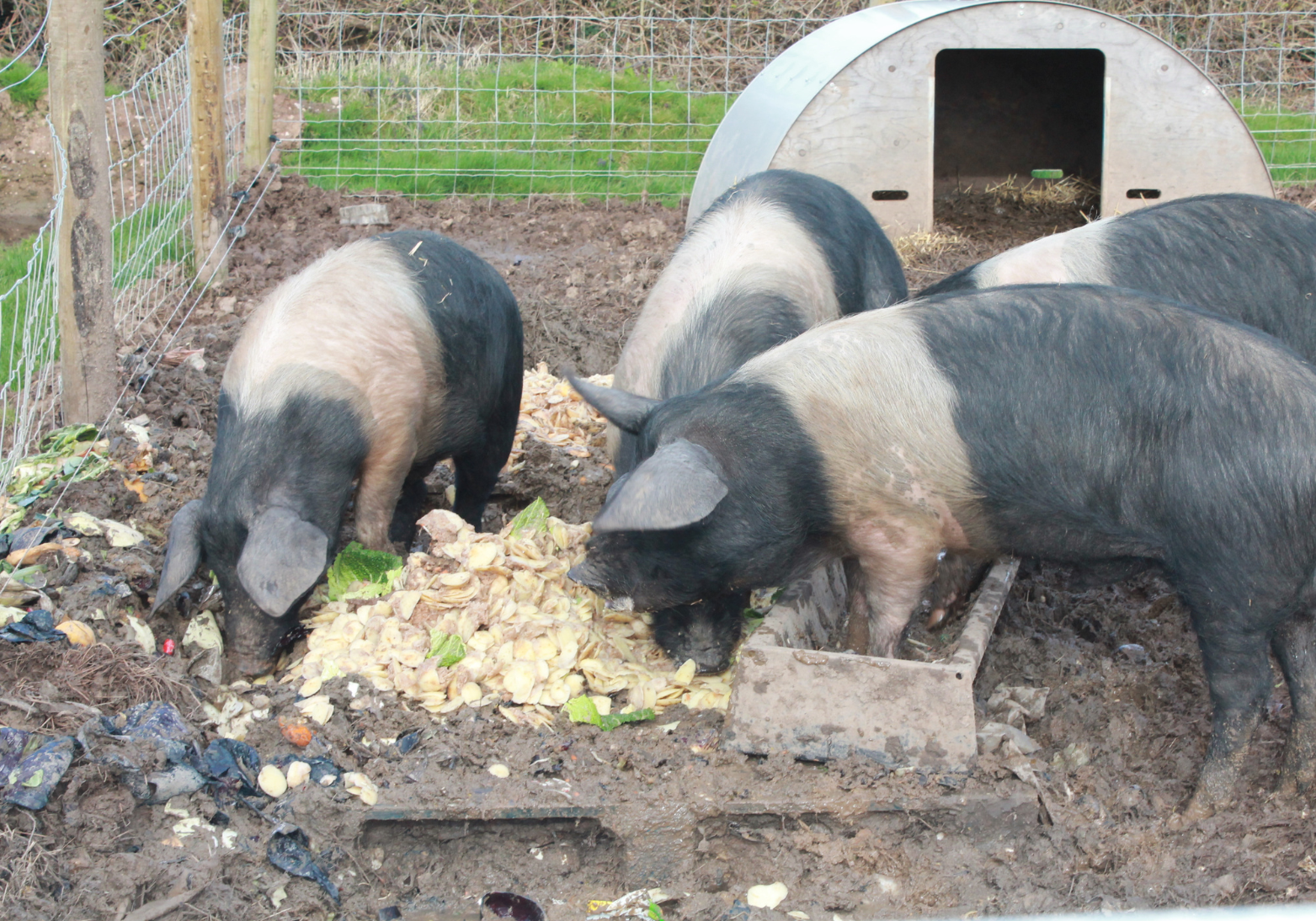
The biggest challenge lies in nutritional balancing. Unlike industrial feed, which is carefully researched and tested, self-mixed rations are often based on experience or informal formulas. This can lead to nutrient deficiencies or excesses, reducing feed conversion efficiency. As a result, livestock may grow more slowly, consume more feed, or become more susceptible to diseases.
Another limitation is the inconsistency of raw materials. In practice, the quality of corn, bran, or soybeans can vary depending on season and supply source. Without proper control systems, each batch of feed may differ in quality, leading to fluctuations in production performance.
In addition, storage is a major challenge. If raw materials are not stored properly, they are highly susceptible to mold or toxin contamination. This is a serious risk that is often underestimated, especially in small-scale operations.
THE ROLE OF TECHNOLOGY IN IMPROVING EFFICIENCY
The key difference between traditional and modern livestock farming lies in technology. While feed mixing in the past relied mainly on experience, advanced production systems today enable near-complete process control.
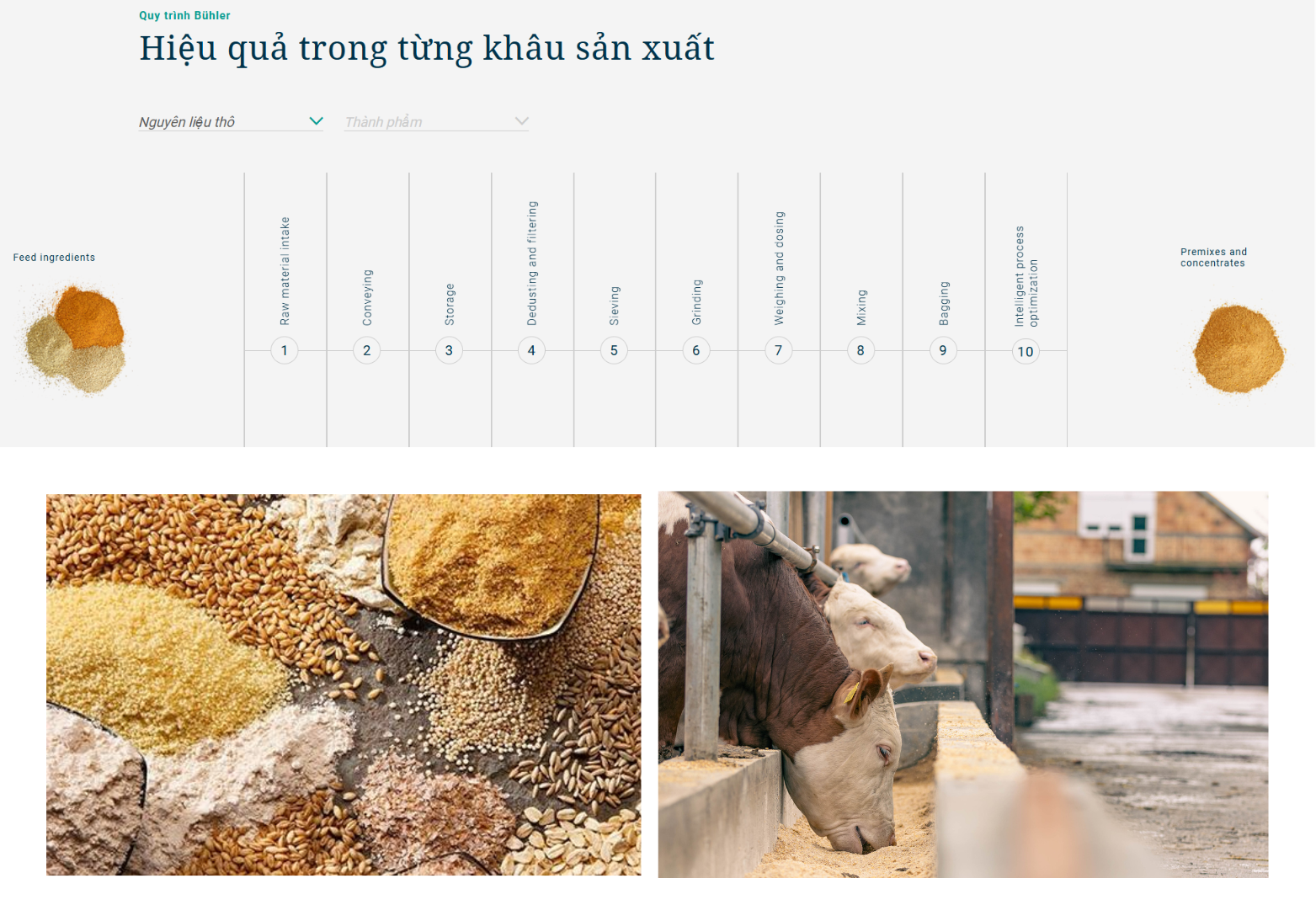
According to the solution ecosystem of Bühler, modern feed production involves a closed-loop process, from raw material intake, cleaning, grinding, and mixing to pelleting and packaging. Each stage is optimized to ensure quality and efficiency.
In particular, real-time nutritional monitoring systems allow precise control of parameters such as moisture, protein, and fat content. This helps minimize formulation deviations and optimize raw material costs.
TRENDS
The livestock industry is moving beyond self-production toward automation and digitalization. Instead of manual mixing, modern systems enable automated weighing, mixing, and nutritional control with high precision.
At the same time, the use of alternative ingredients and by-products is being further researched to reduce costs and enhance sustainability. However, these materials are only truly effective when properly processed and formulated—something that technology can strongly support.
In this context, integrated technological solutions are becoming increasingly important, as they not only provide equipment but also optimize the entire production process.
CONCLUSION
Self-production of animal feed can be effective, but not in all cases. If farmers focus solely on cost while neglecting nutrition and processes, they are likely to face significant risks.
Conversely, with sufficient knowledge, stable raw material sources, and especially technological support, self-production can become a competitive advantage.
Therefore, the optimal approach today is not choosing between “self-production” and “purchasing,” but rather combining both flexibly and gradually upgrading toward controlled production systems—similar to how modern systems operate.
VICHEM – AUTHORIZED DISTRIBUTOR OF BUHLER INDUSTRIAL AND AGRRICULTURAL MACHINERY IN VIETNAM
Vichem is an authorized distributor of Bühler industrial and agricultural machinery and equipment in the Vietnamese market. We not only provide high-quality products but also deliver after-sales services that meet international standards.
For more information about our products, please contact us via the following channels:
📞 Hotline: 08 1790 1790
📧 Email: contact@vichem.vn
🔎 LinkedIn: Vichem JSC
🌐 Website: www.vichem.vn
📌 Facebook: Vichem JSC