
Paint film thickness is an important technical factor in coating application. This parameter directly affects durability and corrosion resistance. Proper control of Dry Film Thickness (DFT) ensures construction quality.
WHAT IS DRY FILM THICKNESS (DFT)?
Paint film thickness refers to the thickness of the coating layer after it has completely dried. DFT stands for Dry Film Thickness. It is a standard indicator in coating quality control.
This parameter is measured in micrometers (µm) or mils. DFT differs from wet film thickness measured immediately after application. The DFT value reflects the actual amount of coating remaining on the surface.
In industrial coating systems, DFT is clearly specified. Each type of coating has its own DFT requirements. Incorrect DFT application can cause serious defects.
THE ROLE OF PAINT FILM THICKNESS
Paint film thickness determines the protective capability of the substrate. A coating layer that is too thin will not provide sufficient coverage, reducing corrosion resistance.
If the film thickness is too high, the coating may crack. Excessive thickness creates high internal stress, leading to peeling or delamination over time.
Proper DFT optimizes coating service life. The coating system performs as originally designed. This is especially important in harsh environments.
HOW TO MEASURE DFT
Using Specialized Measuring Equipment
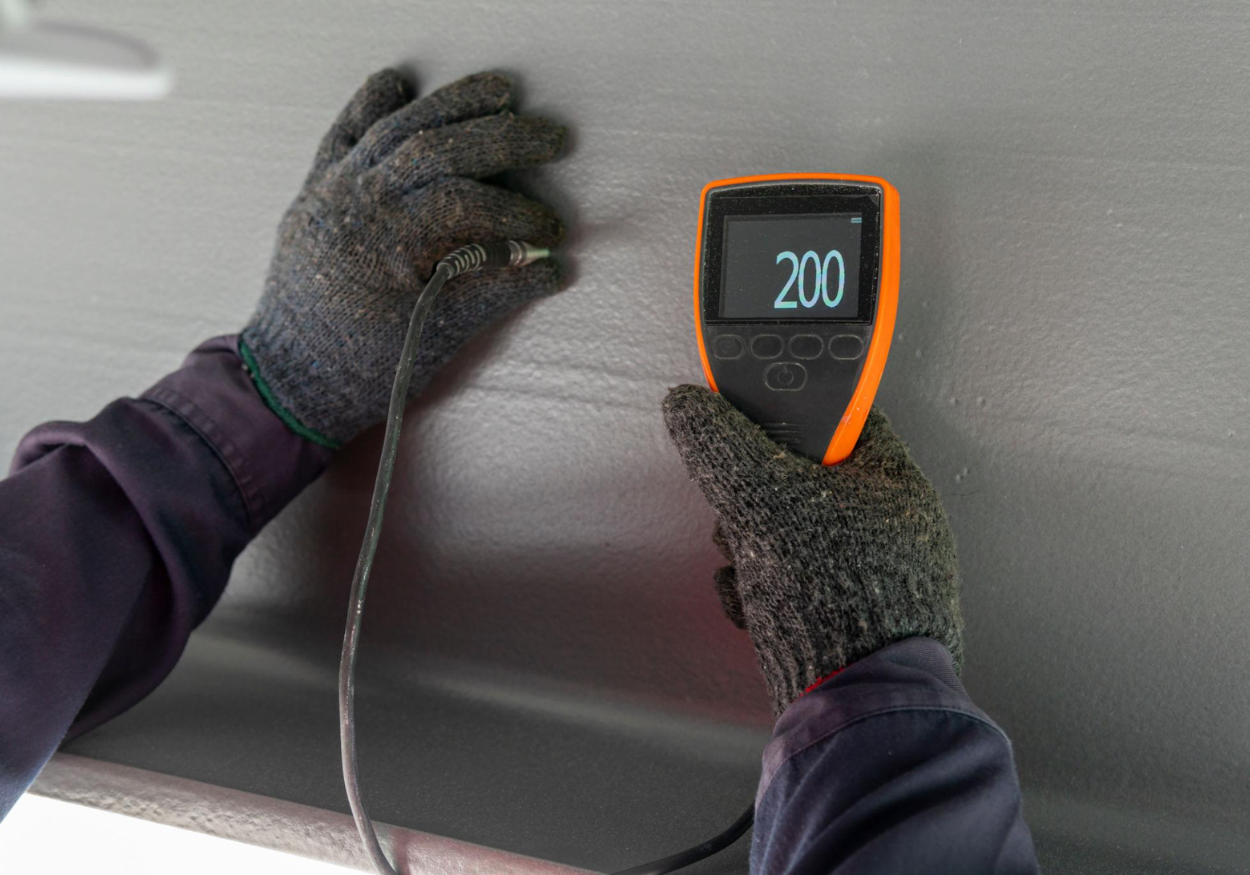
Paint film thickness is measured using a DFT gauge. This device operates based on magnetic or electromagnetic principles. Results are displayed quickly and accurately.
The gauge must be calibrated before use. Calibration ensures reliable measurement data and is mandatory in quality inspections.
Measurements should be taken at multiple points on the surface. The average value accurately represents the actual DFT and helps evaluate coating uniformity.
Control During Application
Paint film thickness depends on wet film thickness. Applicators must calculate shrinkage after drying to predict DFT accurately.
Each layer should be applied according to technical specifications. DFT should not be achieved by applying one excessively thick coat, as this may cause surface defects.
Periodic inspection after each coat is necessary. Timely adjustments help prevent major deviations and ensure DFT remains within allowable limits.
FACTORS AFFECTING PAINT FILM THICKNESS
Application Technique
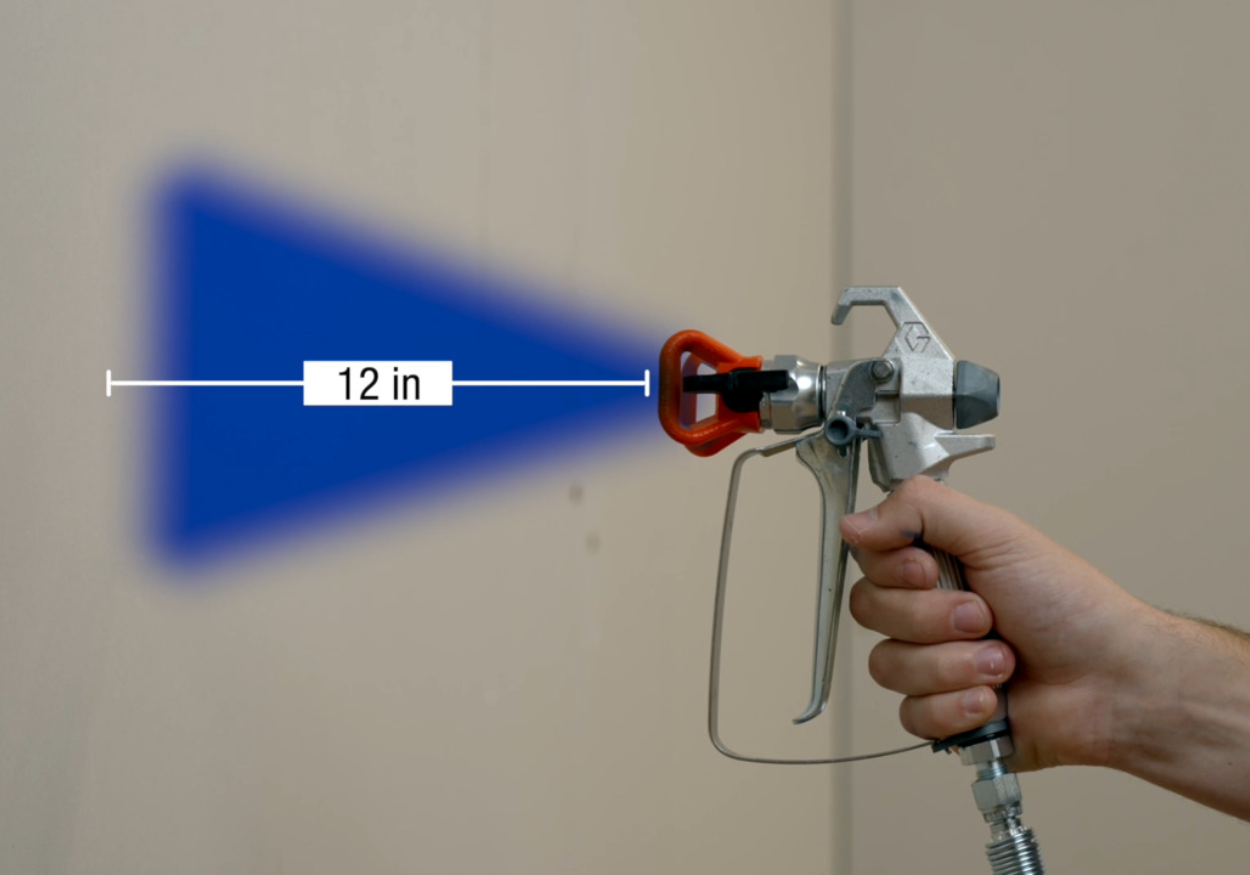
Spray gun distance affects the amount of coating deposited. Spraying from too far away results in a thin film, causing DFT to fall below requirements.
The movement speed of the spray gun is also important. Moving too quickly produces insufficient thickness, while moving too slowly may cause sagging.
The spray angle should remain stable and perpendicular to the surface. Irregular motion leads to uneven distribution and inconsistent DFT.
Coating Properties
Solid content determines shrinkage during drying. High-solid coatings generally achieve better DFT, reducing the number of required coats.
Viscosity affects leveling ability. If the coating is too thin, the film becomes too thin. If too thick, thickness control becomes difficult.
Drying time between coats also has a significant impact. Applying the next coat too early may reduce adhesion, affecting overall DFT.
Environmental Conditions
Ambient temperature affects solvent evaporation rate. High temperatures accelerate drying and may alter expected DFT.
High humidity influences the curing process. Some coating systems are sensitive to moisture, leading to DFT deviations if conditions are unstable.
The substrate surface also plays a key role. Rough surfaces require more coating material, changing the actual film thickness.

DFT STANDARDS IN INDUSTRIAL COATINGS
In industrial coatings, DFT typically follows international standards. Large projects require strict inspection, and film thickness must fall within specified tolerances.
Each coating system has a designed DFT value. For example, anti-corrosion systems require higher DFT to ensure long-term protection.
DFT inspection and documentation are mandatory during project acceptance. Measurement records serve as proof of construction quality and are common requirements in engineering projects.
IMPORTANT NOTES
If the film thickness is too low, coating lifespan decreases. The surface becomes more vulnerable to environmental impact, and corrosion may occur prematurely.
If the thickness is too high, cracking and peeling may occur. Excessive film thickness creates internal stress, reducing coating stability.
Non-uniform DFT affects aesthetics. Some areas may be less protected than others. This is a common issue in manual application.
SOLUTIONS FOR CONTROLLING PAINT FILM THICKNESS
Technical training for applicators is essential. Workers must clearly understand DFT requirements to minimize errors from the beginning.
Use certified measuring equipment and perform regular calibration. Accurate tools enable better quality control and continuous monitoring of thickness.
Follow the manufacturer’s technical procedures and specifications strictly. Do not arbitrarily change the number of coats or dilution ratio. Proper DFT control ensures long-lasting performance.
CONCLUSION
DFT is a critical indicator in coating application. It directly affects durability and protective performance. Proper control of DFT ensures long-term quality.
Understanding its role and measurement methods is fundamental. Correct application techniques help achieve standard DFT, which determines coating system performance.
Effective management of paint film thickness helps optimize maintenance costs. Structures maintain durability as originally designed. This is a key objective in every coating project.
VICHEM – AUTHORIZED DISTRIBUTOR OF CHEMICAL ADDITIVES FROM LEADING BRANDS SUCH AS COVESTRO, SINOPEC, BUHLER, … IN VIETNAM
Vichem is an authorized distributor of chemical additives from leading brands such as Covestro, Sinopec, Buhler, and others in the Vietnamese market. We not only supply high-quality products but also provide internationally standardized after-sales services.
- Technical consulting: Support customers in selecting products suitable for their application.
- Color-matching tests: Vichem specialists perform matching tests to ensure results meet design standards.
- On-site application support: Assist customers during integration into production lines to ensure optimal performance.
For more information, please contact us:
📞 Hotline: 08 1790 1790
📧 Email: contact@vichem.vn
🔎 LinkedIn: Vichem JSC
🌐 Website: www.vichem.vn
📌 Facebook: Vichem JSC