In the industrial paint industry, product quality depends not only on formulation but is also significantly influenced by input materials. As technical and safety standards become increasingly stringent, businesses are required to strictly control chemical components. Among these, lead is one of the factors that requires special attention.
In reality, lead content in paint remains an issue in many markets. Poor control of raw materials can result in non-compliant products, leading to legal risks and negatively affecting corporate reputation. Therefore, understanding the nature of lead in paint and establishing appropriate inspection processes is a fundamental requirement.
WHAT IS LEAD IN INDUSTRIAL PAINT?
Lead (Pb) is a heavy metal. It was widely used in paint production due to its superior properties. It enhances color durability, provides good corrosion resistance, and helps paint dry faster. However, lead is highly toxic. According to the World Health Organization (WHO), lead is one of the 10 heavy metals of greatest concern to human health. Long-term exposure to lead causes damage to the nervous system, cardiovascular system, and kidneys.
In industrial paint, lead does not exist in its pure metallic form. It is present in pigment compounds—especially in yellow, red, and orange pigments. In Vietnam, national technical regulations have established specific limits for lead content. This means that businesses must not only control quality but also ensure legal compliance throughout the entire production chain.
SOURCES OF LEAD IN INPUT MATERIALS
Lead may be present in paint raw materials from various sources. One common source is pigments. Some traditional pigments, especially bright colors such as yellow or orange, may contain lead compounds. If not replaced with safer alternatives, these pigments become primary sources of lead contamination.
In addition, additives and stabilizers may also pose potential risks. In some older formulations, lead compounds were used to improve durability or drying time. Although many alternatives are now available, risks still exist if businesses use uncontrolled supply sources.
Furthermore, recycled materials represent a significant risk factor. Reusing materials without clear classification and testing processes can lead to the accumulation of heavy metals. This is particularly common in non-standardized supply chains.
VIETNAMESE REGULATIONS ON LEAD CONTENT IN PAINT
Vietnam has established clear regulations. On December 21, 2020, the Ministry of Industry and Trade issued Circular No. 51/2020/TT-BCT along with QCVN 08:2020/BCT, which officially took effect on July 1, 2022.
The reduction roadmap is defined as follows:
| Timeline | Lead Content Limit |
|---|---|
| From 01/07/2022 to 01/07/2027 | ≤ 600 ppm |
| After 01/07/2027 | ≤ 90 ppm |
All organizations and individuals involved in the production, import, and trading of paint must obtain certification and declare conformity of lead content before placing products on the market.
METHODS FOR TESTING LEAD CONTENT
Level 1: Documentation Review
To ensure effective control, businesses need to establish a systematic input material inspection process. First, evaluating technical documentation from suppliers is essential. Documents such as Certificates of Analysis must clearly indicate heavy metal content and be updated periodically. Before receiving any batch of pigments or additives, suppliers must provide:
- Certificate of Analysis (CoA) specifying heavy metal content, including Pb
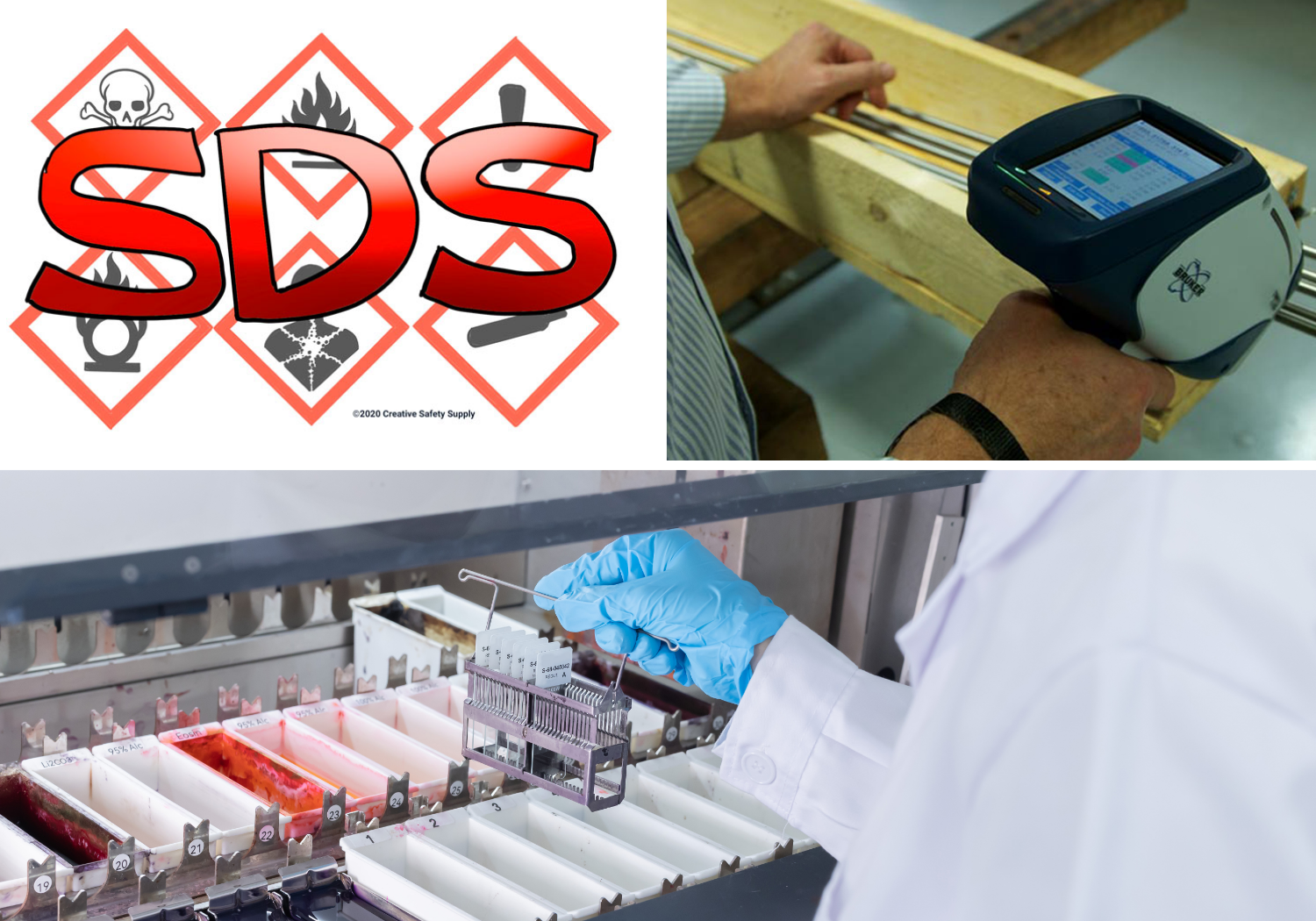
- Safety Data Sheet (SDS) in accordance with GHS standards — Sections 3 (Composition) and 11 (Toxicological information) must be fully completed
- Certificate of conformity or test results from an independent laboratory
Level 2: Rapid Screening Using Handheld XRF
However, relying solely on documentation is not sufficient. Businesses need to conduct actual testing through laboratory analytical methods. Techniques such as Atomic Absorption Spectroscopy (AAS) or Inductively Coupled Plasma (ICP) are commonly used due to their high accuracy. The testing process typically includes sample preparation, chemical treatment, and quantitative analysis.
Additionally, handheld XRF devices can be used. These are modern instruments capable of analyzing samples at ppm levels and require only short-term training to operate. Handheld XRF is suitable for rapid screening of incoming batches. This method is non-destructive, provides results within minutes, and can detect low levels of lead.
Level 3: Laboratory Analysis
According to QCVN 08:2020/BCT, official lead content analysis must be conducted using AAS (wavelength 283.3 nm) or ICP (wavelength 220.2 nm). This is the mandatory method when sampling for conformity certification. Businesses should periodically send samples to accredited laboratories such as QUATEST 3 (Ho Chi Minh City) or other laboratories designated by the Ministry of Industry and Trade.
APPLICATION OF LEAD CONTROL IN PAINT PRODUCTION PROCESSES
In practice, lead control must be implemented throughout the entire production process. At the raw material intake stage, all batches must be inspected to ensure compliance with standards. This helps eliminate risks from the beginning and prevents impacts on subsequent stages.
During production, strict control of formulation components is required. Each material must have clear traceability and comply with technical regulations. This is particularly important for high-quality paint lines.
After production is completed, finished product testing serves as the final verification step. Lead content indicators must be evaluated before products are released to the market. At the same time, businesses must also declare conformity in accordance with current regulations.
CURRENT TRENDS IN LEAD CONTROL IN THE PAINT INDUSTRY
As environmental and safety requirements become increasingly stringent, the trend toward complete elimination of lead is becoming more evident. Many companies have transitioned to using pigments and additives that do not contain heavy metals. This not only ensures regulatory compliance but also aligns with sustainable development goals.
In addition, ESG standards are receiving increasing attention in supply chains. The control of hazardous chemicals, including lead, has become an important criterion in partner evaluation. At the same time, modern analytical technologies are making testing processes more accurate and efficient.
The trend toward information transparency is also reshaping the market. B2B customers increasingly demand traceability and proof of quality. This requires businesses to invest more in data management systems and quality control.
CONCLUSION
Lead in industrial paint is an issue with far-reaching impacts on product quality, safety, and legal compliance. Effective control must begin with input materials and be maintained throughout the entire production process.
In an increasingly competitive market, businesses must not only meet standards but also proactively improve quality. Building a scientific control system and selecting reputable suppliers will be the foundation for sustainable development.
VICHEM – AUTHORIZED DISTRIBUTOR OF CHEMICAL ADDITIVES FROM MAJOR BRANDS SUCH AS COVESTRO, SINOPEC, BUHLER,… IN VIETNAM
Vichem is an authorized distributor of chemical additives from major brands such as Covestro, Sinopec, Buhler,… in the Vietnamese market. We not only provide high-quality products but also deliver international-standard after-sales services.
For more information about our products, please contact us via:
📞 Hotline: 08 1790 1790
📧 Email: contact@vichem.vn
🔎 LinkedIn: Vichem JSC
🌐 Website: www.vichem.vn
📌 Facebook: Vichem JSC