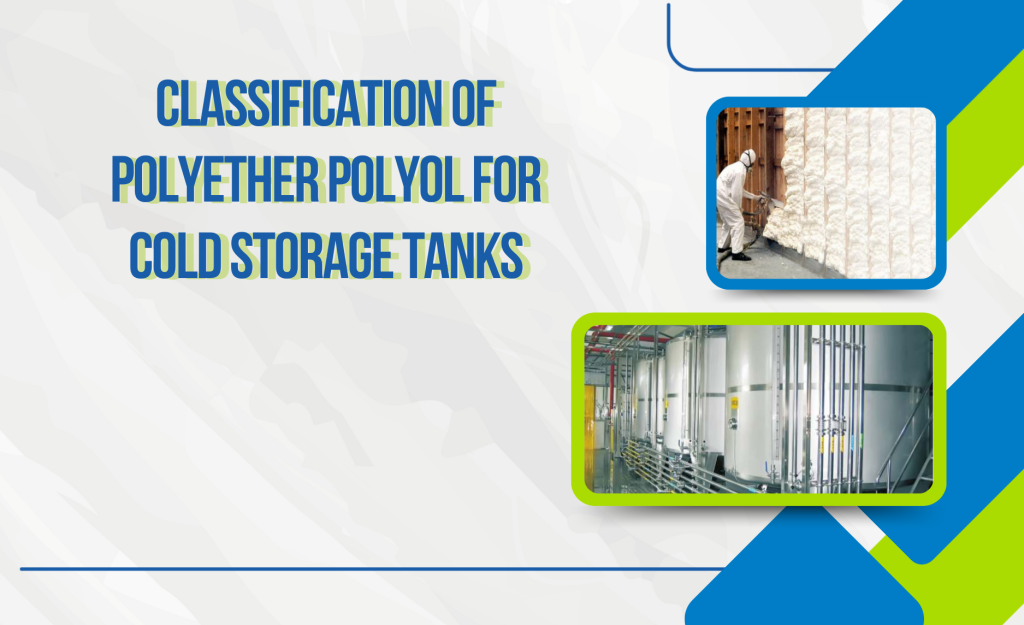
In PU insulation foam systems, Polyether Polyol is a core component. It directly affects the structure and performance of the material. However, Polyether Polyol is not a single type. Each type has its own characteristics and is suitable for different applications.
A clear classification helps engineers and businesses select the appropriate material. This is a critical factor in ensuring the performance and lifespan of cold storage tanks.
OVERVIEW
Polyether Polyol is the main component in the polyol system of PU foam. When reacting with isocyanate, it forms a stable polymer network. In cold storage tank applications, the foam must have a closed-cell structure. This helps limit heat transfer and reduce energy loss.
The properties of the foam largely depend on the type of polyol used. Therefore, classifying Polyether Polyol is an important step in material design.
CLASSIFICATION
By Functionality
Functionality represents the number of hydroxyl groups in the polyol molecule. This is a key factor determining the crosslink density of the polymer. Polyols with low functionality typically produce flexible foam. Their structure has fewer crosslinks, making them unsuitable for industrial insulation.
In contrast, polyols with high functionality produce rigid foam. The polymer network is denser and more stable. In cold storage tanks, high-functionality polyols are commonly used. They help the foam maintain its shape and performance under low-temperature conditions.
By Molecular Weight
Molecular weight affects the mechanical properties of the foam. This is an important factor in formulation design. Polyols with low molecular weight typically produce rigid foam. The polymer structure has a higher crosslink density, which enhances strength and load-bearing capacity.
Meanwhile, polyols with high molecular weight produce more flexible foam. However, rigidity and insulation performance may decrease. For cold storage tanks, polyols with medium to low molecular weight are often selected. This helps balance rigidity and insulation performance.
By Composition
Polyether Polyol is derived from ethylene oxide and propylene oxide. The ratio between these two components affects the material properties. Polyols with higher ethylene oxide content are more hydrophilic. This improves reactivity and dispersion but also increases moisture absorption.
In contrast, polyols with higher propylene oxide content have better hydrophobicity. This helps the foam limit water absorption in cold environments.
In cold storage tank applications, polyols rich in propylene oxide are typically preferred. They help maintain stable insulation performance over time.
By Viscosity
The viscosity of Polyether Polyol directly affects processing and foaming. Low-viscosity polyols are easier to mix and react quickly. This improves foam uniformity. However, if not properly controlled, the cellular structure may become unstable.
High-viscosity polyols allow better control of the foaming process. However, they may cause difficulties in pumping and mixing. In practice, selecting the appropriate viscosity is very important. It ensures stable and efficient production.

ROLE OF CLASSIFICATION
The classification of Polyether Polyol is not only theoretical. It also has significant practical value in manufacturing and processing. When each type of polyol is clearly understood, engineers can design suitable foam formulations. This helps optimize insulation performance and material durability.
In addition, selecting the right polyol helps reduce risks during production. It minimizes technical errors and improves product consistency.
TRENDS
The PU foam industry is developing toward higher performance and sustainability. Polyether Polyol is continuously being improved. New types of polyols are designed to reduce thermal conductivity while enhancing durability and lifespan.
In addition, bio-based polyols are gaining attention. They help reduce environmental impact and align with green development trends. Furthermore, optimizing polyols for specific applications is becoming increasingly common.
CONCLUSION
Polyether Polyol is a key factor in PU insulation foam systems. Clear classification helps achieve a deeper understanding of each material type.
In cold storage tanks, selecting the right Polyether Polyol optimizes performance and durability. This is a decisive factor in the quality and lifespan of the system.
Correct understanding and proper application are the keys to achieving high efficiency in practice.
VICHEM – AUTHORIZED DISTRIBUTOR OF CHEMICAL ADDITIVES FROM LEADING BRANDS SUCH AS COVESTRO, SINOPEC, BUHLER,… IN VIETNAM
Vichem is an authorized distributor of chemical additives from leading brands such as Covestro, Sinopec, Buhler,… in the Vietnamese market. We not only provide high-quality products but also deliver after-sales services that meet international standards.
For more information about our products, please contact us via the following channels:
📞 Hotline: 08 1790 1790
📧 Email: contact@vichem.vn
🔎 LinkedIn: Vichem JSC
🌐 Website: www.vichem.vn
📌 Facebook: Vichem JSC