In construction, the adhesion of adhesives and mortars plays a crucial role. It is a key factor determining the durability of the finishing layer. If the adhesive layer does not meet standards, tiles may debond after a short period.
In reality, many projects encounter this issue even when the materials are not necessarily of poor quality. The causes often lie in the process and application techniques. To fully understand the problem, it is necessary to take a comprehensive view—from the substrate and materials to the construction environment.
OVERVIEW
Adhesion is the ability of the adhesive or mortar layer to bond with the substrate and the covering material. It is a core factor determining the long-term stability of a structure. When the bonding force is insufficient, the material layer will detach from the substrate.
In modern construction, tile adhesives must meet clearly defined technical standards. Adhesion strength is typically measured in MPa. If it does not meet the required level, the risk of debonding is very high.
In addition, the development of materials has also changed adhesion requirements. Modern tiles have low water absorption, making traditional methods less effective than before. Therefore, a proper understanding of adhesion is essential.
MAIN CAUSES
Substrate not meeting standards
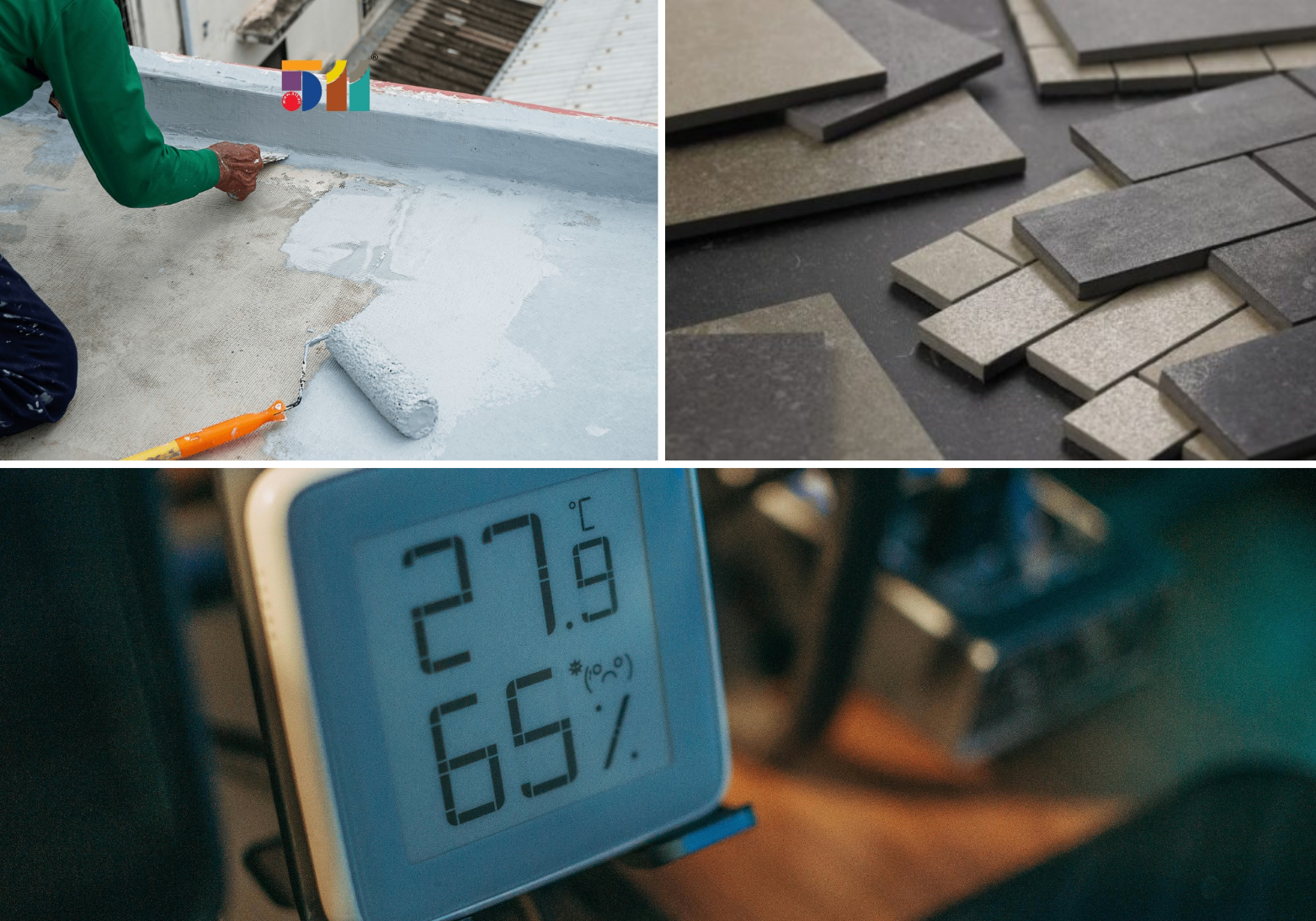
One of the most common causes is a substrate that is not ready for installation. When the substrate is weak or has not fully cured, the adhesive layer cannot bond firmly. In this case, the interlayer bonding becomes very weak.
In addition, an overly dry substrate also causes problems. Cement-based substrates have high water absorption. When they draw moisture from the adhesive, the bonding process is disrupted, significantly reducing adhesion strength.
Conversely, an overly wet substrate is also undesirable. Excess water dilutes the adhesive layer, weakening the bonding structure. All these factors directly affect construction quality.
Improper surface preparation
The substrate surface plays a critical role in forming a bond. If the surface contains dust, grease, or impurities, the adhesive cannot bond uniformly, creating weak points in the bonding system.
An uneven surface is also a major issue. When the adhesive is not evenly distributed, voids will form. These voids reduce the actual contact area.
Another often-overlooked factor is substrate moistening. If moisture is not properly controlled, the adhesive may lose water too quickly, preventing the bonding reaction from fully developing.
Incorrect application techniques
Application techniques have a significant impact on adhesion. In practice, many defects arise from improper handling. If the adhesive is not evenly spread, the bonding layer will be inconsistent.
Not using a notched trowel is a common mistake. This tool helps create uniform ridges, enhancing adhesion. Without it, the adhesive will not fully cover the surface.
For large-format tiles, failing to apply adhesive on the back (back-buttering) also causes problems. Without this additional layer, bonding performance is significantly reduced. These small errors can lead to serious consequences over time.
Use of unsuitable materials
Not all adhesives are suitable for every condition. Choosing the wrong product leads to poor performance. For example, porcelain tiles have very low water absorption. If traditional mortar is used, adhesion will be insufficient.
Low-quality materials are also a notable cause. Products that do not meet standards typically have weak bonding capacity, increasing the risk of debonding during use.
Material selection must be based on the specific characteristics of the project. Otherwise, even with proper techniques, the results may not meet expectations.
Unsuitable environmental conditions
The construction environment directly affects the bonding process. At high temperatures, water in the adhesive evaporates quickly, interrupting the necessary chemical reactions.
In high humidity conditions, the drying process is prolonged, affecting the bonding structure. Additionally, water infiltration from the substrate or surrounding environment can weaken the adhesive layer.
Temperature fluctuations over time also cause expansion and contraction. Without appropriate solutions, the resulting stress can break the bond between material layers.
SIGNS OF FAILURE
In practice, failures do not always occur immediately after installation. In many cases, defects only appear after a period of use. Therefore, early identification of signs is very important.
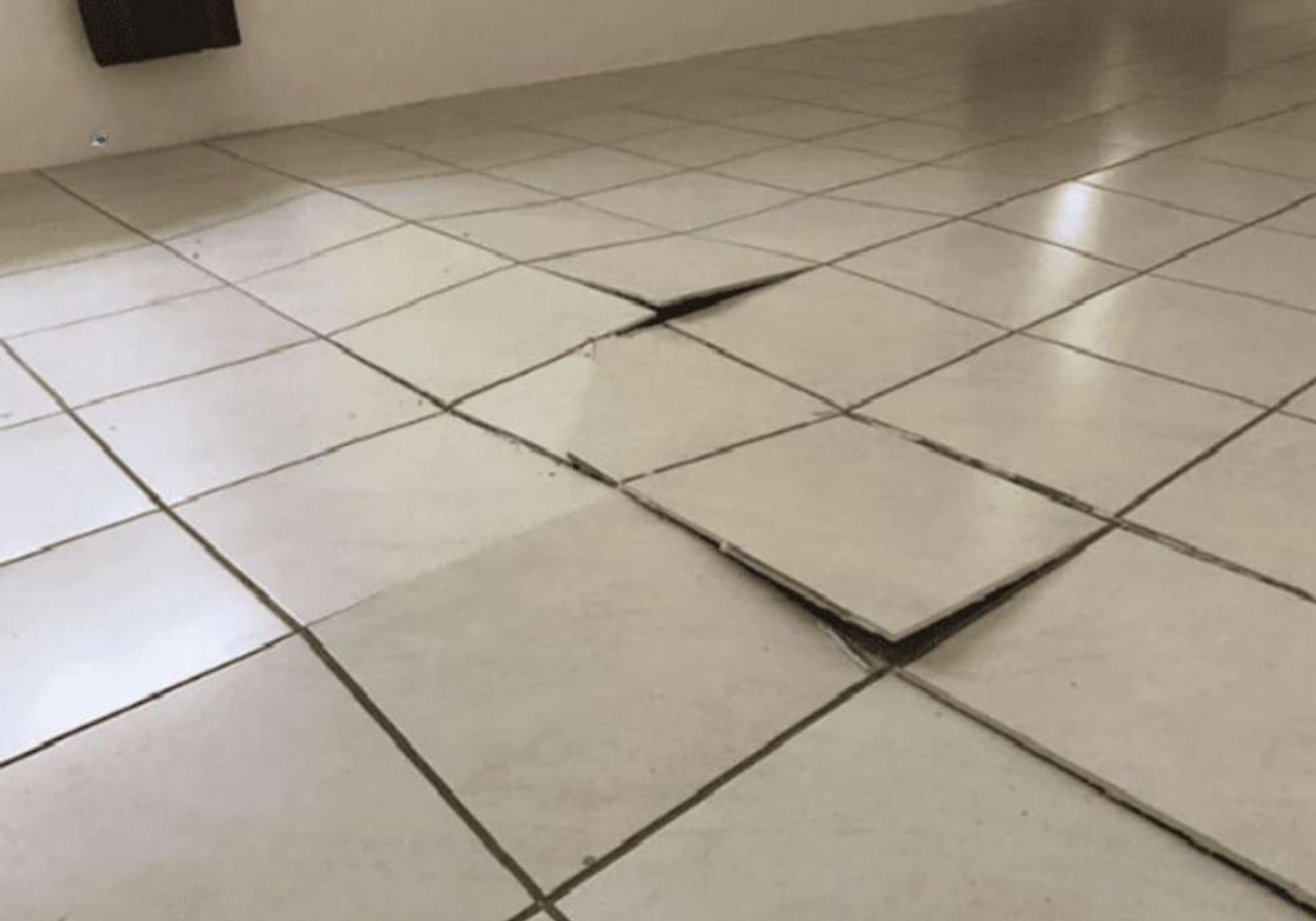
One common sign is a hollow sound when tiles are lightly tapped. This indicates the presence of voids beneath the tile. When the adhesive bond is compromised, the sound will no longer be solid.
Tile bulging or lippage is another clear sign. At this point, internal stress has exceeded the adhesive’s bonding capacity. If not addressed promptly, tiles may fully detach.
Small cracks in grout joints should not be overlooked. These may be early signs of bond deterioration. When water penetrates these gaps, the condition becomes more severe.
In some cases, the mortar crumbles when tiles are removed. This indicates that the bonding structure has been destroyed. Early detection of these signs helps reduce future repair costs.
IMPROVEMENT SOLUTIONS
To improve adhesion, a comprehensive approach is required. First, surface preparation must be carried out thoroughly. The substrate should be clean, flat, and have appropriate moisture content. When the surface meets standards, bonding performance is significantly enhanced.
In addition, selecting suitable materials is critical. The correct type of adhesive must be used for each tile type and installation condition. Standard-compliant products ensure long-term stability.
Application techniques must also be carefully executed. Adhesives should be mixed at the correct ratio and used within the allowable time. During installation, ensure full coverage without voids.
Furthermore, controlling environmental conditions is essential. Avoid installation under extreme weather conditions. When necessary, protective measures can be applied to stabilize temperature and humidity.
CONCLUSION
The adhesion of adhesives and mortars is a critical factor in construction. It depends not only on materials but also on techniques and environmental conditions.
The main causes typically include substandard substrates, improper application, and unsuitable material selection. When these factors are not properly controlled, the risk of debonding is very high.
To ensure quality, the entire process must be executed correctly from start to finish. Investment in proper techniques and technical knowledge will deliver long-term performance, ensuring the durability of the structure over time.
VICHEM – AUTHORIZED DISTRIBUTOR OF CHEMICAL ADDITIVES FOR THE ADHESIVE INDUSTRY SUCH AS PVA, VAE, EVOH,… FROM SINOPEC IN VIETNAM
Vichem is an authorized distributor of chemical additives for the adhesive industry such as PVA, VAE, and EVOH from Sinopec in the Vietnamese market. We not only provide high-quality products but also deliver after-sales services that meet international standards.
For more information about our products, please contact us via the following channels:
📞 Hotline: 08 1790 1790
📧 Email: contact@vichem.vn
🔎 LinkedIn: Vichem JSC
🌐 Website: www.vichem.vn
📌 Facebook: Vichem JSC