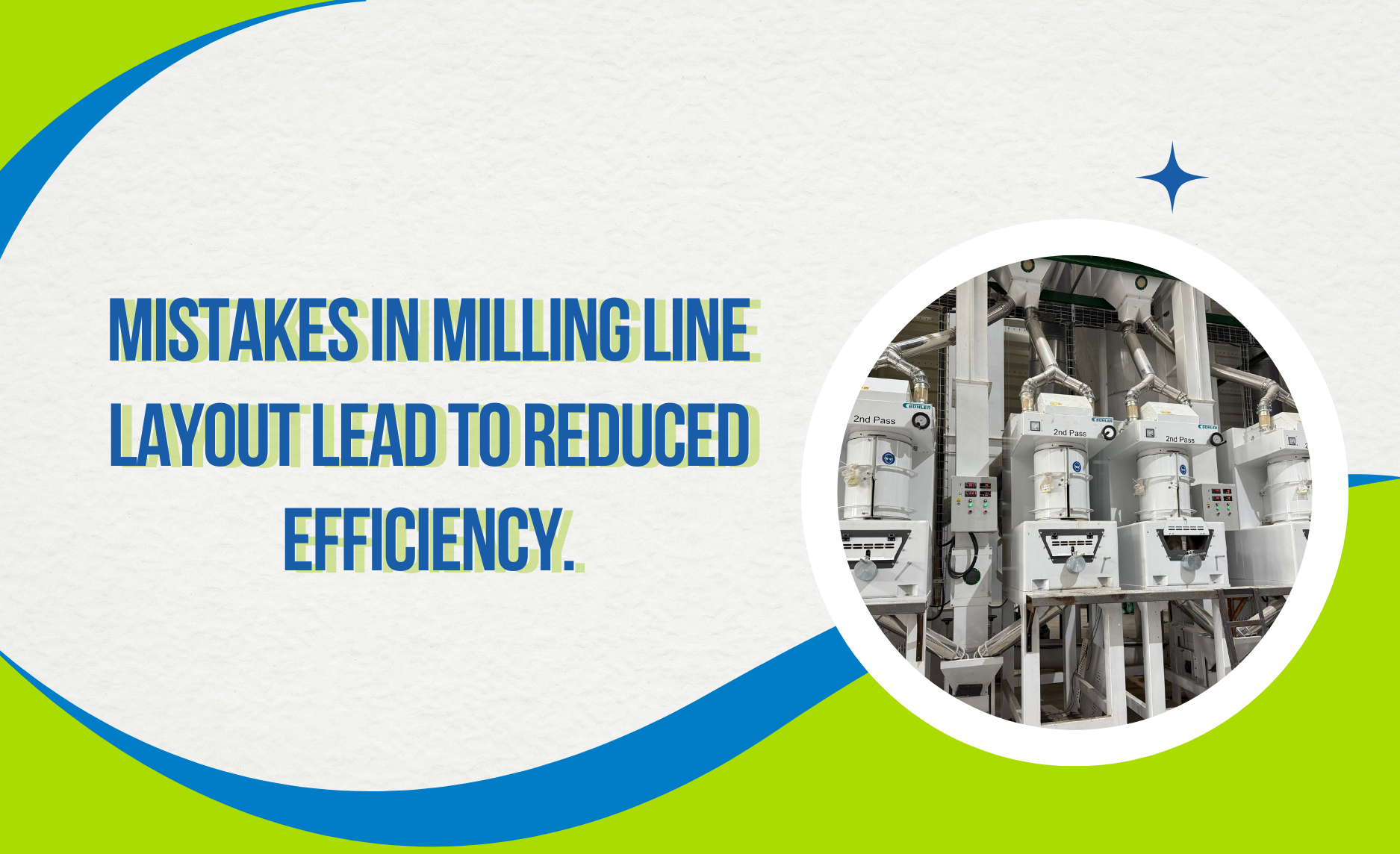
The rice milling line plays a crucial role in the entire rice processing operation. A well-designed layout helps increase productivity and ensure product quality.
However, many businesses still make mistakes in equipment design and arrangement. These errors can reduce efficiency and increase operating costs. Early identification and correction are essential.
DEFINITION
A rice milling line is a system consisting of multiple interconnected machines. The processes include husking, whitening, polishing, and grading.
Line layout is not just about arranging equipment. It also involves material flow and coordination between processes. A well-designed layout ensures stable and efficient operation.ng vận hành ổn định và hiệu quả.
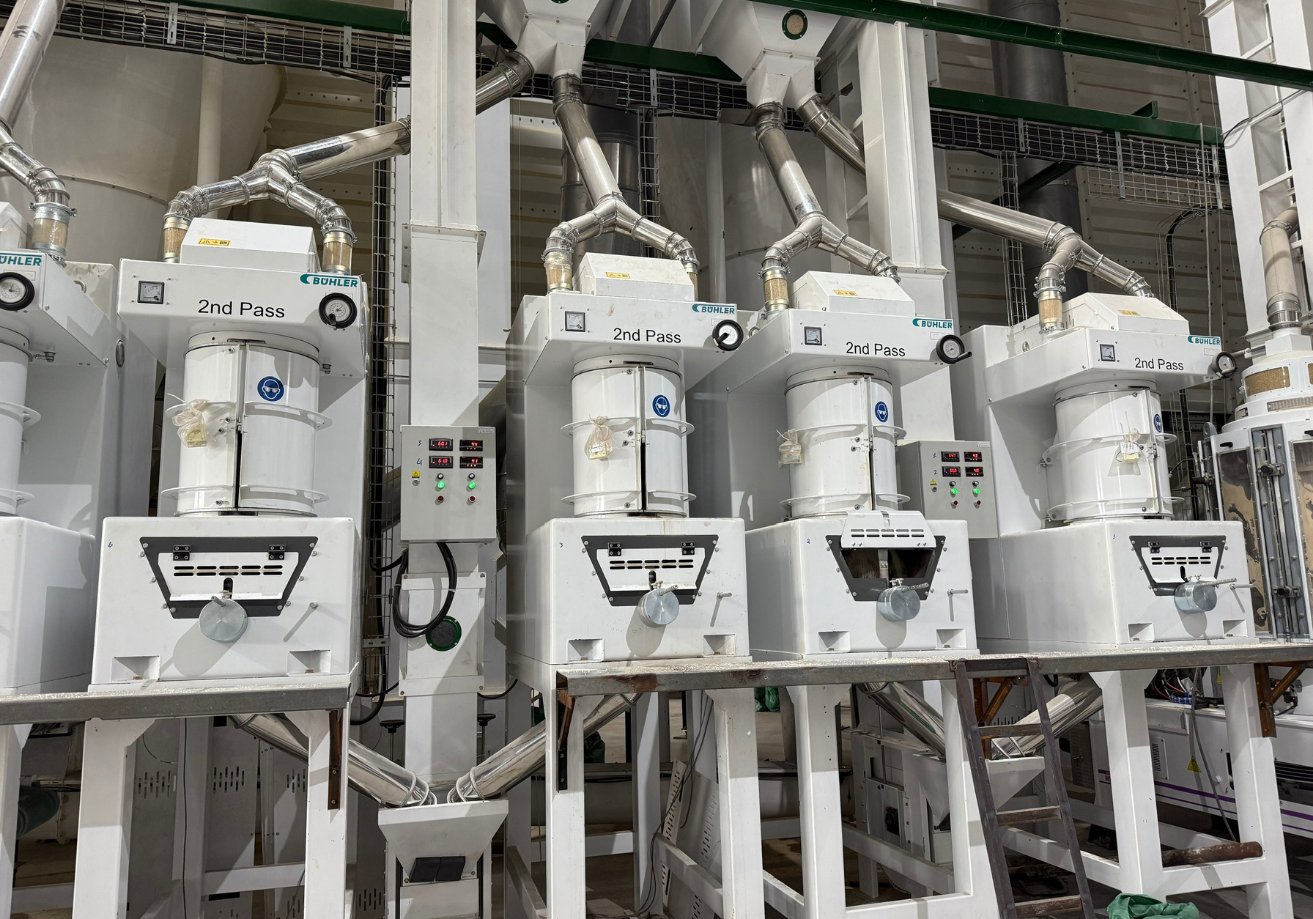
COMMON MISTAKES IN RICE MILLING LINE LAYOUT
Improper Equipment Arrangement Not Following Material Flow
A common mistake is arranging equipment without following the processing sequence. Materials have to move back and forth between stages, increasing transportation time and energy consumption.
When the flow is not continuous, bottlenecks are more likely to occur. In addition, quality control becomes more difficult. This significantly reduces overall efficiency.
Mismatch in Equipment Capacity
In many factories, equipment capacities are not properly aligned. Some machines are overloaded while others are underutilized.
This imbalance creates bottlenecks in the production line. When one stage slows down, the entire system is affected. This reduces productivity and increases operating costs.
Neglecting Internal Conveying Systems
Many businesses focus only on main machines while overlooking conveying systems. This leads to inefficient material handling.
Without proper conveyors or pneumatic systems, material transport becomes interrupted. This increases machine downtime and reduces overall efficiency.
Lack of Space for Maintenance and Operation
Some production lines are arranged too tightly, making operation and maintenance difficult.
When issues occur, accessing equipment becomes complicated. Repair time is extended, causing production interruptions. This directly affects operational efficiency.
Poor Dust and Impurity Control
The milling process generates a significant amount of dust and impurities. Without proper handling systems, the working environment is negatively affected.
Dust can reduce equipment lifespan and impact product quality. It also poses health risks to workers. This issue is often overlooked during initial design.
Failure to Consider Future Expansion
Many production lines are designed only for current needs. When output increases, upgrading becomes difficult.
Without space and expansion planning, businesses may need to redesign the entire system. This is costly and disrupts production operations.
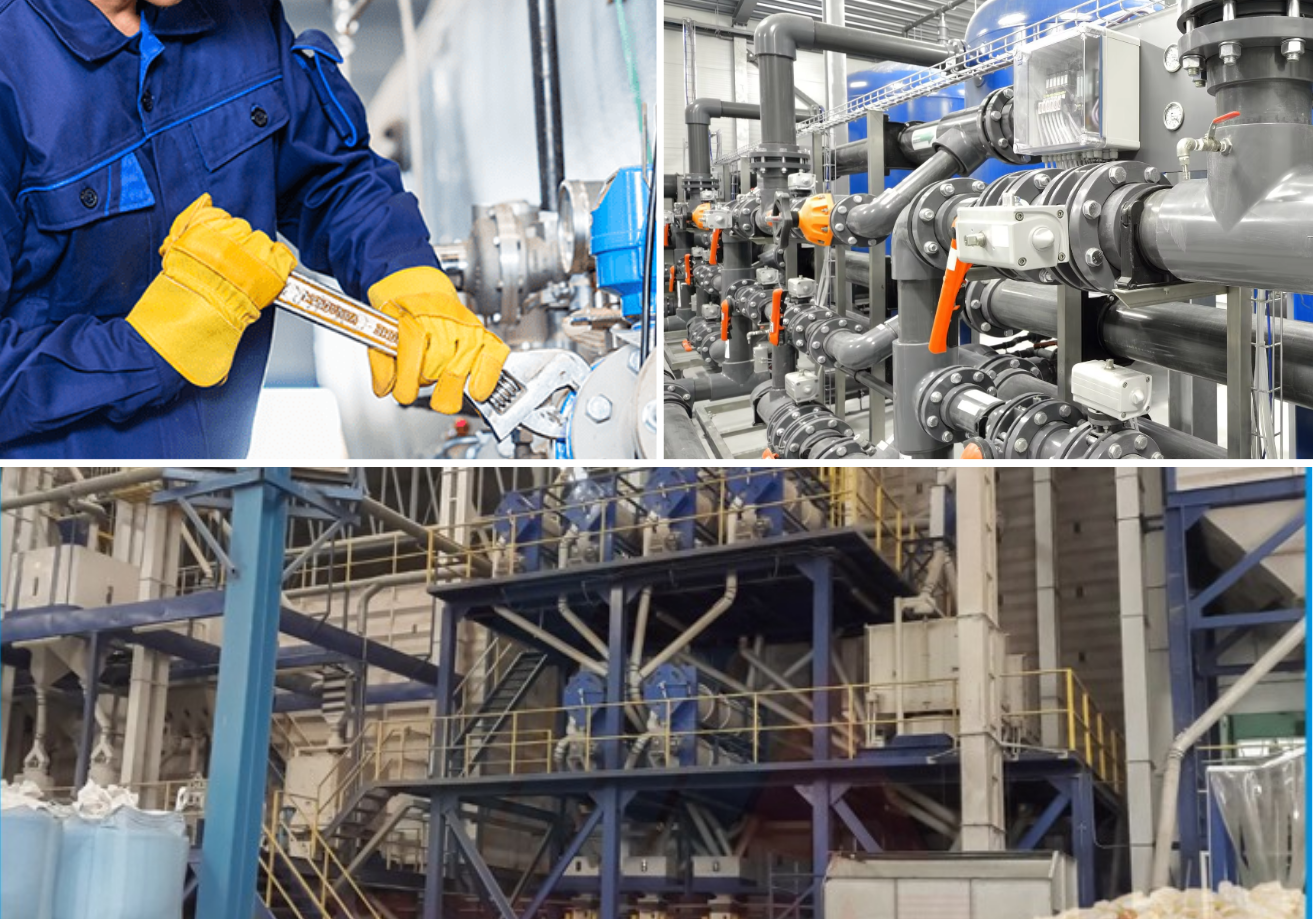
IMPACT ON PRODUCTION EFFICIENCY
Mistakes in line layout can significantly reduce efficiency. When the system is not optimized, operating time is extended, and energy and labor costs increase.
In addition, material loss rates tend to be higher, directly affecting business profitability.
CONCLUSION
Rice milling line layout is a critical factor in rice production. Design mistakes can have a major impact on efficiency and cost.
Businesses need to carefully evaluate technical factors before implementation. A well-planned layout helps optimize operations and improve product quality. This is the foundation for sustainable development in the industry.
VICHEM – AUTHORIZED DISTRIBUTOR OF BUHLER AGRICULTURAL AND INDUSTRIAL MACHINERY IN VIETNAM
Vichem is an authorized distributor of agricultural and industrial machinery from Buhler in the Vietnamese market. We not only provide high-quality products but also deliver after-sales services that meet international standards.
For more information about our products, please contact us via the following channels
📞 Hotline: 08 1790 1790
📧 Email: contact@vichem.vn
🔎 LinkedIn: Vichem JSC
🌐 Website: www.vichem.vn
📌 Facebook: Vichem JSC