
Rice whitening is an important stage in rice processing. It directly affects product quality and commercial value. In practice, whitening technology has evolved significantly from manual methods to automation.
Choosing the right technology is not only related to investment cost. It also impacts production efficiency and material loss rate. By understanding the differences between the two methods, businesses can make more accurate decisions.
DEFINITION
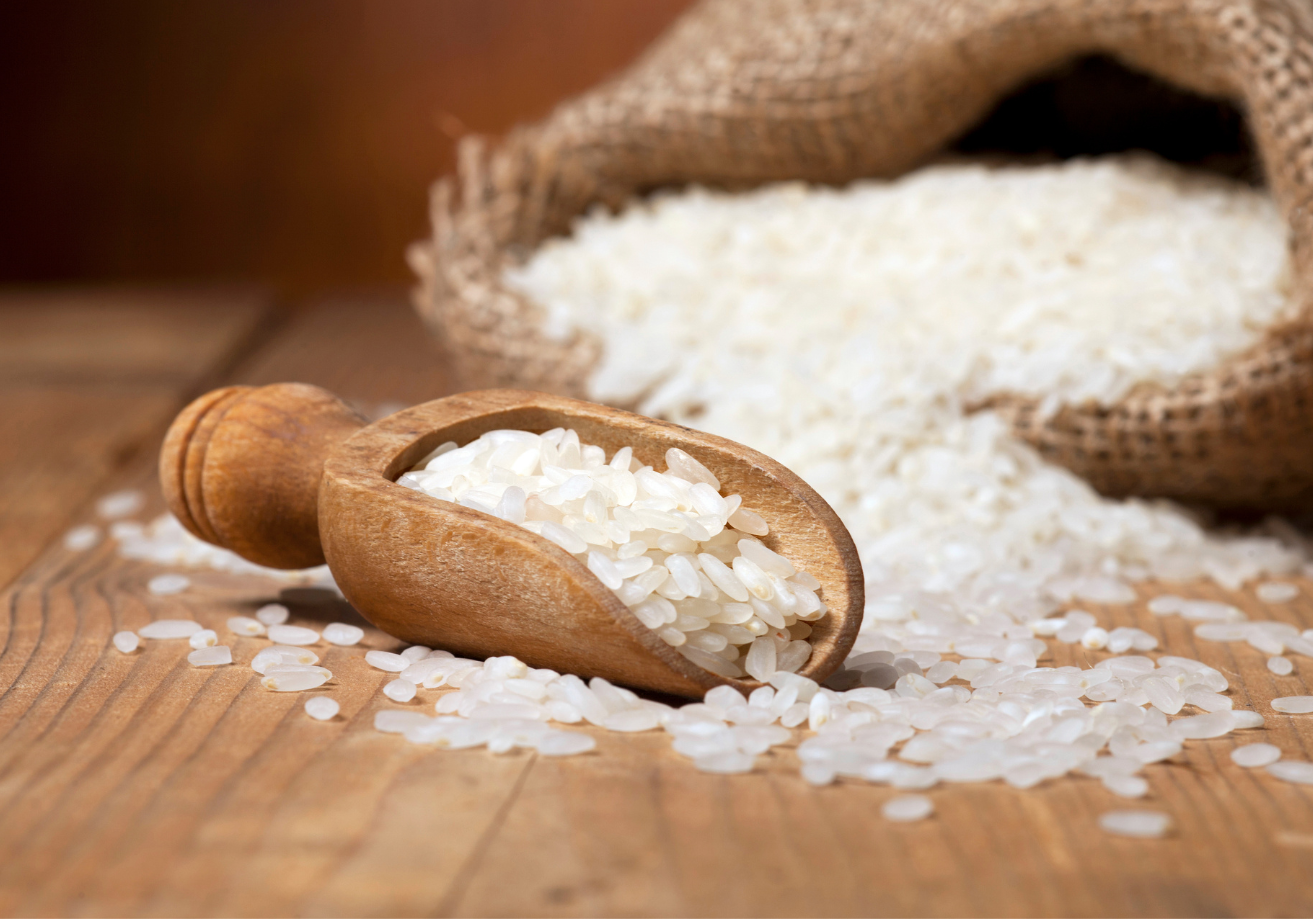
Rice whitening is the process of removing the bran layer from rice grains after husk removal. The goal is to produce white rice that meets consumption or processing standards.
In practice, this stage is not limited to whitening alone. It also involves grain breakage rate, gloss, and uniformity. These factors directly determine the commercial value of rice.
COMPARISON OF TRADITIONAL AND MODERN RICE WHITENING TECHNOLOGIES
Traditional Rice Whitening Technology
Traditional rice whitening technology uses simple equipment such as stone mortars or older mechanical machines. The process mainly relies on friction to remove the bran layer.
This method is commonly found in household-scale or small facilities. The operator plays a key role in quality control.
Due to technological limitations, productivity is typically low. Rice quality is also inconsistent between batches. In addition, the broken rice rate is usually higher compared to modern technology.
Modern Rice Whitening Technology
Modern rice whitening technology utilizes automated or semi-automated machinery systems. The processes are integrated into a single production line.
This system allows precise control of pressure and whitening speed. As a result, the process is more stable and efficient.
Compared to traditional methods, modern technology significantly increases productivity. The head rice yield is higher and quality is more consistent. In addition, dependence on labor is greatly reduced.
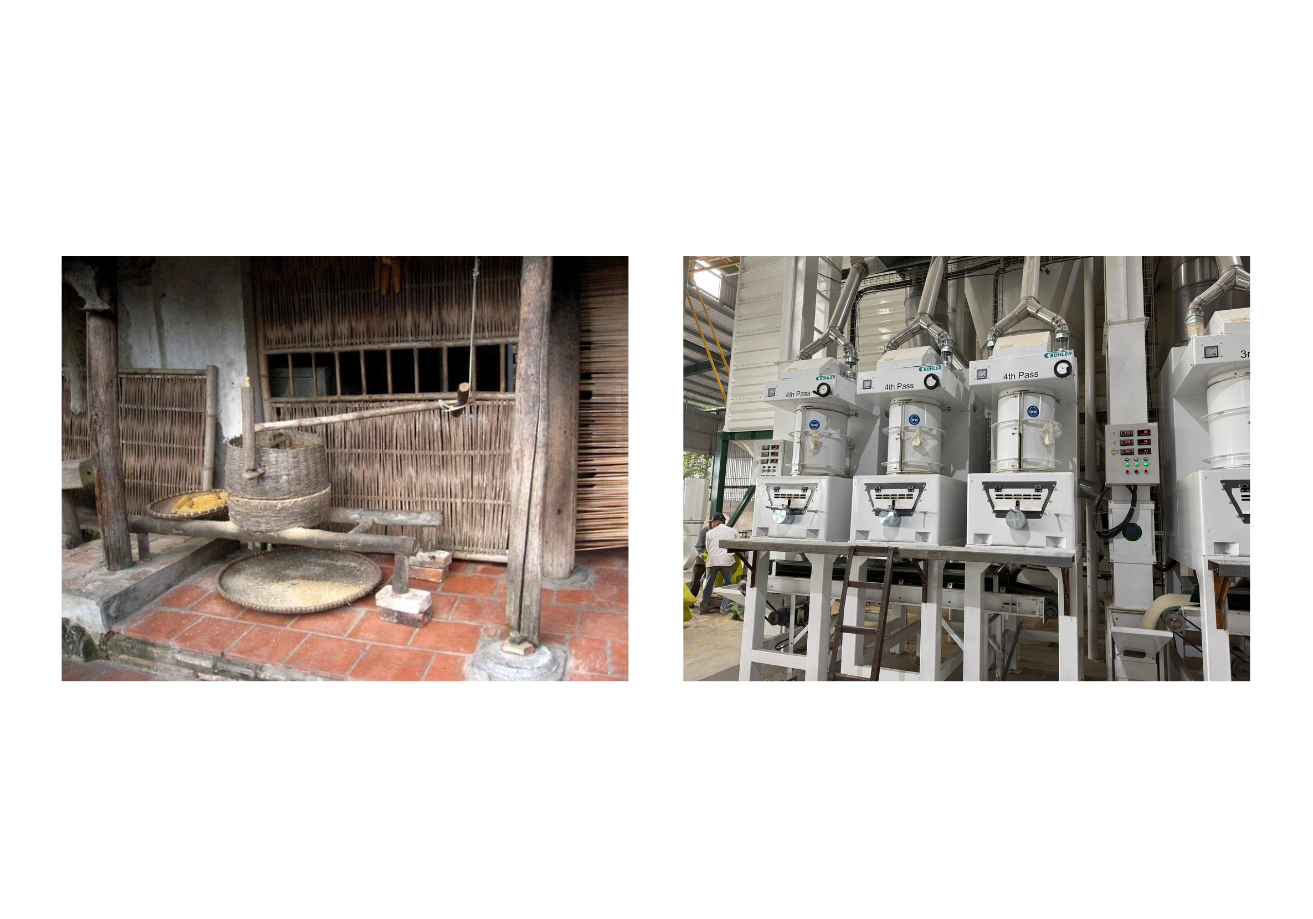
Detailed Comparison Between the Two Technologies
Volatility represents the ability of a solvent to transition from liquid to vapor. This parameter is closely related to vapor pressure.
Highly volatile solvents help shorten production time. However, excessive volatility may cause surface defects. This is particularly important in the coating industry.
Therefore, it is necessary to select solvents with volatility suitable for each specific process.
|
Criteria |
Traditional |
Modern |
| Principle |
Simple mechanical friction |
Friction combined with precise control |
| Automation level |
Low |
High |
| Productivity |
Low, intermittent |
High, continuous |
| Head rice yield |
Low |
High |
| Rice quality |
Inconsistent |
Uniform and stable |
| Investment cost |
Low |
High |
| Operating cost |
Labor-intensive |
More optimized |
| Environment |
Dusty |
Better controlled |
See more Buhler rice whitening machine models here


PRODUCTION AND ECONOMIC EFFICIENCY
Modern technology significantly improves production efficiency. Continuous operation reduces downtime, thereby increasing output.
In addition, material loss is better controlled. As a result, production cost per unit is reduced. In the long term, economic efficiency is higher than traditional methods.
IMPACT ON PRODUCT QUALITY
Rice quality is heavily influenced by whitening technology. Modern technology allows better control of whiteness and gloss, resulting in more uniform products.
Meanwhile, traditional methods often struggle to control these parameters, leading to inconsistent batch quality. This is a major limitation in export markets.
ENVIRONMENTAL IMPACT
Traditional technology often generates more dust and noise, affecting both the working environment and surrounding areas.
In contrast, modern systems are designed to reduce emissions. Many production lines integrate dust collection systems. This improves operating conditions and helps meet environmental standards.
CONCLUSION
Traditional and modern rice whitening technologies differ significantly. Each method is suitable for different production scales and objectives.
In today’s competitive environment, modern technology offers more advantages. It enhances productivity and improves product quality. This is a key factor in increasing the value of rice.
VICHEM – AUTHORIZED DISTRIBUTOR OF BUHLER AGRICULTURAL AND INDUSTRIAL MACHINERY IN VIETNAM
Vichem is an authorized distributor of agricultural and industrial machinery from Buhler in the Vietnamese market. We not only provide high-quality products but also deliver after-sales services that meet international standards.
For more information about our products, please contact us via the following channels
📞 Hotline: 08 1790 1790
📧 Email: contact@vichem.vn
🔎 LinkedIn: Vichem JSC
🌐 Website: www.vichem.vn
📌 Facebook: Vichem JSC