The self-cleaning ability of TiO₂ is a prominent feature in modern materials. Thanks to its photocatalytic mechanism, TiO₂ helps decompose organic contaminants on surfaces. Understanding this mechanism enables more effective practical applications of TiO₂.
WHAT IS THE SELF-CLEANING ABILITY OF TiO₂?
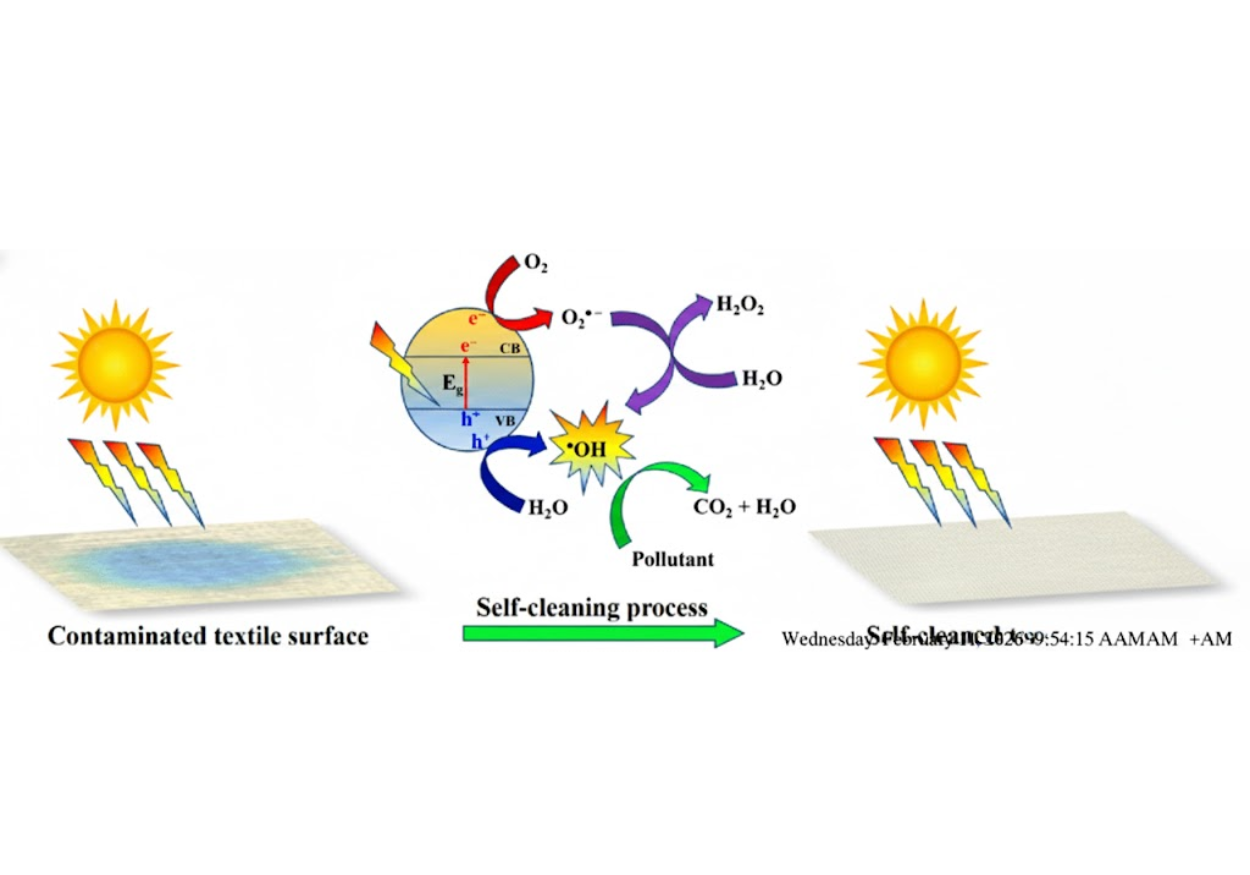
The self-cleaning ability of TiO₂ is based on its photocatalytic mechanism. When exposed to UV light, TiO₂ generates electron–hole pairs. These particles initiate strong oxidation reactions.
Free radicals are formed during this process. They are capable of decomposing grease and organic contaminants. As a result, the material surface is naturally cleaned.
This process does not require chemical detergents. Rainwater or light rinsing can wash away remaining residues. This helps reduce maintenance costs.
PHOTOCATALYTIC MECHANISM OF TiO₂
Formation of electron–hole pairs
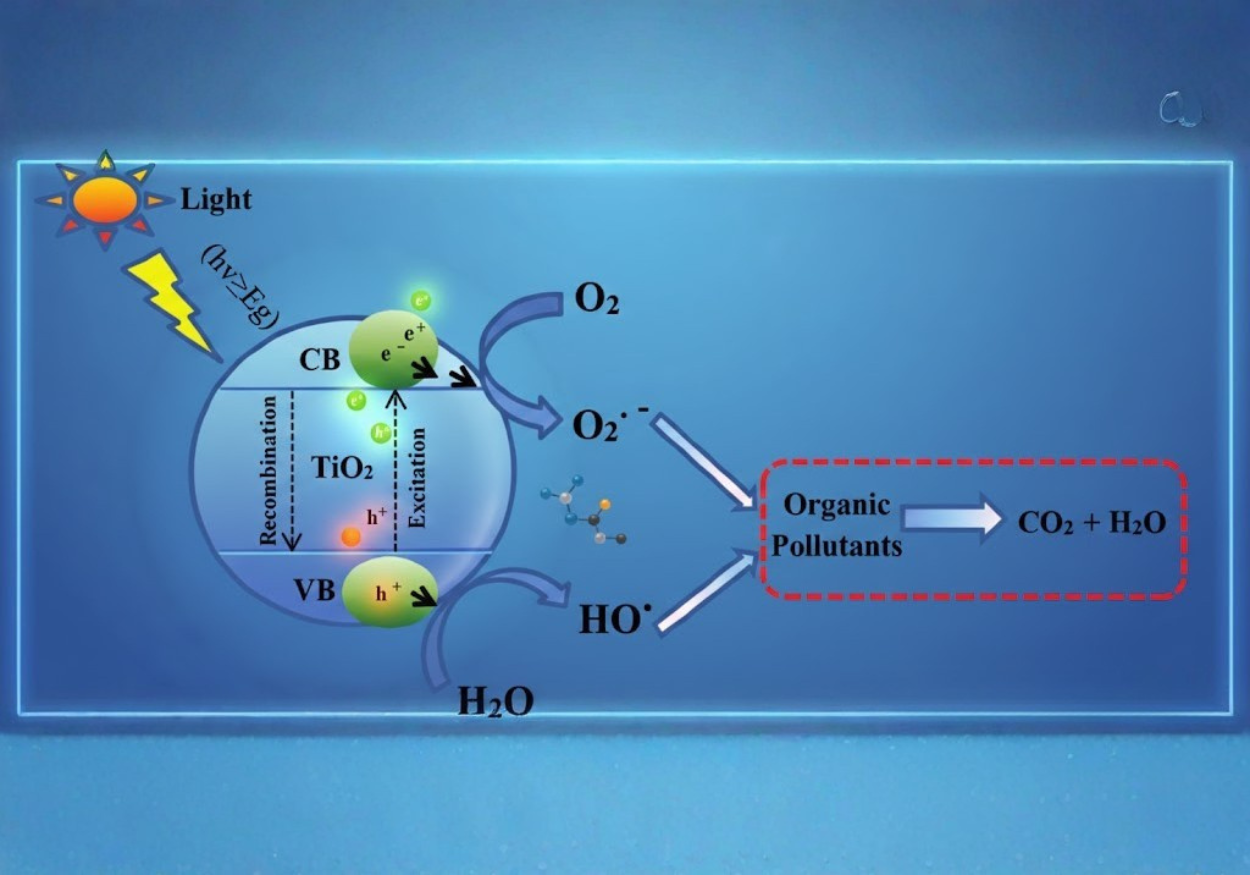
When TiO₂ absorbs light of a suitable wavelength, electrons become excited. They move from the valence band to the conduction band. This leaves holes in the valence band.
These electron–hole pairs enable oxidation–reduction reactions. This is the initial step in the self-cleaning mechanism of TiO₂. The reactions occur on the material surface.
Without light, the reaction hardly takes place. Therefore, efficiency depends on the light source. UV light is a key factor.
Generation of highly reactive oxidative radicals
Electrons react with oxygen in the air. Holes react with water or moisture. Hydroxyl radicals are formed.
These radicals are highly reactive. They break down the bonds of organic substances. Contaminants are decomposed into smaller molecules.
This process continues as long as light is present. The material surface remains clean. This is the core mechanism of TiO₂’s self-cleaning ability.
SUPERHYDROPHILIC PROPERTY
In addition to photocatalysis, TiO₂ exhibits a superhydrophilic effect. Under illumination, the surface becomes strongly hydrophilic. Water spreads evenly as a thin film.
This water layer helps wash away dirt easily. Large water droplets do not form on the surface. This reduces staining.
The superhydrophilic effect complements the photocatalytic mechanism. Together, they enhance cleaning efficiency. The surface maintains brightness over time.
FACTORS AFFECTING THE SELF-CLEANING ABILITY OF TiO₂
Effect of crystal structure
The anatase phase has higher photocatalytic activity than rutile. Crystal structure influences light absorption capability. This determines reaction efficiency.
A mixture of anatase and rutile can enhance performance. The combination improves electron separation. Catalytic activity increases.
Selecting the appropriate phase is important. Outdoor applications require high efficiency. Anatase is often preferred.
Effect of particle size
Smaller particle size increases surface area. Larger surface area provides more reaction sites. Self-cleaning efficiency improves.
However, excessively small particles may agglomerate. This reduces effective contact area. Proper size control is necessary.
Nano-TiO₂ technology helps optimize performance. Nanoparticles exhibit higher activity. This is a common current trend.
Effect of light intensity
Light intensity determines reaction rate. Stronger light generates more excited electrons. Cleaning efficiency improves.
In environments with limited UV light, performance decreases significantly. Indoor applications require suitable design. Artificial light sources may be used.
Current research focuses on TiO₂ activated under visible light. This expands application potential. Practical usability increases.
APPLICATIONS OF THE SELF-CLEANING ABILITY OF TiO₂
In paints and coatings
TiO₂ is used in self-cleaning coatings. The coating layer can decompose organic contaminants. Buildings maintain brightness for longer periods.
The self-cleaning ability of TiO₂ reduces maintenance costs. Surfaces resist staining over time. Coating lifespan is extended.
It is widely applied in exterior paints. Residential walls and public buildings commonly use it. Aesthetic stability is maintained.
In glass and construction materials
TiO₂-coated glass has self-cleaning properties. Organic dirt decomposes under light. Rainwater easily removes residues.
Construction materials integrated with TiO₂ help reduce pollution. Some studies show the ability to degrade NOx. This contributes to environmental improvement.
Applications are expanding in urban areas. Green buildings prioritize smart materials. TiO₂ plays an important role.
In environmental treatment
TiO₂ is used in water and air treatment. Photocatalysis decomposes organic pollutants. Treatment efficiency is relatively high.
The self-cleaning ability of TiO₂ also supports antibacterial effects. Free radicals eliminate microorganisms. This is significant in medical applications.
Photocatalytic technology is widely researched. TiO₂ is a central material in this field. Its application potential is substantial.
LIMITATIONS OF TiO₂
Traditional TiO₂ requires UV light for activation. This limits efficiency in low-UV environments. Improvements are needed to broaden applications.
Some applications require thin and uniform coatings. TiO₂ dispersion must be carefully controlled. Deviations may reduce performance.
Nano-material production costs can be relatively high. However, long-term benefits may offset initial investment. Overall economic efficiency should be considered.
CONCLUSION
The self-cleaning ability of TiO₂ results from its photocatalytic mechanism. The generation of reactive radicals decomposes organic contaminants. Material surfaces remain clean for extended periods.
Controlling crystal phase and particle size is essential. These factors directly influence performance. Applications should be optimized according to actual conditions.
In the trend toward smart materials, TiO₂ plays a prominent role. Its self-cleaning ability reduces costs and pollution. It represents a promising solution for modern construction.
VICHEM – OFFICIAL DISTRIBUTOR OF TITANIUM DIOXIDE POWDER FROM TINOX, BOOM, AND WHITEARROW IN VIETNAM
Vichem is the official distributor of Titanium Dioxide powder from Tinox, Boom, and Whitearrow in the Vietnamese market. We not only provide high-quality products but also deliver international-standard after-sales services.
- Technical consulting: Support customers in selecting products suitable for their application.
- Color-matching tests: Vichem specialists perform matching tests to ensure results meet design standards.
- On-site application support: Assist customers during integration into production lines to ensure optimal performance.
For more information, please contact us:
📞 Hotline: 08 1790 1790
📧 Email: contact@vichem.vn
🔎 LinkedIn: Vichem JSC
🌐 Website: www.vichem.vn
📌 Facebook: Vichem JSC