Selecting polyvinyl alcohol for adhesives depends on the two main parameters encoded in the grade designation: degree of hydrolysis and solution viscosity. The degree of hydrolysis governs dissolution conditions and the moisture resistance of the film, while viscosity reflects polymer chain length and affects application. Switching grades without considering these two parameters can cause a batch to form lumps, fall outside the target consistency, or fail to meet wet-strength requirements.
What Goes Wrong When the Wrong PVA Grade Is Selected
The first sign is powder that does not dissolve completely in the existing process cycle. When the outer surface of a particle encounters heat, it may swell and form a gel layer that seals in the dry core, producing “fish eyes” that are difficult to break up through conventional mixing. A solution that appears relatively homogeneous but still contains particles can clog filters, cause streaks during coating, or create weak points in the adhesive film. Raising the temperature and extending the mixing time will not always recover a batch once lumps have formed.
The second sign is viscosity outside the design window. A solution that is too thick is difficult to pump, produces a thick adhesive layer, levels poorly, and does not readily penetrate paper. A solution that is too thin can penetrate too deeply, leave insufficient adhesive at the bonded interface, or require more water to be removed. Even at the same concentration by weight, two PVA grades with different chain lengths can produce significantly different viscosities.
The third sign is an adhesive film that cannot withstand humid conditions. The PVA structure contains many hydroxyl groups that form hydrogen bonds with water; the degree of hydrolysis and the ability of the chains to organize influence moisture sensitivity. Selecting an easily dissolved grade for production convenience while overlooking end-use requirements can cause the bond to soften or lose strength as humidity rises.
The grade should therefore be selected for the end product and equipment first, followed by establishment of the dissolution process.
Two Decisive Parameters
Degree of Hydrolysis—Determines Dissolution Temperature and Moisture Resistance
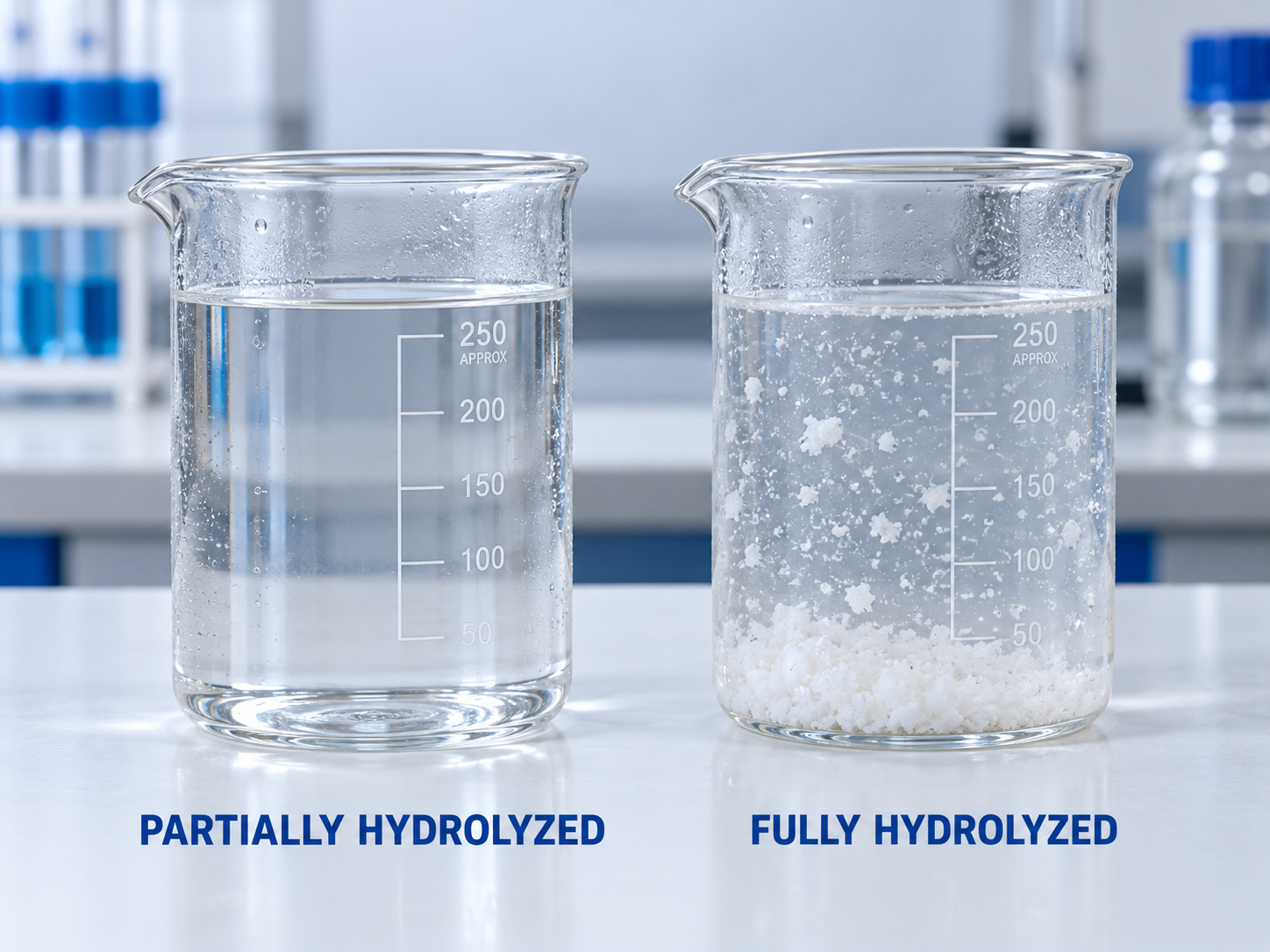
Polyvinyl alcohol is produced by hydrolyzing polyvinyl acetate. The degree of hydrolysis indicates the proportion of acetate groups that have been converted into hydroxyl groups. A partially hydrolyzed grade retains some acetate groups; these interruptions reduce the ability of the chains to pack and crystallize tightly, allowing water to penetrate more readily and promote dissolution under milder conditions.
At a high degree of hydrolysis, the chains contain more hydroxyl groups. They form a strong hydrogen-bonding network and can pack more tightly, making it difficult for cold water to separate the chains. These grades generally require a higher-temperature cycle to dissolve completely, but their films tend to provide better moisture resistance than partially hydrolyzed grades under appropriate comparative conditions.
“Water-soluble” is therefore not a simple yes-or-no property. The charging temperature, swelling time, heating rate, concentration, and mixing intensity must be defined. Water that is too hot during charging can rapidly hydrate the particle surface and trap a dry core. Cold water supports initial dispersion, but some grades still require subsequent heating to complete dissolution.
The degree of hydrolysis is also not the sole determinant of moisture resistance. Concentration, chain length, plasticizers, fillers, crosslinkers, substrate, and curing conditions all alter the film. The hydrolysis group should therefore be used for initial direction, followed by bond testing at the actual service humidity.
Under the supplier's naming convention shown in the PVA documentation, the first pair of digits identifies the degree-of-hydrolysis group. This convention must be interpreted according to the documentation for the relevant product line and should not be applied indiscriminately across all brands.
Solution Viscosity—Reflects Polymer Chain Length
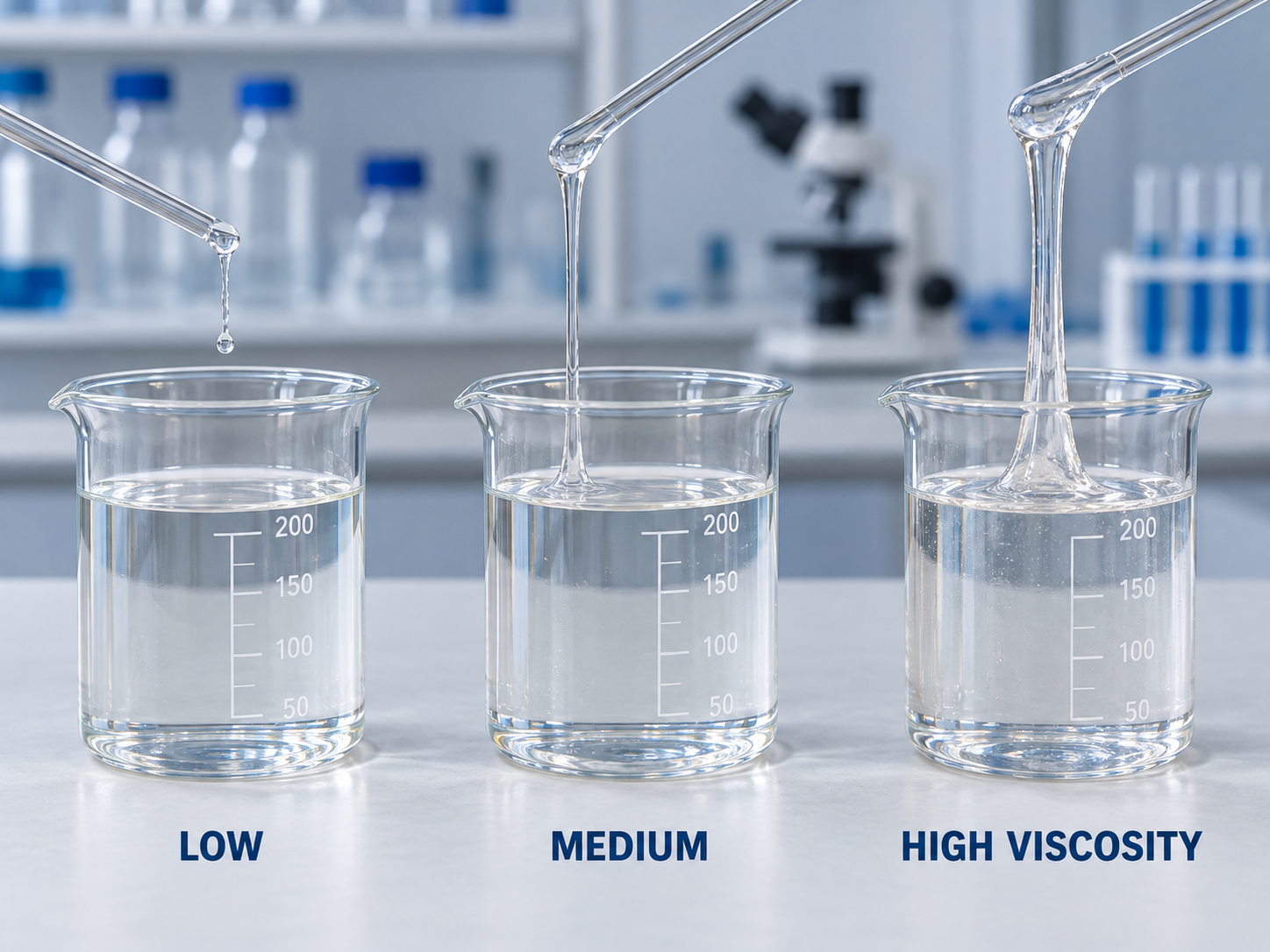
The second pair of digits in the grade designation relates to the solution viscosity grade under the test conditions specified by the supplier. Within the same chemical group, higher viscosity is generally associated with longer polymer chains or higher molecular weight. Long chains create more entanglement points, increasing resistance to flow.
Viscosity determines how the adhesive moves through pumps, coating gaps, rollers, or nozzles. On porous paper, a solution that is too thin penetrates the substrate quickly and leaves less binder on the surface; one that is too thick is difficult to wet evenly and may form a heavy adhesive layer. The higher the line speed, the more important it becomes to keep the viscosity window stable with respect to temperature and time.
Do not compare viscosity values measured at different solution concentrations, temperatures, or by different methods. Viscosity decreases as temperature rises and may change over time if the solution has not fully dissolved. Control samples must be prepared using the same procedure, cooled to the same temperature, and only then measured.
Water should not be used as the sole adjustment lever. Adding water lowers viscosity but also reduces solids content, increases drying energy, and alters penetration. The correct approach is to select a viscosity grade compatible with the equipment, then optimize concentration within the tested range.
How to Match the Grade to Your Application
Step 1—Determine Whether the End Product Will Be Exposed to Moisture
Clearly define the substrate, applied forces, temperature, and humidity during use. Packaging stored in a dry warehouse has different requirements from bottle labels, paper exposed to moisture, or products transported through changing environments. Determine whether the bond must retain rigidity, flexibility, or redissolvability.
Prepare a representative test rather than testing tensile strength only under dry conditions. Samples can be conditioned at the expected humidity, subjected to dry–humid cycles, and inspected for the location of failure: within the substrate, within the adhesive film, or at the interface. This location indicates whether the PVA or the substrate treatment should be adjusted.
Step 2—Select the Degree-of-Hydrolysis Group for the Required Moisture Resistance
If mild dissolution conditions are a priority and the process does not have strong heating capacity, the partially hydrolyzed group is generally a more suitable starting point for screening. If higher moisture resistance is required and the equipment can provide controlled heating, highly hydrolyzed grades may be included in testing. This is a selection direction, not a performance commitment before bond testing.
Also check the batch time, heating capacity, and cooling capability. A raw material that produces a suitable film but exceeds the limitations of the mixing vessel will create production variability. Evaluate the full time from powder charging until the solution is ready, not only the holding time at temperature.
Step 3—Select Viscosity for the Application Method and Equipment
Partially hydrolyzed polyvinyl alcohol should be screened across different viscosity grades. Highly hydrolyzed polyvinyl alcohol represents the group with a higher degree of hydrolysis. The extracted TDS currently contains no data for these grades, so the grade descriptions should be used only to define test groups and must not be converted into specific viscosity or degree-of-hydrolysis values.
Run a narrow concentration range on the actual equipment and record viscosity at the operating temperature, flow rate, coat weight, substrate penetration, and drying time. Select the point that both supports adhesive delivery and achieves the required bond after curing. When changing grades, do not keep the same water level and temperature out of habit; rebuild the cycle from the dispersion stage onward.
Common Mistakes When Dissolving PVA
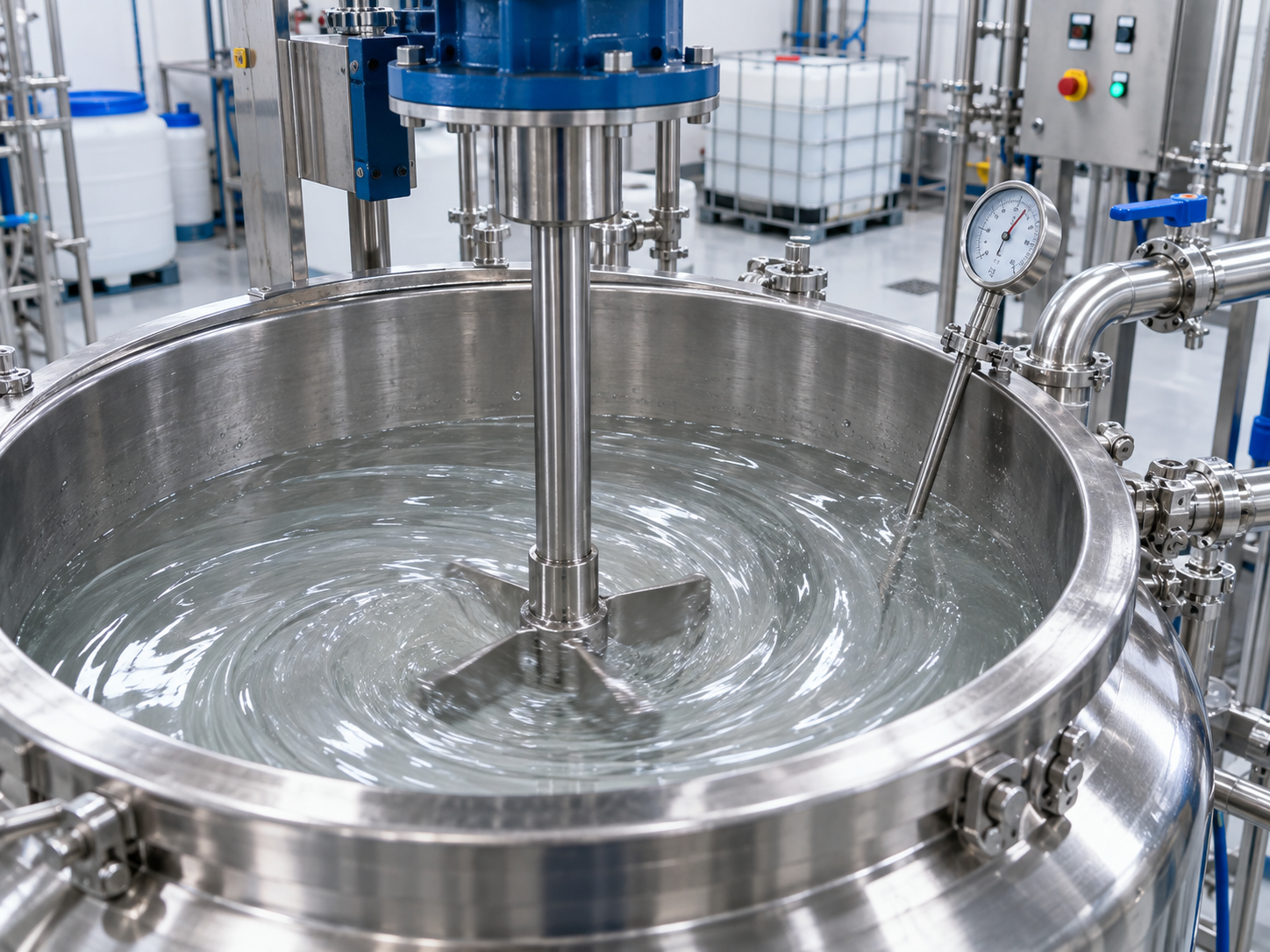
Adding powder directly to hot water is a common cause of lumping. The outer layer swells rapidly and forms a gel that prevents water from reaching the core. Establish stable flow in the vessel, add the powder gradually to water during the appropriate dispersion stage, and then heat according to the tested procedure.
Allowing insufficient swelling time causes uneven water uptake by the particles. When the temperature rises, the swollen fraction dissolves first while the dry fraction forms agglomerates. Swelling time should be established for the batch size, impeller geometry, and PVA grade; do not copy the timing used in a small vessel directly to a production vessel.
Heating too quickly creates temperature gradients within the vessel and increases the risk of material adhering to the vessel wall. A temperature reading at one point does not represent the entire batch if circulation is poor. Monitor temperature, mixer load, appearance, and viscosity after the sample has cooled.
Frequently Asked Questions
What Do the Two Pairs of Digits in a PVA Grade Name Mean?
Under the supplier's naming convention, the first pair identifies the degree-of-hydrolysis group, while the second identifies the viscosity grade. These are classification codes and should not be converted into exact specifications if the TDS for the specific product does not publish them. Always consult the documentation for each grade.
Can Highly Hydrolyzed PVA Replace a Partially Hydrolyzed Grade?
It cannot be substituted directly using the same process. A highly hydrolyzed grade has different dissolution conditions, thermal sensitivity, and film behavior. The charging–heating cycle, concentration, and bond test must be re-established; if the equipment cannot reach the required temperature, the batch may not dissolve completely.
How Long Can a Prepared PVA Solution Be Stored?
The holding time must be established for the specific formulation and hygiene conditions. Concentration, temperature, water, additives, and microbial risk all affect stability. Monitor appearance, odor, viscosity, and film-forming ability; do not apply a general shelf-life limit without storage testing.
Why Does Viscosity Differ Between Hot and Cooled Measurements?
Polymer solution viscosity is highly temperature-dependent: a hot sample generally flows more easily than a cooled sample. To compare batches, collect samples using the same procedure, ensure they have dissolved completely, and bring them to the same measurement temperature. Without standardization, temperature variation can easily be mistaken for a raw-material discrepancy.
Conclusion
Selecting the right polyvinyl alcohol for adhesives means matching the moisture-resistance requirement to the degree-of-hydrolysis group, then matching the application equipment to the viscosity grade. The dissolution process must be redesigned when changing grades rather than retaining the same temperature, water level, and timing out of habit.
- Define the service environment before selecting a PVA group.
- Compare viscosity at the same concentration and temperature.
- Charge the powder, allow it to swell, and heat it in a controlled sequence.
Vichem is an authorized distributor of chemical additive products from leading brands such as Covestro, Sinopec, Bühler, and others in the Vietnamese market.
For more information about our products, please contact us through the following channels:
- Hotline: 08 1790 1790
- Zalo OA: Vichem JSC
- Email: contact@vichem.vn
- LinkedIn: Vichem JSC
- Website: www.vichem.vn
- Facebook: Vichem JSC