Pigment ink and dye ink are two common types of ink used in modern printing. Each type has distinct characteristics in color structure, durability, and application performance. Understanding their differences helps select the right ink for specific printing purposes.
WHAT ARE PIGMENT INK AND DYE INK?
Pigment ink and dye ink are both used to create color in printing. However, their coloring mechanisms are fundamentally different. These differences directly affect print quality.
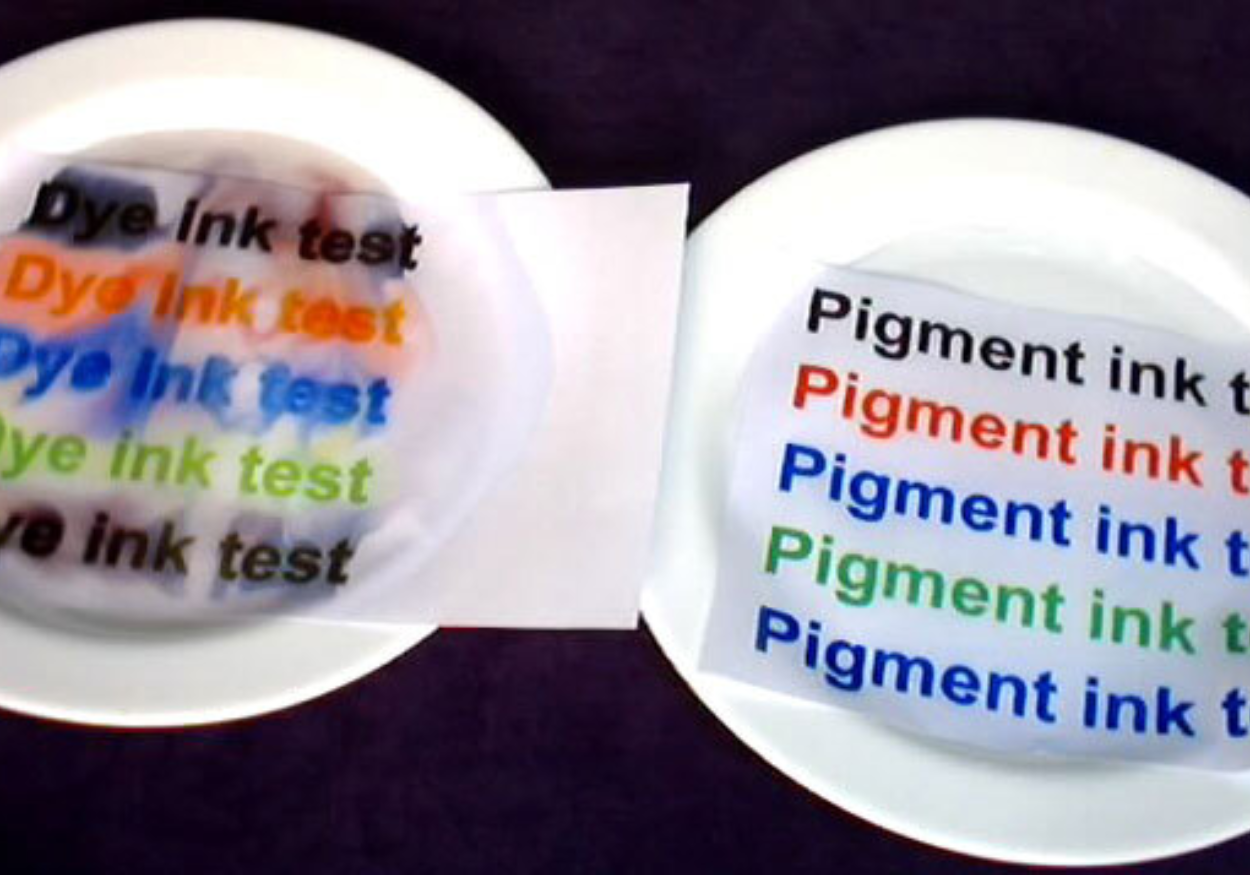
Dye ink uses colorants that are completely dissolved in the solvent. The color penetrates deeply into the printing material. This results in vivid and vibrant prints.
Pigment ink uses solid color particles that do not dissolve. These pigment particles stay on the surface of the material. As a result, prints have higher durability over time.
CHARACTERISTICS OF DYE INK
Structure and color-forming mechanism
Dye ink has very small color molecules. These molecules easily dissolve in water or solvents. During printing, the color penetrates deeply into paper or media.
This penetration mechanism creates a smooth and even surface. Colors appear bright and eye-catching. This is a key advantage of dye ink.
However, dye-based colors are sensitive to environmental factors. Light and humidity can cause rapid fading. Color durability is therefore limited.
Advantages in printing
Dye ink delivers excellent color reproduction. Color gradients are smooth and detailed. This makes it ideal for photo and graphic printing.
The cost of dye ink is generally lower than pigment ink. Production and formulation are simpler. This helps reduce overall printing costs.
Dye ink is also less likely to clog printheads. Small molecules allow stable ink flow. Printers operate more smoothly as a result.
Limitations to consider
Prints made with dye ink fade easily under sunlight. Water resistance is also relatively low. This reduces the lifespan of printed materials.
When exposed to high humidity, colors may bleed. This makes dye ink unsuitable for outdoor environments. Application options are therefore limited.
Dye ink is not ideal for long-term printing needs. Documents requiring long storage should be carefully considered. Color stability is a key factor.
CHARACTERISTICS OF PIGMENT INK
Structure and color-forming mechanism
Pigment ink contains small solid color particles. These particles do not dissolve in the solvent. During printing, pigments remain on the surface.
This adhesion mechanism provides greater color stability. Pigment particles are less affected by light exposure. As a result, color durability is higher than dye ink.
The ink forms a thin film on the surface. This improves water resistance. Environmental resistance is significantly enhanced.
Advantages in practical applications
Pigment ink offers excellent color longevity. Prints retain their color for many years. This makes it suitable for long-term archiving.
Pigment ink has good water resistance. Prints do not easily smear when exposed to moisture. This is important for outdoor printing.
Pigment ink delivers high sharpness in text printing. Fine details are rendered clearly. It is well suited for documents and technical prints.
Limitations of pigment ink
Pigment ink colors are generally less vibrant than dye ink. Smooth color transitions are more limited. This affects artistic photo printing.
The cost of pigment ink is usually higher. Manufacturing technology is more complex. This leads to higher prices.
Pigment particles may cause printhead clogging. Printer maintenance requires more attention. Proper operating procedures are essential.
COMPARISON OF PIGMENT INK AND DYE INK
Color durability and print lifespan
Pigment ink clearly outperforms in color durability. Prints can retain color for many years. This is ideal for long-term storage.
Dye ink has lower color durability. Light exposure easily causes fading. Print lifespan is therefore shorter.
If durability is the priority, pigment ink is preferred. If color vibrancy is the goal, dye ink is more suitable. Usage needs determine the choice.
Water resistance and environmental performance
Pigment ink has good water resistance. Prints do not smear when exposed to moisture. This is crucial for harsh environments.
Dye ink easily bleeds when in contact with water. Environmental stability is lower. It is not suitable for outdoor use.
Usage conditions strongly influence ink selection. Humid environments favor pigment ink. Indoor use offers more flexibility.
Color quality and image performance
Dye ink produces bright and vivid colors. Color transitions appear smooth and natural. It is ideal for artistic photo printing.
Pigment ink produces more muted and stable colors. Color accuracy is high but less vibrant. This suits document printing.
Each ink type has its own strengths. No single ink is superior in all aspects. Clear printing goals are essential.
HOW TO CHOOSE THE RIGHT INK
Choosing between pigment ink and dye ink depends on the intended application. Ink should not be selected based on price alone. Long-term performance should be prioritized.
For indoor photo and poster printing, dye ink is a suitable choice. It offers attractive colors at a lower cost. This meets high aesthetic demands.
For documents, labels, or outdoor prints, pigment ink is more appropriate. Durability and water resistance are critical. This helps reduce long-term costs.
NOTES ON USING PIGMENT INK AND DYE INK
Always use the correct ink type for each printer. Do not substitute inks arbitrarily. This prevents printhead damage.
Store ink under proper technical conditions. Avoid high temperatures and direct sunlight. Stable ink ensures better print quality.
Regularly clean and maintain printers. This is especially important when using pigment ink. Stable equipment extends service life.
CONCLUSION
Pigment ink and dye ink both play important roles in printing. Each meets different usage requirements. Understanding their properties enables accurate selection.
Dye ink excels in color vibrancy and cost efficiency. Pigment ink stands out in durability and stability. Proper evaluation leads to better results.
Choosing the right ink optimizes print quality and cost. This is a key factor in professional printing. The right decision delivers long-term value.
VICHEM – AUTHORIZED DISTRIBUTOR OF ZEALAN INDUSTRIAL PIGMENTS IN VIETNAM
Vichem is the authorized distributor of Zealan industrial pigment products in Vietnam. We provide not only high-quality products but also international-standard after-sales services.
- Technical consulting: Support customers in selecting products suitable for their application.
- Color-matching tests: Vichem specialists perform matching tests to ensure results meet design standards.
- On-site application support: Assist customers during integration into production lines to ensure optimal performance.
For more information, please contact us:
📞 Hotline: 08 1790 1790
📧 Email: contact@vichem.vn
🔎 LinkedIn: Vichem JSC
🌐 Website: www.vichem.vn
📌 Facebook: Vichem JSC