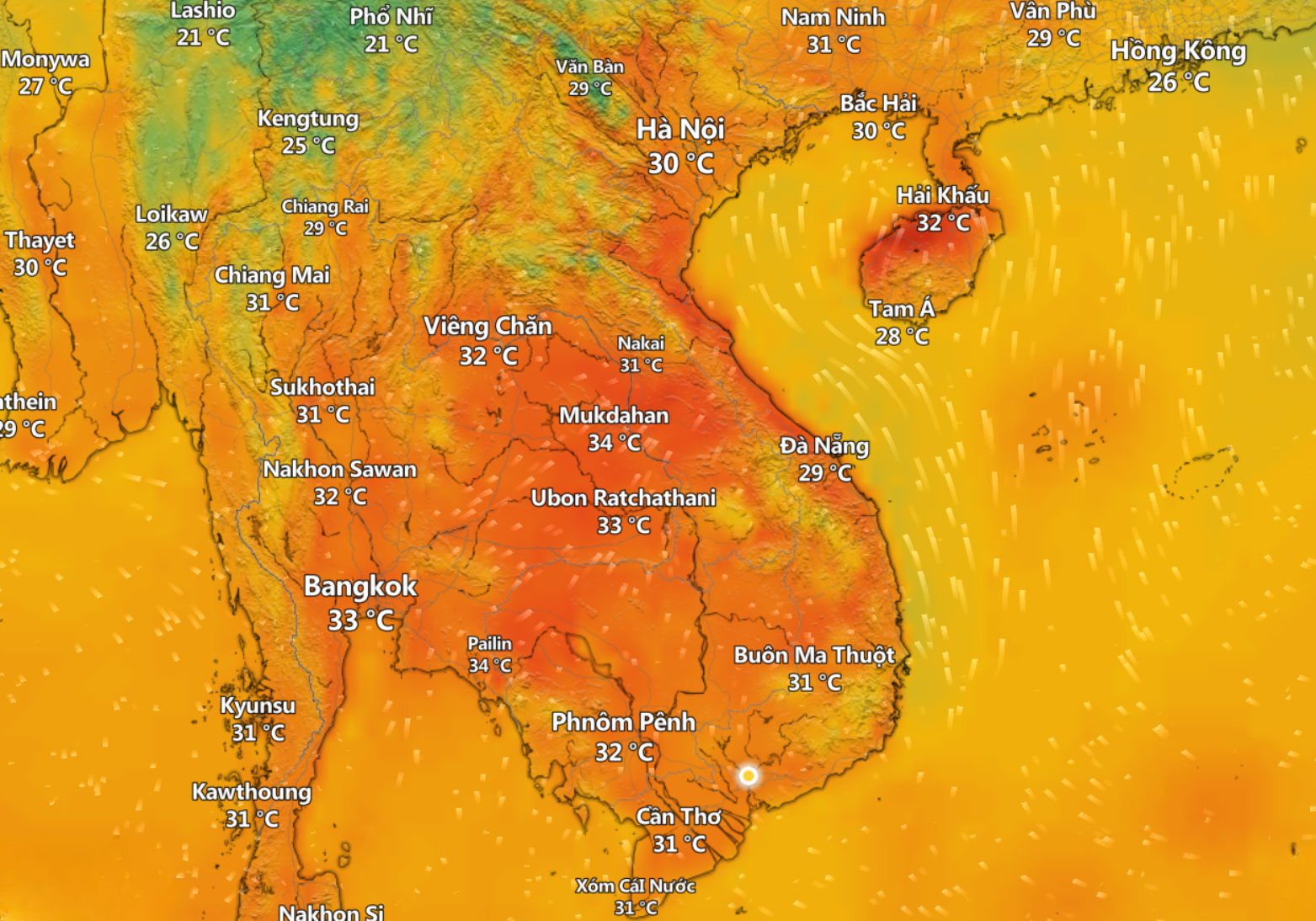
Vietnam is located in a tropical monsoon climate zone. High temperatures combined with high humidity create significant pressure on industrial buildings. Especially with metal roofs, heat can accumulate strongly during the day.
This not only causes excessive heat but also affects materials and equipment. Therefore, using thermal insulation ceiling panels is no longer optional. It has become a necessary solution in many factories today.
VIETNAM’S CLIMATE
Under prolonged hot conditions, roof temperatures can rise significantly. This heat is directly transferred to the space below, making the working environment harsh.
High humidity further worsens the situation. When heat and moisture combine, material aging occurs rapidly, affecting both structural integrity and surface coatings.
In addition, temperature fluctuations between day and night cause continuous expansion and contraction. This makes materials more prone to cracking and reduces durability over time.
THE ROLE OF CEILING PANELS IN TEMPERATURE CONTROL
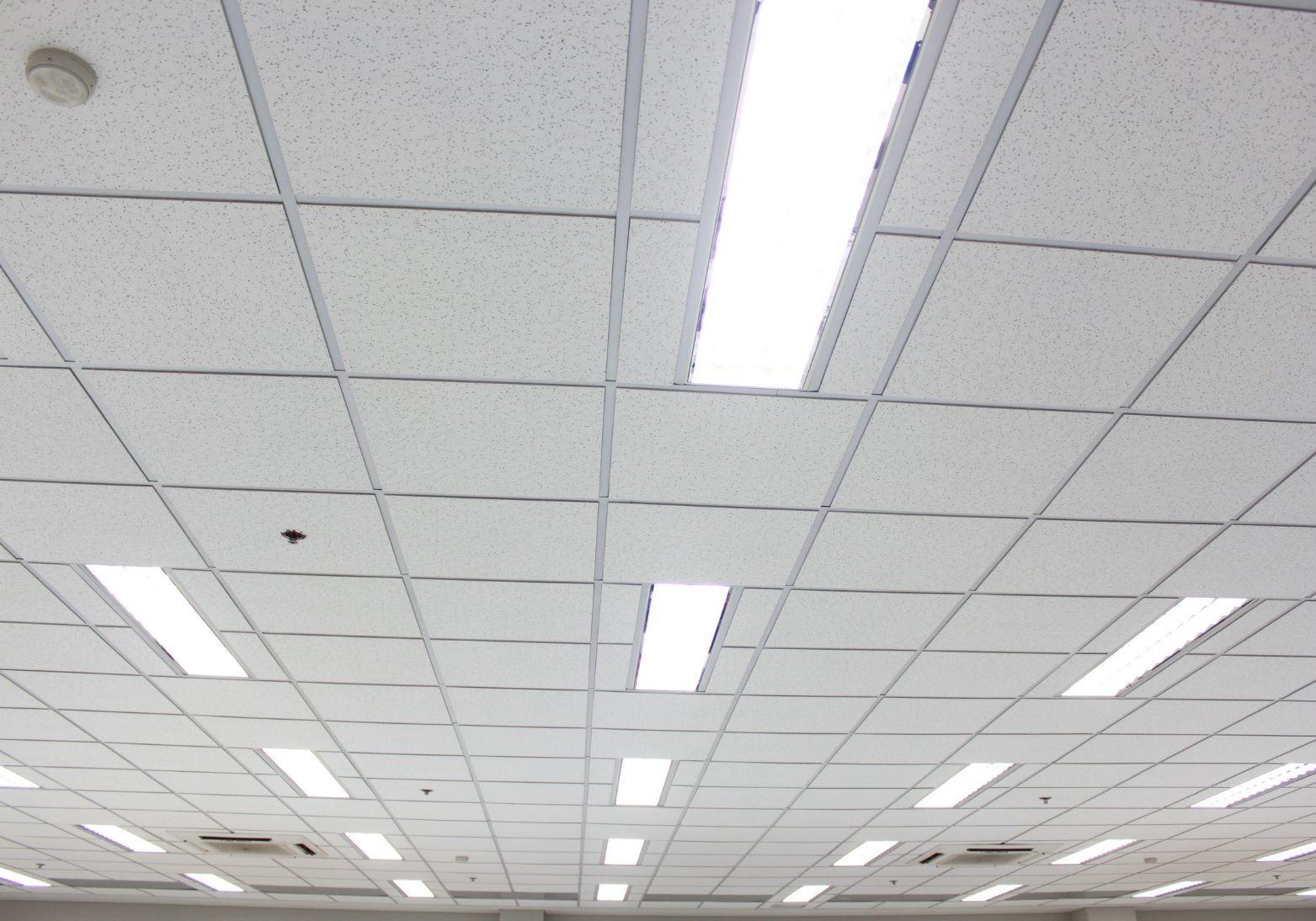
Ceiling panels create a barrier layer between the roof and the space below. This layer helps reduce heat transfer, thereby stabilizing indoor temperatures.
When heat is controlled, the working environment becomes more comfortable. This improves labor productivity and protects equipment. In addition, reducing heat also helps save cooling costs. This is a clear long-term operational benefit.
WHICH CEILING PANEL MATERIAL SHOULD BE USED FOR INDUSTRIAL BUILDINGS?
PU Panel
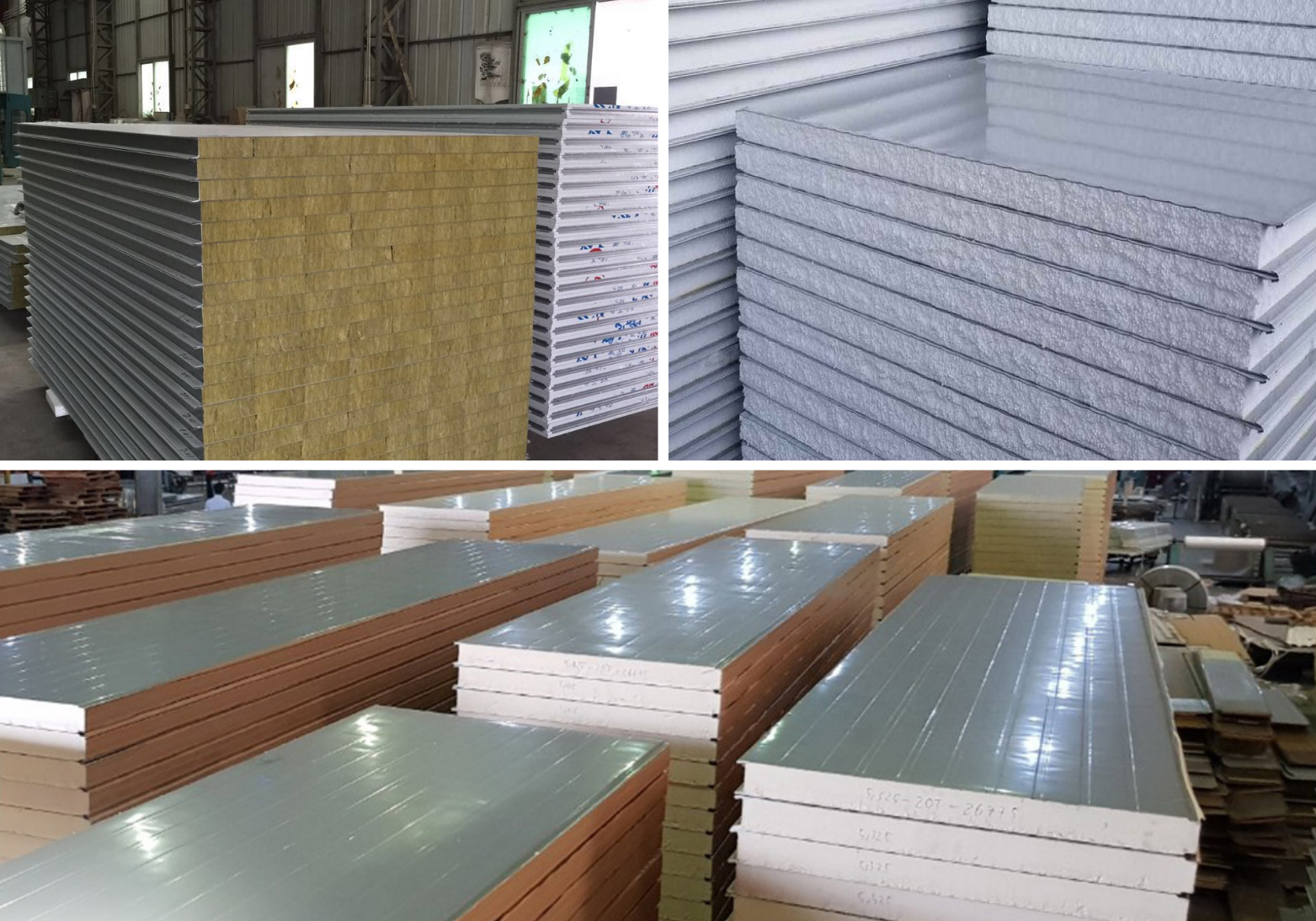
PU panels are high-performance insulation materials. Their closed-cell foam structure effectively limits heat transfer.
According to various technical documents, PU panels offer superior insulation performance and better thermal stability compared to other materials. In addition, they provide better fire resistance. This enhances safety levels in industrial buildings.
PU panels are commonly used in cold storage or large factories. They are suitable if long-term performance is a priority.
EPS Panel
EPS panels use a lightweight foam core. Their biggest advantage is low cost and ease of installation. This type still provides basic insulation performance. It is suitable for factories that do not require high technical standards.
However, EPS has lower fire resistance and durability. In high-temperature environments, the material may degrade faster. Therefore, EPS is more suitable for short-term projects or limited budgets.
Mineral Wool Panel
Mineral wool panels are designed for environments requiring high safety standards. They offer excellent heat resistance and fire protection. This type is commonly used in factories with fire or explosion risks, such as chemical plants or heavy industrial production facilities.
However, their insulation performance is not as good as PU, and their cost is higher than EPS.
RAW MATERIALS FOR CEILING PANEL PRODUCTION
The effectiveness of ceiling panels does not depend only on design. It also strongly depends on the quality of input materials.
For PVC ceiling panels, thermal stabilizers play an important role. They prevent PVC from degrading during processing and use, which is especially necessary in high-temperature environments. In addition, processing aids improve product uniformity and structure. As a result, the panels achieve better mechanical strength.
Moreover, the use of Ca-Zn stabilizer systems or UV-resistant additives helps extend product lifespan. These factors ensure stable performance under harsh climate conditions.
OPTIMAL SOLUTIONS FOR MANUFACTURING ENTERPRISES
To achieve high efficiency, a combination of design and materials is required. Selecting the right resin system and additives helps improve product durability.
Under Vietnam’s conditions, thermal stability is extremely important. Without proper control, products will degrade quickly during use. Therefore, investing in high-quality raw materials is a necessary step. This helps reduce risks and enhance product value.
SOLUTIONS TO MITIGATE IMPACTS
To reduce the effects of heat, it is necessary to select appropriate coating systems. Heat-resistant or heat-reflective coatings are effective options. They help reduce the amount of heat absorbed by the surface. Improving paint formulations is also important. Adding nano-materials can enhance structural durability, helping the coating remain more stable under high temperatures.
In addition, proper application techniques also play a key role. When the paint film is well-formed, its resistance performance will be higher.
CONCLUSION
The tropical monsoon climate creates many challenges for industrial buildings. High temperatures and humidity reduce the lifespan of materials and equipment. In this context, thermal insulation ceiling panels are an effective solution to control the indoor environment. However, actual performance depends heavily on material quality.
Combining the right materials and technologies will help optimize performance. This is a sustainable approach for businesses in the long term.
VICHEM – AUTHORIZED DISTRIBUTOR OF CHEMICAL ADDITIVES FROM MAJOR BRANDS SUCH AS COVESTRO, SINOPEC, BUHLER,… IN VIETNAM
Vichem is an authorized distributor of chemical additives from major brands such as Covestro, Sinopec, Buhler,… in the Vietnamese market. We not only provide high-quality products but also deliver after-sales services that meet international standards.
For more information about our products, please contact us through the following channels:
📞 Hotline: 08 1790 1790
📧 Email: contact@vichem.vn
🔎 LinkedIn: Vichem JSC
🌐 Website: www.vichem.vn
📌 Facebook: Vichem JSCXem thử (mở trong cửa sổ mới)