When a batch shows seeds or color drift even after enough grinding time, the cause is usually a pigment grinding method that does not match the pigment type. Easy-to-disperse pigments need only a high-speed disperser. Fine-particle organic pigments and carbon black need bead milling. Flake pigments such as aluminum must not be ground hard. Before choosing a machine, check the pigment's particle size, its oil absorption and the target pigment fineness of the paint film.
Where the wrong pigment grinding method fails
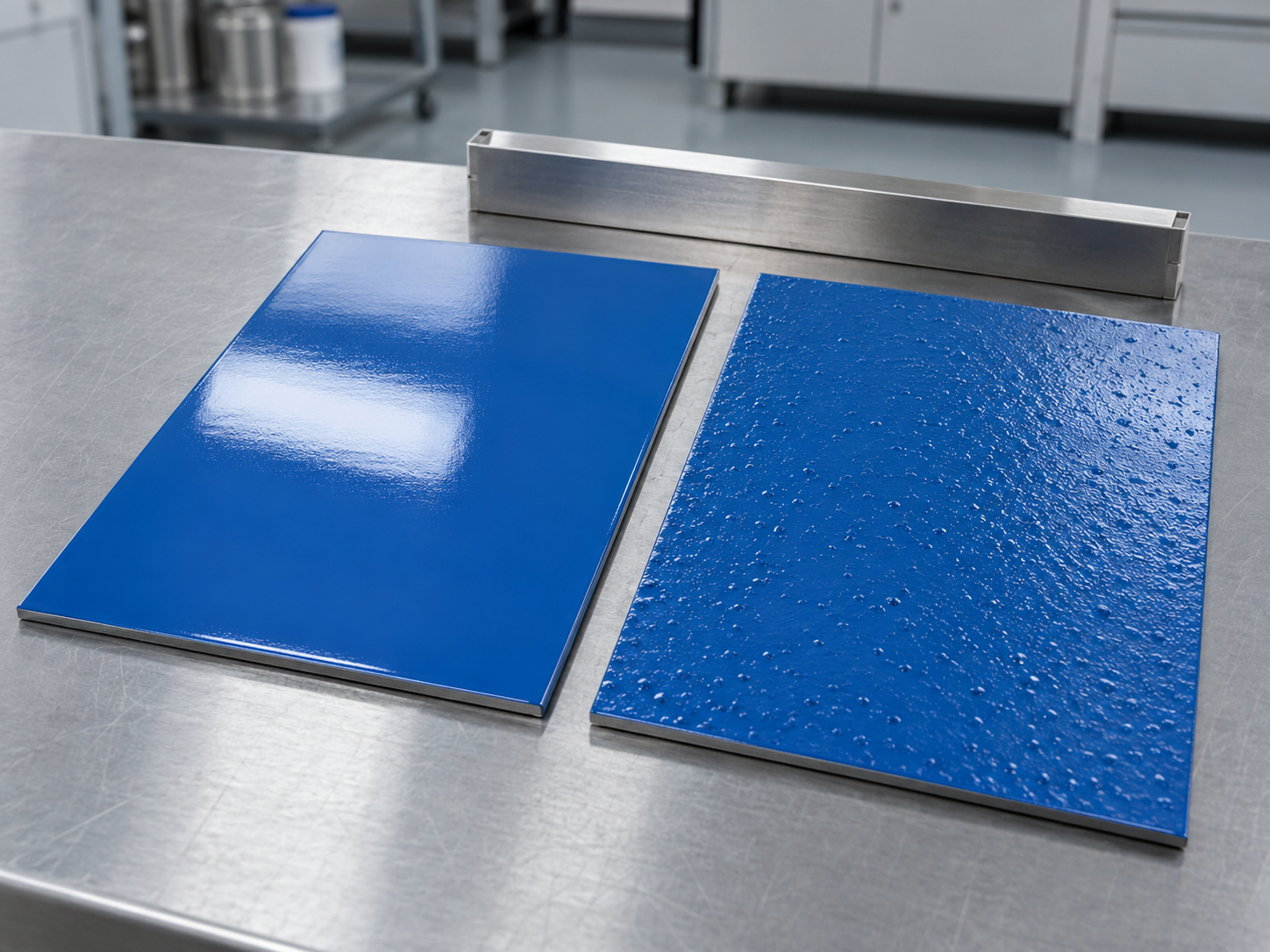
In pigment dispersion in paint, both under-grinding and over-grinding leave visible defects in the film, but the two defects have different causes.
Under-grinding leaves agglomerates in the mill base. An agglomerate is a cluster of primary particles held together by surface attraction and not yet separated. On the line, you see seeds on the paint film. Gloss drops because coarse particles scatter light off the surface. Tinting strength is lower than expected, because pigment surface inside the clusters does not take part in light absorption. The remaining agglomerate level differs from batch to batch, so color also drifts between batches.
Over-grinding does harm in the opposite direction. Metallic flakes are broken and lose reflectivity, so the film looks dull and loses its effect. Mechanical energy turns into heat, which warms the batch. Heat-sensitive pigments may change color, and viscosity may rise as solvent evaporates. Prolonged grinding also wastes power and wears out the grinding media faster, while color quality no longer improves.
Grinding must be distinguished from the other two stages of dispersion:
- Wetting: resin and solvent displace air on the particle surface. This stage depends on surface chemistry and the wetting agent, not on the machine.
- Deagglomeration: this is the job of the grinding machine, which uses shear or impact to separate the clusters.
- Stabilization: the dispersant or resin keeps the separated particles from clustering back together as flocculation (particles regrouping into loose clusters after grinding).
If wetting is poor, a more powerful machine only pushes the defect to a later stage.
4 criteria that decide the pigment grinding method
The four criteria below decide which of the common pigment grinding methods suits your pigment: a high-speed disperser, a bead mill for paint or just gentle mixing.
Criterion 1 — Dispersion difficulty of the pigment
Dispersion difficulty depends on surface area and primary particle size. The finer the particle, the larger the surface area and the stronger the bonds between particles in an agglomerate, so more shear energy is needed to separate them. This is why carbon black and many fine-particle organic pigments usually need bead milling, while relatively coarse inorganic pigments can usually be dispersed with a high-speed disperser.
This is only a general trend. Even within the same pigment type, each grade has a different surface treatment and particle size, so read the TDS of the exact grade you use.
Criterion 2 — Particle shape and mechanical strength
Spherical or blocky particles withstand the impact of bead mill media without changing shape, so they suit aggressive grinding. Flake particles such as aluminum powder and pearlescent pigments are different: the metallic effect comes from the smooth flat face of the flake reflecting light.
When beads strike, the flakes break or bend. Smaller broken flakes reflect less, and the film loses brightness and luster. For this group, use only gentle stirring so the flakes wet out and distribute evenly, and do not put them into a mill.
Criterion 3 — Target fineness of the paint
A primer tolerates coarser particles than a gloss topcoat, because the primer is overcoated and does not decide the final surface. A gloss topcoat is the opposite: any remaining particle larger than the film thickness will stand proud of the surface and reduce gloss.
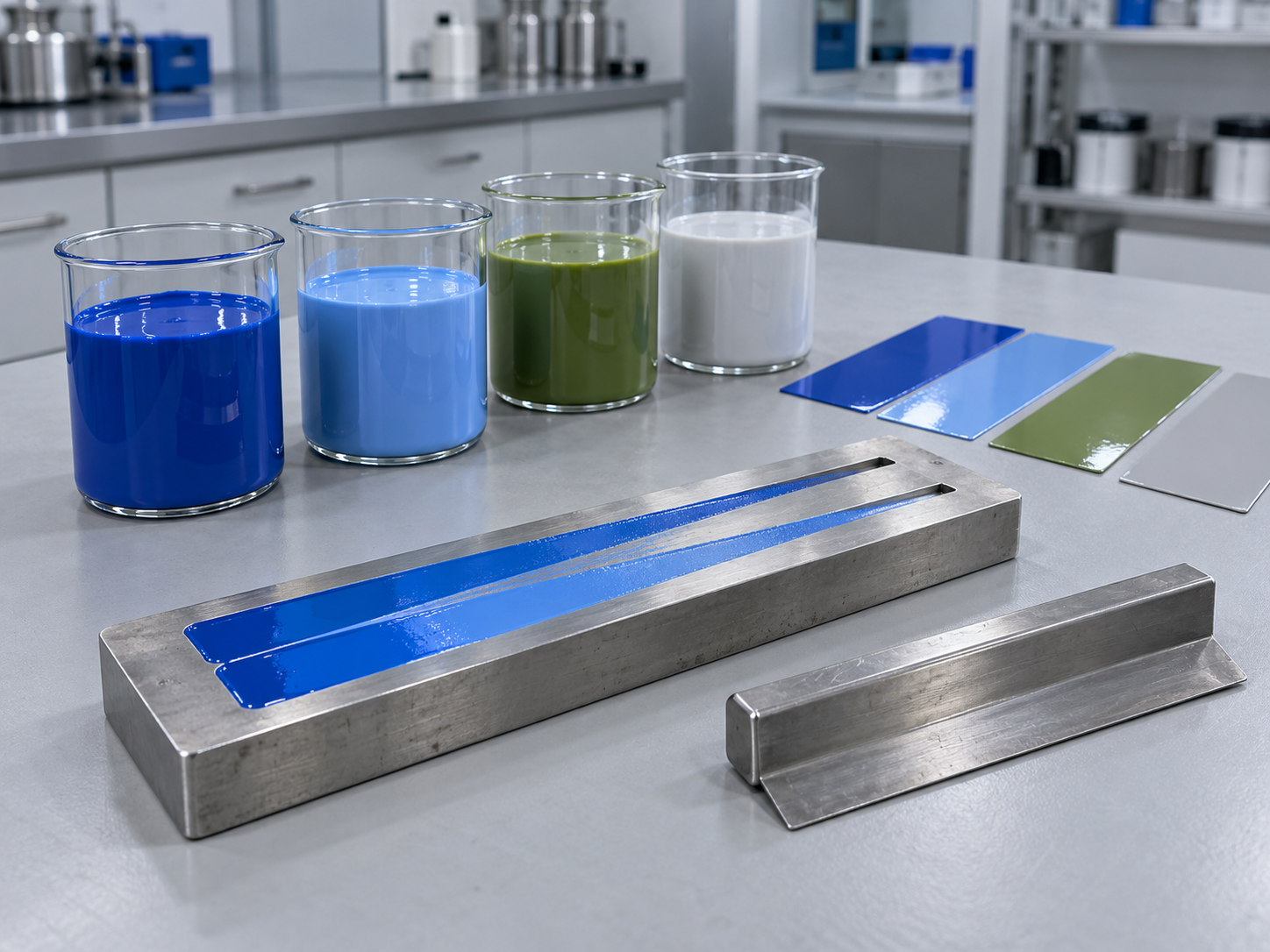
Fineness is usually measured with a Hegman gauge. This is a steel block with a groove whose depth decreases along its length. You draw the paint sample along the groove, and the point where particle streaks begin to appear shows the largest particle size left in the sample. The higher the pigment fineness, the smoother the surface and the higher the gloss, so the target fineness of the paint film decides where you should stop grinding.
Criterion 4 — Mill base viscosity and heat sensitivity
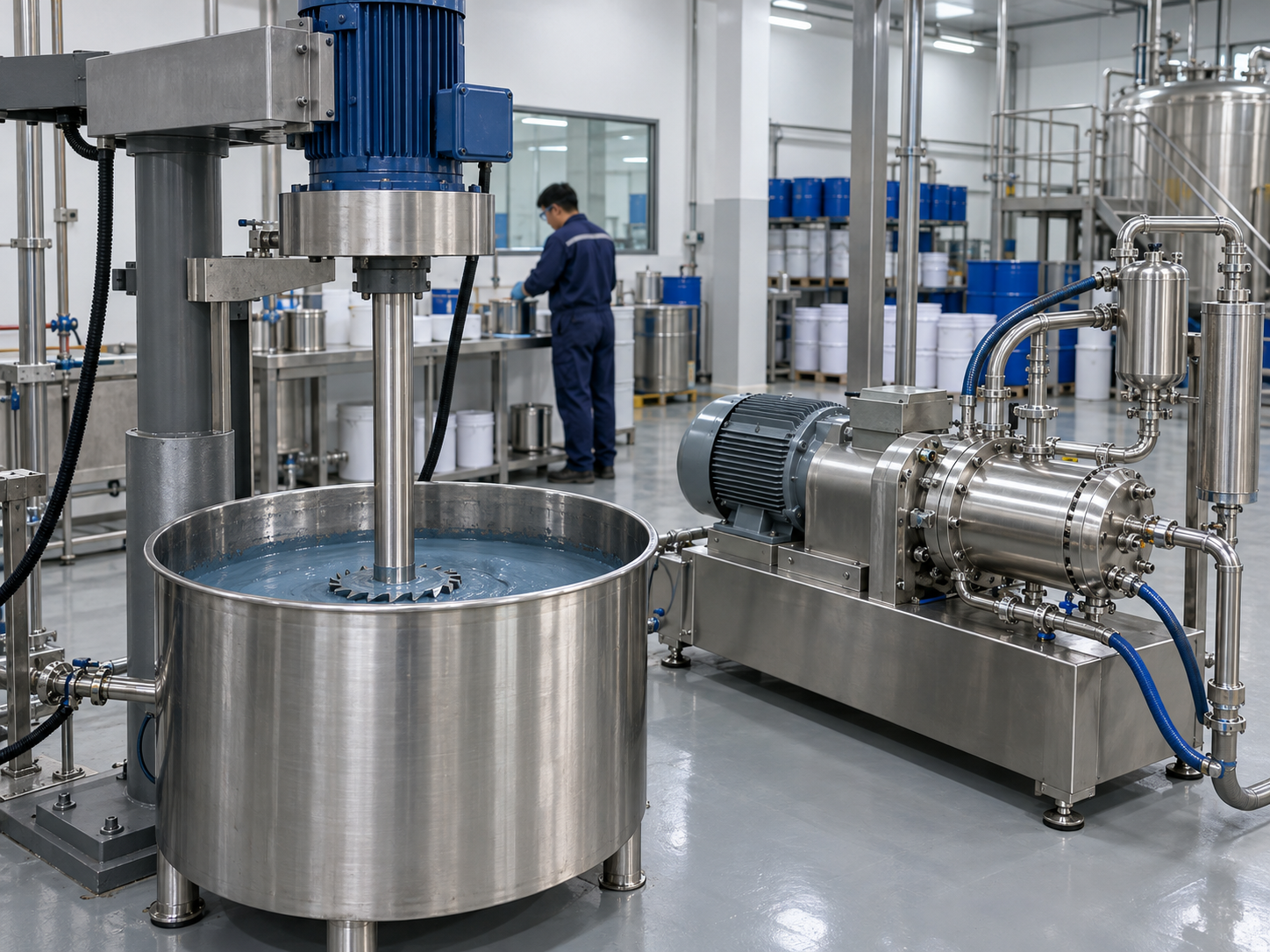
Each type of equipment needs a different mill base viscosity. A high-speed disperser needs a mill base thick enough to transmit shear from the blade into the pigment mass. If the mill base is too thin, the blade only stirs the flow and cannot break up agglomerates. A bead mill needs a thinner mill base so it can be pumped in circulation through the grinding chamber, and it also needs cooling because friction generates heat continuously.
The oil absorption of the pigment sets the pigment-to-resin ratio in the mill base. A high oil absorption pigment needs more resin to wet out, so the mill base must carry less pigment to stay flowable. If the pigment loading is kept too high, the batch thickens, generates more heat and grinds less effectively.
How to match the grinding method to your pigments
The three steps below go from grouping the pigments in the formulation, to trial grinding, to choosing a pigment type that suits the equipment you already have.
Step 1 — Group the pigments in the formulation by criteria 1–2
List each pigment in the formulation and place it in one of three groups: easy to disperse (blocky, relatively coarse particles), difficult to disperse (very fine particles, large surface area) and flake. Each group follows its own route: high-speed dispersing, bead milling or gentle stirring.
If the same pigment is also used in printing inks, see also how to choose pigments for packaging inks by application requirements, because ink fineness requirements differ from those of paint.
Step 2 — Run a trial grind and track fineness, tinting strength and gloss over grinding time
Take mill base samples at evenly spaced time points, measure fineness with the gauge, compare tinting strength with a standard and measure the gloss of a drawdown. Plot the three indicators against time: the stopping point is when all three no longer improve significantly. Grinding beyond that point only adds heat and equipment wear.
Record the batch temperature at each sampling point as well, to learn whether the pigment tolerates the heat of grinding.
Step 3 — Choose a pigment type that fits the process
A plant does not have to grind every pigment. You can choose the pigment type to reduce the load on the grinding step:
- Inorganic pigments: the particles are usually coarser and mechanically strong, and in many cases they can be dispersed with a high-speed disperser.
- Organic pigments: the primary particles are fine and agglomerate strongly, so they usually need bead milling and heat control.
- Pre-dispersed color pastes: the supplier has already ground and stabilized the pigment in a carrier, so the plant only lets it down into the paint and can skip the color grinding step.
For TiO₂, choosing a surface-treated grade that disperses easily reduces the energy required. Aluminum powder should only be stirred gently, and the paste form is usually more convenient because the flakes are already wetted out. When reading the TDS, look for two indicators, oil absorption and particle size, and compare them against the group from Step 1. If the pigment is shared between paint and plastics, the article on choosing pigments for plastics by processing temperature helps you check heat stability as well.
Common mistakes when choosing a pigment grinding method
The three mistakes below are the most common when a plant changes formulations or switches pigment sources.
- Grinding all pigments together in one mill base. Flake pigment is broken at the same time as fine-particle pigment is only just separated. Each group needs its own mill base and grinding conditions, and then they are combined in the paint.
- Extending grinding time instead of fixing wetting. When particles remain despite long grinding, the cause usually lies in an unsuitable wetting agent or grind resin. See more on how to deal with this in the article on poor pigment dispersion in industrial paint and how to fix it.
- Putting flake pigment into a bead mill. Metallic flakes break inside the grinding chamber, and the paint film loses its effect even though the mill base still looks uniform.
- Ignoring the grinding batch temperature. A batch that heats up changes viscosity and color, and fineness readings differ between the start and end of the batch. Monitor temperature and keep cooling running.
Frequently asked questions
Which pigment grinding machine suits industrial paint?
The right machine depends on the pigment type, not on the type of paint. Easy-to-disperse pigments use a high-speed disperser, fine-particle pigments and carbon black use bead milling, and flake pigments are only stirred gently. Group the pigments in the formulation before choosing equipment.
How does a bead mill pigment grinding machine differ from a high-speed disperser?
A high-speed disperser breaks up agglomerates with the shear of the blade in a thick mill base. A bead mill uses grinding media moving inside a closed chamber to separate finer particles, with a thinner mill base and cooling. A bead mill suits pigments that are harder to disperse.
How long should pigment grinding take?
There is no single time for all pigments. The time is enough when fineness, tinting strength and gloss stop improving as you sample at each time point. This stopping point varies with the pigment, the equipment and the mill base formulation, so test it on the system you actually use.
Do organic pigments need more thorough grinding than inorganic pigments?
Usually yes, because organic pigments have finer primary particles, so agglomeration forces are stronger and higher shear energy is needed. However, this depends on the grade, so compare particle size and oil absorption on the TDS of the grade you use.
Conclusion
The right grinding method is the one that matches each pigment's dispersion difficulty and particle shape, and it is stopped at the right time based on measurements rather than a fixed time. For flake pigments, not grinding hard is the first rule.
- Choose the grinding method by the dispersion difficulty and particle shape of each pigment.
- Measure fineness, tinting strength and gloss at time points to find the stopping point.
- Do not put aluminum powder and flake pigments into aggressive grinding.
- Consider pre-dispersed color pastes to reduce the grinding step.
Send us the list of pigments in your formulation and the grinding equipment you use, and the Vichem technical team will work with you to match the pigment type to your process.
Vichem is a distributor of chemical additives from leading brands such as Covestro, Sinopec and Bühler in the Vietnamese market.
For more information about our products, please contact us through the following channels:
- Hotline: 08 1790 1790
- Zalo OA: Vichem JSC
- Email: contact@vichem.vn
- LinkedIn: Vichem JSC
- Website: www.vichem.vn
- Facebook: Vichem JSC