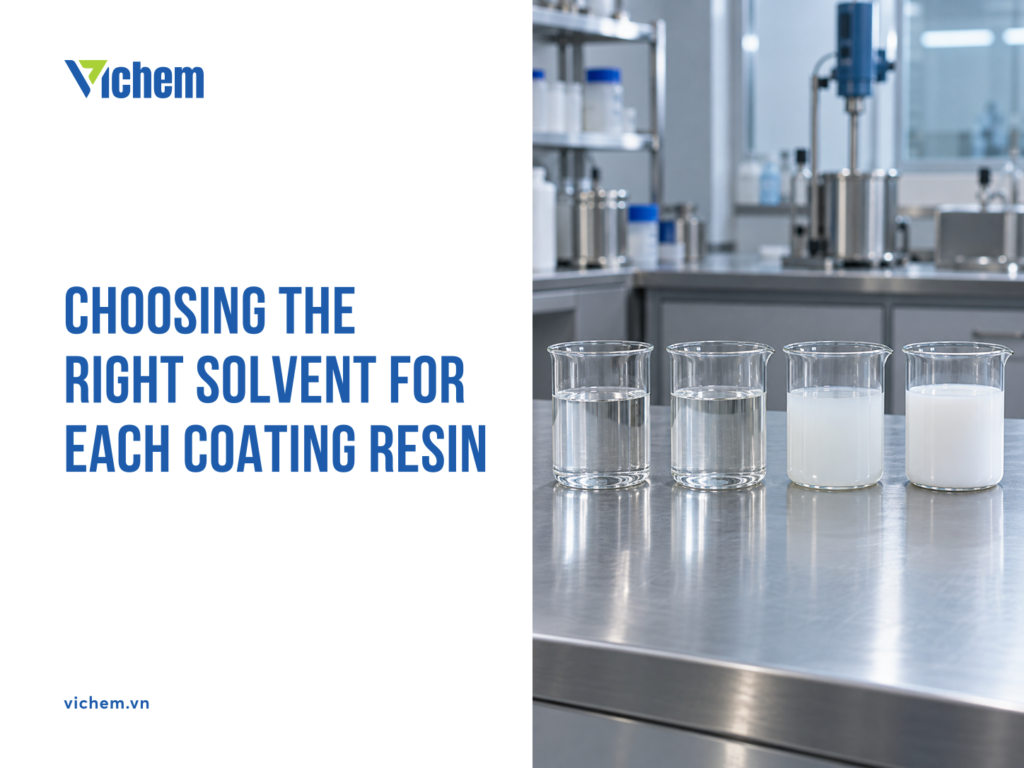
For solvent selection for paint resins, check three things together: how well the solvent dissolves the resin, an evaporation rate that suits the application method, and chemical compatibility with the hardener. Choosing on price alone, or using one solvent for every system, can leave the film cloudy, hazy white or softer than intended. For each resin system, check the sensitive functional groups, the shop conditions and the film test results before you finalize the choice.
Where a wrong solvent breaks the paint film
The solvent controls three things in a paint: whether the resin dissolves completely, how fast the wet film dries, and whether the hardener is consumed by unwanted side reactions. If any one of these goes wrong, the defect shows on the film.
When the resin does not dissolve fully, the paint solution turns cloudy, resin molecules aggregate and separate on standing, and the dry film loses clarity and shows fine particles. The cause is that the solvent is not close enough to the resin in polarity, so the resin chains coil up instead of extending in solution.
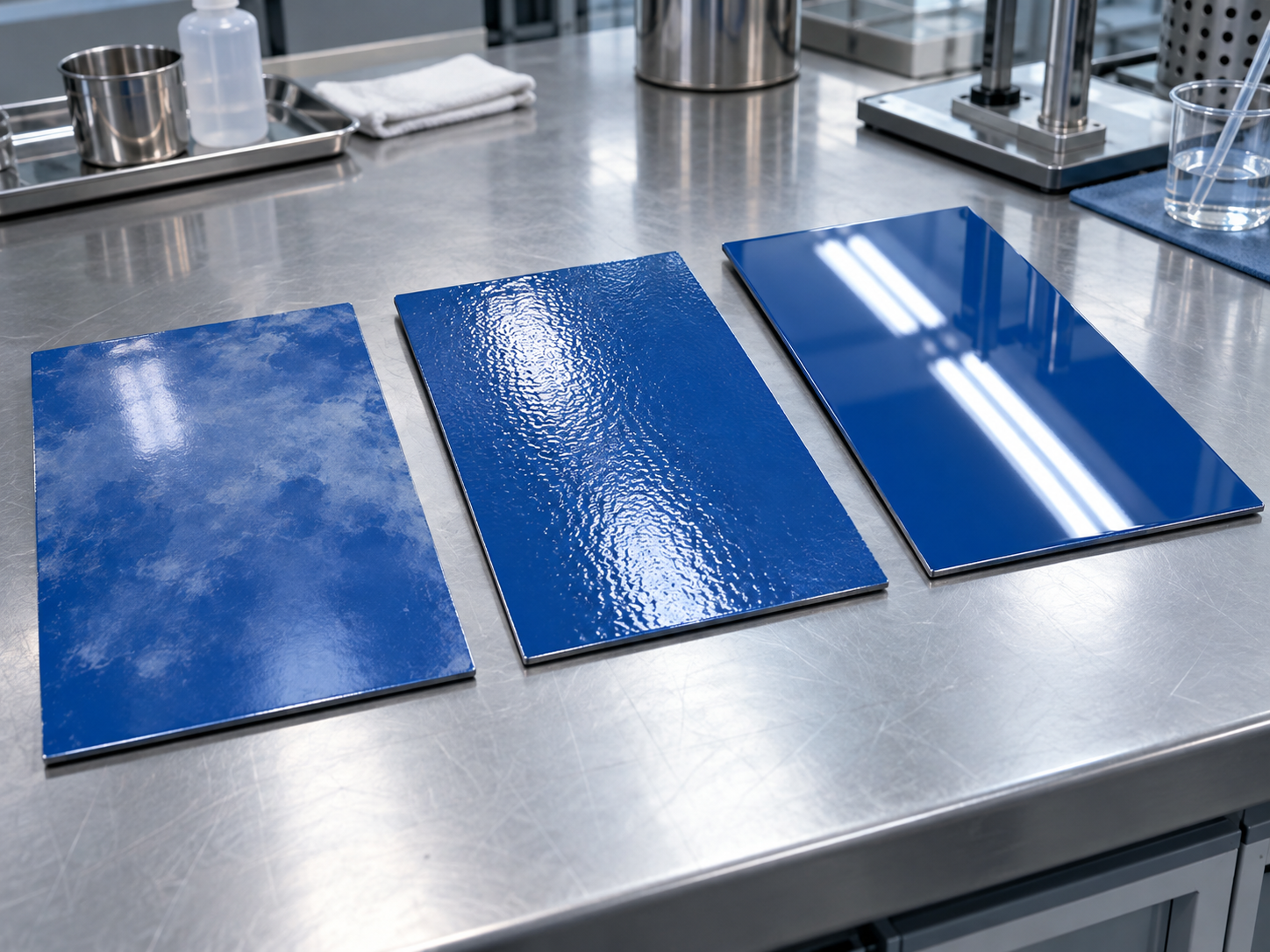
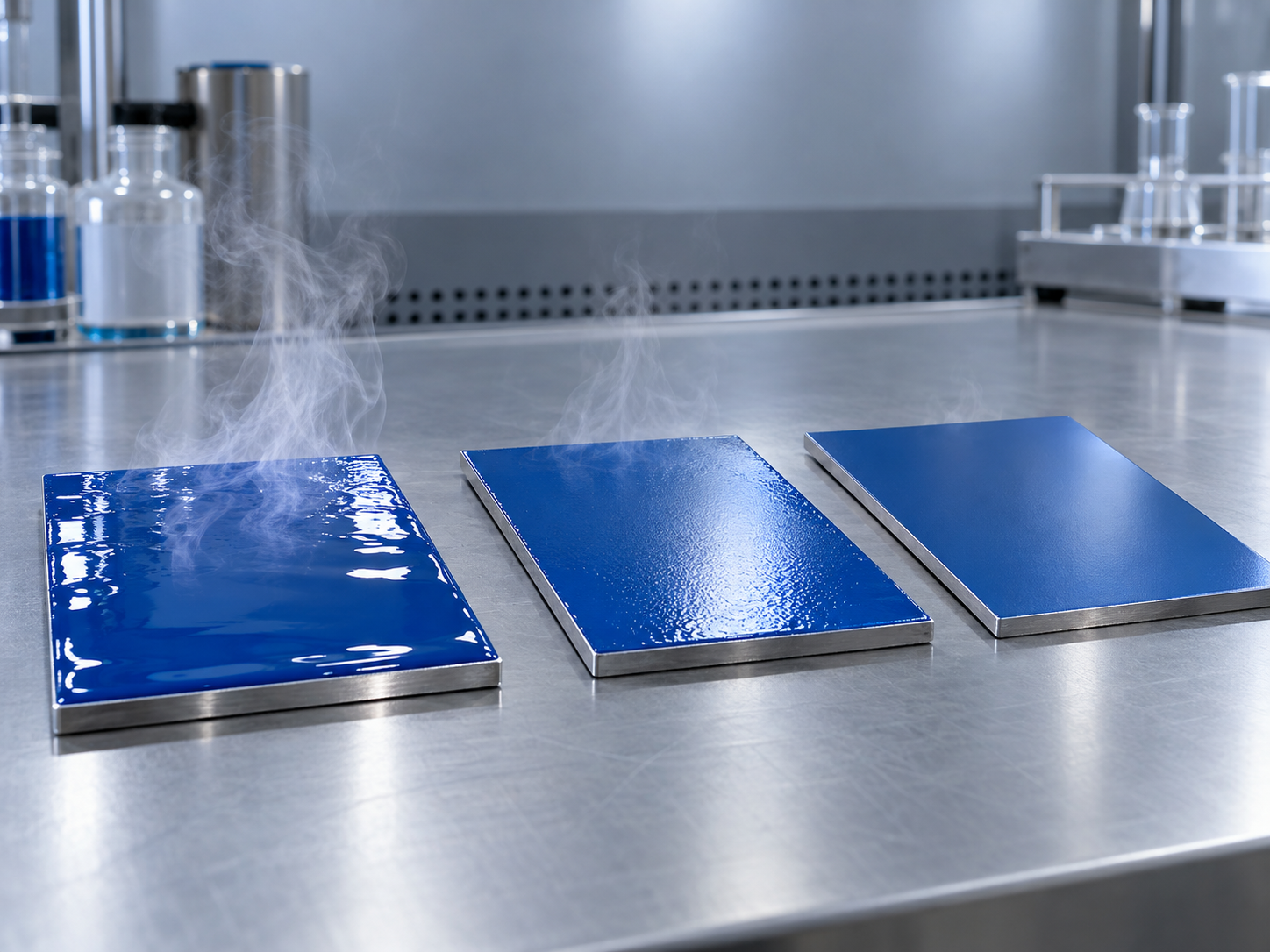
An off-target evaporation rate produces two opposite groups of defects. A solvent that evaporates too fast skins the film before it can level, leaving an orange peel surface. Solvent trapped under the skinned layer escapes later and causes bubbling and pinholes. A solvent that evaporates too slowly keeps the film wet too long, so the paint runs and sags on vertical surfaces.
Blushing appears when the solvent evaporates too fast in humid air. Evaporation draws heat from the film and cools its surface, moisture condenses into the film, and the resin precipitates locally around the water droplets. The dry film then loses gloss because the surface is rough from early resin precipitation or poor leveling.
In 2K PU systems (two components: polyol resin and isocyanate hardener), the risk is chemical. A solvent that contains OH groups, or that carries water, reacts with the isocyanate and shortens the pot life of the mixed paint. With the isocyanate consumed, the cured network lacks crosslinks and film hardness drops. The reaction with water also releases CO₂, which forms gas bubbles in the film.
4 criteria for solvent selection for paint resins
Resin solvency
The principle is that like dissolves like: the solvent's polarity and hydrogen-bonding capacity must be close to the resin's. The paint industry quantifies this closeness with solubility parameters for the resin and the solvent. Values for each material are taken from the supplier's technical documents; a solvent or blend with a value close to the resin's will dissolve the resin more stably.
Alkyd resin has low polarity, so it leans toward hydrocarbons. Acrylic, polyester and PU resins contain many ester, urethane and hydroxyl groups, so they need esters and ketones to dissolve stably. A solvent blend lets you tune polarity closer to the resin than a single solvent can, because each component covers part of the resin's interactions.
Evaporation rate
Evaporation rate sets how long the film stays open to flow and level, and how long it takes to dry. In spray paint, a single solvent rarely meets both requirements: the sprayed droplets need a fast solvent so the film sets on the surface, while the wet film needs a slow solvent to spread evenly. Spray formulations therefore usually combine fast and slow solvents.
The slowest-evaporating solvent is the last to leave and keeps the film open, letting bubbles escape and the surface level. If the slow solvent dissolves the resin poorly, the resin can precipitate once the fast solvent has gone, so the solvent left in the film must also be a good solvent for the resin.
Compatibility with the hardener
Isocyanate reacts with OH groups and with water. 2K PU systems therefore avoid alcohols and glycol ethers that contain OH groups: these solvents bind to the isocyanate before it can react with the polyol resin. Residual water in the solvent has two consequences: it consumes isocyanate and it generates CO₂, which forms gas bubbles.
For this reason 2K systems need dry-grade solvents, commonly called urethane grade, with controlled water content and no impurities that react with isocyanate. Water content must be read from the documentation of each batch; the solvent name alone does not tell you. The effect shows up in the pot life of the mixed paint and in bubbles in the film.
Effect on viscosity and VOC regulations
A strongly dissolving solvent extends the resin chains further, so the same amount lowers viscosity more. The plant reaches application viscosity with less solvent, and the total VOC of the paint falls accordingly. A weakly dissolving solvent must be added in larger amounts to reach the same viscosity, which raises total VOC.
For exported goods, market regulations restrict certain solvents and total VOC. The specific lists vary by market and over time, so R&D teams should check the current regulations of the importing country and the brand owner's requirements before finalizing the formulation.
How to match a solvent to your paint resin system
Step 1 — Identify the resin and the cure mechanism
Record which system the resin belongs to: physical drying, oxidative drying, 2K or baking. Also record the sensitive functional groups, first of all the hydroxyl groups of the resin and the isocyanate groups of the hardener, because they immediately rule out solvents that carry reactive groups.
Step 2 — Identify the application method and shop conditions
Define whether you apply by spray, roller coating or dipping, since each needs a different evaporation profile. Then record the shop temperature and humidity by season: high temperature makes solvent evaporate early, and high humidity raises the risk of blushing. These two factors determine the balance of fast and slow solvents in the blend.
Step 3 — Run dissolution and film tests
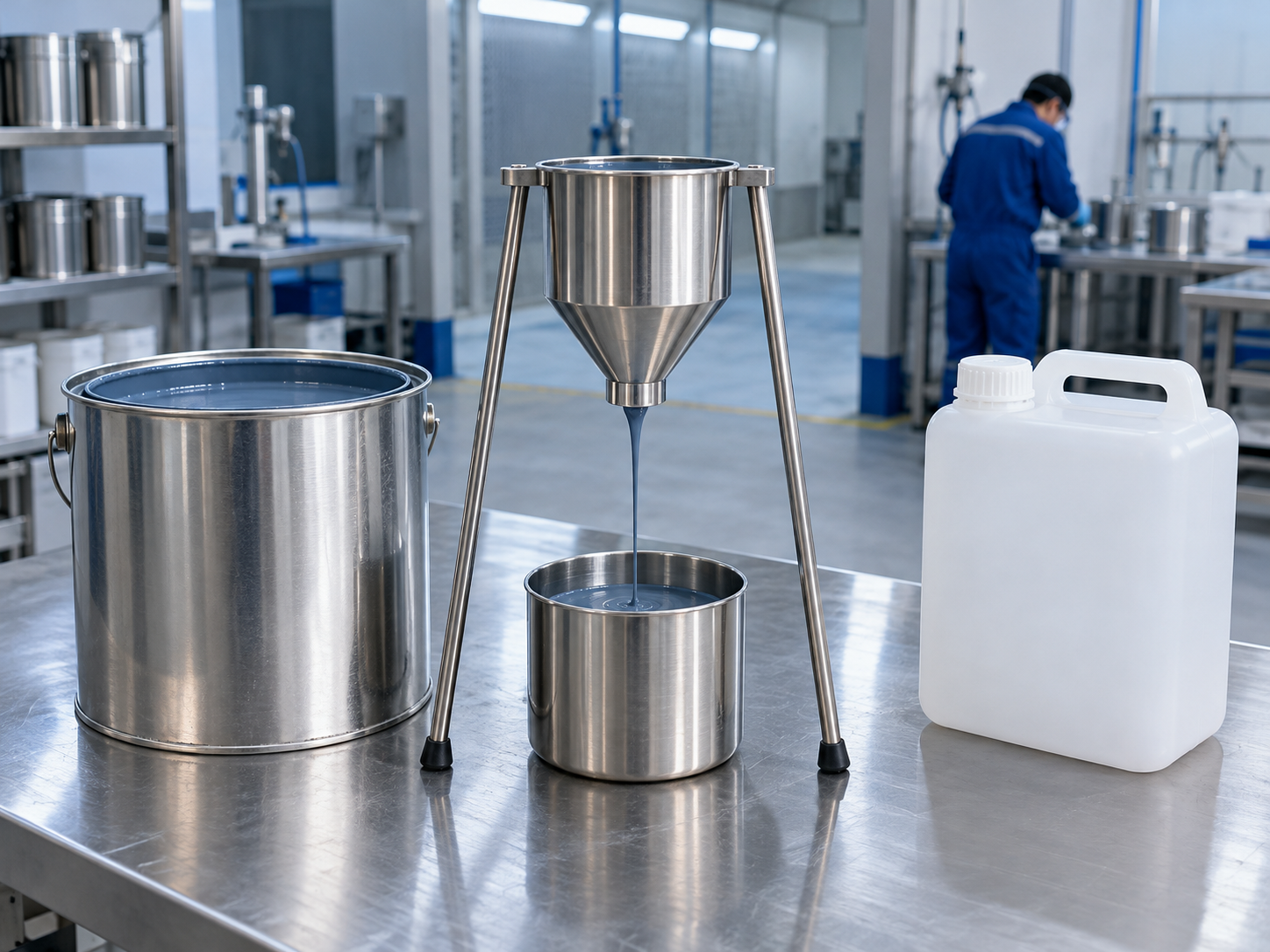
Mix the resin with the candidate solvent or blend, then check solution clarity, viscosity, drying time and gloss of the test film. For 2K systems, also track the pot life of the mixed paint. On the solvent TDS, read three parameters: relative evaporation rate, water content and boiling range. A wide boiling range shows that the solvent consists of several components that do not evaporate at the same time.
Step 4 — Choose the solvent group
Choose the solvent group only after the results of the previous steps. As a guide: alkyd resin uses aromatic or aliphatic hydrocarbons; acrylic and polyester resins use esters, ketones and aromatic hydrocarbons; 2K PU systems with an isocyanate hardener use dry-grade esters and ketones; baking paints use slow-evaporating solvents so the film levels before heat drives it dry. Alcohols and glycol ethers are used only in systems without isocyanate, and their compatibility with the resin must be checked. Aromatic hydrocarbons, esters, ketones, alcohols and glycol ethers can all go into sample testing under step 3.
Common mistakes when choosing paint solvents
Using one solvent for every system. Each resin system has a different polarity and different functional groups. A solvent that suits alkyd resin may cloud an acrylic solution, and a solvent that works well with a physically drying paint may ruin a 2K PU system.
Switching to a cheaper solvent without checking water content. Solvents with the same name but from a different batch or source can differ in water and impurities. In 2K systems, excess water shortens pot life and generates CO₂ bubbles, so check this parameter on the documentation before changing source.
Looking only at solvency. A solvent that dissolves the resin well does not necessarily evaporate at a rate that suits the application method. A resin that dissolves in the test beaker but evaporates too fast on the surface will still give orange peel or blushing when sprayed.
Not adjusting the ratio by season. Shop temperature and humidity change between seasons, but the solvent formulation stays the same, which upsets the balance between fast and slow solvents. Review the ratio and test the film whenever shop conditions change markedly.
Frequently asked questions
What types of solvents are used in paint?
Organic solvents used in paint fall into five main groups: aromatic and aliphatic hydrocarbons, esters, ketones, alcohols and glycol ethers. Hydrocarbons suit alkyd resin; esters and ketones suit acrylic, polyester and PU; alcohols and glycol ethers are usually co-solvents in systems without isocyanate.
Which organic solvents dissolve acrylic resin?
Esters and ketones dissolve acrylic resin well, and aromatic hydrocarbons are often used in combination. Acrylic resin has polar ester groups, so it needs a solvent with a correspondingly close polarity. The specific choice depends on the resin structure and the application method, so run trial mixes and check the solubility parameters from the resin supplier.
Why can't PU paint be thinned with alcohol?
Because alcohol has OH groups that react with the isocyanate in the hardener. This reaction consumes isocyanate before it can bond with the polyol resin, which shortens pot life and lowers film hardness. Alcohol often contains water, which reacts further with isocyanate and releases CO₂, causing bubbles in the film.
Is blushing during spraying caused by the solvent?
Usually yes, when the solvent evaporates too fast in humid conditions. Evaporation cools the film surface, moisture condenses into the film, and the resin precipitates around the water droplets. When you see this defect, check shop humidity and the slow solvent portion first, then look at the water content of the solvent.
Conclusion
Solvent selection for paint resins starts from the resin system and cure mechanism, and only then moves to application conditions. A suitable solvent must fully dissolve the resin, evaporate at the right pace and not react with the hardener.
- Four criteria: resin solvency, evaporation rate, compatibility with the hardener, and viscosity and VOC regulations.
- Order of matching: resin and cure mechanism, application method and shop conditions, dissolution and film tests, and only then the solvent group.
- Parameters to read on the solvent TDS: relative evaporation rate, water content, boiling range.
- Test samples before changing solvent, even when only the supply source changes or the formulation is adjusted by season; record clarity, viscosity, drying time and gloss.
Vichem is a distributor of chemical additives from leading brands such as Covestro, Sinopec and Bühler in the Vietnamese market.
For more information about our products, please contact us through the following channels:
- Hotline: 08 1790 1790
- Zalo OA: Vichem JSC
- Email: contact@vichem.vn
- LinkedIn: Vichem JSC
- Website: www.vichem.vn
- Facebook: Vichem JSC