When a paint turns cloudy or lumpy right after mixing, the cause is usually that the paint thinner cannot dissolve the base resin or reacts with a component of the coating system. Check the resin system (alkyd, acrylic, epoxy, 2K PU, nitrocellulose), the solvent's polarity, its water content, and free hydroxyl (OH) groups if the system uses an isocyanate hardener. Adjust evaporation rate only after the solvent is confirmed compatible.
Where the Wrong Paint Thinner Goes Wrong
A wrongly chosen thinner damages paint in two ways: it fails to dissolve the resin, or it reacts with components of the coating system itself.
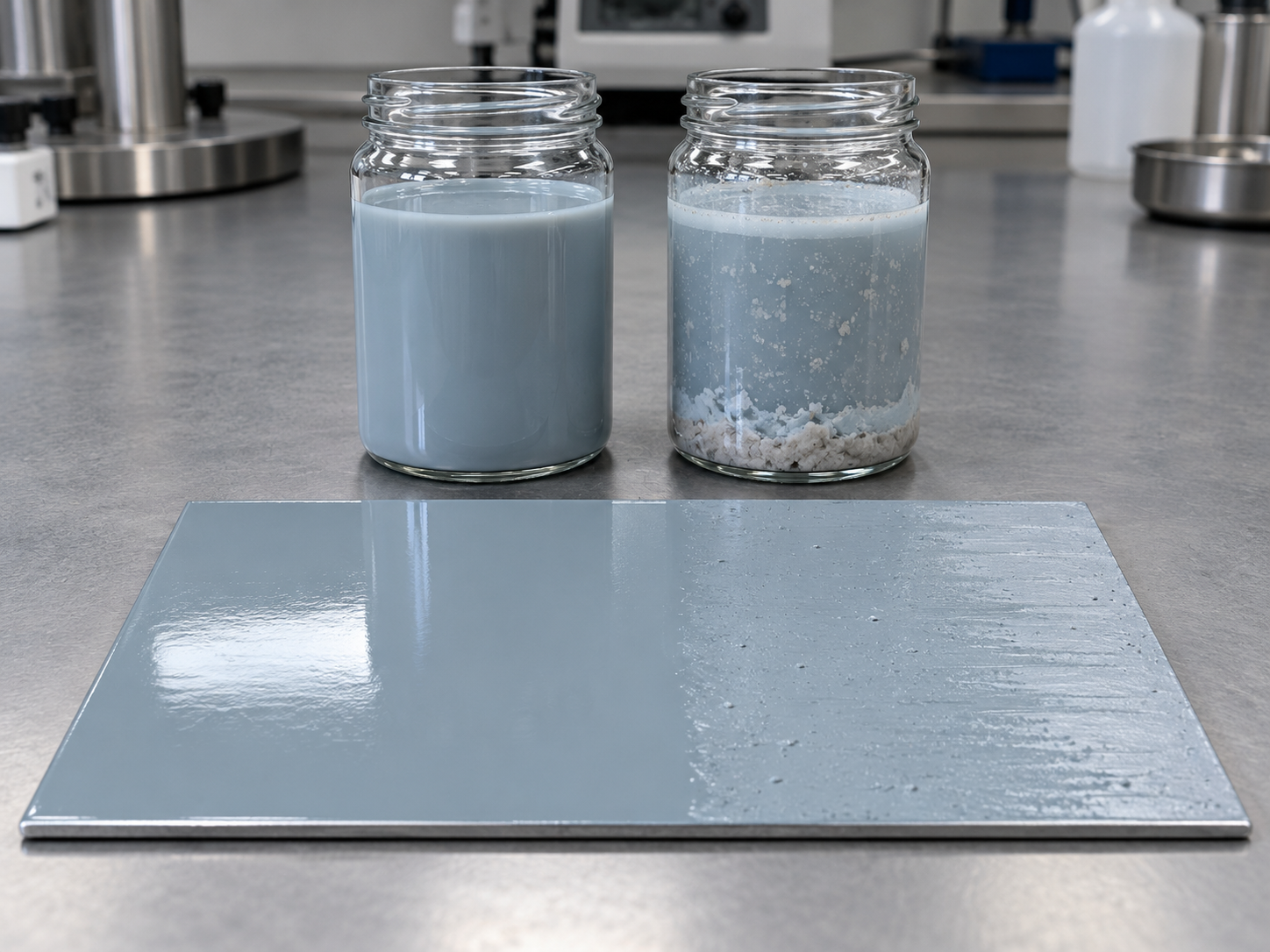
A solvent too weak for the resin. Solvency depends on polarity, the difference in charge distribution between parts of a molecule. When the polarity of the solvent and the resin are far apart, the resin chains coil up instead of extending in the solvent. In the mixing batch, you see cloudy paint, lumps, or resin precipitating at the bottom of the jar. If that batch is still applied, the film turns dull, loses gloss and shows streaks, because part of the resin separated from the liquid phase before it could form a film.
A solvent that reacts with the curing system. 2K PU paint cures when the isocyanate (NCO) groups of the hardener react with the OH groups of the resin. Alcohols, or solvents contaminated with water, also carry OH or water, so they also react with NCO. The isocyanate is consumed in the wrong place: water generates CO₂ gas that makes the film bubble, and the remaining NCO is insufficient, so the film stays soft and dries slowly. Pot life is also shortened. Pot life is the period during which the mixed two-component paint can still be applied, before viscosity rises and it gels. Paint thickening quickly in the can or in the spray gun is a common sign.
Defects caused by evaporation rate. Sagging, pinholes and orange peel from a solvent that evaporates too fast or too slowly show quite different symptoms, and they are covered in a separate article on choosing solvents by evaporation rate. The two groups of defects are easily confused on the film, so rule out compatibility problems before adjusting evaporation rate.
4 Key Criteria for Choosing Paint Thinner
Criterion 1 — Solvency for the base resin
The underlying principle is like dissolves like: a solvent whose polarity and bonding forces are close to those of the resin will dissolve it. Match by solvent group:
- Aliphatic hydrocarbons (low polarity): suit long-oil alkyd, because the oil chains are also low in polarity.
- Aromatic hydrocarbons: dissolve a wider range of resins and are used for alkyd, acrylic and some PU systems, but are restricted under criterion 4.
- Esters and ketones (medium polarity): suit acrylic, PU and nitrocellulose.
- Glycol ethers: dissolve acrylic and PU resins well. Types with free OH are not used in isocyanate systems; esterified types no longer contain OH.
- Alcohols (high polarity): do not dissolve many paint resins; they usually serve only as co-solvents.
Nitrocellulose needs an ester or ketone as the primary solvent, together with a diluent to reduce cost and adjust viscosity.
Criterion 2 — No reaction with the curing system
Isocyanate systems need a solvent with no OH groups and low water content. A solvent meeting this requirement is commonly called urethane grade. For a solvent for PU paint, this is the exclusion criterion to apply before any other.
On the COA of each lot, read two parameters. The first is water content: compare it with the maximum that the TDS of the paint or hardener allows, and check the test method stated. The second is acid value: a high value indicates free acid in the solvent, which may affect the curing reaction or the catalyst. Drums left open for a long time absorb moisture from the air, so a lot's COA is only valid for a sealed drum.
Criterion 3 — Balancing strong solvent and diluent
A strong solvent (true solvent) dissolves the resin on its own. A diluent does not dissolve the resin by itself but is acceptable within a mixture, helping reduce viscosity and cost. Each resin system tolerates only a limited amount of diluent.
Adding too much diluent drops the concentration of strong solvent in the mixture below the threshold needed to keep the resin dissolved. The resin is shocked, precipitates locally, and the paint turns cloudy. So add slowly and stir continuously, especially at the pouring point. The pouring point usually has the highest diluent concentration in the container, so it is where resin precipitates first.
Criterion 4 — VOC, safety and odor constraints
Aromatic solvents are restricted in many export markets, so check the requirements of the brand owner or the ordering customer before finalizing the formulation. On safety, flash point determines how the warehouse and workshop are laid out: low-flash-point solvents require control of ignition sources, ventilation and storage areas. Odor affects working conditions in the spray and finishing areas. Read all three items on the SDS of each solvent, in the physical and chemical properties section and the firefighting section.
How to Match Paint Thinner to Your Coating System
Step 1 — Identify the resin system and drying mechanism (evaporation, oxidation, two-component reaction) from the paint TDS or formulation.
Open the paint TDS or formulation sheet and note the base resin type and drying mechanism. Systems that dry by evaporation (nitrocellulose, some acrylics) only need a solvent that dissolves the resin. Systems that dry by oxidation (alkyd) need a solvent that does not interfere with the reaction with oxygen. Two-component reactive systems (PU) add one more constraint: the solvent must have no OH and low water.
Step 2 — Run a compatibility test in a jar
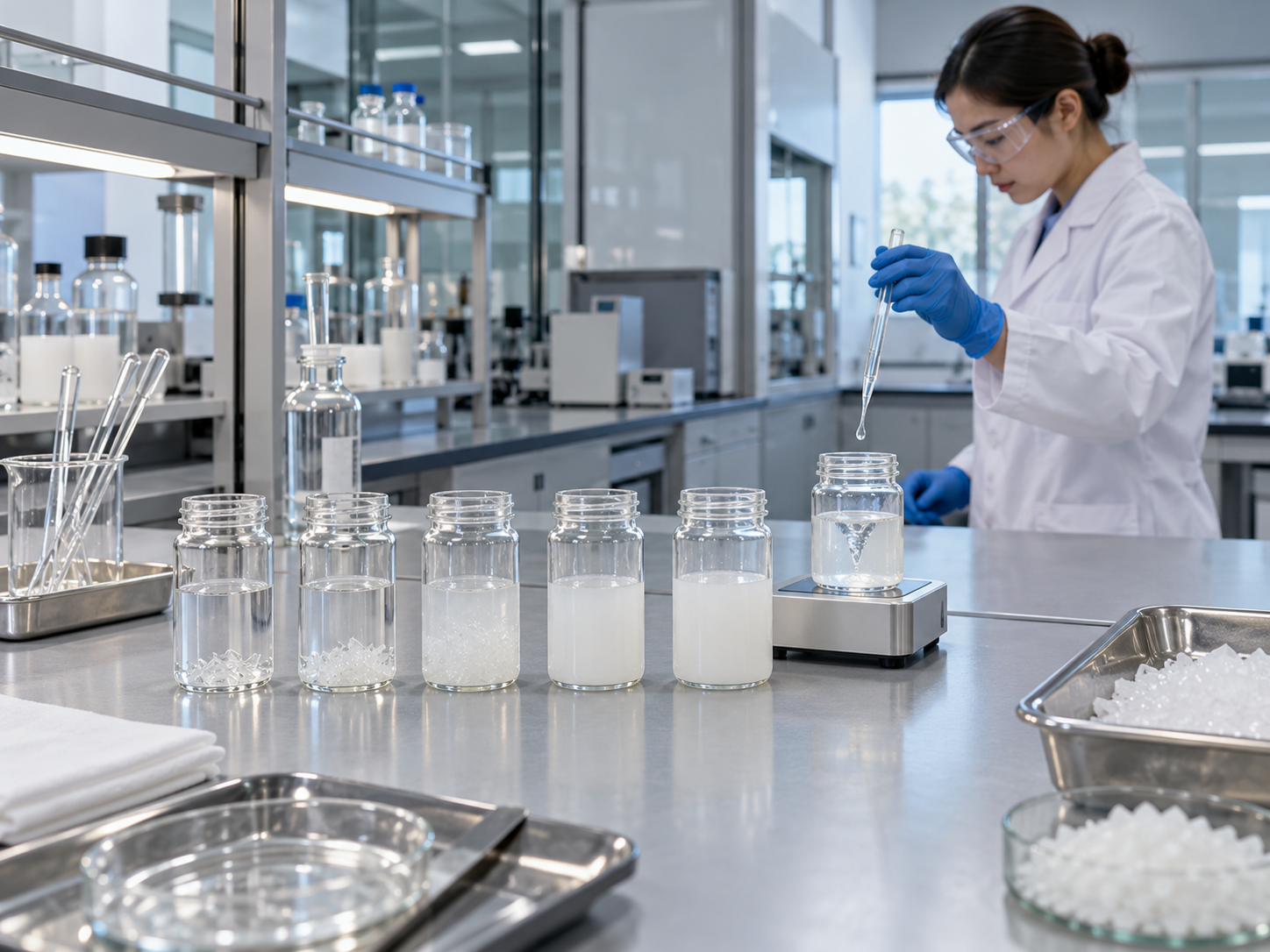
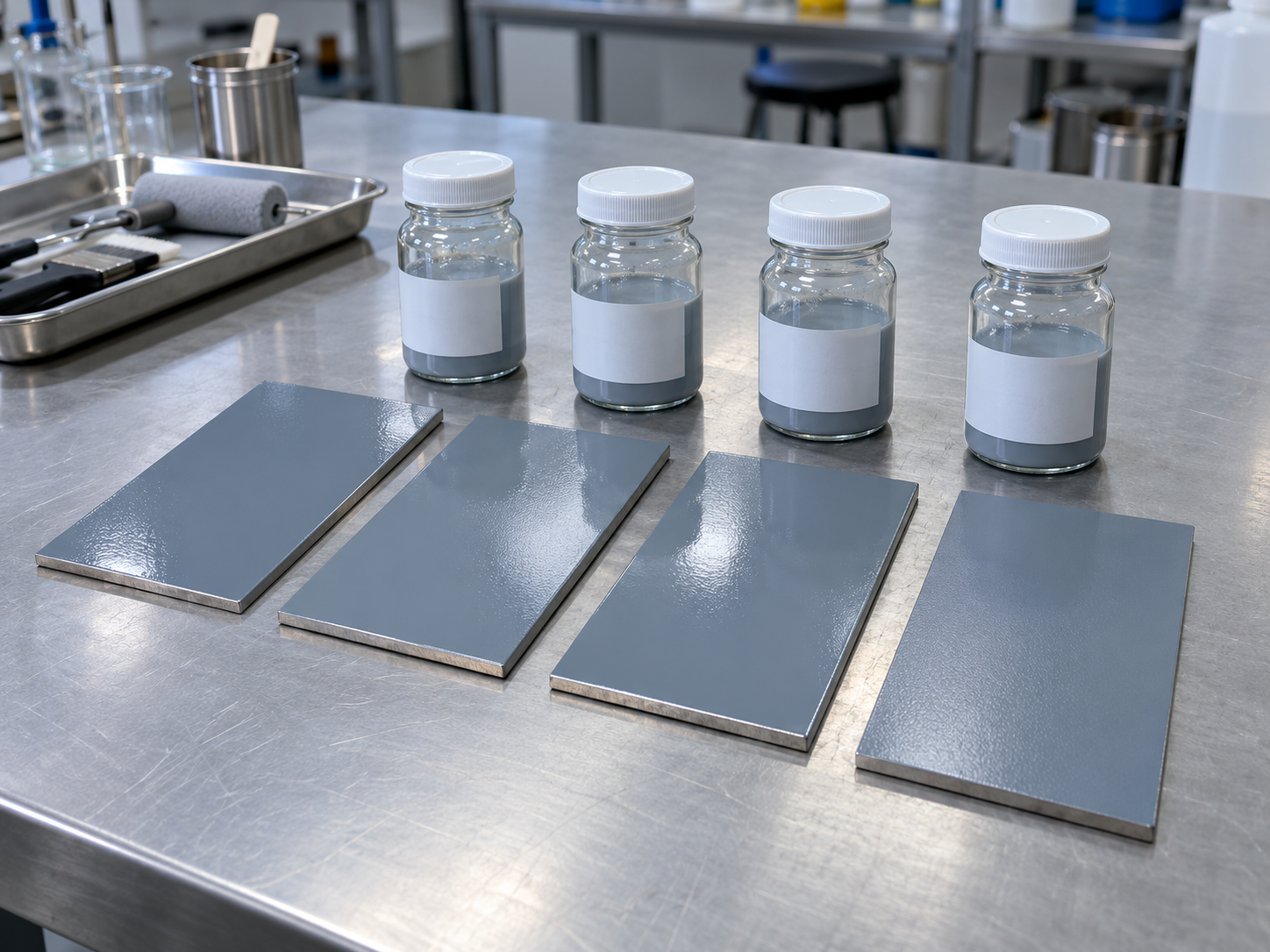
Add the solvent to the paint in increasing proportions in a glass jar, and observe for cloudiness or separation at each level. Draw down a thin film on a test panel and check gloss and dryness against a control sample. For PU systems, add one more check: monitor bubbles and viscosity over time after mixing the two components. Bubbles appearing early, or viscosity rising faster than the control, indicate that the solvent carries water or OH.
Step 3 — Select the solvent type and request documents
For acrylic and PU, ester and glycol ether solvents such as PMA and EEP are commonly used; for alkyd, hydrocarbons. When ordering solvent, request the TDS, SDS and COA for each lot. Use the COA to check the lot's water content and purity, then compare them with the limits your coating system accepts.
Common Mistakes When Choosing Paint Thinner
- Using one general thinner for every coating system. A thinner suited to alkyd can turn acrylic or nitrocellulose paint cloudy, and a thinner containing alcohol used on PU paint makes the film bubble. Each resin system needs its own compatible solvent.
- Looking only at price and evaporation rate and ignoring water content for PU systems. These two parameters are visible immediately on a price quotation, while water in the solvent only shows up a few hours later, when the film has bubbled or the paint has thickened in the can.
- Changing the solvent source without retesting compatibility. The same name from a different manufacturer can differ in purity, water content or impurities. Test each new source in a jar as you would a new raw material, and check the COA of the first lot.
- Adding solvent to the hardener component instead of the resin component. Isocyanate hardener is sensitive to water and OH, so a solvent containing impurities will react directly with the NCO inside the hardener can. If viscosity needs reducing, add it to the resin component before mixing the two components, following the TDS of the coating system.
Frequently Asked Questions
Can the same thinner for paint be used for both alkyd and PU paint?
It should not be. Thinner for alkyd is usually a hydrocarbon, which dissolves PU resin poorly, while a thinner containing alcohol or water ruins 2K PU paint. Each system needs a solvent suited to the base resin and the curing mechanism. Check the paint TDS and test in a jar before using one thinner for both.
What should I watch for when using paint thinner with 2K PU paint?
Choose a solvent with no OH groups and low water content, because both react with isocyanate. Check the COA of each lot, keep the drum sealed, and add the solvent to the resin component, not the hardener. After mixing, monitor bubbles and viscosity to know how long the paint remains workable.
Why does paint turn cloudy or lumpy when thinner is added?
The usual cause is a solvent that is too weak for the resin, or an amount of diluent beyond what the resin can tolerate, so the resin precipitates. Pouring quickly into one spot can also shock the resin locally. Test with increasing additions in a jar, add slowly and stir continuously to find the cloud point of the coating system in use.
Which paint thinner limits VOC for export paint?
Every volatile organic solvent contributes VOC, so no type removes it completely. The practical approach is to limit aromatic solvents and follow the requirements of the target market or brand owner. Read the SDS and TDS of the solvent, and check them against the paint formulation when setting a VOC target.
Conclusion
Choosing paint thinner starts from the resin system: the solvent must dissolve the resin and not react with the curing system, and only then are evaporation rate, VOC and odor adjusted. For PU paint, the two deciding parameters are OH groups and water content, and both can be checked on the COA of each lot.
- Dissolve first, evaporate second.
- Isocyanate systems rule out solvents containing OH and water.
- Test compatibility in a jar before production runs, even when only the solvent source changes.
- Check the COA for every lot, and keep solvent drums sealed so water cannot get in.
Send us the resin system you use, the paint TDS and the application conditions of your line, and the Vichem technical team will recommend a suitable solvent.
Vichem is a distributor of chemical additives from leading brands such as Covestro, Sinopec and Bühler in the Vietnamese market.
For more information about our products, please contact us through the following channels:
- Hotline: 08 1790 1790
- Zalo OA: Vichem JSC
- Email: contact@vichem.vn
- LinkedIn: Vichem JSC
- Website: www.vichem.vn
- Facebook: Vichem JSC