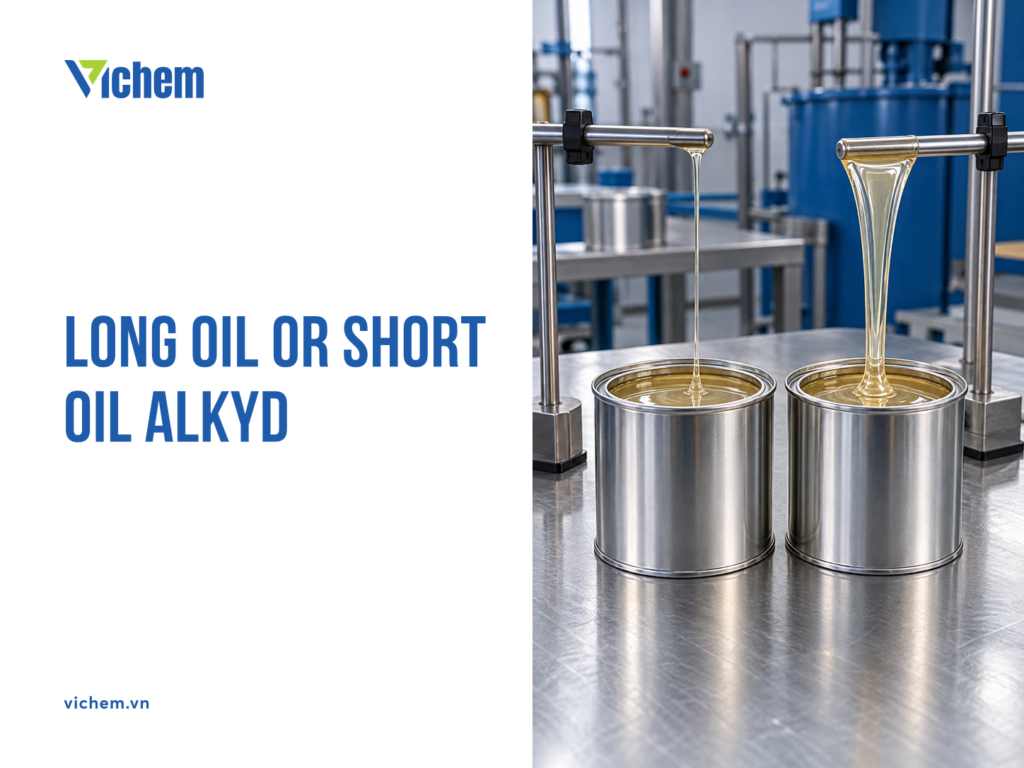
Choose long oil alkyd resin for air-drying paints that need a flexible film, such as wood and structural steel coatings. Choose short oil for stoving paints that need a hard, fast-drying, chemical-resistant film. First decide whether the paint will air-dry or be stoved. The choice also depends on the substrate, the solvent system and the film requirements. Price and resin viscosity are not enough to decide on.
Where industrial coatings fail when the wrong alkyd is chosen
An alkyd is a polyester modified with fatty oil. Oil length is the proportion of fatty oil in the resin relative to the polyester portion, and it determines almost all of the film's behavior. If the choice leans too far to one side, the defects show up at different stages.
The first case is a long oil alkyd put into a stoving line. The film does not reach the required hardness, so it leaves the oven soft and still tacky, and it takes marks when parts are stacked. Parts have to wait a long time before packing, and the line slows down.
The second case is a short oil alkyd used in an air-drying paint. This type has few double bonds available for oxidation, so it dries poorly at ambient temperature. Once the film has dried it is hard but brittle and prone to cracking when the substrate expands or takes an impact. On outdoor structural steel, cracks give moisture a path to the substrate.
Besides these two main failures, a wrong choice also leaves related defects:
- The film yellows over time, most visibly in white and light colors, because the oil type does not suit the color-retention requirement.
- Poor adhesion, because the flexibility or hardness of the film does not match the substrate and the shrinkage stress.
- The resin does not dissolve in the intended solvent: the solution turns cloudy, separates, or the film turns hazy, because the polarity of the resin does not match the solvent system.
These defects usually appear only after paint has been applied in volume, and fixing them then means repainting. So match the resin to the drying method and the substrate at the formulation approval stage.
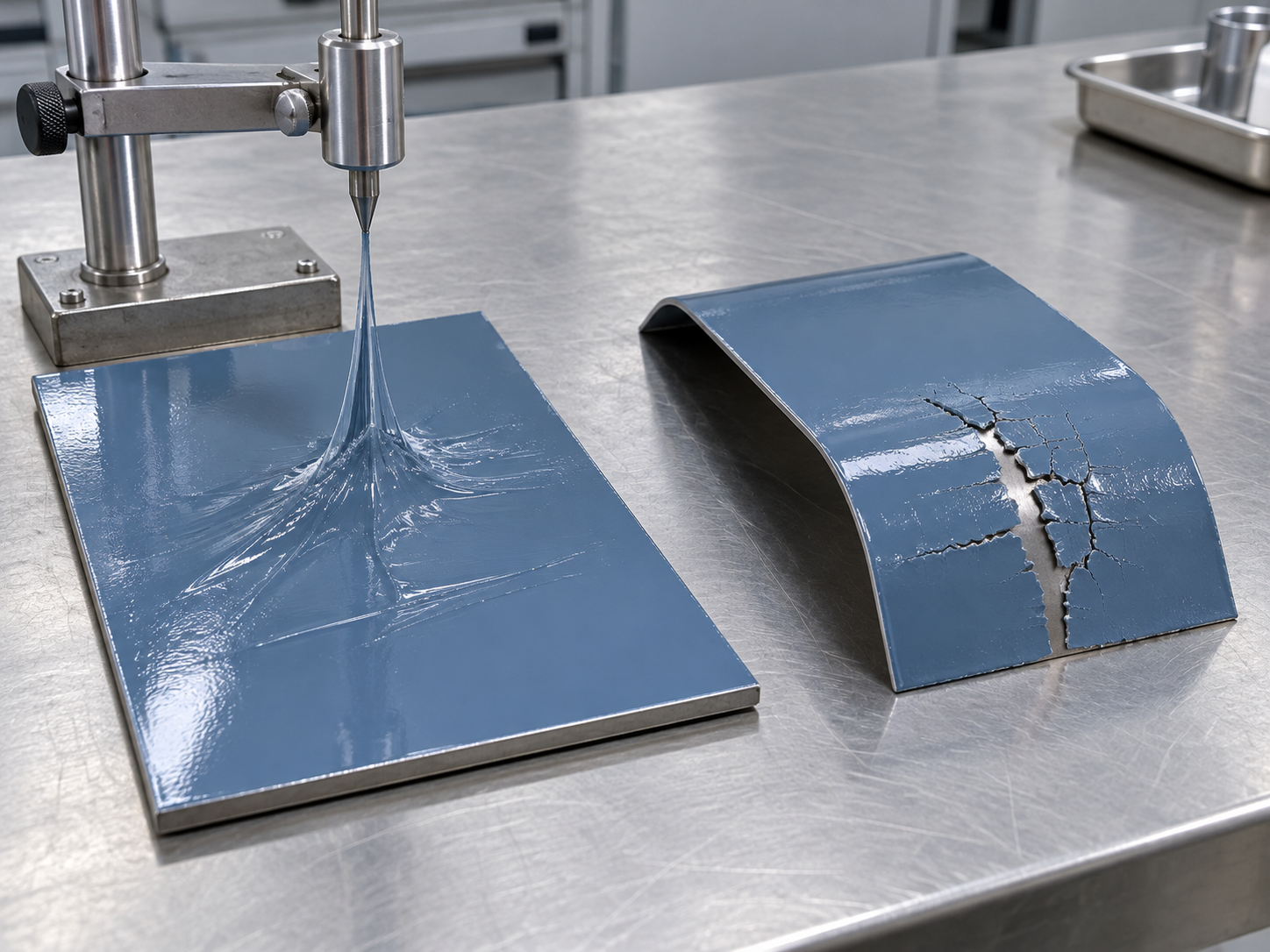
4 criteria that decide the choice of alkyd resin
Drying mechanism — oxidation of oil double bonds (air-drying) and curing with amino resin when stoved; long oil has more double bonds
Alkyds air-dry through oxidation of the double bonds in the fatty oil chains. Oxygen from the air attacks the position next to a double bond, forms free radicals, and the chains then crosslink into a network. This happens at ambient temperature and needs a drier, usually a metal salt, as catalyst; without a drier, oxidation is very slow. A long oil alkyd carries more double bonds per resin molecule, so it air-dries better than a short oil alkyd.
Stoving paints use a different mechanism: the residual hydroxyl groups on the alkyd react with an amino resin when heated, forming a cured network. This reaction does not need double bonds. A short oil alkyd has few double bonds but is usually richer in hydroxyl groups, so it suits stoving lines. These two mechanisms are the first branching point in the choice.
Film hardness and flexibility — a high oil proportion makes the film softer and more flexible; more polyester makes it harder
Fatty oil chains are mobile, so a high oil proportion makes the film soft and flexible: the film withstands bending and follows the expansion of the substrate, but it hardens slowly and marks easily. The polyester portion, made up of polyfunctional acids and polyols, forms the rigid backbone. The more of it there is, the harder, glossier and more chemical-resistant the film becomes, but also the more brittle. A medium oil alkyd sits between the two ends.
Hardness and flexibility move in opposite directions, so the choice is about finding the right balance for each application. Substrates that move a lot, such as wood or outdoor structural steel, call for flexibility first. Machine housings and parts stacked right after the oven need hardness and mar resistance.
Solubility and solvent — long oil dissolves in aliphatic solvents; short oil needs aromatic or polar solvents
The polarity of the resin changes with oil length. Fatty oil chains are hydrophobic, so a long oil alkyd dissolves in aliphatic solvents, that is, straight-chain hydrocarbons. A short oil alkyd has a larger polyester portion and is more polar, so it usually needs aromatic solvents or polar solvents such as esters, ketones and alcohols blended in.
The wrong solvent makes the solution cloudy, causes phase separation or leaves a hazy film, on top of changing the application viscosity. When changing the solvent system, for example to cut the amount of aromatic solvent, recheck the resin's solubility and its compatibility with the amino resin and driers in the formulation.
Oil type and yellowing — oils with conjugated double bonds dry fast but yellow easily; non-drying oils are used in color-retaining stoving paints
Vegetable-based fatty oils are divided into drying, semi-drying and non-drying oils according to their degree of unsaturation. Oils with conjugated double bonds dry fast but yellow easily, because oxidation produces color-forming groups. Ordinary drying oils also yellow gradually over time, more so where light is limited.
Non-drying oils do not take part in oxidation. They stay in the film as internal plasticizers and are used in stoving paints that must hold their color, especially white and light colors. For this reason, read both the oil type and the oil length on the TDS.
You can picture oil length as a scale. The long oil end is linked to air-drying, a flexible film and solubility in aliphatic solvents. The short oil end is linked to stoving, a hard film and the need for more polar solvents. Medium oil sits in between.
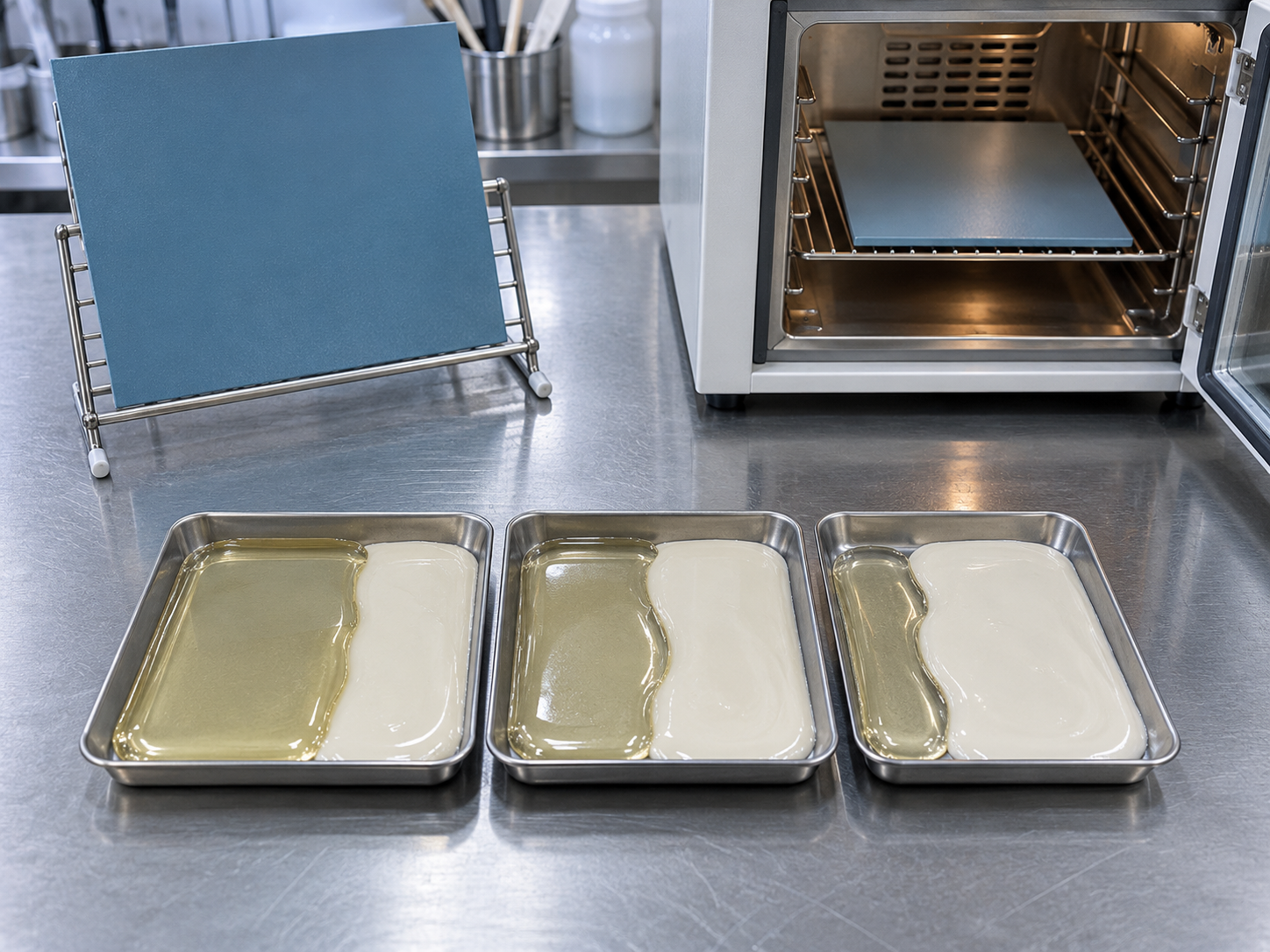
How to match the resin to your paint line
Step 1 — Define the drying method: air-dry or stoving, oven temperature and time
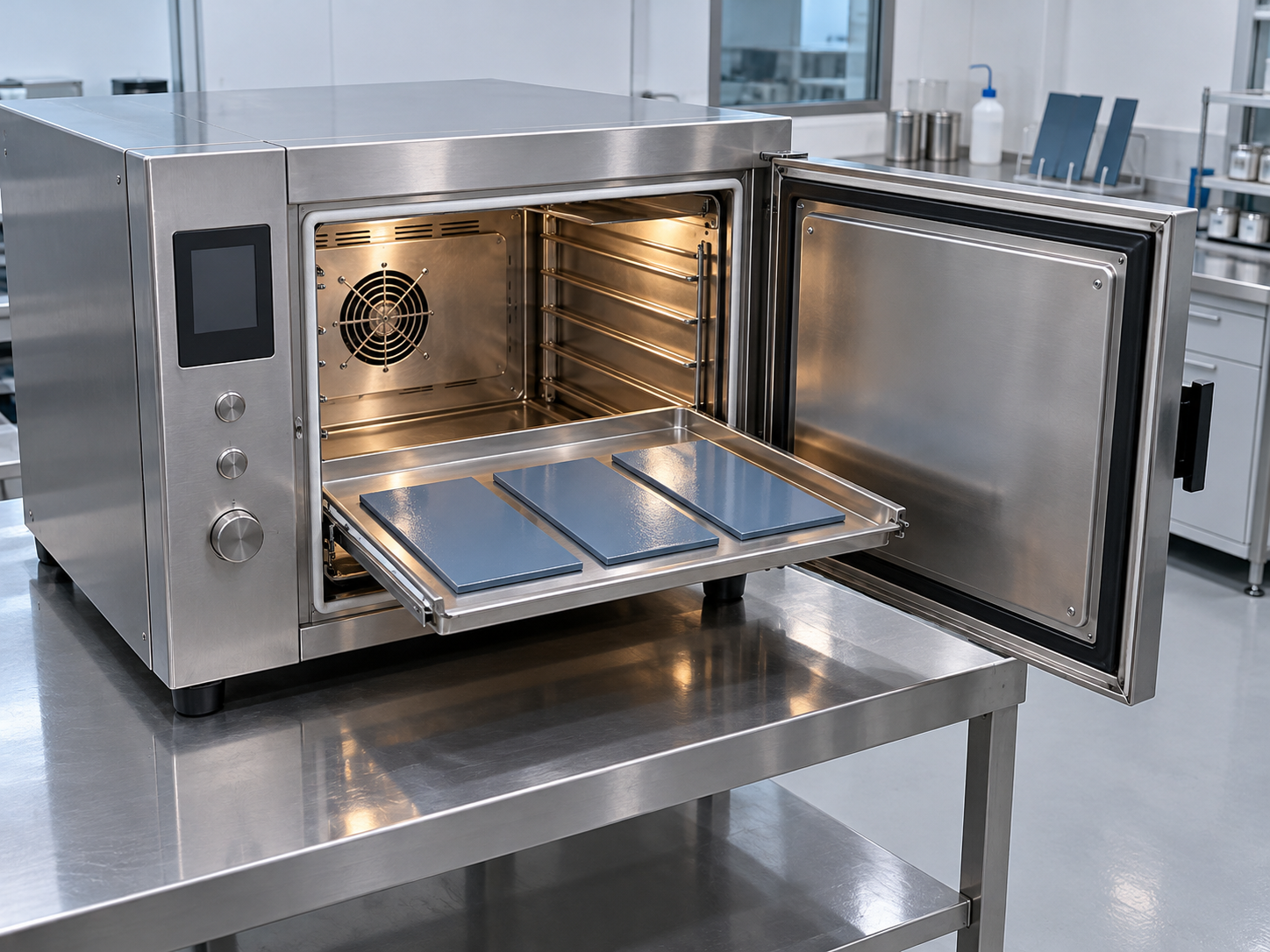
Start from how the paint actually dries on your line. Air-drying paints lean toward long oil or medium oil alkyd resin with a drier. Stoving paints lean toward short oil or medium oil alkyd used with an amino resin. Record the actual oven temperature and time, including the time a part takes to go from the oven entrance to working temperature, because an amino resin only cures fully when the oven supplies enough heat for enough time. An oven that runs too cool, or a cycle shorter than the resin requires, easily leaves the film under-cured.
Step 2 — Define the substrate and film requirements: steel, wood, machinery; hardness, gloss, weather resistance
Each substrate puts different demands on the film. Wood moves with moisture and structural steel expands with temperature, so both need a flexible film. Machine housings and equipment need a hard, glossy film that resists abrasion during transport and assembly. List clearly the hardness, gloss and weather resistance to be achieved. For outdoor parts or light colors, also weigh the oil type to limit yellowing and chalking.
Step 3 — Choose the alkyd group (long, medium, short oil) and the parameters to read on the TDS: oil length, oil type, acid value, solids content, accompanying solvent
From the first two steps, choose the group: long oil for air-drying paints that need a flexible film; short oil for stoving paints that need a hard film; medium oil when the two requirements need balancing. Then read the TDS of the specific resin grade, since each grade has its own values. The parameters to check are oil length, oil type and acid value; the acid value reflects the residual free carboxyl groups, which relate to the reaction with amino resin and to pigment wetting. The other two are solids content and accompanying solvent, because they set the application viscosity and the thinning system.
Resin suppliers for industrial coatings, such as Covestro, publish these parameters in the TDS for each grade. After choosing, test a sample in a laboratory oven on the actual substrate, with the film thickness and curing schedule of your line, before running a production trial.
Common mistakes when choosing alkyd resin
- Looking only at viscosity. Viscosity depends on solids content, solvent and molecular weight. Two resins with the same viscosity can have very different oil lengths and give two different kinds of film.
- Ignoring the oil type. Two resins with the same oil length but different oil types will differ in drying speed and yellowing. A white paint stoved with a resin based on an easily yellowing oil is a common fault.
- Not adjusting the drier to the oil length. Long oil has many double bonds and needs a suitable drier system, while short oil cures mainly through the amino resin. Too high a drier dose can make the surface dry first and the film wrinkle.
- Using the wrong solvent, causing cloudiness. Thinning a short oil alkyd with pure aliphatic solvent, or changing solvent without testing solubility, easily makes the solution cloudy and the film hazy.
All four mistakes can be avoided by reading the TDS grade by grade and testing a sample before moving to production.
Frequently asked questions
What paints is long oil alkyd resin used for?
It is used for air-drying paints that need a flexible film and easy application: wood coatings, structural steel topcoats, and maintenance paints applied by brush or roller. A long oil film adapts well to substrates that expand, and it dissolves in aliphatic solvents, which makes thinning convenient. In return, the film is softer and reaches hardness more slowly than short oil.
Can short oil alkyd resin air-dry?
It can dry, but slowly, and the film is brittle, because it has few double bonds to oxidize. Short oil is designed for stoving paints that cure with amino resin. If you must dry at ambient temperature, switch to medium oil or long oil and test a sample on the real substrate.
When is medium oil alkyd used?
Use it when you need a balance of hardness and flexibility: a film harder than long oil and less brittle than short oil. This group suits air-drying paints that need to dry faster than long oil, or stoving paints for equipment and machinery. Check the oil type and the accompanying drier for each application.
Why do alkyd paints yellow?
The cause is the oil type and the oxidation that continues in the film. Oils with many double bonds, especially conjugated ones, form color-forming groups as they oxidize, more so where light is limited. Stoving paints that must hold their color usually use non-drying oils to limit this.
Conclusion
Long oil alkyd resin suits air-drying paints that need a flexible film; short oil suits stoving paints that need a hard, chemical-resistant film; medium oil is used when the two requirements need balancing. The right group must come from your actual paint line and substrate, then be confirmed by sample testing.
- Define the drying mechanism first: oxidation at ambient temperature or curing with amino resin in the oven.
- Match the film requirements to the substrate: flexibility for substrates that move, hardness for stacked parts.
- Check the solvent: long oil dissolves in aliphatic solvents, short oil needs aromatic or polar solvents.
- Read both the oil type and the oil length on the TDS to control drying speed and yellowing.
Vichem is a distributor of chemical additives from leading brands such as Covestro, Sinopec and Bühler in the Vietnamese market.
For more information about our products, please contact us through the following channels:
- Hotline: 08 1790 1790
- Zalo OA: Vichem JSC
- Email: contact@vichem.vn
- LinkedIn: Vichem JSC
- Website: www.vichem.vn
- Facebook: Vichem JSC