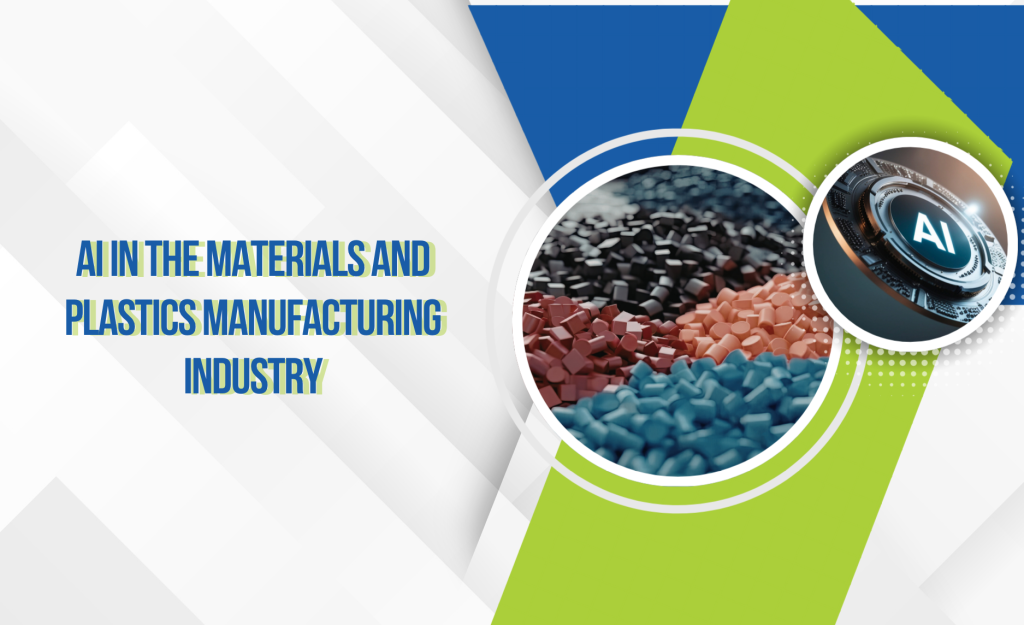
The plastics industry is entering a phase of strong transformation under the impact of digital technology. In an increasingly competitive environment, businesses must not only improve productivity but also ensure quality and sustainability. This is why artificial intelligence, or AI, has become a critical factor.
AI not only helps automate production but also supports data-driven decision-making. From material research to factory operations, this technology is opening up new opportunities for the modern plastics industry.
OVERVIEW
AI is a technology that enables computers to learn from data and make predictions or decisions. In the plastics industry, AI is applied across various stages, from polymer research to production and recycling.
Previously, material development often relied on repeated experimentation. This process was time-consuming and costly. With AI, models can predict material properties before production. According to scientific studies, this technology has significantly shortened the development time for new polymers.
Thanks to its ability to process large volumes of data, AI helps engineers better understand material behavior. This creates a foundation for precise and rapid product improvement.

WHY DOES THE PLASTICS INDUSTRY NEED AI?
The traditional plastics industry often relies heavily on operational experience. This makes production processes prone to errors. Issues such as material waste, product defects, and long development cycles remain common.
AI addresses these limitations by analyzing data in real time. Systems can detect anomalies as soon as they occur. As a result, businesses can respond promptly and minimize risks.
In addition, AI reduces the number of experiments required in research. Machine learning models can predict outcomes with high accuracy. This not only saves costs but also accelerates time-to-market.
KEY FEATURES
One of the greatest strengths of AI is process optimization. Systems can analyze multiple parameters such as temperature, pressure, and flow rate. Based on this data, AI automatically adjusts conditions to achieve optimal performance.
Moreover, AI enhances product quality. This technology can detect very small defects that are difficult for humans to identify. As a result, the defect rate is significantly reduced.
Another benefit is predictive maintenance. AI can analyze machine data to forecast failures. This allows businesses to perform maintenance proactively before issues occur.
Unlike traditional automation systems, AI has the ability to learn. Over time, the system becomes increasingly efficient. This is a key factor in maintaining a competitive advantage.
CLASSIFICATION
AI is widely applied across many areas of the plastics industry. In material research, it helps predict properties such as strength, flexibility, and heat resistance. This makes new product development faster and more accurate.
In product design, AI supports the selection of materials that meet usage requirements. Systems can analyze multiple design options to identify the optimal solution.
In manufacturing, AI plays an important role in processes such as injection molding, extrusion, and blow molding. Systems can adjust parameters in real time to ensure consistent quality.
Additionally, AI is applied in supply chain management. This technology helps forecast raw material demand and optimize inventory. As a result, businesses can reduce costs and improve operational efficiency.
APPLICATIONS
In industrial production, AI helps optimize production cycles and increase productivity. Some studies show that this technology can significantly reduce production time. This allows businesses to increase output without expanding factory scale.
In material development, AI supports the creation of new polymers. These materials can meet high technical requirements or be environmentally friendly. This technology enables the screening of thousands of formulations in a short time.
AI also plays an important role in plastic recycling. Systems can identify and classify materials based on image data. This makes recycling processes more efficient and reduces errors.
Furthermore, AI contributes to sustainable manufacturing. This technology helps reduce energy consumption and optimize material usage. This is a crucial factor as the industry moves toward green development.
TECHNICAL STANDARDS TO CONSIDER
To implement AI effectively, data quality is the most important factor. Data must be accurate and complete to ensure reliable results. Poor data will lead to incorrect predictions.
In addition, selecting the appropriate machine learning model is essential. Each model type is suited to different objectives. Therefore, businesses need to carefully evaluate before deployment.
The ability to integrate with existing systems is also a key consideration. AI must operate synchronously with production lines to achieve high efficiency.
Finally, system reliability must be validated in real-world conditions. This ensures that AI can operate stably in a production environment.
TRENDS
The plastics industry is gradually shifting toward smart factory models, where devices are interconnected and continuously share data. AI plays a central role in processing and analyzing this data.
A notable trend is the use of digital twins. This technology allows simulation of the entire production process. As a result, businesses can optimize operations before real-world implementation.
In addition, the development of sustainable materials is becoming a top priority. AI supports the research of bioplastics and recyclable materials. This helps reduce environmental impact.
In the future, factories may operate fully automatically. AI will control the entire process from start to finish. This represents a major step forward in the digital transformation of the plastics industry.
CONCLUSION
AI is creating profound changes in the materials and plastics manufacturing industry. This technology not only improves efficiency but also enhances product quality.
More importantly, AI opens up a path toward sustainable development for the industry. In an increasingly competitive environment, adopting AI is no longer an option but an inevitable trend.
VICHEM – AUTHORIZED DISTRIBUTOR OF TOTALENERGIES CORBION LUMINY PLA VIRGIN PLASTIC PRODUCTS IN VIETNAM
Vichem is the authorized distributor of Luminy PLA virgin plastic products from TotalEnergies Corbion in the Vietnamese market. We not only provide high-quality products but also deliver after-sales services that meet international standards.
For more information about our products, please contact us through the following channels:
📞 Hotline: 08 1790 1790
📧 Email: contact@vichem.vn
🔎 LinkedIn: Vichem JSC
🌐 Website: www.vichem.vn
📌 Facebook: Vichem JSC