PVC is a familiar material used across many industries. It is widely applied in construction, interior design, and advertising. However, to create lighter and more flexible products, PVC is often combined with foaming agents.
Not everyone fully understands the role of this additive. Many businesses focus only on cost while overlooking technical factors. This leads to poor-quality products and difficulty in process control.
In reality, foaming agents directly influence the structure and durability of PVC. Understanding this mechanism helps optimize production and improve material performance.
WHAT ARE FOAMING AGENTS IN PVC?
A foaming agent is an additive used in the production of PVC foam. When heated, it decomposes and releases gas. This gas forms small cells within the material. Through this process, PVC transitions from a solid form to a cellular structure.
This new structure makes the material lighter while maintaining the necessary rigidity. This is why PVC foam is increasingly popular in various applications.
Foaming agents can be either chemical or physical. Each type has different decomposition temperatures and operating mechanisms. Selecting the right type is a crucial factor in production.

THE ROLE OF FOAMING AGENTS IN PVC
Foaming agents play a decisive role in forming the structure of PVC foam. As gas is generated, it creates small cells distributed throughout the material. This structure reduces weight and enhances several other properties.
One of the most obvious benefits is weight reduction. PVC foam is significantly lighter than solid PVC, making transportation and installation easier.
Additionally, the internal cells improve thermal insulation and sound insulation. This is why PVC foam is commonly used in interior and construction applications. Moreover, using foaming agents helps reduce the amount of raw plastic material, thereby optimizing production costs.
HOW DO FOAMING AGENTS AFFECT PVC QUALITY?
Structure
The impact of foaming agents goes beyond simply creating a cellular structure. It determines many key aspects of the final product.
First is the cell structure. If the foaming process is stable, the cells will be small and evenly distributed. This results in higher strength and better stability.
Conversely, if foaming is poorly controlled, the cells will be uneven. This makes the product weaker and lower in quality.
Mechanical Strength
If the foaming level is too high, the material becomes brittle and prone to breakage. If too low, the product becomes heavy and loses the advantages of PVC foam. Therefore, controlling the foaming ratio is essential.
Surface Quality
If gas release is uneven, the surface may develop voids or roughness. This directly affects aesthetics and application performance.
Thermal Stability
Foaming agents are also related to the thermal stability of PVC. If temperature is not properly controlled, decomposition may degrade polymer quality. This causes the product to deteriorate more quickly during use.
Material Density
Foaming agents determine the level of porosity in PVC. Low density makes the material lighter and improves insulation. High density increases rigidity and load-bearing capacity. The appropriate level depends on the intended application.
FACTORS AFFECTING FOAMING EFFICIENCY
The effectiveness of foaming agents does not depend solely on the additive itself. It is also influenced by various processing factors.
The type of foaming agent is the first factor to consider. Each type operates at a different temperature. If not properly selected, the foaming process will not achieve the desired efficiency.
Processing temperature also plays a critical role. If too high, the foam expands excessively and disrupts the structure. If too low, insufficient gas is generated to form foam.
Extrusion speed must also be controlled. If too fast, the foam does not have time to stabilize. If too slow, the foam may collapse.
In addition, the formulation significantly impacts performance. PVC is typically combined with other additives such as stabilizers and plasticizers. The balance among these components determines the final product quality.
APPLICATIONS
PVC foam is widely used across various industries due to its lightweight and durability.
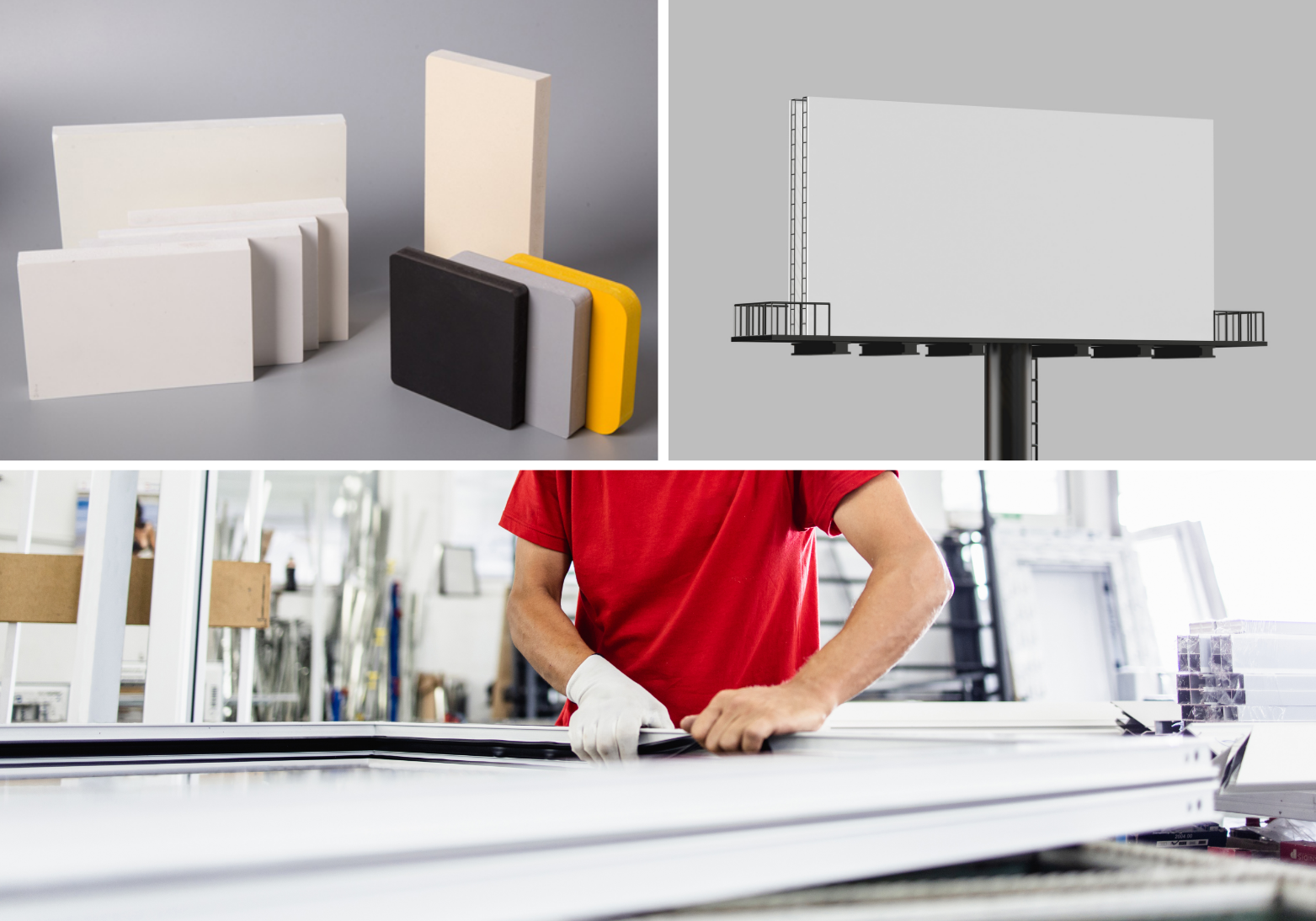
In interior applications, it is commonly used for cabinets, partitions, and wall panels. Its moisture resistance makes it suitable for humid environments.
In the advertising industry, PVC foam is used for signage and printing materials. Its smooth surface ensures sharp and high-quality image display.
In construction, it is applied in ceilings and partitions. Its insulation properties help improve energy efficiency in buildings.
Additionally, in industrial applications, PVC foam is used in various technical components. Its stability and processability allow it to meet diverse requirements.
TRENDS
Foaming technology has made significant advancements. One notable trend is the development of environmentally friendly foaming agents. These materials help reduce emissions and improve safety in production.
At the same time, microstructure control technology is being enhanced. Manufacturers aim to produce smaller and more uniform cells, improving strength and surface quality.
Energy optimization is also an important trend. Modern systems help lower processing temperatures and reduce operating costs.
CONCLUSION
Foaming agents are an essential factor in PVC foam production. They not only create the cellular structure but also directly affect product quality.
From durability and weight to aesthetics, everything depends on how the foaming process is controlled. When properly utilized, PVC foam offers significant advantages.
Conversely, without a clear understanding of the mechanism, businesses may face substantial production risks. Therefore, investing in knowledge and technology is crucial.
In an increasingly competitive environment, material quality control is a key advantage. And foaming agents are one of the core factors that must be carefully managed.
VICHEM – AUTHORIZED DISTRIBUTOR OF CHEMICAL ADDITIVES FROM MAJOR BRANDS SUCH AS COVESTRO, SINOPEC, BUHLER,… IN VIETNAM
Vichem is an authorized distributor of chemical additives from leading brands such as Covestro, Sinopec, Buhler,… in the Vietnamese market. We not only supply high-quality products but also provide after-sales services that meet international standards.
📞 Hotline: 08 1790 1790
📧 Email: contact@vichem.vn
🔎 LinkedIn: Vichem JSC
🌐 Website: www.vichem.vn
📌 Facebook: Vichem JSC