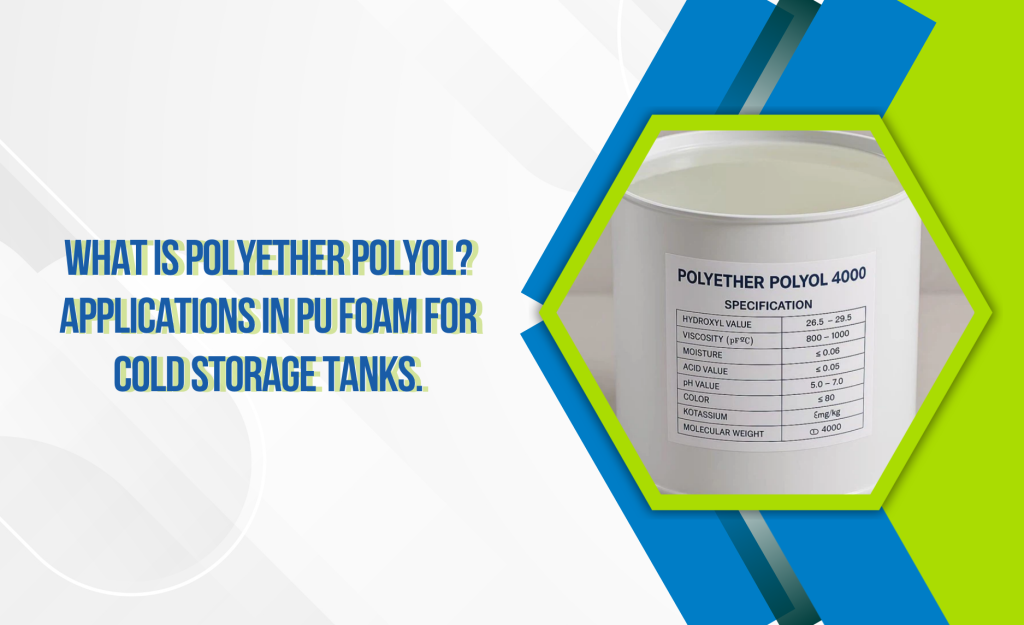
In the field of industrial insulation, PU foam is widely used. This material stands out for its excellent thermal insulation properties and high durability. One of the most important components forming PU foam is Polyether Polyol.
Understanding Polyether Polyol is not only of technical significance. It also helps optimize formulations and improve performance for insulation systems, especially in cold storage tanks.
WHAT IS POLYETHER POLYOL?
Polyether Polyol is a liquid polymer compound. Its structure contains multiple hydroxyl groups. These groups serve as the primary reactive sites in the polyurethane formation process. This substance is produced through the ring-opening polymerization of compounds such as propylene oxide or ethylene oxide. Thanks to this mechanism, the molecular structure of Polyether Polyol can be flexibly adjusted depending on the intended application.
In the PU industry, Polyether Polyol acts as the main component of the polyol system. When combined with isocyanate, it forms urethane linkages and creates a stable polymer network.
Due to its flexibility and structural controllability, Polyether Polyol is widely used in various types of foam, from flexible foam to rigid foam.

WHAT IS PU INSULATION FOAM?
PU foam is a type of cellular polymer material. It is formed through a chemical reaction between polyol and isocyanate. During this process, generated gases create pores within the material. For rigid foam, a closed-cell structure predominates. This significantly reduces the thermal conductivity. As a result, PU foam becomes one of the most effective insulation materials available today.
In addition to its insulation capability, PU foam is lightweight and highly durable. It also adheres well to various surfaces such as metal or concrete.
ROLE OF POLYETHER POLYOL
In PU foam systems, Polyether Polyol is not only a reactive raw material. It is also a key factor determining the final properties of the material. When reacting with isocyanate, the hydroxyl groups in the polyol form urethane bonds. This process occurs simultaneously with gas generation, thereby forming the characteristic foam structure.
The structure of Polyether Polyol directly affects the hardness or softness of the foam. It also determines the mechanical strength and thermal resistance of the material.
In addition, Polyether Polyol controls the cellular structure of the foam. For insulation applications, creating a closed-cell structure is extremely important. This helps limit heat transfer and enhances insulation efficiency.
APPLICATION IN COLD STORAGE TANKS
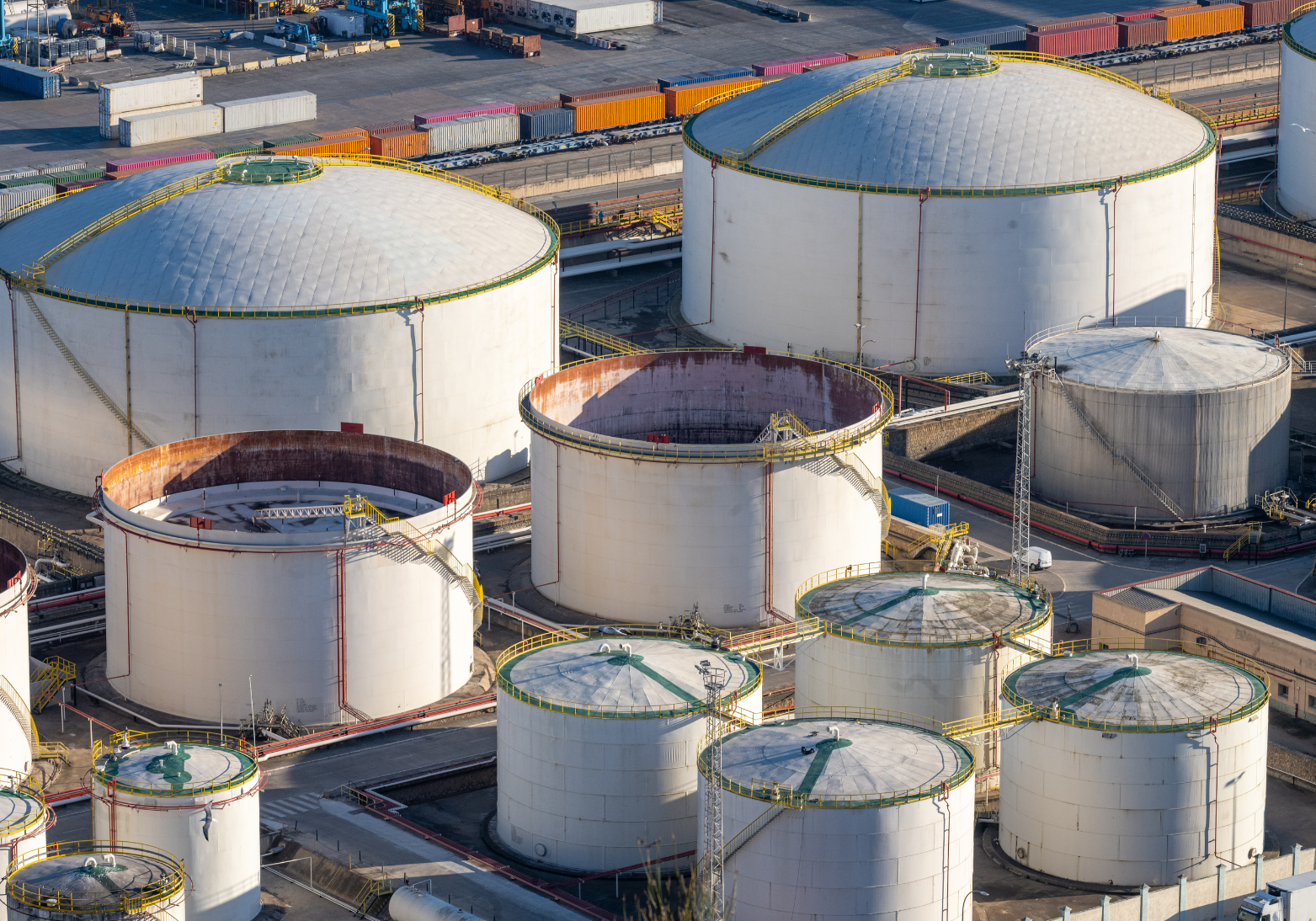
In cold storage tank systems, maintaining a stable temperature is a mandatory requirement. PU foam using Polyether Polyol plays a crucial role in meeting this requirement. Thanks to its closed-cell structure, the foam minimizes heat exchange between the inside and outside environments of the tank. This helps reduce energy loss during operation.
Moreover, Polyether Polyol enhances the foam’s adhesion to the metal surface of the tank. As a result, the insulation layer does not delaminate during long-term use.
Another important factor is moisture resistance. In low-temperature environments, condensation may occur. However, PU foam with Polyether Polyol helps limit water absorption, thereby maintaining stable insulation performance.
Additionally, this material increases the rigidity and stability of the tank structure. It contributes to protecting the outer shell from mechanical and thermal impacts.
FACTORS AFFECTING FOAM PERFORMANCE
Structure
The structure of the polyol is the first important factor. Molecular weight and the number of hydroxyl groups determine the crosslink density in the polymer. This directly affects hardness and insulation performance.
Ratio
The mixing ratio between polyol and isocyanate also plays a key role. If the ratio is not accurate, the reaction will be incomplete. As a result, the foam may be weak or uneven.
Environmental Conditions
Environmental conditions such as temperature and humidity also affect the foaming process. High temperatures can accelerate the reaction. Meanwhile, humidity can influence gas generation and cellular structure.
Additives
In addition, additives such as catalysts or blowing agents also contribute to controlling the process. They help optimize the structure and improve material performance.
COMPARISON WITH POLYESTER POLYOL
In the PU industry, Polyether Polyol is often compared with Polyester Polyol. These two types have clearly different characteristics. It has advantages in flexibility and moisture resistance. This makes it suitable for outdoor applications or cold environments.
In contrast, Polyester Polyol has better chemical resistance. However, it is more sensitive to moisture and typically has a higher cost. In cold storage tank applications, Polyether Polyol is usually preferred due to its stability and water resistance.
TRENDS
The PU materials industry is developing rapidly. Polyether Polyol is continuously being improved to meet new requirements. One notable trend is the development of bio-based polyols. These materials help reduce environmental impact and move toward sustainable development.
In addition, high-performance foam technologies are being researched. The goal is to reduce thermal conductivity and improve material durability. Furthermore, optimizing polyol formulations for specific applications is also gaining attention. This enhances efficiency in industries such as industrial refrigeration.
CONCLUSION
Polyether Polyol is an important component in PU foam systems. It determines the structure and properties of the material. In cold storage tank applications, its role becomes even more evident. From insulation capability to mechanical strength, all are directly related to Polyether Polyol.
Understanding the characteristics and mechanisms of this material helps optimize system performance. This is a key factor in modern insulation applications.
VICHEM – AUTHORIZED DISTRIBUTOR OF CHEMICAL ADDITIVES FROM LEADING BRANDS SUCH AS COVESTRO, SINOPEC, BUHLER,… IN VIETNAM
Vichem is an authorized distributor of chemical additives from leading brands such as Covestro, Sinopec, Buhler,… in the Vietnamese market. We not only provide high-quality products but also deliver after-sales services that meet international standards.
For more information about our products, please contact us via the following channels:
📞 Hotline: 08 1790 1790
📧 Email: contact@vichem.vn
🔎 LinkedIn: Vichem JSC
🌐 Website: www.vichem.vn
📌 Facebook: Vichem JSC