In the modern coffee industry, bean quality is only the starting point. The true value of the product is determined during the roasting and grinding stages. These two processes create the aroma, flavor, and consistency of coffee.
In practice, the same type of beans can produce very different results depending on how they are roasted and ground. This makes processing technology a key competitive factor.
THE ROLE OF ROASTING AND GRINDING TECHNOLOGY IN THE COFFEE INDUSTRY
Coffee roasting is the process of transforming green beans into brown beans with a characteristic aroma. During this process, heat is transferred into the beans in various ways, including direct contact, hot air flow, and thermal radiation.
If properly controlled, the beans will fully develop their flavor. Otherwise, unstable heat can cause beans to burn, remain underdeveloped, or roast unevenly.
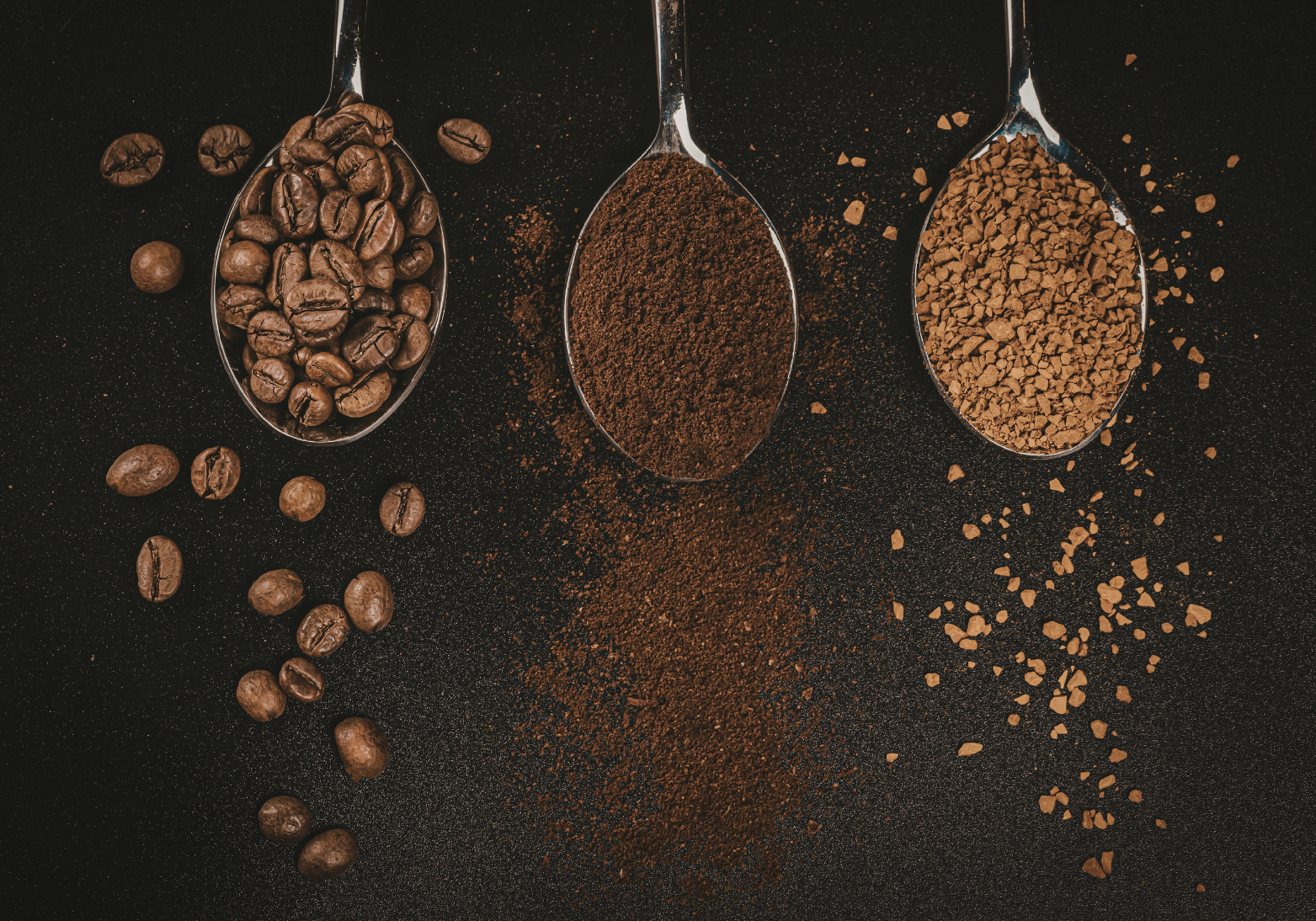
After roasting, coffee must be ground. Grind size directly affects the brewing process. A grind that is too fine will result in bitter coffee and slow extraction, while a grind that is too coarse will produce a weak and under-extracted cup.
Therefore, roasting and grinding must always go hand in hand. These are two closely linked stages in the entire production process.
COMMON COFFEE ROASTING TECHNOLOGIES
Drum Roasters
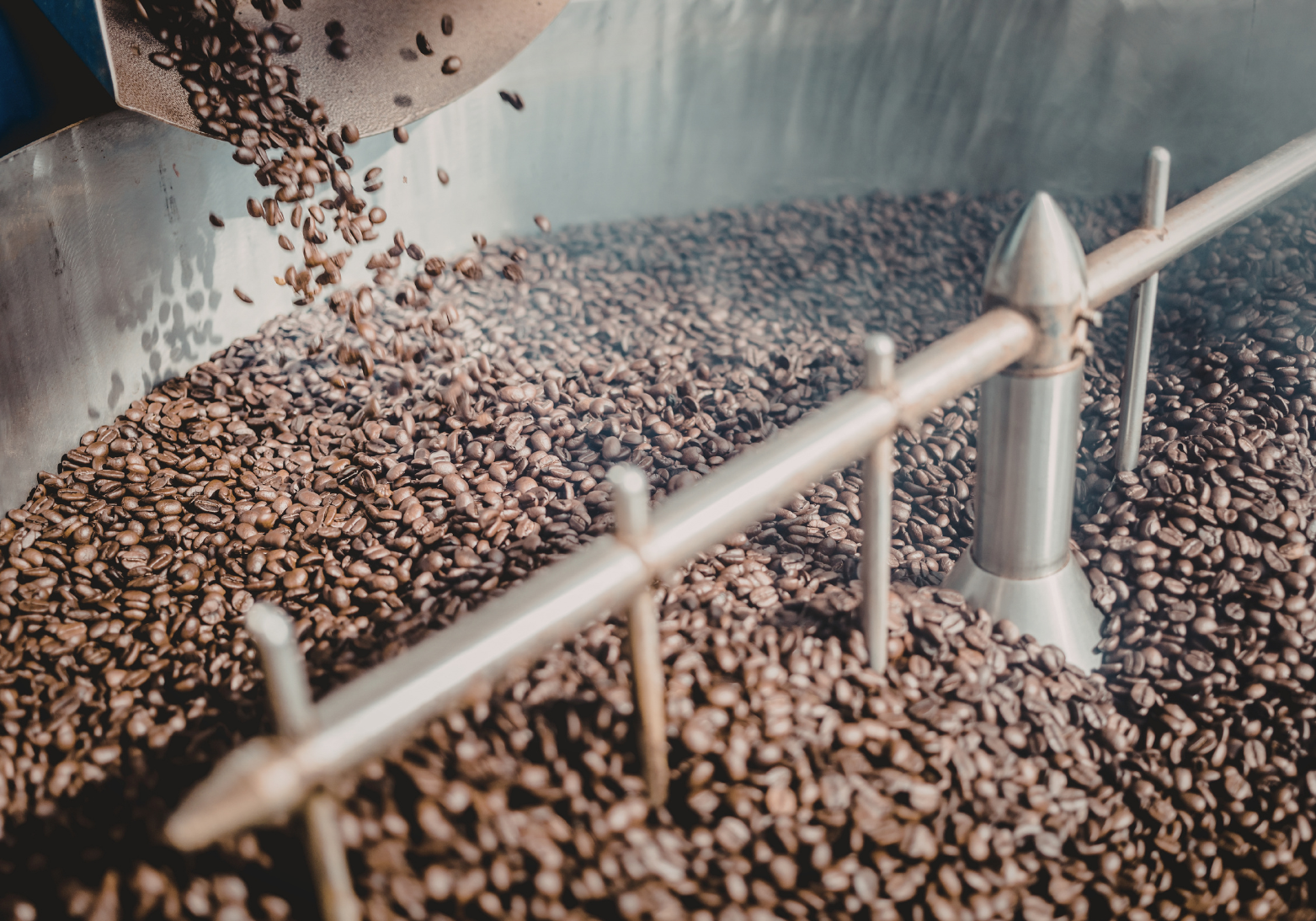
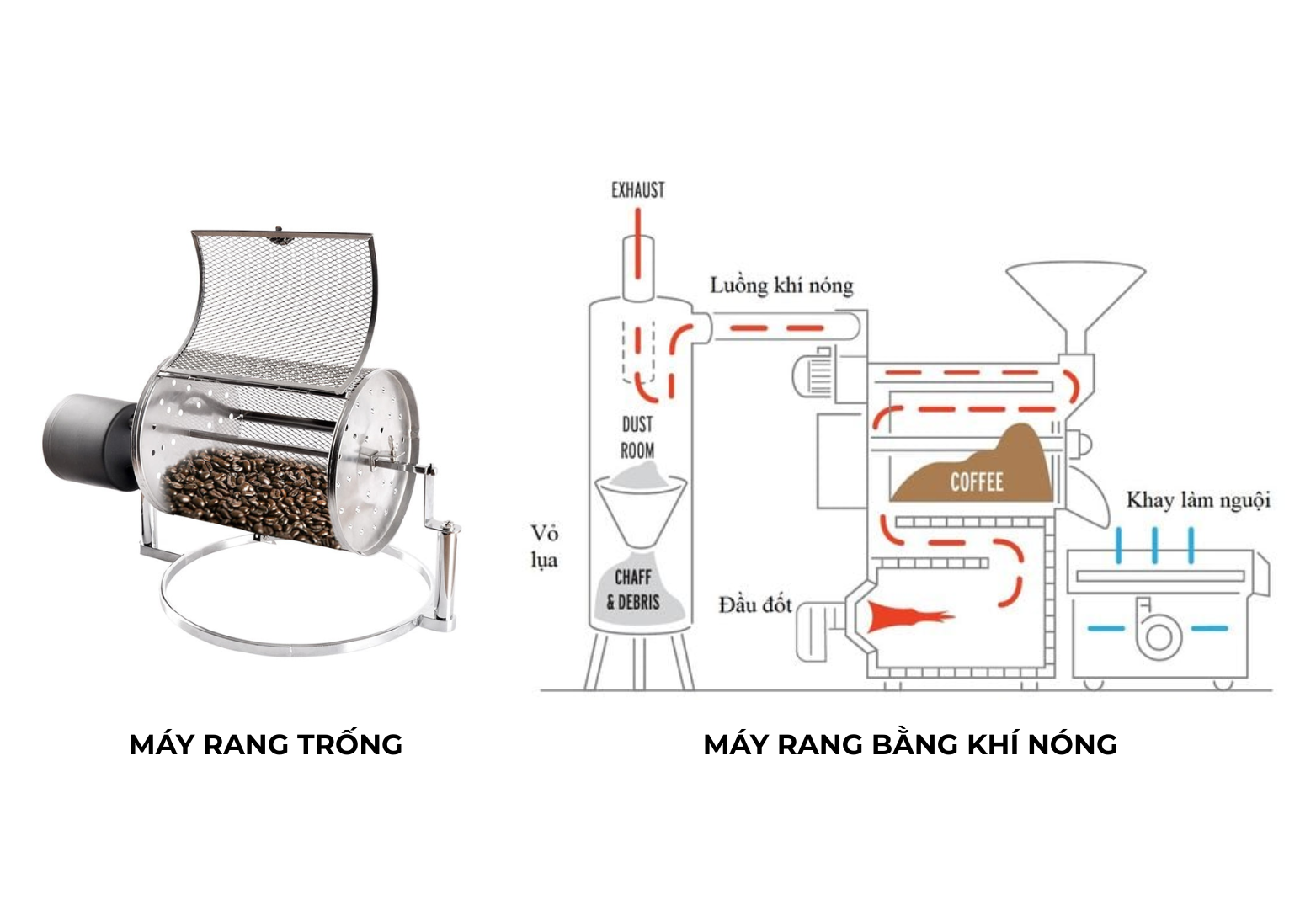
Drum roasters are the most widely used type today. Coffee beans are placed in a rotating drum and gradually heated. Heat is transferred through the drum walls and hot air inside. Continuous movement helps ensure more even roasting.
The main advantage of drum roasters is the ease of controlling the roasting process. Operators can adjust temperature and time to achieve different roast levels.
This type of machine is suitable for various models, from small workshops to medium-scale production. It also allows for deep and well-defined flavor development. However, it relies heavily on operator experience. Uneven heat distribution may cause localized burning or inconsistent roasting.
Hot Air Roasters
Hot air roasters use high-temperature airflow to heat the beans. The beans are kept in continuous motion by the air stream. Compared to drum roasting, this method provides more even heat distribution and faster roasting time.
The advantage of this technology is the reduced risk of surface scorching. It also produces highly uniform results. Hot air roasters are suitable for businesses requiring stable output and fast processing.
However, achieving the same depth of flavor as drum roasting requires careful adjustment. Otherwise, the coffee may lack body and complexity.
Hybrid Roasting Systems
This is a more advanced technology that combines multiple heat transfer methods in a single system. It can simultaneously utilize conductive heat, hot air, and radiation, allowing for better control of the roasting process.
The advantage of this technology is the production of more consistent and cleaner results, with reduced impact from direct combustion gases. It also allows flexible adjustments for different bean types, enabling businesses to develop diverse product lines.
However, the initial investment cost is typically higher, and the system is more complex to operate compared to traditional machines.
COMMON COFFEE GRINDING TECHNOLOGIES
Burr Grinders
This is a widely used technology in the professional coffee industry. Coffee beans are ground between two specially designed surfaces, allowing precise control over particle size.
The main advantage is consistent grind size, which leads to more stable brewing results. This type of grinder is suitable for coffee shops and roasting facilities. Depending on the design, it can produce a wide range of grind sizes, from coarse to fine.
Industrial Roller Mills
This technology is commonly used in large-scale factories. Coffee beans are ground through multiple pairs of rollers, gradually reducing their size at each stage.
The advantages are high capacity and good consistency, with the ability to operate continuously for long periods.
However, the investment cost is high and requires advanced technical operation, making it suitable only for industrial-scale production.
WHY GRINDING TECHNOLOGY HAS A MAJOR IMPACT ON QUALITY
Grind size determines how coffee is extracted. If the grind is inconsistent, water flow becomes uneven, leading to imbalanced flavor.
In addition, heat and static electricity are generated during grinding, which can cause grounds to cling to the machine and affect quality. Therefore, selecting the right grinder is essential, especially for businesses requiring consistent quality.
TRENDS
In an increasingly competitive market, businesses can no longer rely solely on experience. Investing in coffee roasting and grinding technology helps improve quality and reduce costs.
Modern systems allow full control over the entire process, enabling businesses to produce consistent products that meet international standards.
At the same time, industrial machinery increases productivity and reduces dependence on manual labor.
CONCLUSION
Roasting and grinding technologies play a crucial role in the coffee industry. Each method has its own advantages and disadvantages. Drum roasters are suitable for flavor control, hot air roasters for fast production, and hybrid systems for higher consistency.
In grinding, burr grinders are the most common choice, while roller mills are suitable for large-scale production. Businesses need to choose technologies that align with their goals. This is a key factor in improving quality and achieving sustainable growth.
VICHEM – AUTHORIZED DISTRIBUTOR OF BUHLER INDUSTRIAL AND AGRICULTURAL MACHINERY IN VIETNAM
Vichem is the official distributor of Buhler industrial and agricultural machinery products in the Vietnamese market. We not only provide high-quality products but also deliver after-sales services that meet international standards.
For more information about our products, please contact us via the following channels:
📞 Hotline: 08 1790 1790
📧 Email: contact@vichem.vn
🔎 LinkedIn: Vichem JSC
🌐 Website: www.vichem.vn
📌 Facebook: Vichem JSC