If a plant's chemical safety data sheet was prepared before 2026, it needs to be checked again against Circular 01/2026/TT-BCT, issued by the Ministry of Industry and Trade and effective 17/01/2026. The Circular sets out 16 basic contents for the sheet in Article 5 and the sheet template in Annex I. Chemical manufacturers and importers should also check how they classify chemicals under Article 7, and plants should review the sheets they hold against this content list and template.
An old chemical safety data sheet may not match the new rules
A chemical safety data sheet (SDS, short for Safety Data Sheet) is a document that records the safety information of a chemical, based on the contents listed in Article 5. The Circular has no separate definitions article for this term, so this reading is a commonly used wording, not a legal definition. In a plant, this document is usually kept in the warehouse, the blending area and the safety department, where people need to know where a chemical is hazardous and how to respond in an incident. The Circular does not specify who in the plant uses the sheet.
Circular 01/2026/TT-BCT provides detailed rules on the content and forms of the chemical safety data sheet (Article 1, clause 1, point b). On the same day the Circular takes effect, Circular 32/2017/TT-BCT and Circular 17/2022/TT-BCT cease to be valid (Article 12, clause 2). Whether a sheet prepared the old way matches is checked directly against Article 5, clause 1 and the Annex I template (Article 5, clause 2). The Circular sets no transition period for old sheets.
The full text also records that Circular 26/2026/TT-BCT replaces some forms in other annexes. Companies should therefore read the consolidated version of the original text before settling their review approach. The wider context of these changes is covered in the article on what manufacturing plants need to know about the 2025 Law on Chemicals.
How Circular 01/2026/TT-BCT regulates the chemical safety data sheet
Article 5, clause 1 provides that the sheet contains the basic contents below, in the same order as the original text (points a to q):
- Chemical identification and supplier information;
- Hazard identification of the chemical;
- Information on composition of substances;
- First aid measures;
- Firefighting measures;
- Accidental release measures and emergency response;
- Requirements for handling and storage;
- Exposure controls/personal protective equipment requirements;
- Physical and chemical properties of the chemical;
- Stability and reactivity of the chemical;
- Toxicological information;
- Ecological information;
- Disposal information;
- Transport information;
- Regulatory information;
- Other necessary information.
Article 5, clause 2 requires the sheet to follow the Annex I template. This annex has 16 numbered sections, from 1 to 16, matching the list above in order and name. Each section has an explanation column divided into sub-items. Section 1 covers product identifier, uses and restrictions on use, supplier information and emergency phone number. Section 2 covers GHS classification and label elements. Section 3 separates "Substance" from "Mixture", with a note giving priority to the legal rules on trade secret information when listing components.
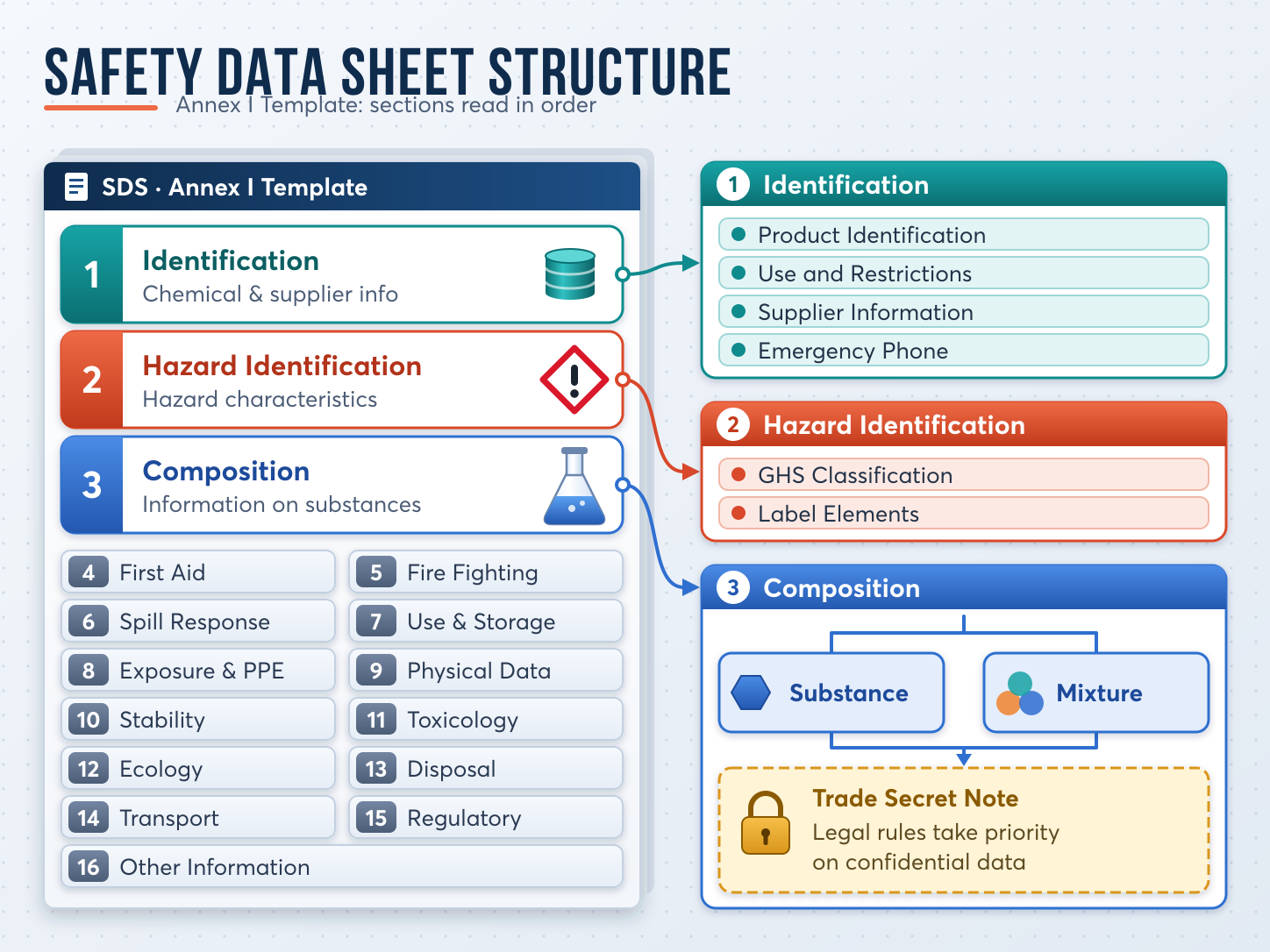
Section 9 on physical and chemical properties has 16 sub-items, such as state, boiling point, flash point, pH and density. Section 14 on transport requires showing one or more of the listed items of information. Section 16 also includes information on preparing and revising the sheet.
When checking the layout, note that the last sentence of Annex I allows changes to the order and presentation format. The focus of the review is whether the sheet contains all mandatory content, not necessarily whether every section is in the exact order. Sheets from foreign suppliers often have a layout that differs from the template, so checking content item by item is a necessary step.
On the trade-off, this is the author's opinion and the Circular does not provide for it. Reviewing each sheet against the 16 contents and the template will take time from the technical and safety teams, especially when the plant holds many sheets for many chemicals. In return, each sheet is checked once against a fixed list, which reduces the chance of missing content when it has to be presented. The Circular does not address checking sheets.
What decides whether a chemical safety data sheet meets the requirements
There are four factors to check, in order from GHS chemical classification to amendments.
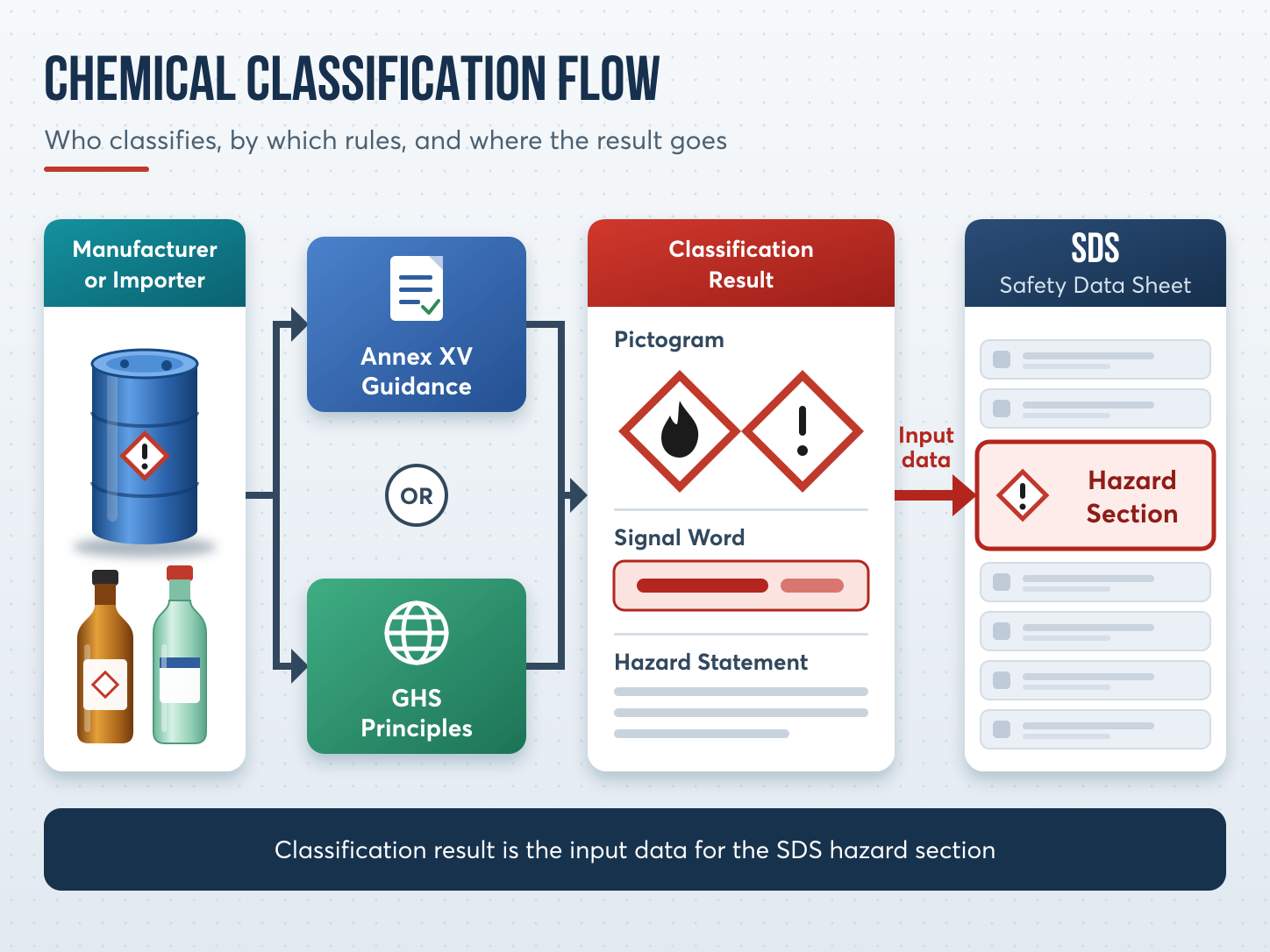
Chemical classification. Organizations and individuals that manufacture or import chemicals are obliged to classify chemicals following the guidance in Annex XV, or the principles of the Globally Harmonized System of Classification and Labelling of Chemicals (GHS) "from revision 2 of 2007 onward" (Article 7). GHS is a common set of rules for placing chemicals into hazard groups and showing them through a unified label made up of pictograms, signal words and hazard statements. The GHS classification result is the input data for section 2 of the sheet.
Annex XV has three parts. Part I lists 13 hazardous properties under the GHS principles, from explosive, strongly oxidizing, strongly corrosive and flammable to acutely toxic and hazardous to the environment. Part II covers GHS classification, divided into physical hazards (16 classes) and health and environmental hazards, each class with classification criteria and a table of label elements. Some tables of concentration thresholds for components in a mixture state the cases that must be reported in the SDS. Part III covers pictograms for the transport of dangerous chemicals.
Complete content. The sheet must contain all 16 contents in Article 5, clause 1. Missing one section means falling short of this list.
Correct template. The sheet is presented following the Annex I template (Article 5, clause 2), with the order and format as noted above.
Amendments. The full text contains no amendment tied to Article 5, Article 7, Annex I or Annex XV. The replacement notes of Circular 26/2026/TT-BCT relate only to some forms in other annexes. The scope of amendments affecting the chemical safety data sheet needs to be read in the consolidated version.
When a plant must update the chemical safety data sheet itself and when to ask the supplier
Chemical manufacturers and importers are obliged to classify chemicals under Annex XV or GHS from revision 2 of 2007 onward (Article 7). For imported chemicals used in a plant, this classification result is the basis for the sheet to state the correct hazard properties in section 2. Annex I section 1 also requires the sheet to carry supplier information (importer or manufacturer), including name, address and phone number. A plant that imports directly should check these two points on sheets received from abroad, and see the article on declaring imported chemicals under Decree 26 of 2026 for the accompanying procedures.
The Circular does not specify who must prepare or update the sheet. Article 5 only sets the content and template. The Circular also states no separate sheet obligation for a plant that only buys and uses chemicals, within the scope of Article 5, Article 7, Annex I and Annex XV. The general scope of application covers domestic and foreign agencies, organizations and individuals with chemical-related activities in Vietnam (Article 1, clause 2).
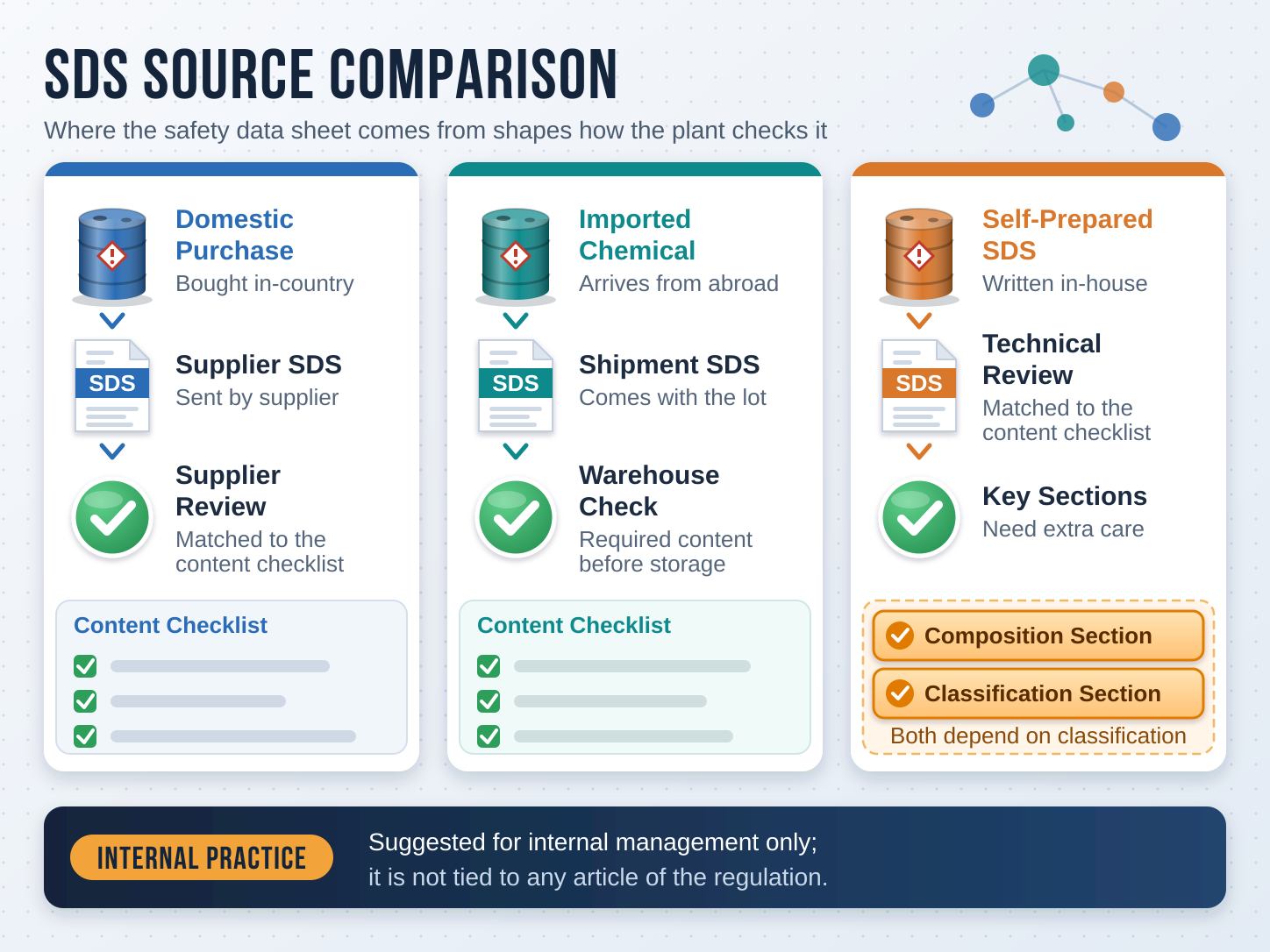
From there, the suggestions below are an internal management approach proposed by the author, not tied to any provision:
- Domestically purchased chemicals: the plant should ask the supplier to send an SDS with all 16 contents and following the Annex I template, then use the Article 5 list to check it when approving suppliers.
- Imported chemicals: the plant should receive the SDS from the supplier together with the shipment and check the mandatory contents before moving the goods into the warehouse.
- Self-prepared sheets: the technical team reviews against the 16-section list, especially the composition and classification sections, because these two sections depend on the classification result under Article 7.
The plant only needs to keep one checklist for each sheet, recording which sections are complete, which are missing and who is responsible for adding them. This also helps when preparing a chemical incident prevention and response plan, because the first aid, firefighting and incident response sections of the sheet are a source of input information.
Frequently asked questions about the chemical safety data sheet under Circular 01/2026
How many chemical safety data sheet contents does Circular 01/2026 require?
The sheet has 16 basic contents, set out in Article 5, clause 1 (points a to q), from chemical identification and supplier information to other necessary information. This number matches the 16 numbered sections of Annex I. When reviewing, the plant should count against the original text.
Where is the new chemical safety data sheet template?
The template is in Annex I issued with Circular 01/2026/TT-BCT, under Article 5, clause 2. The annex has 16 sections, each with an explanation column for the sub-items to be shown. The last sentence of the annex allows changes to the order and presentation format, as long as all mandatory content is present.
Which GHS revision is accepted for chemical classification?
Article 7 accepts classification under GHS principles "from revision 2 of 2007 onward". The alternative is classification following the guidance in Annex XV. This obligation rests with organizations and individuals that manufacture and import chemicals.
Has Circular 01/2026/TT-BCT been amended?
A related document is Circular 26/2026/TT-BCT, which replaces some forms in other annexes of Circular 01. The full text does not show that this document amends Article 5, Article 7 or Annex I. Companies should check the official consolidated version before applying it.
Conclusion
The chemical safety data sheet needs to be checked again because Circular 01/2026/TT-BCT has set a specific content list and sheet template, effective from the date of issue.
- Circular 01/2026/TT-BCT was issued and took effect on 17/01/2026; Circular 26/2026/TT-BCT is related, so the consolidated version needs to be read.
- The sheet must have all 16 contents under Article 5, clause 1 and follow the Annex I template.
- Classification follows Annex XV or GHS from revision 2 of 2007 onward (Article 7).
Send us the list of SDS your plant uses and the types of chemicals it imports, and the Vichem technical team will discuss the documents that accompany each shipment.
Vichem is a distributor of chemical additives and equipment from leading brands such as Covestro, Sinopec, TotalEnergies Corbion, Bühler and Tinox in the Vietnamese market.
For more information about our products, please contact us through the following channels:
- Hotline: 08 1790 1790
- Zalo OA: Vichem JSC
- Email: contact@vichem.vn
- LinkedIn: Vichem JSC
- Website: www.vichem.vn
- Facebook: Vichem JSC