When choosing long oil alkyd resin for wood and metal coatings applied by brush or spray and air-dried, long oil alkyd suits wood substrates because the film is flexible, wets well and dissolves in aliphatic hydrocarbon solvents. For metal coatings that need faster drying and a harder film, consider medium oil alkyd or modified alkyd. On the TDS, check the oil length, fatty oil type, viscosity and solvent system before approval.
Where the wrong long oil alkyd resin fails
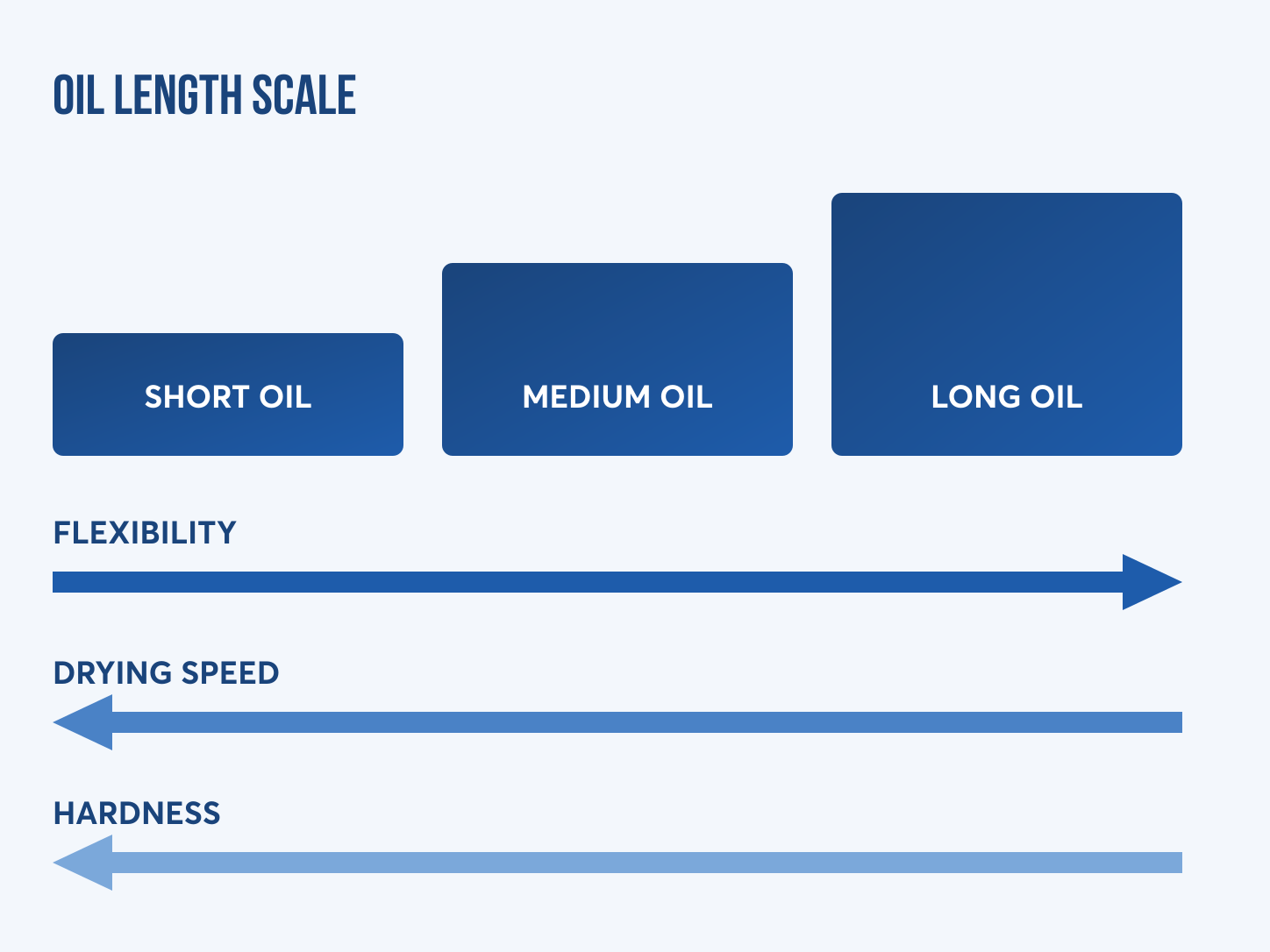
Oil length is the proportion of fatty oil in the alkyd molecule, and the article on choosing long oil or short oil alkyd resin for industrial coatings already explains this concept in detail. Here, only one underlying rule matters: the more fatty oil, the more flexible the film and the better the wetting, but the slower it dries and hardens; the less oil, the harder and faster-drying the film, but also the more brittle. Each substrate has its own movement and mechanical requirements, so the same alkyd can pass on one substrate and fail on another.
On wood, the common mistake is choosing an alkyd that is too short. Wood expands and contracts with humidity and temperature, and a hard, brittle film cannot follow that movement, so it cracks along the wood grain. The cracks run with the grain, water enters the substrate through them and the film flakes off in patches.
On metal, the failure runs the other way: the alkyd is too long. A line spraying machine frames or steel structures needs a film hard enough for stacking and transport. An alkyd that is too long gives a slow-drying, soft film, with a surface that picks up dust in the workshop, easily takes handprints or pressure marks when parts are stacked, and has not reached the required hardness at delivery.
The third failure occurs on both substrates. Fatty oil contains double bonds, and these bonds oxidize over time, so the film yellows gradually. White and light colors show it most clearly: a batch that matched the color at shipment may shift after some time indoors or in storage. This defect appears late, so it has to be considered at the resin selection stage, before the coating goes into mass production.
4 criteria for choosing long oil alkyd resin
Criterion 1 — Oil length by substrate
The fatty oil in an alkyd consists of long, flexible hydrocarbon chains that act as a plasticizer built into the resin structure. These chains make the film flex with the expansion of the substrate and help the resin penetrate porous surfaces. On wood, the resin penetrates the grain to form mechanical anchor points, while the flexible film withstands moisture-driven expansion and contraction cycles. That is why long oil alkyd for wood coatings is the usual starting point.
Metal has different requirements. Steel is not porous and does not expand and contract like wood, so the film needs to be hard to resist impact, resist scratching when stacked, and dry fast enough that the line does not have to wait. With less oil in the chain, the film is harder and dries sooner, so metal coatings usually use medium oil alkyd, which sits shorter than the alkyd used for wood. The first question is always the substrate: a substrate that moves a lot leans toward longer oil length, while a rigid substrate coated at line pace leans toward shorter.
Criterion 2 — Fatty oil type
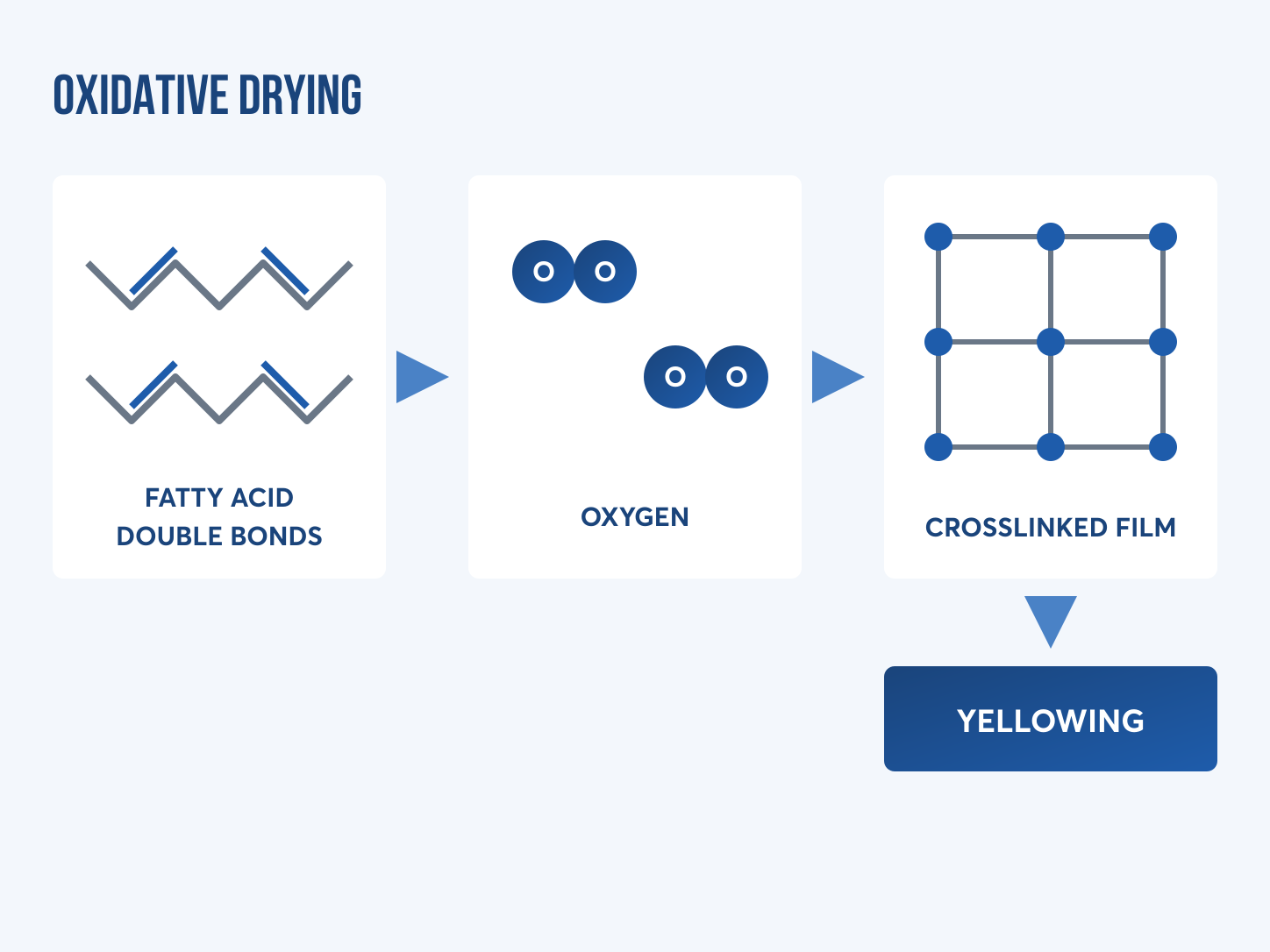
The drying speed of an alkyd is tied to the type of fatty oil, and the deciding parameter is the number of double bonds on the oil chain. Alkyds dry by oxidation: oxygen in the air attacks the position next to a double bond, forming free radicals and hydroperoxides; these decompose and then link the chains into a three-dimensional network, with driers acting as catalysts. A chain with more double bonds, especially when the bonds lie close together, has more linking sites, so the film dries faster.
The cost is color. The remaining double bonds and the oxidation products form chromophoric groups, so faster-drying oil yellows more. The linseed oil group dries fast and yellows visibly; oils with fewer double bonds, such as soybean oil, dry more slowly and hold color better. Two alkyd batches with the same oil length but different oil types can dry differently and yellow differently, so the TDS needs to state the oil type. White or light-colored coatings usually use a color-retentive oil, then make up the drying speed with a shorter alkyd or a modified alkyd.
Criterion 3 — Solubility and solvent system
Long oil alkyd, like any solvent-borne alkyd resin, dissolves well in aliphatic hydrocarbon solvents, a type of solvent with mild odor that painters know well. Most of the resin is aliphatic chain with low polarity, so an aliphatic solvent dissolves it adequately and lets the film level evenly with few brush marks. For indoor wood coatings or workshops that need mild odor, this is a practical advantage.
Short oil alkyd has a larger polar portion, so it usually needs stronger solvents, such as aromatic hydrocarbons or blends containing esters and ketones. The odor is stronger, and the plant has to review the thinner system it currently uses. When changing resin, read the solvent on the TDS and cross-check it against the article on choosing thinners for industrial coatings by resin system to avoid cloudy resin or phase separation when thinning.
Criterion 4 — Corrosion protection and outdoor durability
When alkyd for metal coatings works outdoors or in humid environments, two capabilities matter: surface wetting and water barrier. Long oil alkyd wets steel surfaces well, even when surface preparation is not perfect, so it is used for brush-applied maintenance coatings. The drawback is that the film contains ester groups and has poor resistance to water and alkali. On alkaline substrates such as concrete or galvanized steel, the esters can saponify, and the film loses adhesion and peels.
Outdoors, UV and water usually make alkyd films chalk and lose gloss. When these conditions dominate, or when you need both fast drying and hardness, consider modified alkyd, for example urethane-modified or silicone-modified, to improve hardness, drying speed or weather resistance. The degree of improvement depends on the type and is stated in the supplier's TDS.
How to match long oil alkyd resin to your wood and metal coatings
Step 1 — Define the substrate, application method, drying conditions and color requirement
Choosing alkyd resin starts with four inputs: the substrate (wood, bare steel or primed steel), the application method (brush or spray), the drying conditions (air-dry or light baking, plus workshop temperature and humidity) and the color requirement (white, light color or dark color). These four inputs decide the oil length, oil type and solvent in the later steps. A white, brush-applied indoor wood coating and a dark, spray-applied steel frame coating will lead to two different answers.
Step 2 — Test drying time, hardness, flexibility and yellowing
Test samples on the real substrate at the same film thickness as the alkyd currently in use. Compare four parameters against the control sample: surface-dry and hard-dry time, film hardness, flexibility and yellowing after aging. Both samples must have the pigment ground under the same conditions, see how to choose a pigment grinding method for industrial coatings, so that any difference in results comes from the resin. Use the test methods and instruments your plant lab already applies.
Step 3 — Select the alkyd resin type
For wood coatings, start with a solvent-borne long oil alkyd resin. For metal coatings, start with medium oil alkyd or modified alkyd. On the TDS, read the oil length, oil type, viscosity, solids content and solvent. Viscosity and solids content determine the amount of thinner and the thickness of each coat, so compare grades only under the same measurement conditions. Request the TDS of each alkyd resin from suppliers such as Covestro to cross-check these parameters before sending samples for testing.
Common mistakes when choosing long oil alkyd resin
The first mistake is using one alkyd for both substrates to keep the raw material list short. An alkyd flexible enough for wood will dry slowly and stay soft on a metal line; an alkyd hard enough for metal will crack on wood. Two substrates need two resins, or at least two oil lengths.
The second mistake is compensating for slow drying by increasing the drier. Driers are metal salts that catalyze the oxidation reaction; add too much and the surface layer dries and forms a skin first, so oxygen cannot reach the layers below. The wet lower layer then shrinks and the film wrinkles. The film also becomes brittle and yellows faster. Slow drying caused by a resin that is too long should be solved by reselecting the resin, not by raising the drier dose.
The third mistake is ignoring yellowing in light-colored coatings. If the test samples only measure drying and hardness, the goods will have shipped by the time a white batch yellows. Aging tests before approval are a necessary step for white, cream and light gray; with dark colors, yellowing shows less. Reading the oil type on the TDS also helps rule out yellowing-prone resins early.
Frequently asked questions
What is long oil alkyd resin used for?
Long oil alkyd resin is used for brush and spray coatings that dry in air and need a flexible, well-wetting film: wood coatings, maintenance coatings for steel structures and brush-applied decorative coatings. When a product needs fast drying and a hard film, formulators usually switch to a shorter or modified alkyd.
How do long oil and short oil alkyd differ for metal coatings?
Long oil alkyd gives a flexible film that wets steel well, but it dries and hardens more slowly and stays softer; short oil alkyd dries fast and gives a hard film, but it is more brittle and needs stronger solvents. Spray coatings on a line usually lean toward the shorter type, while brush-applied maintenance coatings lean toward the longer type.
Why does long oil alkyd paint dry slowly?
Most of the resin's mass is soft oil chain, so the film needs more time to oxidize and form enough crosslinks to reach hardness. The speed also depends on the fatty oil type, the amount of drier, temperature, humidity and film thickness. A film that is too thick, or a cold, humid workshop, will extend the drying time.
Does long oil alkyd resin yellow?
Yes. Fatty oil oxidizes over time, so alkyd films yellow gradually, and alkyds with more fatty oil usually show it more clearly. The oil type determines the degree of yellowing: faster-drying oil yellows more. For white and light-colored coatings, choose a color-retentive oil and run aging tests before approval.
Conclusion
Choosing long oil alkyd resin starts with the substrate: wood moves with humidity, so it needs a flexible film, while metal is coated at line pace, so it needs a film that dries faster and harder. After the substrate, the fatty oil type and solvent system decide the rest of the result on the product.
- Wood coatings need long oil alkyd because the film flexes with the expansion of wood.
- Metal coatings need faster drying and a harder film, so consider medium oil or modified alkyd.
- The fatty oil type governs both drying speed and the degree of yellowing.
- Test on the real substrate, at the same film thickness and with aging, before selecting.
Send a wood or steel substrate sample together with your line's application method and drying conditions, and the Vichem technical team will recommend a suitable alkyd.
Vichem is a distributor of chemical additives and equipment from leading brands such as Covestro, Sinopec, TotalEnergies Corbion, Bühler and Tinox in the Vietnamese market.
For more information about our products, please contact us through the following channels:
- Hotline: 08 1790 1790
- Zalo OA: Vichem JSC
- Email: contact@vichem.vn
- LinkedIn: Vichem JSC
- Website: www.vichem.vn
- Facebook: Vichem JSC