
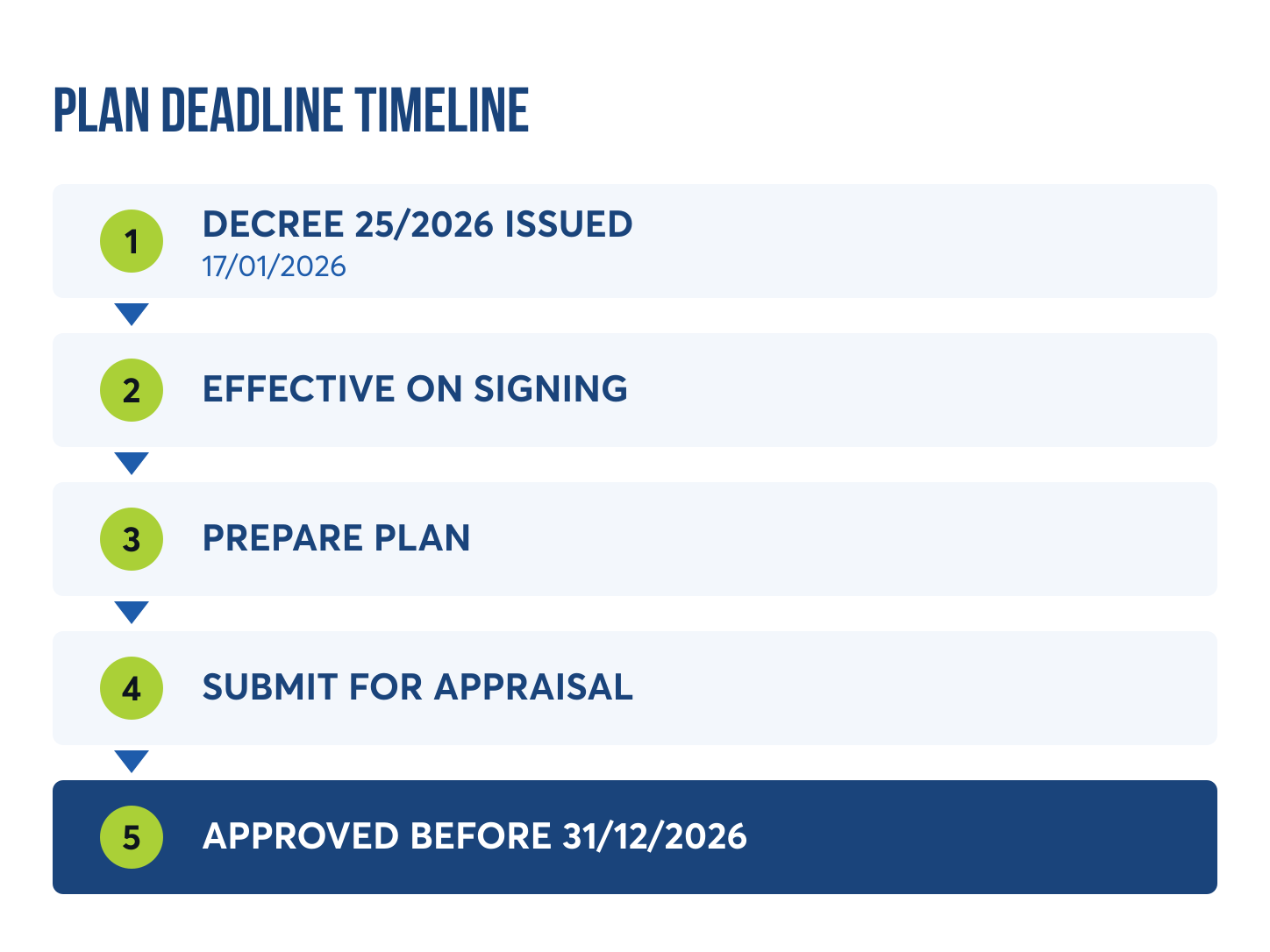
If your plant already has chemical incident prevention and response measures in place, it must prepare a chemical incident prevention and response plan, submit it for appraisal, and have it approved by 31/12/2026, under Clause 2, Article 40 of Decree 25/2026/ND-CP (issued 17/01/2026, effective from the date of signing). The rule applies to facilities covered by point b, Clause 2, Article 33. The appraisal of the chemical incident prevention plan is the step most likely to decide whether the 31/12/2026 deadline is met. The immediate task is to check your facility against point b, Clause 2, Article 33 in the original text.
The problem: plants with existing measures must act under Decree 25/2026
Decree 25/2026/ND-CP was issued by the Government on 17/01/2026 and takes effect from the date of signing (Clause 1, Article 41). For plants, the transitional provisions in the decree have been in force since mid-January 2026, with no waiting period before they apply.
The affected group is facilities covered by point b, Clause 2, Article 33 that already have chemical incident prevention and response measures (Clause 2, Article 40). Existing measures differ from plant to plant. In some, it is a spill-handling procedure written by the EHS department. In others, it is a response plan tied to the warehouse. In others, it is equipment placed at the mixing and charging area.
The transitional provision sets a requirement for exactly this group of facilities: old measures must be converted into an approved plan. Procedures scattered across safety handbooks, drill records or warehouse instructions cannot replace a plan that has gone through appraisal and approval.
EHS, legal or production managers should clarify two things first. The first is whether your facility is covered by point b, Clause 2, Article 33. The second, if it is, is whether the measures currently in use have been gathered into one coherent set of content to serve as the basis for the plan.
For the broader context of changes in chemical management, plants can read our article on what production plants need to know about the changes in the 2025 Chemicals Law. For the incident plan specifically, the direct basis is Decree 25/2026/ND-CP, and more precisely two articles: Article 33 and Article 40.
How Article 33 Decree 25/2026 and the transitional rule on the chemical incident prevention and response plan work
The rule works in two layers: Article 33 of Decree 25/2026 states who must have a plan, while Clause 2, Article 40 states when facilities that already had measures must move to that plan.
Article 33 is the article governing chemical incident prevention and response plans. Within it, point b of Clause 2 identifies the group of facilities that the transitional rule targets. The detailed content of point b, including the criteria for identifying facilities and the requirements for plan content, is in the original text. You should read this article verbatim on the site that publishes the text (luatvietnam) and check it against each facility, rather than rely on a summary.
Clause 2, Article 40 sets three steps for facilities under point b, Clause 2, Article 33 that already had measures in place:
- Prepare the chemical incident prevention and response plan.
- Submit the plan for appraisal.
- Have the plan approved.
All three steps must be completed before 31/12/2026. This is where the rule is often misread: the deadline runs until the plan is approved, not just until the file is submitted. A plant that submits its file in the last days of the year has still not met the obligation if the plan has not been approved. The original text separates appraisal and approval into two consecutive steps, and each step takes processing time outside the plant's control.
The practical consequence is that you must schedule backward from 31/12/2026. Drafting time belongs to the plant. Appraisal and approval time sits with the party reviewing the file, and the decree gives plants no basis to assume it will be short.
Choosing when to start is a trade-off:
- Starting early costs resources right away: EHS staff, time to review each area where chemicals are stored and used, and effort to collect existing measures. In return, the plant has time for the appraisal round, even if the file needs revision or additions.
- Starting close to the deadline conserves resources early on, but the risk of missing approval rises. A single round of revisions may be enough to push past 31/12/2026.
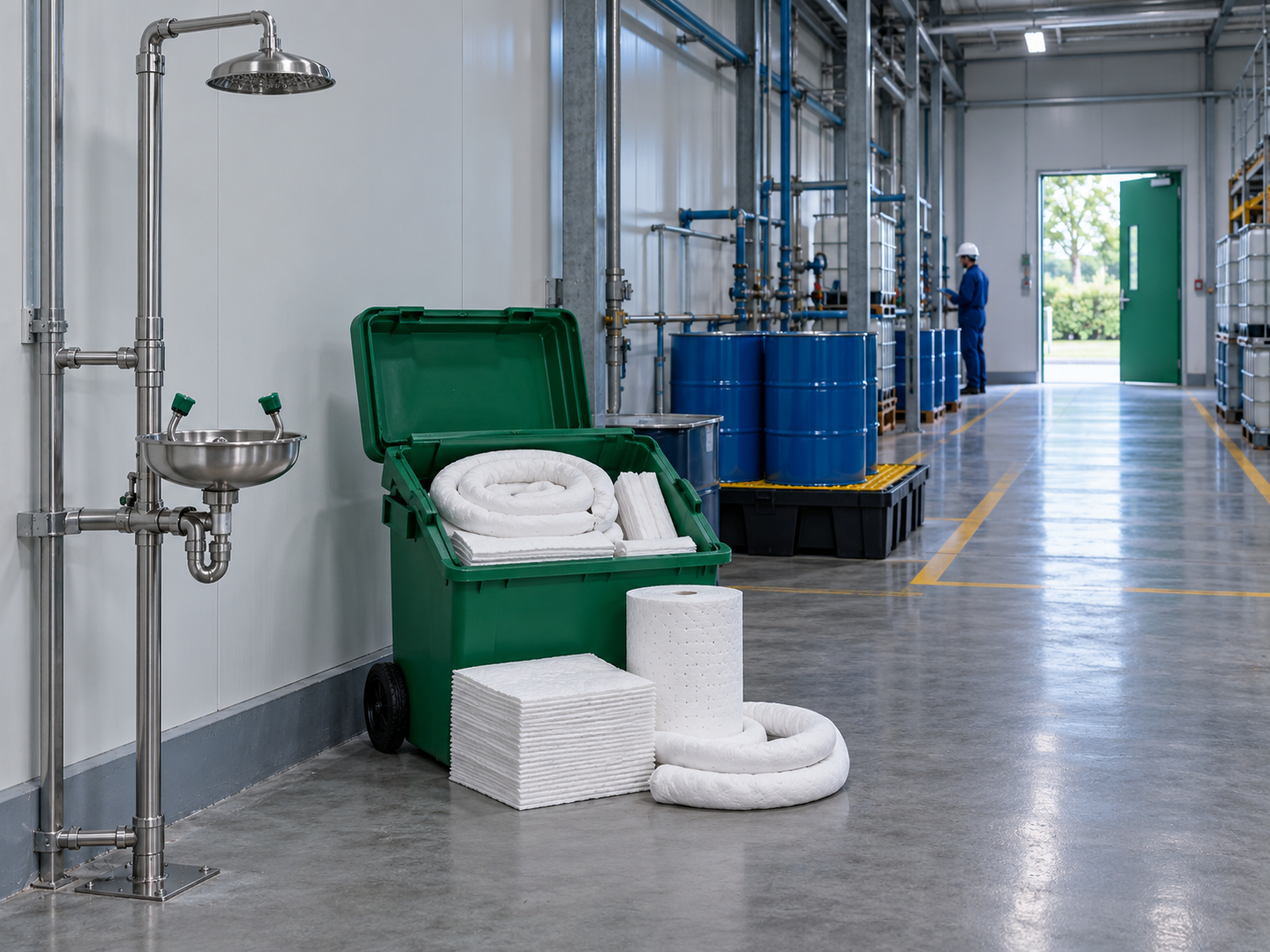
At shop-floor level, existing measures are usually things you can see in the workshop, such as emergency eyewash stations, spill kits and clearly marked emergency exits. The plan work consists of gathering these measures, together with their accompanying procedures, into one structured document for appraisal.
What determines whether a plant meets the 31/12/2026 deadline chemical incident plan approval requires
Three factors determine whether a plant meets the deadline, including the appraisal of the chemical incident prevention plan, and all three act along the timeline: when any one is slow, the approval date slips with it.
Correctly determining whether the facility falls under point b, Clause 2, Article 33. This is the first step and the easiest to get wrong. If you read the scope too broadly, the plant prepares an unnecessary file. If you read it too narrowly, the plant misses an obligation and finds out when time has run out. For a plant with several warehouses or production areas, each facility needs to be assessed against the original text, without applying one blanket conclusion to the whole site.
Appraisal time. The file must be submitted early enough to leave time for approval before the deadline. The specific appraisal period is set by the original text or by guiding documents, so you need to look it up directly rather than estimate from experience with other procedures. The decree gives plants no basis to treat this step as quick. The closer to the deadline the file is submitted, the narrower the margin for revisions and additions.
How ready the existing measures are. Existing measures form the basis of the new plan. A plant that has fully documented its storage areas, spill-handling procedures and response assignments mainly needs to systematize them. A plant whose measures are fragmented, or exist only in the experience of a few operators, needs extra time to record and standardize them before drafting the plan.
The three factors are linked. A wrongly defined scope leads to wrong plan content, a plan that needs revision extends the appraisal round, and a longer appraisal round eats into the time left until 31/12/2026. The sensible order of work is therefore to check scope first, review existing measures second, and only then draft and submit the file.
When a plant must prepare a plan and when it falls outside Clause 2, Article 40
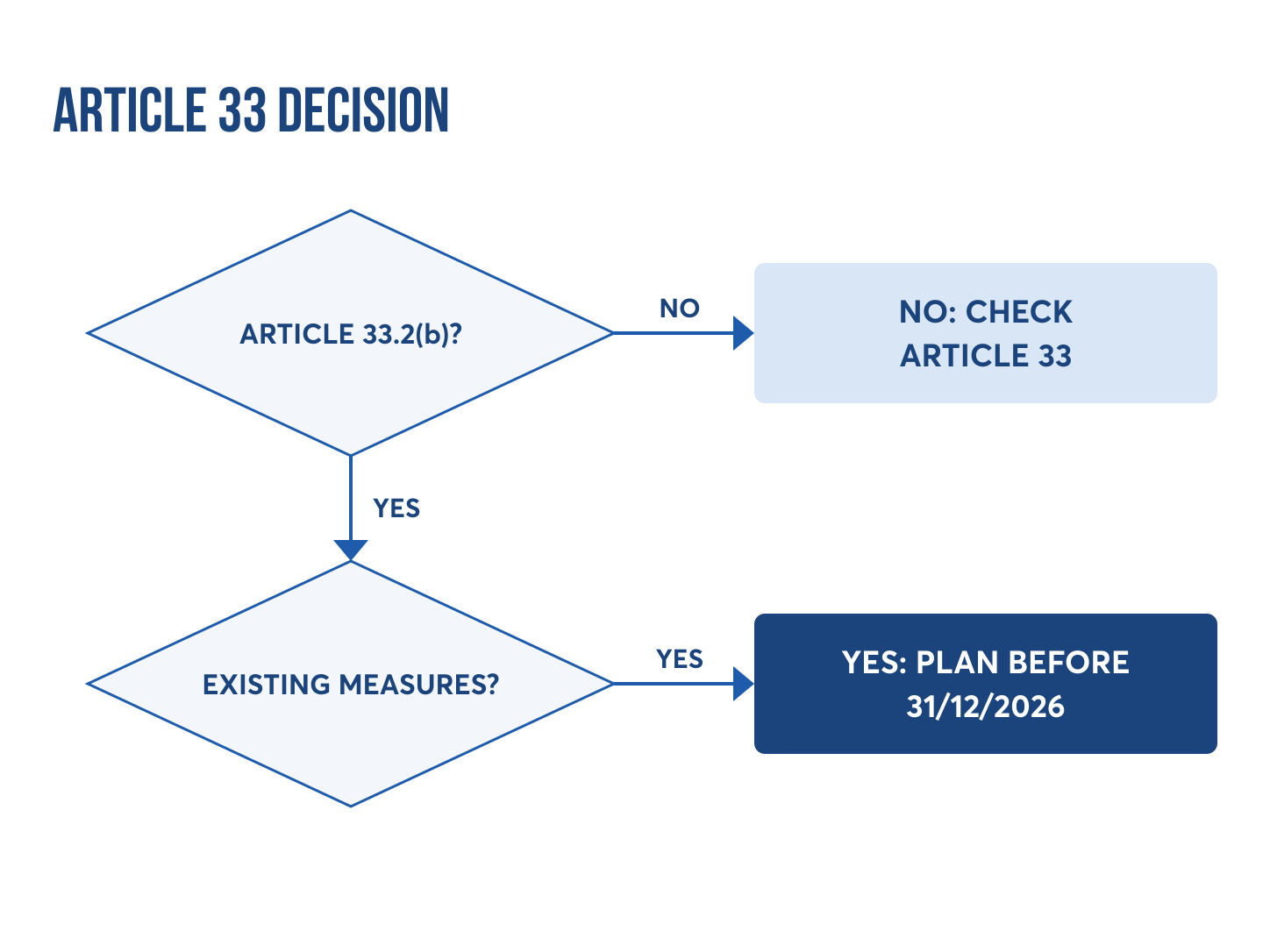
Clause 2, Article 40 applies only when a facility meets both conditions: it falls under point b, Clause 2, Article 33, and it already had chemical incident prevention and response measures in place.
Covered. A facility under point b, Clause 2, Article 33 that already had measures in place must prepare a plan, submit it for appraisal and have it approved before 31/12/2026. For example, a plant that has had response procedures and equipment at its warehouse for several years, and whose facility falls under point b, Clause 2, Article 33, is covered by the transitional rule.
Not covered by this transitional rule. A facility not under point b, Clause 2, Article 33 is not bound by Clause 2, Article 40 in this way. In that case, check the other provisions of Article 33 in the original text to see whether the facility has its own plan obligations. The conclusion "not under point b" is not enough for a plant to safely ignore all of Article 33.
This obligation is separate from the plant's other chemical obligations. For example, how to declare imported chemicals under Decree 26 of 2026 is a separate procedure, with its own subjects and timing. Completing that procedure does not replace preparing a chemical incident prevention and response plan, and vice versa.
The diagram below summarizes the check as two consecutive questions. The first asks whether the facility falls under point b, Clause 2, Article 33. The second asks whether the facility already had measures in place. Only when both answers are "yes" must the plant complete an approved plan before 31/12/2026.
Frequently asked questions
When does Decree 25/2026/ND-CP take effect?
Decree 25/2026/ND-CP takes effect from the date of signing, under Clause 1, Article 41. The Government issued the decree on 17/01/2026. Because it took effect immediately on signing, the transitional provisions in Article 40 have applied since that time, and plants have no waiting period.
What is the deadline for preparing the chemical incident prevention and response plan?
The deadline is 31/12/2026, under Clause 2, Article 40. It applies to facilities under point b, Clause 2, Article 33 that already had prevention and response measures in place. The deadline is tied to the plan being approved, so the file needs to be submitted earlier than this date.
If a plant already has chemical incident prevention measures, does it still need a new plan?
Yes, if the facility falls under point b, Clause 2, Article 33. Clause 2, Article 40 requires this very group of facilities, those that already had measures, to prepare a plan, submit it for appraisal and have it approved. Existing measures are the basis for drafting the plan, but they cannot replace an approved plan.
Is it enough to submit the chemical incident response plan, or must it be approved before the deadline?
The plan must be approved before 31/12/2026. Clause 2, Article 40 sets out three consecutive steps: prepare, submit for appraisal and obtain approval, and all three must be done before the deadline. Submitting the file before the deadline without approval does not meet the requirement.
Conclusion
A plant under point b, Clause 2, Article 33 that already had measures in place must have an approved chemical incident prevention and response plan before the end of 2026. The deadline runs until approval, so appraisal time determines when it is safe to submit the file.
- Decree 25/2026/ND-CP was issued and took effect on 17/01/2026 (Clause 1, Article 41).
- Article 33 is the article governing chemical incident prevention and response plans.
- Clause 2, Article 40 sets the deadline for preparing, appraising and approving the plan before 31/12/2026.
- The first task is to check your facility against point b, Clause 2, Article 33 in the original text.
Send us the list of chemical groups your plant uses so the Vichem technical team can discuss your related material needs with you.
Vichem is a distributor of chemical additives from leading brands such as Covestro, Sinopec and Bühler in the Vietnamese market.
For more information about our products, please contact us through the following channels:
- Hotline: 08 1790 1790
- Zalo OA: Vichem JSC
- Email: contact@vichem.vn
- LinkedIn: Vichem JSC
- Website: www.vichem.vn
- Facebook: Vichem JSC