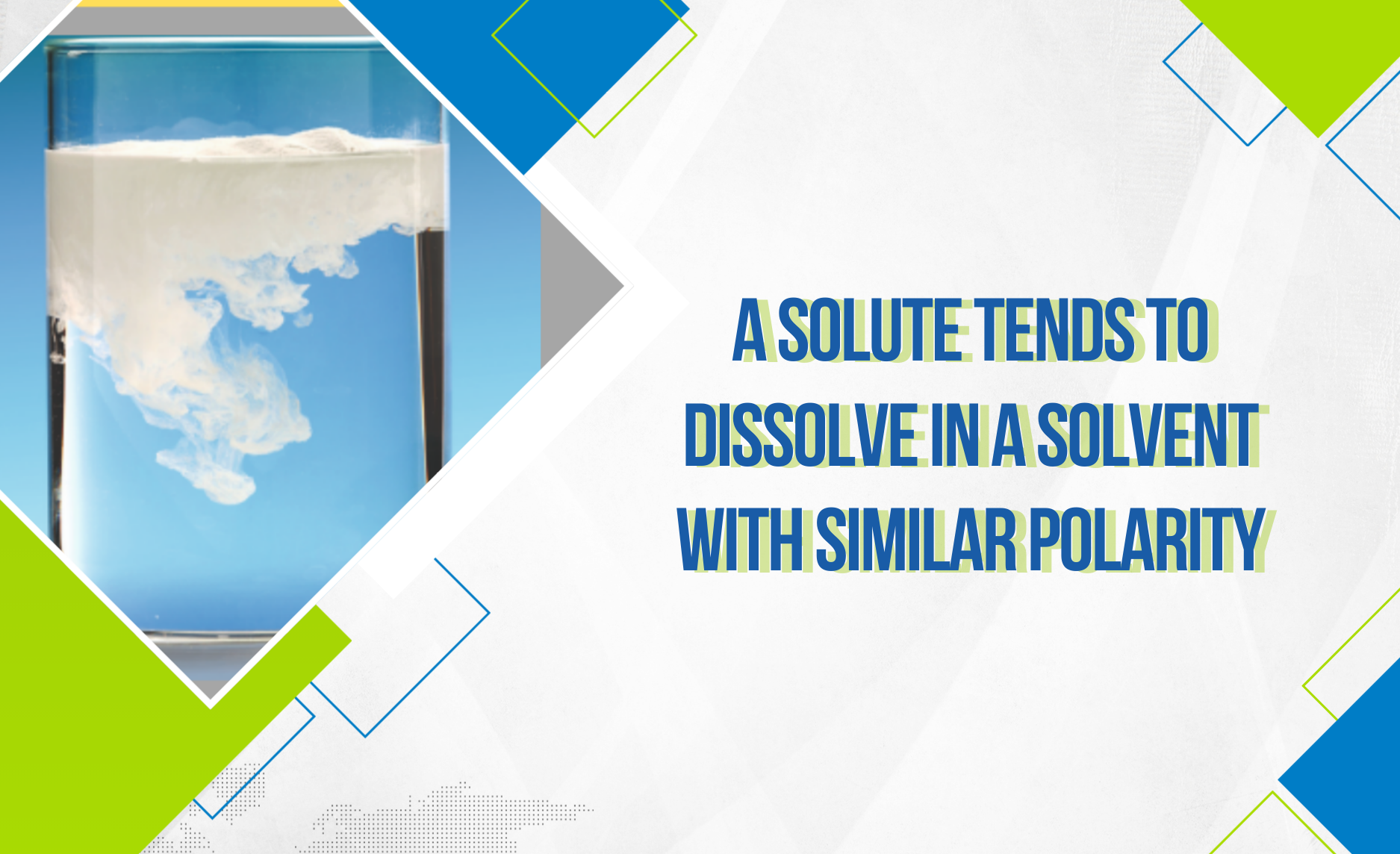
In chemistry, selecting the appropriate solvent is a key factor that determines the effectiveness of the dissolution process. One of the most fundamental and widely applied principles is “like dissolves like”.
This principle helps predict the solubility between different substances. When its nature is well understood, businesses can optimize formulations, reduce costs, and improve production efficiency.
DEFINITION
The principle of “like dissolves like” states that substances with similar chemical properties tend to dissolve in each other. In other words, a solvent will effectively dissolve substances with similar polarity.
This principle is commonly used to explain solubility between solvents and solutes. It is one of the fundamental rules in solution chemistry and applied chemistry.
THE PRINCIPLE OF “LIKE DISSOLVES LIKE”
Nature of the Principle
The essence of this principle lies in intermolecular interactions. When the interactions between solvent and solute are similar, the dissolution process occurs more easily.
These interactions include hydrogen bonding, dipole–dipole interactions, and Van der Waals forces. If the differences are too large, dissolution will be limited. This explains why some substances cannot dissolve in each other even under the same conditions.
Classification by Polarity
Chemical bonding directly affects solubility. Substances capable of forming hydrogen bonds tend to dissolve well in solvents with similar characteristics.
For example, ethanol dissolves in water due to its ability to form hydrogen bonds. Meanwhile, hydrocarbons lack this capability and therefore are poorly soluble in water. Similarity in bonding types enhances solution stability.
Role of Chemical Bonding
Chemical bonding directly affects solubility. Substances capable of forming hydrogen bonds tend to dissolve well in solvents with similar characteristics.
For example, ethanol dissolves in water due to its ability to form hydrogen bonds. Meanwhile, hydrocarbons lack this capability and therefore are poorly soluble in water. Similarity in bonding types enhances solution stability.
Limitations of the Principle
Although very useful, this principle is not always completely accurate. Some complex systems may be influenced by temperature or pressure.
In addition, factors such as molecular size and spatial structure also affect solubility. Therefore, in many cases, additional technical parameters must be considered. Understanding these limitations helps avoid errors in solvent selection.
APPLICATIONS IN INDUSTRY AND PRACTICE
Paint and Coating Industry
This principle is applied to select solvents for resins and polymers. Choosing the right solvent helps improve coating coverage and adhesion.
If the solvent is not compatible, the coating may exhibit defects or instability. This directly affects product quality.
Pharmaceutical Industry
In pharmaceuticals, solvents are used to dissolve active ingredients. Selecting the appropriate solvent enhances drug absorption efficiency.
Additionally, solvents affect product stability and shelf life. This is a critical factor in pharmaceutical research and manufacturing.
Extraction and Purification
The principle of “like dissolves like” is widely used in extraction processes. Target compounds are dissolved in suitable solvents to separate them from mixtures.
For example, vegetable oils are typically extracted using non-polar solvents. Meanwhile, polar compounds are extracted using polar solvents. This method improves both yield and purity.

TRENDS
In the modern context, this principle remains fundamental. However, it is increasingly combined with computational models and experimental data.
Simulation software helps predict solubility more accurately, saving time and experimental costs.
In addition, the trend toward green solvents is influencing how this principle is applied. Businesses prioritize environmentally friendly solvents while maintaining dissolution efficiency.

CONCLUSION
The principle of “like dissolves like” is one of the fundamental rules in chemistry. It helps predict solubility and select appropriate solvents.
A clear understanding of this principle enables businesses to optimize processes and improve product quality. However, it should be combined with other technical factors for optimal results.
In today’s competitive landscape, applying this principle correctly provides a significant advantage in both production and research.
VICHEM – AUTHORIZED DISTRIBUTOR OF CHEMICAL ADDITIVES FROM LEADING BRANDS SUCH AS COVESTRO, SINOPEC, BUHLER,… IN VIETNAM
Vichem is an authorized distributor of chemical additives from leading brands such as Covestro, Sinopec, Buhler,… in the Vietnamese market. We not only provide high-quality products but also deliver after-sales services that meet international standards.
For more information about our products, please contact us via the following channels
📞 Hotline: 08 1790 1790
📧 Email: contact@vichem.vn
🔎 LinkedIn: Vichem JSC
🌐 Website: www.vichem.vn
📌 Facebook: Vichem JSC