Offset printing ink is an essential material in the modern industrial printing industry. Print quality largely depends on the structure and composition of the ink. Understanding the components helps optimize performance and color durability.
WHAT IS OFFSET PRINTING INK?
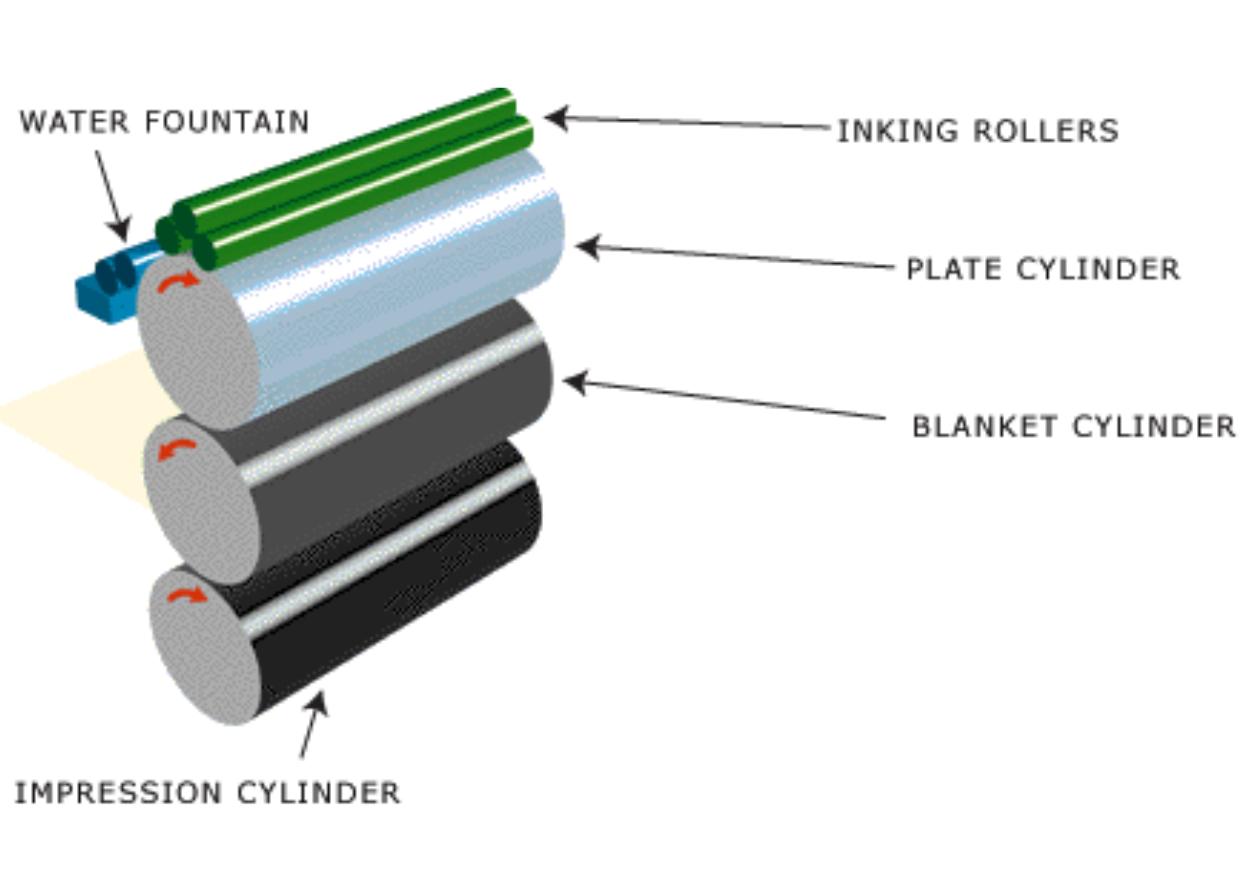
Offset printing ink is the type of ink used in the widely adopted offset printing technology. This technology is based on the principle that water and oil do not mix. The ink is transferred from the printing plate to a rubber blanket and then onto the paper.
Offset ink is characterized by high viscosity and tack. It must ensure strong adhesion to the printing substrate. At the same time, the ink must dry stably and resist smudging.
Ink composition consists of multiple closely coordinated components. Each component performs a specific function. The balance among these elements determines print quality.
BASIC COMPOSITION OF OFFSET PRINTING INK
Offset printing ink is composed of pigments, binders, and additives. It also contains solvents and property-modifying agents. The mixing ratio determines performance and stability.
Pigments provide color strength and opacity to the printed image. Binders help pigment particles adhere to the paper surface. Additives assist in adjusting drying speed and gloss.
Precise coordination among the components is critical. If the balance is disrupted, printing defects may occur. Therefore, formula control is extremely important.
PIGMENTS IN OFFSET PRINTING INK
Inorganic Pigments
Inorganic pigments are commonly used in offset printing ink. They offer high lightfastness and thermal stability. Their colors remain stable under industrial printing conditions.
Inorganic pigments generally provide good opacity. However, their color brilliance is lower than that of organic pigments. They are suitable for packaging and technical prints.
Pigment dispersion directly affects print quality. The finer the particles, the sharper the printed image. This improves color uniformity.

Organic Pigments
Organic pigments deliver brighter and more vibrant colors. They are often used in advertising prints and premium packaging. Color durability depends on formulation and usage conditions.
Organic pigments have small particle sizes and disperse easily. This enhances smoothness and brightness in prints. However, proper control is required to prevent smudging.
Pigment selection depends on printing purpose. Each type of offset ink has specific color requirements. The right combination ensures optimal performance.
BINDERS IN OFFSET PRINTING INK
Binders, also called resins, hold pigment particles together. They also form a film that adheres to the paper surface.
In offset inks, binders are typically modified vegetable oils. Some systems use synthetic resins to enhance durability. The choice depends on technical requirements.
Binders affect gloss and drying time. If the ratio is not appropriate, ink may dry too slowly. This reduces production efficiency.
SOLVENTS AND OILS IN OFFSET PRINTING INK
Solvents help adjust the viscosity of offset printing ink. They support ink transfer through the roller system. After printing, solvents either evaporate or participate in the drying reaction.
Mineral oils and vegetable oils are commonly used. Vegetable oils are more environmentally friendly. Current trends favor sustainable raw materials.
Solvent ratio affects drying speed and ink penetration. Too much solvent can cause smudging. Too little makes ink transfer difficult.
ADDITIVES IN OFFSET PRINTING INK
Additives optimize ink performance. Although used in small amounts, they are very important. Each additive serves a specific function.
Drying agents accelerate oil oxidation. This shortens waiting time before further processing. Printing efficiency improves as a result.
Anti-foaming and anti-scuff additives are also commonly included. These components help create a smoother print surface. Mechanical durability is significantly enhanced.
IMPACT OF COMPOSITION ON PRINT QUALITY
The balance between pigments and binders determines adhesion strength. If binder content is too low, color may peel. If excessive, color brightness may decrease.
Additive ratios influence gloss and drying properties. An improper formulation can cause paper sticking. This reduces production speed.
High-quality offset printing ink always has an optimized formula. Manufacturers must strictly control raw materials. This ensures long-term stability.
DEVELOPMENT TRENDS IN OFFSET PRINTING INK
The printing industry is moving toward environmentally friendly offset inks. Vegetable oil-based systems are becoming increasingly popular. This helps reduce volatile organic compound (VOC) emissions.
Nano-pigment technology is being intensively researched. Ultra-fine particles enhance sharpness and opacity. Print quality continues to improve.
Optimizing composition saves energy and time. New trends focus on performance and sustainability. This meets the demands of the modern market.
CONCLUSION
Offset printing ink is a complex material system with multiple components. Each element plays a crucial role in print quality. Formula balance determines production efficiency.
Understanding the composition helps in selecting suitable ink. This optimizes cost and minimizes technical defects. Printing quality is therefore significantly improved.
In a highly competitive market, optimizing composition is a major advantage. Manufacturers must invest in formulation research. This forms the foundation for sustainable development in the printing industry.
VICHEM – OFFICIAL DISTRIBUTOR OF ZEALAN INDUSTRIAL PIGMENTS IN VIETNAM
Vichem is the official distributor of Zealan industrial pigments in the Vietnamese market. We not only supply high-quality products but also provide after-sales services that meet international standards.
- Technical consulting: Support customers in selecting products suitable for their application.
- Color-matching tests: Vichem specialists perform matching tests to ensure results meet design standards.
- On-site application support: Assist customers during integration into production lines to ensure optimal performance.
For more information, please contact us:
📞 Hotline: 08 1790 1790
📧 Email: contact@vichem.vn
🔎 LinkedIn: Vichem JSC
🌐 Website: www.vichem.vn
📌 Facebook: Vichem JSC